


Flowers that start with X are the rarest in the entire alphabet, rarer even than U or Q. That scarcity isn’t a flaw in this guide — it’s simply a fact about how plant names distribute across languages, and it means every entry here earns real, specific detail instead of getting lost in a long scroll of near-duplicates.
This guide sorts flowers that start with X by growing context first, not alphabet order. Sun needs, shade tolerance, bloom speed, and skill level all come before any A-Z list. That structure gets you to a usable answer faster than scanning a short name index from top to bottom, even for a letter this compact.
The tone stays practical throughout. Easy plants get called easy. One or two entries here need caution, mainly around livestock and pets rather than people directly, and those get flagged clearly. Nothing gets padded or invented just to make a short letter look longer than it actually is.
A full alphabetical index, a botanical name crosswalk, and a safety table sit near the end for quick reference. But the growing-context sections that follow are where the real planning value lives, especially given how little dedicated coverage this particular letter usually receives.
Quick Take: Where to Start
Xeranthemum solves the dried-flower problem better than almost anything else on this letter, producing papery, everlasting blooms that hold their color and shape for years after cutting. Xanthisma, commonly called Sleepy Daisy, works differently, offering a fast, cheerful yellow bloom for a sunny bed with almost no fuss involved.
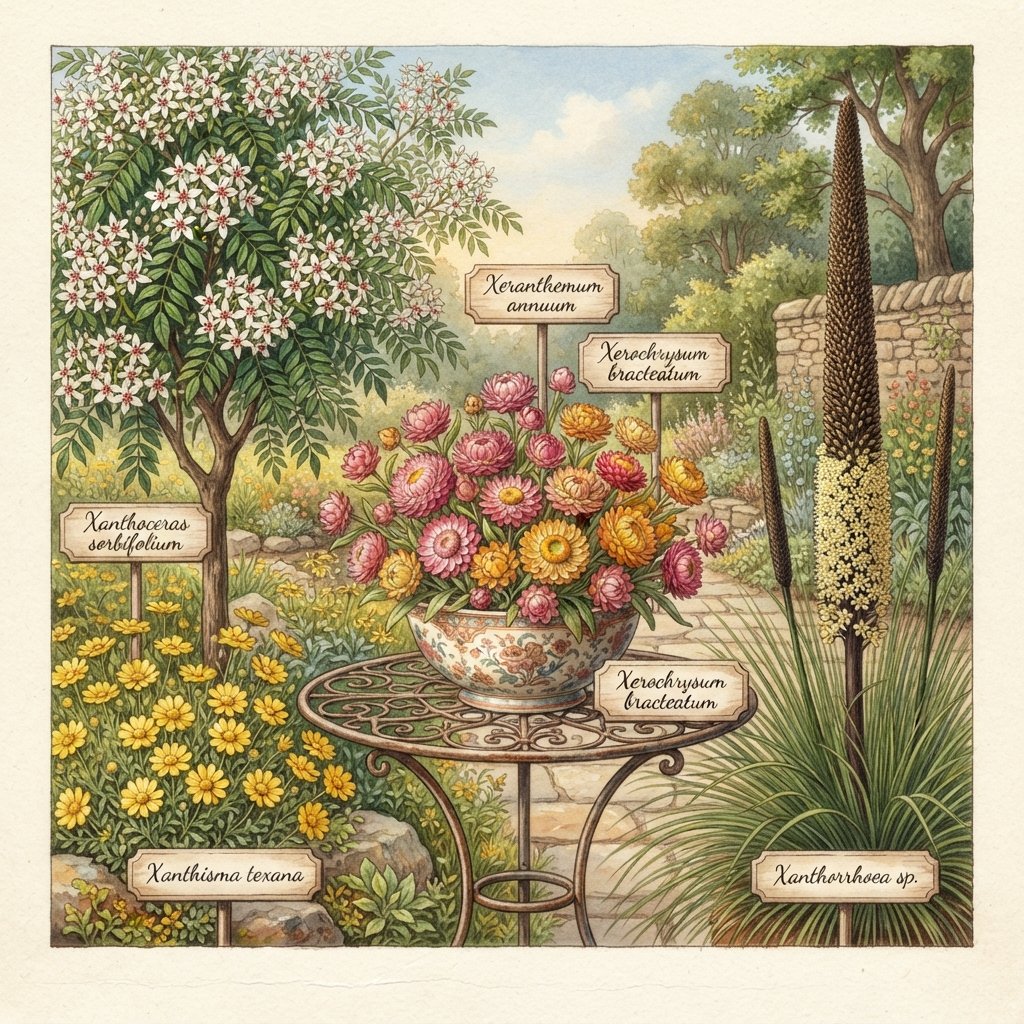
Xanthoceras, also known as Yellowhorn, brings genuine tree-form structure to this letter, producing clusters of white, star-shaped spring flowers with a distinctive yellow-red center. Xerochrysum, closely related to the Strawflower found under other letters, offers a similar papery-petaled bloom prized for both fresh borders and dried arrangements.
Xanthorrhoea, the Australian Grass Tree, rounds out the group as the patience pick — its tall, dramatic flower spike is worth the wait for anyone gardening in a climate that supports this genuinely slow-growing native. Ximenia closes the list as the more obscure specialty choice, a shrub with small, fragrant flowers followed by edible fruit in warmer climates.
Full-Sun Picks That Hold Their Own
A handful of flowers that start with X are built for strong, direct light. These work well in an open border, a naturalized meadow bed, or any spot that gets sun most of the day.
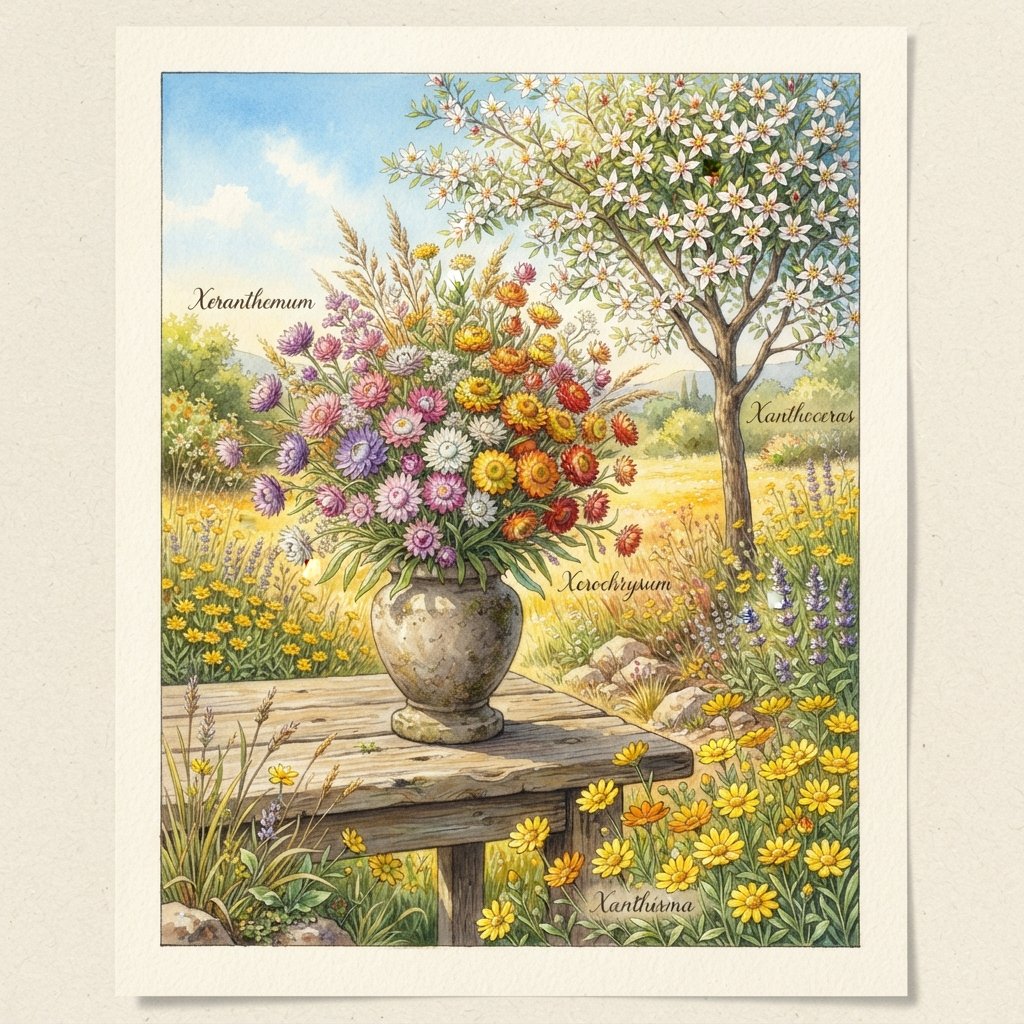
Xeranthemum thrives in full sun and lean, well-drained soil, actually holding its papery texture better in drier conditions than in rich, consistently moist beds. Xanthisma tolerates heat and poor soil about as well as any native annual, blooming steadily through a full season of direct light. Xanthoceras needs full sun to flower well as it matures into tree form, tolerating a range of soil types as long as drainage is reasonable.
- Xeranthemum — thrives in lean, well-drained soil, full sun
- Xanthisma — tolerates heat and poor soil, blooms steadily
- Xanthoceras — needs full sun to flower well as it matures
- Xerochrysum — holds its papery texture best in drier, sunny conditions
Xerochrysum deserves a specific mention here, since its close relationship to Strawflower means it shares that plant’s resistance to wilting in strong afternoon sun, a trait relatively rare among flowering annuals.
Shade and Partial-Shade Options
Shade options are genuinely limited across this letter, more so than almost any other in this series, but a couple of entries are worth knowing for the right setting.
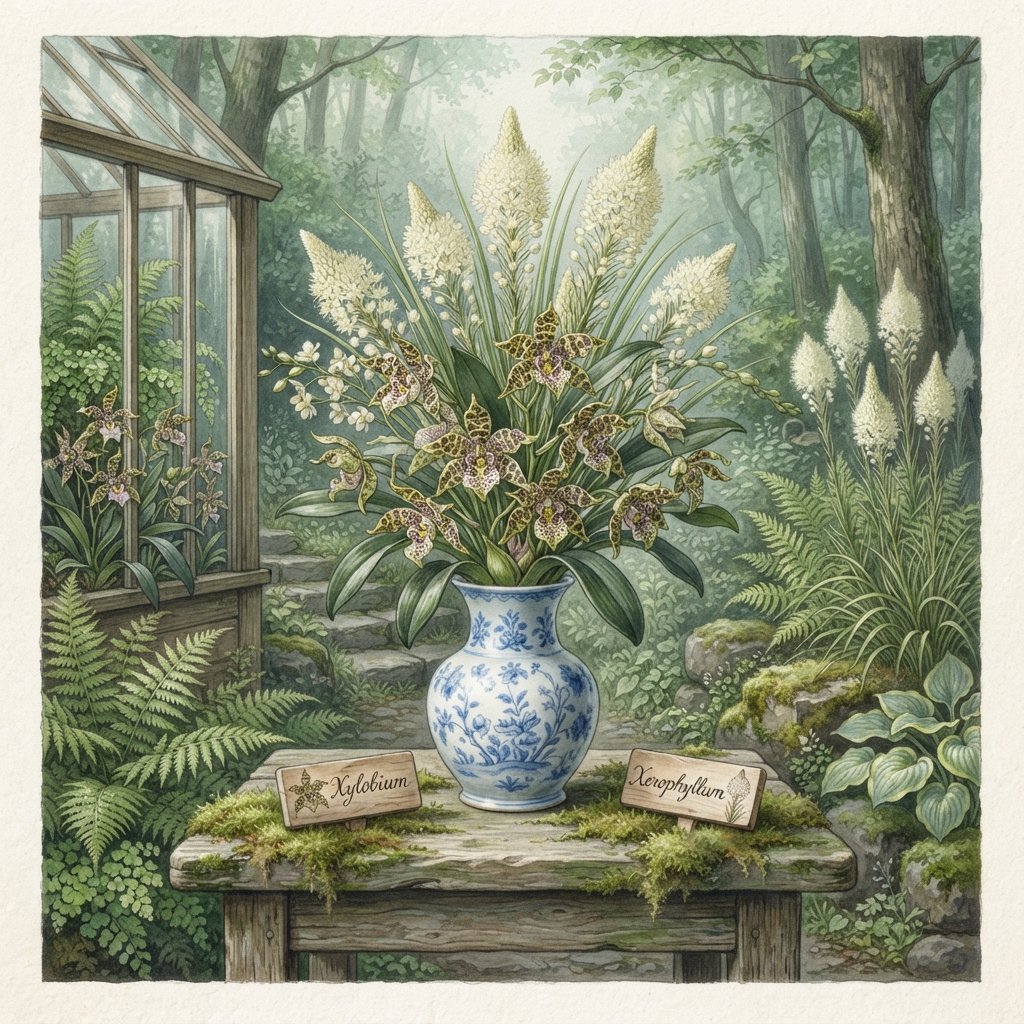
Xylobium, a genus of orchid, needs bright, indirect light rather than direct sun, making it a fit for a shaded greenhouse or an indoor spot away from a harsh south-facing window. Xerophyllum, native to mountainous regions of North America, tolerates partial shade in its native montane habitat, though it still needs reasonably open light to produce its tall, plume-like flower spike.
- Xylobium — needs bright, indirect light, not direct sun
- Xerophyllum — tolerates partial shade in native mountain habitat
Xerophyllum is worth a specific note. It’s a genuinely slow-establishing native plant more often encountered in the wild than purchased from a nursery, so patience and the right site conditions matter more than active care once it’s planted.
Fast Bloomers Versus Slow Payoff
Bloom speed shifts which flowers that start with X make sense for a short-timeline project, though this letter leans more toward the slow end than most others in this series.
Xeranthemum and Xanthisma move fastest, both typically producing their first blooms within eight to ten weeks of direct sowing. These two suit gardeners planting mid-season or wanting quick, reliable color from seed.
Xanthorrhoea sits at the extreme opposite end of this entire series. This iconic Australian native can take decades to reach flowering size in the wild, with some specimens taking twenty to fifty years before producing their first dramatic flower spike, a timeline that makes it one of the slowest-blooming plants covered anywhere in this collection. Xanthoceras, grown as a small tree, needs several years of establishment before producing a significant flush of spring blooms. Anyone working against a tight deadline should lean toward Xeranthemum or Xanthisma rather than these considerably slower picks.
What Actually Holds Up With Minimal Care
A couple of flowers that start with X tolerate real neglect, which matters most for a first-time grower who wants results without a strict schedule.
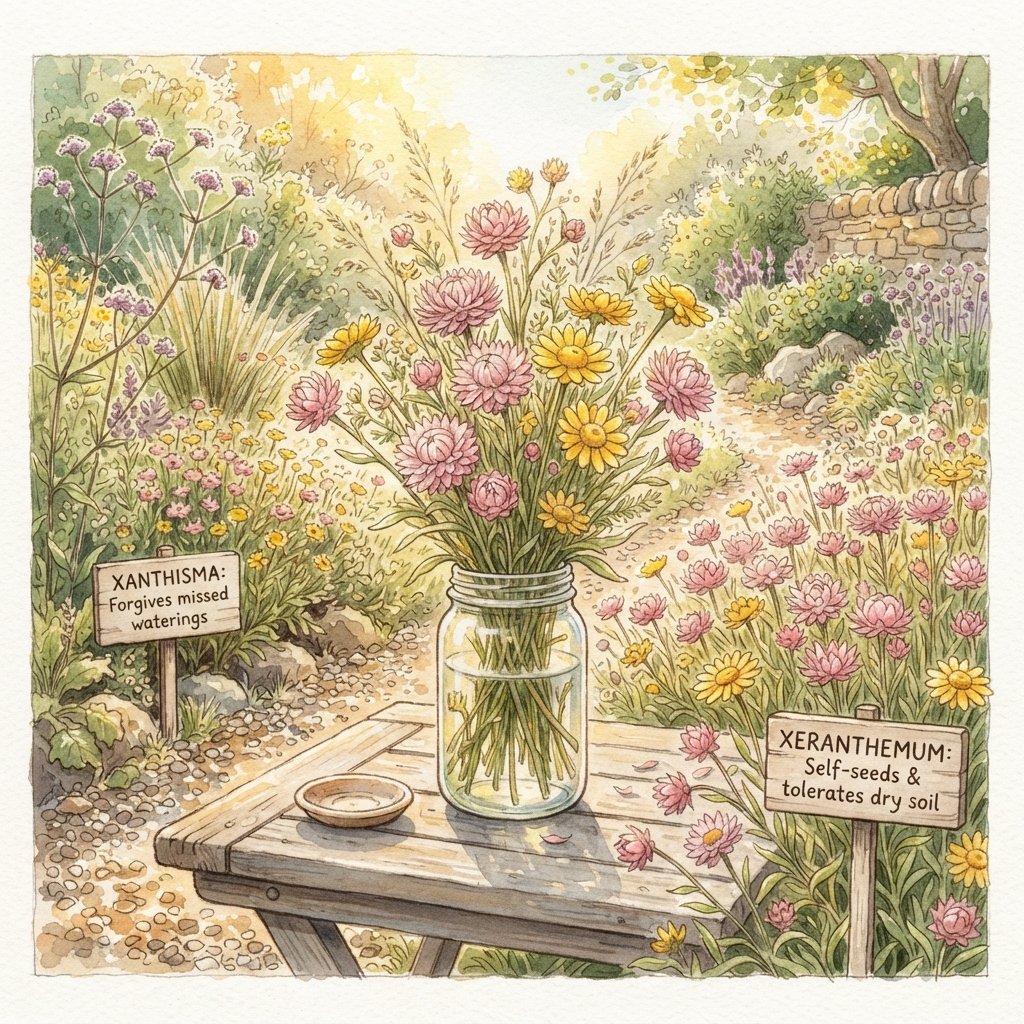
Xeranthemum is the standout here, self-seeding readily in a sunny spot and tolerating dry, poor soil without much complaint. Xanthisma is nearly as forgiving, surviving missed waterings and average soil while still producing a steady show of yellow blooms through summer.
- Xeranthemum — self-seeds readily, tolerates dry, poor soil
- Xanthisma — tolerates missed watering, steady summer bloom
The tradeoff with both is a relatively modest, understated display compared to some showier flowers in this series. Neither delivers the boldest color available, but both ask for very little in return.
The Ones Worth a Warning
This letter doesn’t carry the same volume of serious toxicity concerns found in some other letters, but a couple of entries deserve a specific note, mainly around livestock and pets.
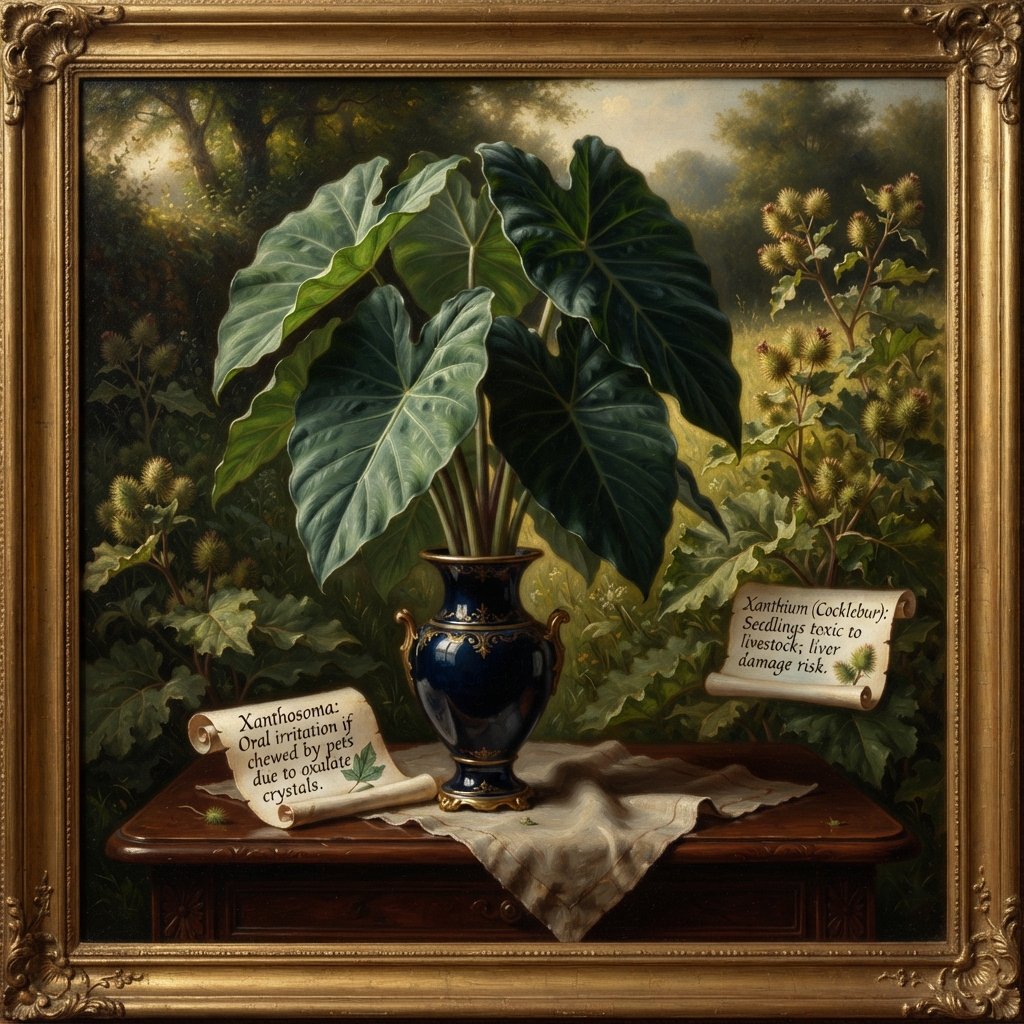
Xanthium, commonly known as Cocklebur, poses a genuine risk to grazing animals, particularly in its seedling stage, when it contains a compound capable of causing liver damage and, in severe cases, death in livestock that consume it. It’s more often encountered as an agricultural weed than a deliberately planted ornamental, but it’s worth recognizing and removing from any pasture or field where animals graze. Xanthosoma, grown as an ornamental Elephant Ear relative, contains calcium oxalate crystals similar to other members of its plant family, causing mouth and throat irritation if chewed by a curious pet.
- Xanthium (Cocklebur) — seedlings toxic to grazing livestock, can cause liver damage
- Xanthosoma — oxalate crystals cause oral irritation if chewed by pets
Xanthium is worth a specific callout for anyone with pastureland or grazing animals, since its danger is concentrated in the early seedling stage, before the plant is easily recognized by its more distinctive mature burred seed pods.
A Companion Planting Guide
Companion planting options are limited for this letter, but one pairing is worth knowing for anyone building a dried-flower or cutting garden. Shared use case matters more here than pest deterrence or soil chemistry specifically.
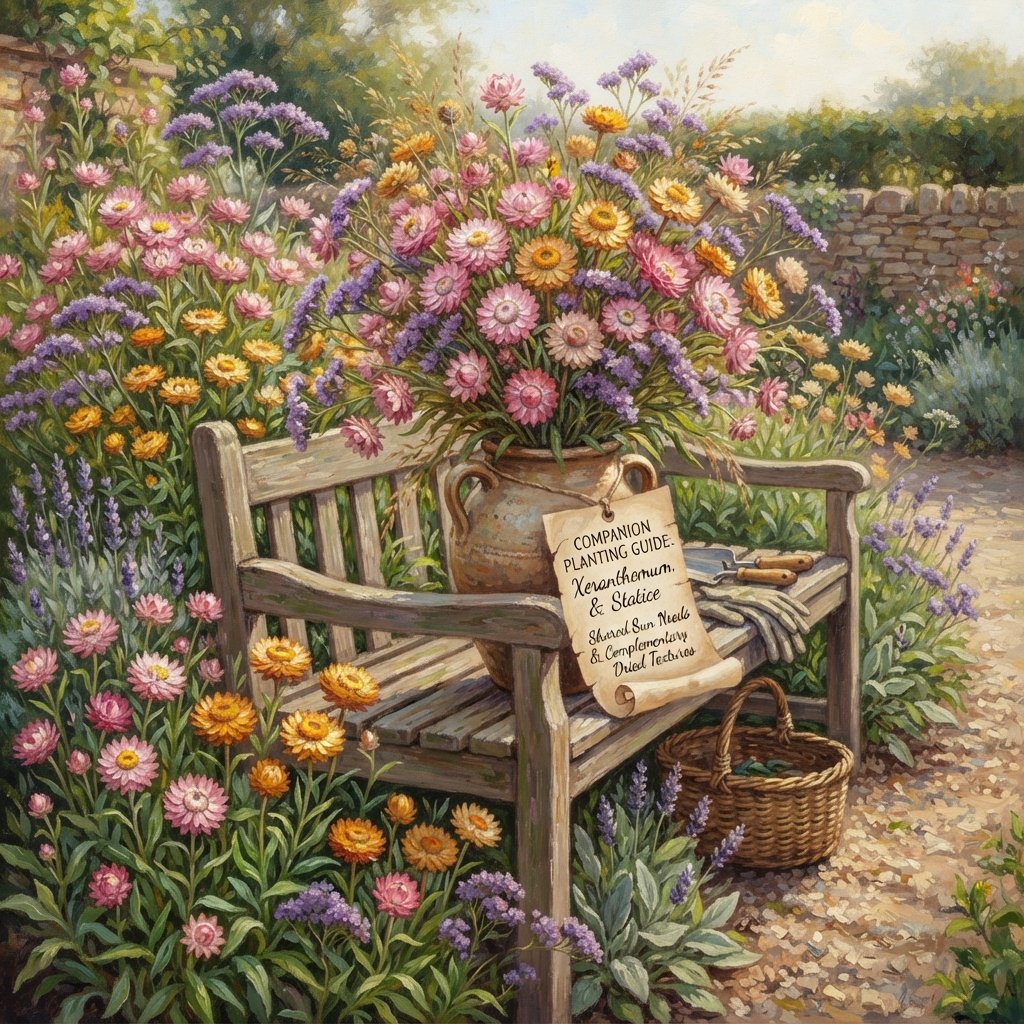
Xeranthemum pairs well with other everlasting flowers like Strawflower and Statice, since all three share similar sun and soil needs while offering complementary texture and color for dried arrangements. Growing them together also simplifies harvest timing, since all three are typically cut and dried at a similar point in their bloom cycle.
| Flower | Good Companion | Why It Works |
| Xeranthemum | Strawflower, Statice | Similar sun needs, complementary dried-flower texture |
Xeranthemum’s pairing with other everlasting flowers is really the one genuinely practical companion relationship this letter offers, and it’s worth leaning into for anyone specifically building a cutting garden geared toward dried arrangements.
A Season-by-Season Care Calendar
Timing matters for the handful of flowers that start with X worth planning around closely. The calendar below covers the top picks from the Quick Take section.
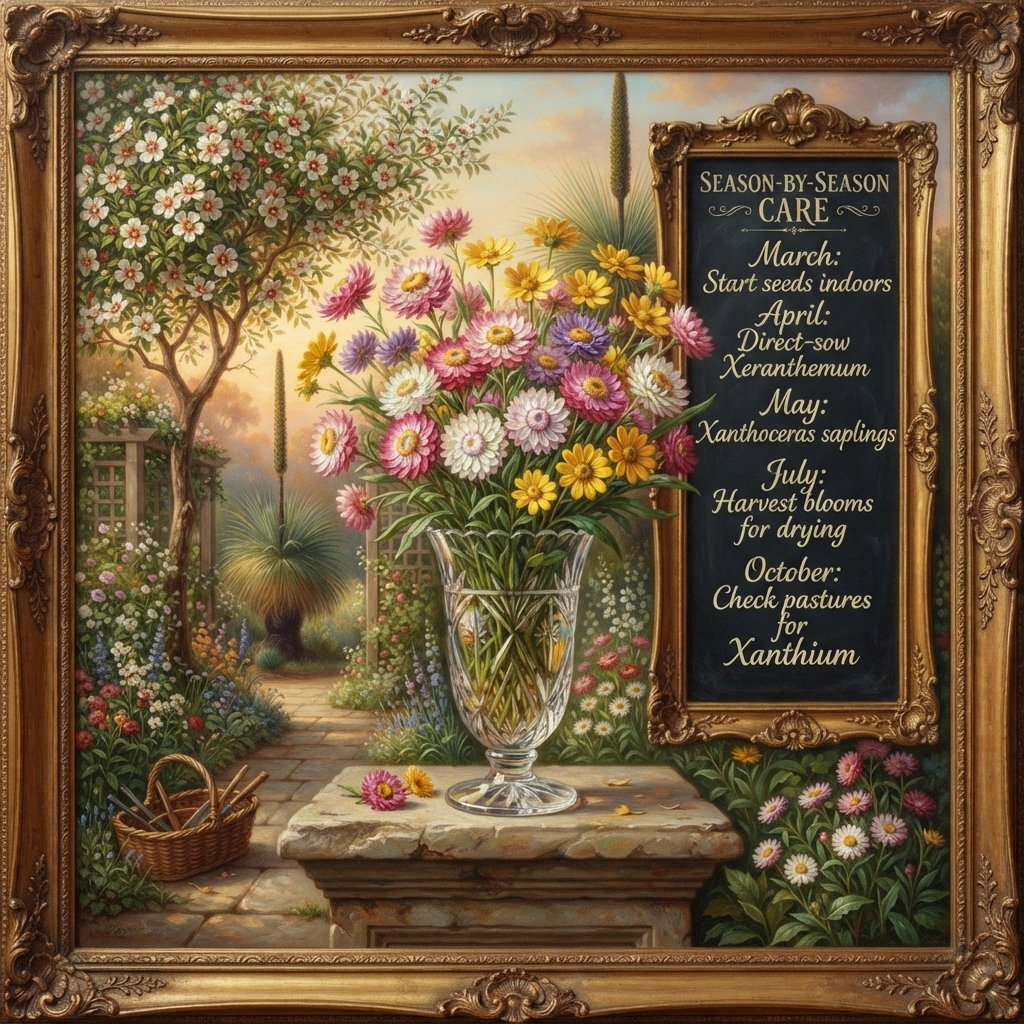
March: Start Xeranthemum and Xanthisma seeds indoors in cooler climates, since both benefit from a head start before the growing season warms up.
April: Direct-sow Xeranthemum and Xanthisma once frost risk has passed.
May: Plant out any nursery-grown Xanthoceras saplings once the soil has warmed, giving roots time to establish before summer heat arrives.
June: Deadhead Xeranthemum regularly if a longer bloom period is preferred over an early, concentrated harvest for drying.
July: Harvest Xeranthemum blooms for drying just as they begin to fully open, since cutting too late reduces how well the color holds over time.
October: Check any pasture or field areas for Xanthium seedlings before winter, removing them if livestock graze nearby.
The most useful timing note for this letter involves patience rather than a specific date. Xanthorrhoea in particular rewards a gardener who accepts its multi-decade timeline rather than expecting any meaningful bloom in a typical planning window.
Mistakes Beginners Make With This Letter
A few errors show up with flowers that start with X, and most trace back to unfamiliarity given how rarely this letter comes up in typical garden planning.
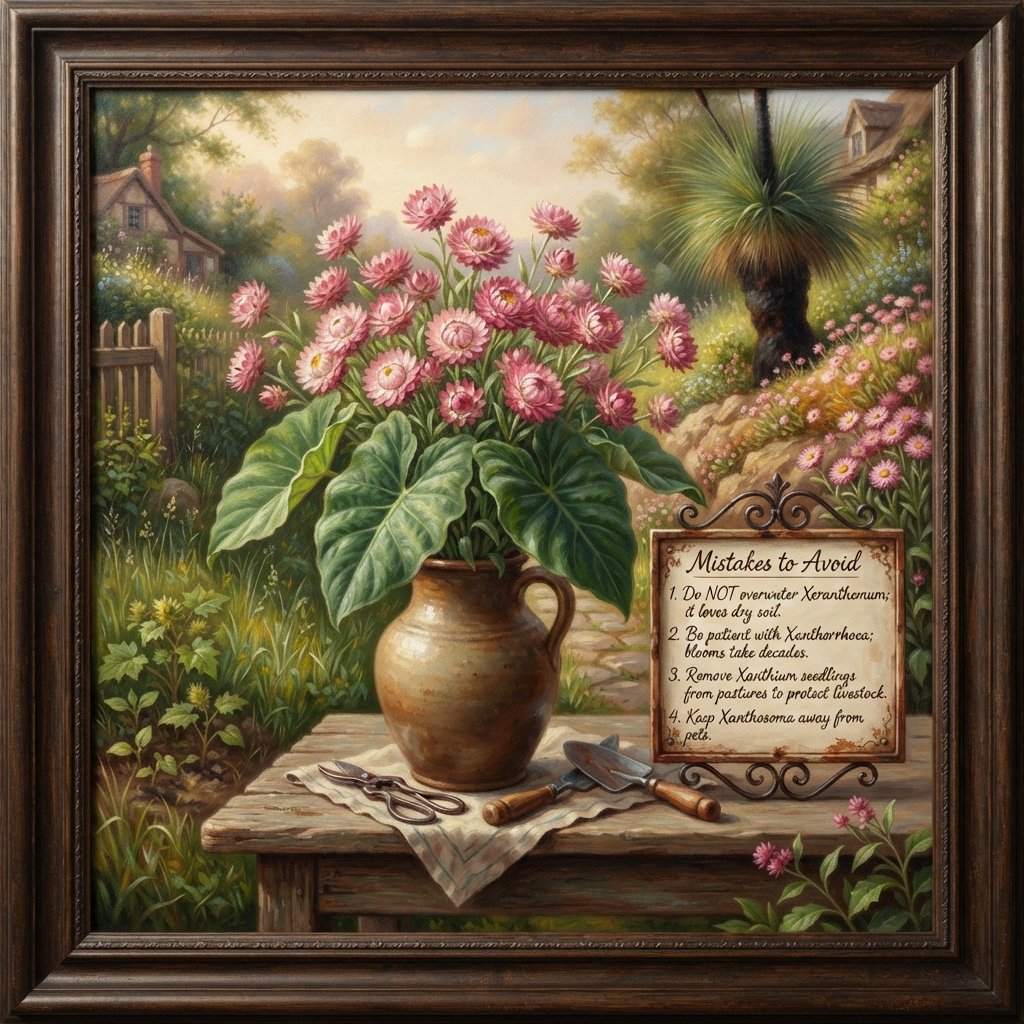
Overwatering Xeranthemum is probably the most common mistake, since its preference for lean, dry soil runs counter to habits formed growing thirstier annuals. Expecting Xanthorrhoea to produce a flower spike within a normal planting timeline is another frequent source of disappointment, when the real payoff can take decades in the wild. Failing to recognize Xanthium seedlings in a pasture is a more serious practical mistake, given the real risk the plant poses to grazing livestock at that early growth stage.
- Overwatering Xeranthemum, which prefers lean, dry soil
- Expecting a quick flower spike from slow-growing Xanthorrhoea
- Failing to identify and remove Xanthium seedlings from grazing pastures
- Assuming Xanthosoma is safe around pets due to its ornamental, harmless appearance
Most of these mistakes come down to unfamiliarity rather than any real difficulty growing the plants themselves, which makes sense given how uncommon this letter is in everyday garden planning.
Where to Actually Buy These
Availability is limited across this entire letter, more so than almost any other covered in this series. Xeranthemum and Xanthisma seeds are reasonably available through specialty seed catalogs, particularly those focused on cutting gardens and dried flowers, though they’re rarely found as established nursery starts at a typical garden center.
Xanthoceras, Xanthorrhoea, and Xylobium orchids typically require a specialty nursery, a native-plant or Australian-native supplier, or an orchid grower rather than a general garden center. Xanthorrhoea in particular is often protected or regulated in parts of its native range given its extremely slow growth rate, so sourcing one legally and sustainably matters as much as finding a supplier at all. This entire letter sits at the far specialty-order end of the spectrum, even more so than U or Q.
If You Only Have Room for a Couple
Given how short this letter runs, a curated shortlist matters more than usual. Xeranthemum takes the first spot without much competition, since it delivers genuine, practical value as a dried flower with almost no ongoing effort required. Xanthisma earns the second spot as the most reliable fresh-bloom option for a sunny bed.
A third pick depends entirely on patience and climate. Gardeners in a mild, frost-free climate with room for a genuinely long-term planting might choose Xanthorrhoea, understanding that any real payoff belongs to a much longer timeline than a typical garden plan. Anyone wanting a flowering tree instead should choose Xanthoceras.
Handling These Safely
This letter carries less overall toxicity risk than most others in this series, and the concerns that do exist are concentrated on livestock and pets rather than people directly. Xanthium poses the most serious risk, with young seedlings capable of causing liver damage and death in grazing livestock, particularly cattle and pigs that consume the plant in its early growth stage. Xanthosoma contains calcium oxalate crystals that cause mouth and throat irritation if a pet chews on its foliage, a concern shared with several other ornamental aroids.
Xeranthemum, Xanthisma, and Xanthoceras carry minimal known toxicity risk and are generally considered safe around pets and children in typical garden settings.

| Flower | Toxicity Level | Main Concern |
| Xanthium (Cocklebur) | Severe (to livestock) | Seedlings can cause liver damage in grazing animals |
| Xanthosoma | Mild | Oxalate crystals irritate the mouth and throat |
| Xeranthemum | Minimal | Generally considered safe |
| Xanthisma | Minimal | Generally considered safe |
| Xanthoceras | Minimal | Generally considered safe |
Anyone with grazing livestock should walk pastures specifically checking for Xanthium seedlings, since the plant’s danger is greatest before its more recognizable burred seed pods develop. The rest of this letter poses comparatively little concern for typical home gardens.
Sorting These Flowers by Color
Color options run thin across this letter, but a few genuine standouts exist worth knowing.
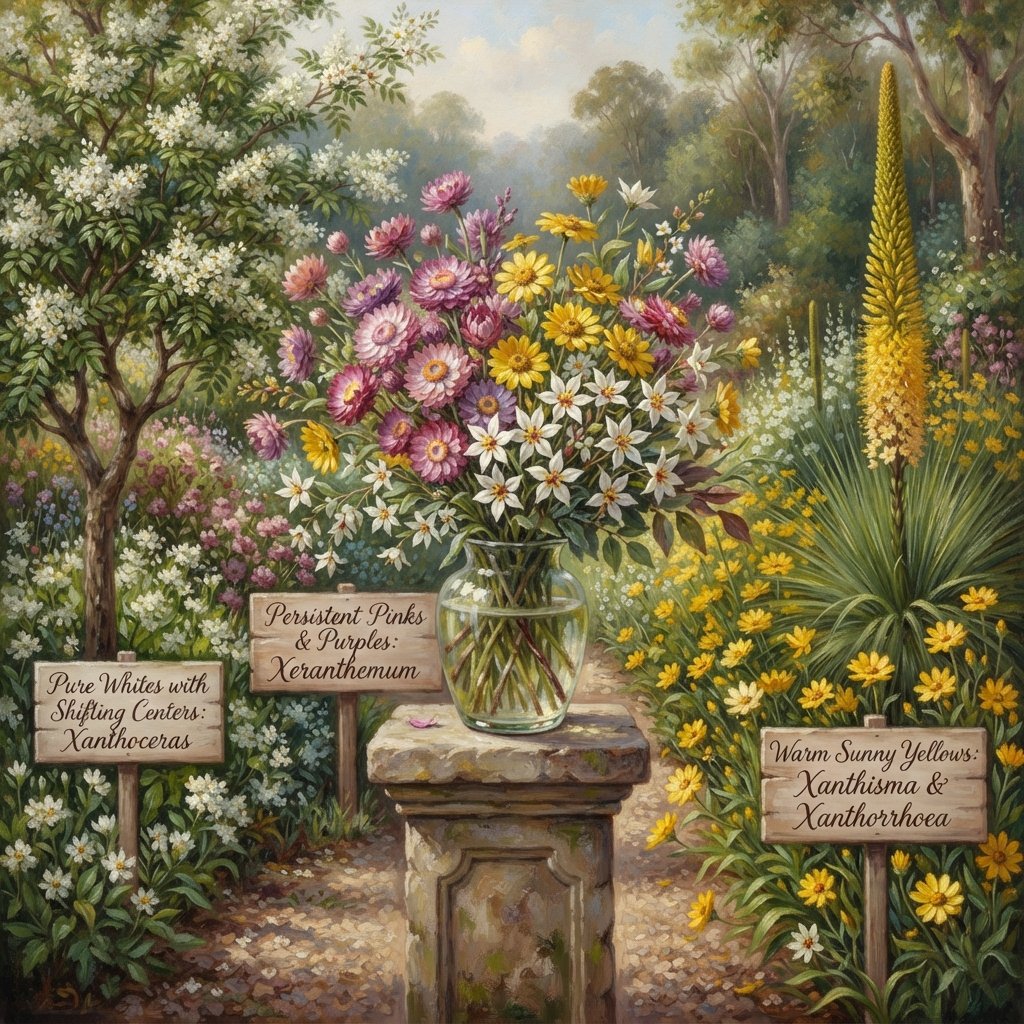
Pink and purple tones appear in Xeranthemum, whose papery petals hold their color for years after drying, making them useful well beyond a single growing season. Yellow flowers are represented by Xanthisma and Xanthorrhoea’s dramatic flower spike, both bringing warm, sunny color to very different garden settings. White flowers show up in Xanthoceras, whose star-shaped spring blooms carry a distinctive yellow-to-red center that shifts as the flower ages.
Full Name Index
The list below rounds up the flowers that start with X worth knowing, mixing common names with botanical genus names. Detailed growing notes for the most relevant entries appear in the sections above; this index exists purely as a fast lookup.
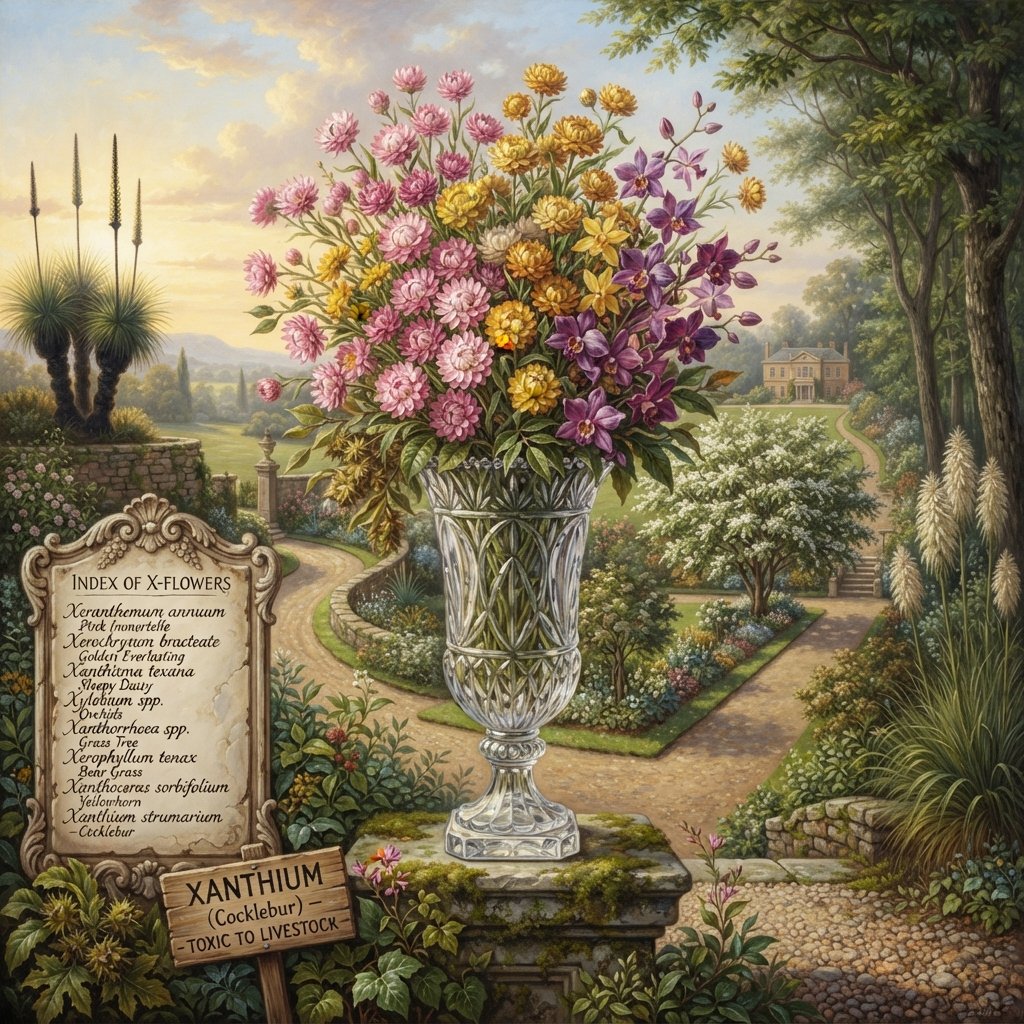
- Xeranthemum
- Xanthisma (Sleepy Daisy)
- Xanthoceras (Yellowhorn)
- Xerochrysum (Golden Everlasting)
- Xanthorrhoea (Grass Tree)
- Xylobium (Orchid)
- Xerophyllum (Bear Grass)
- Ximenia
- Xanthium (Cocklebur)
- Xanthosoma (Elephant Ear relative)
- Xanthosia
- Xylopia
- Xiphidium
A couple of names here overlap or confuse buyers. Xerochrysum and Strawflower refer to essentially the same plant group, with Xerochrysum being the more current, formally accepted genus name. Xanthium is frequently mistaken for a harmless roadside weed, despite the real risk it poses to grazing livestock in its early growth stage.
Common Name to Botanical Name Crosswalk
Botanical names matter most when ordering online or confirming a nursery tag, since common names shift by region in ways botanical names don’t. The crosswalk below covers the flowers referenced most throughout this guide.
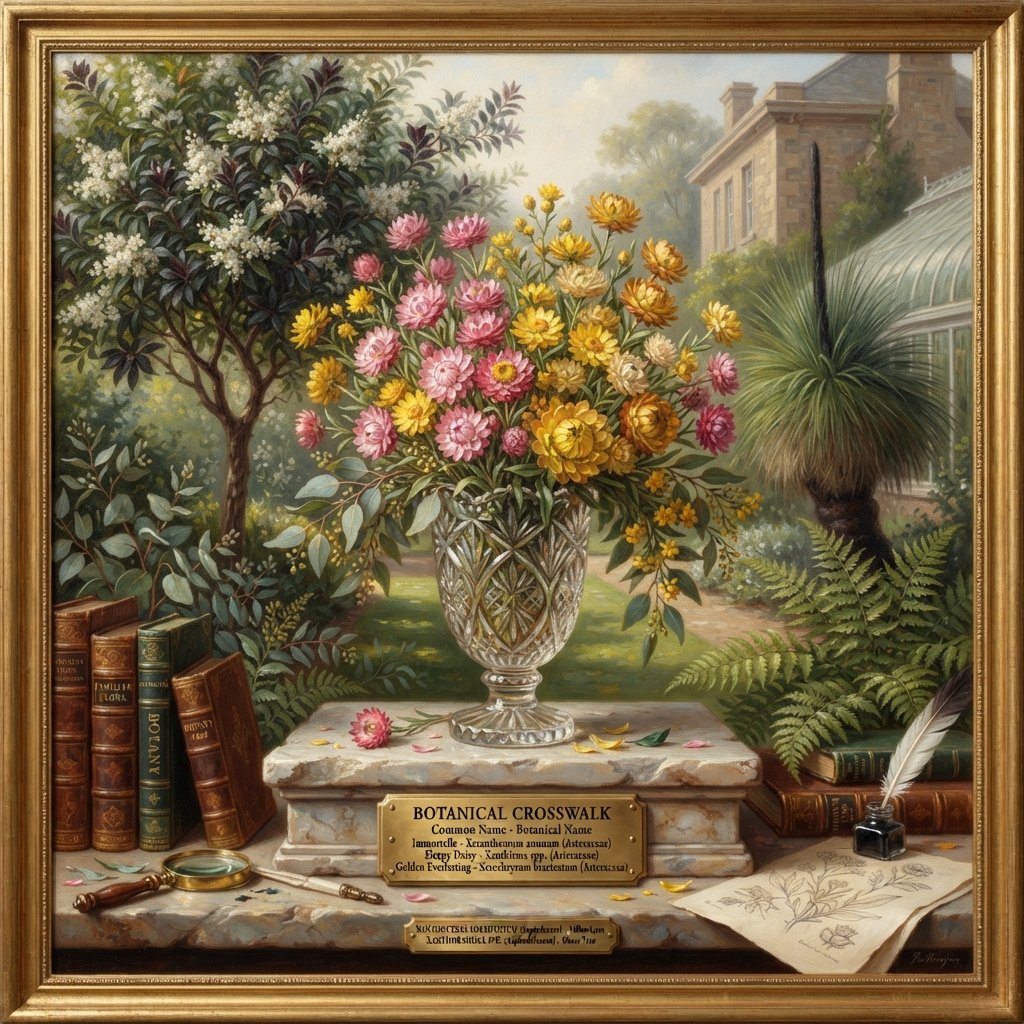
| Common Name | Botanical Name | Family |
| Xeranthemum | Xeranthemum annuum | Asteraceae |
| Xanthisma | Xanthisma spp. | Asteraceae |
| Xanthoceras | Xanthoceras sorbifolium | Sapindaceae |
| Xerochrysum | Xerochrysum bracteatum | Asteraceae |
| Xanthorrhoea | Xanthorrhoea spp. | Xanthorrhoeaceae |
| Xylobium | Xylobium spp. | Orchidaceae |
| Xanthium | Xanthium strumarium | Asteraceae |
Xeranthemum, Xanthisma, Xerochrysum, and Xanthium all sharing the Asteraceae family explains a pattern worth noting across this letter — the daisy family clearly dominates the available options that happen to start with X. Xanthorrhoea’s placement in its own distinct family, Xanthorrhoeaceae, reflects its status as a genuinely unique, ancient lineage of Australian native plants.
What These Flowers Have Meant Through History
A couple of flowers that start with X have fascinating meanings beyond their growing needs. Xeranthemum is often associated with eternity and unfading memory.
This meaning connects closely to its papery, long-lasting petals. When cut and dried, the flowers can retain their shape and color for years.
Xanthorrhoea also has deep cultural significance in Australian Aboriginal traditions. Its resin, leaves, and flower stalks were used for tools, adhesives, and food long before European settlement.
The plant is also known for its remarkable resilience. It can survive bushfires and may even flower after fire. Because of this, Xanthorrhoea is often associated with resilience and renewal. Its ability to survive for many years makes this meaning especially fitting. Some species can live far longer than a human lifetime before producing their dramatic flower spikes.
Final Thoughts
Flowers that start with X may be the rarest in the entire alphabet. However, the few that exist offer a surprising range of shapes, colors, and growing habits. From the papery, long-lasting Xeranthemum to the slow-growing Xanthorrhoea, these unusual plants have something special to offer. When choosing flowers that start with X, consider your garden’s sunlight, shade, and your level of gardening experience. This makes it easier to find a plant that suits your space. Because there are so few flowers that start with X, even one carefully chosen variety can add something unique to your garden. It can also help complete an alphabet-inspired flower collection.
Frequently Asked Questions
What are the easiest flowers that start with X for beginners?
Xeranthemum and Xanthisma are the most forgiving picks. Both tolerate average conditions and inconsistent watering without much loss in bloom quality.
Why is this letter so short compared to others?
Very few plant genera and common names naturally begin with X, making flowers that start with X the rarest and shortest group in the entire alphabet.
How long does it take Xanthorrhoea to flower?
It can take twenty to fifty years in the wild, making it one of the slowest-blooming plants covered anywhere in this series.
Is Xanthium dangerous to have around pets or livestock?
Yes, particularly to grazing livestock. Its seedlings contain a compound capable of causing liver damage if consumed in quantity.
What’s the fastest-blooming flower that starts with X?
Xeranthemum and Xanthisma typically flower within eight to ten weeks of direct sowing, making them strong choices for quick color.
Is Xeranthemum the same as Strawflower?
They’re closely related but distinct, with Xerochrysum being the more current name for what’s commonly still called Strawflower.
Can Xanthoceras be grown outside a warm climate?
It tolerates a range of climates reasonably well, though it needs several years of establishment before producing a significant flowering display.
Is Xanthosoma safe to grow if I have pets?
It’s best kept out of reach. Its foliage contains calcium oxalate crystals that cause mouth and throat irritation if chewed.