


Flowers that start with T range from the universally recognized Tulip to Thorn Apple, a genuinely dangerous plant that occasionally shows up in wildflower mixes without a clear warning. Few other letters combine that much mainstream popularity with that much real caution in the same alphabetical stretch.
This guide sorts flowers that start with T by growing context first, not alphabetical order. Sun needs, shade tolerance, bloom speed, and skill level all come before any A-Z list. That structure gets you to a usable answer faster than scrolling through dozens of names looking for the one that actually fits your yard.
The tone stays practical throughout. Easy plants get called easy. A few entries here need real caution around pets and children, and those get flagged directly rather than softened. This letter offers enough genuine variety that nothing needs to be inflated just to fill out the count.
A full alphabetical index, a botanical name crosswalk, and a toxicity table sit near the end for quick reference, but the growing-context sections that follow carry the real planning value. Between climbing vines, woodland natives, and a few plants better admired than handled, this letter has more range than its modest reputation suggests.
Quick Take: Where to Start
Tulip solves the classic spring color problem better than almost any other bulb, planted once in fall for a guaranteed show the following spring. Tiger Lily works differently, producing tall, dramatically spotted orange blooms that return reliably year after year with minimal fuss.
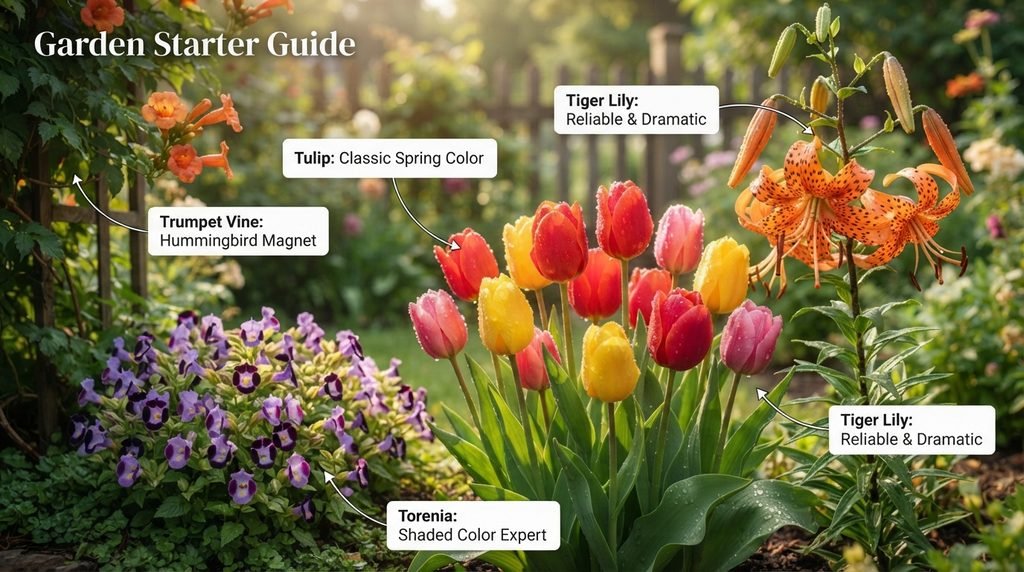
Trumpet Vine earns its spot for coverage speed, climbing a fence or arbor faster than most other flowering vines and drawing hummingbirds almost immediately. Tuberose brings intense, sweet fragrance to a warm-climate bed, often grown specifically for cut-flower arrangements where scent matters as much as appearance.
Torenia solves a specific problem: shaded color. Its small, orchid-like blooms hold up in partial shade better than most flowering annuals. Thistle, though often dismissed as a weed, earns a spot here for pollinator traffic, drawing bees and butterflies at a rate few cultivated flowers can match.
Turtlehead rounds out the group as the late-summer wetland pick, thriving in consistently moist soil where many other perennials struggle. Tickseed closes the list as the low-maintenance summer staple, blooming steadily from early summer through fall with almost no deadheading required.
Full-Sun Picks That Hold Their Color
A large share of flowers that start with T were built for strong, direct light. These work well on a hot patio, a south-facing border, or any strip of soil that bakes through the afternoon.
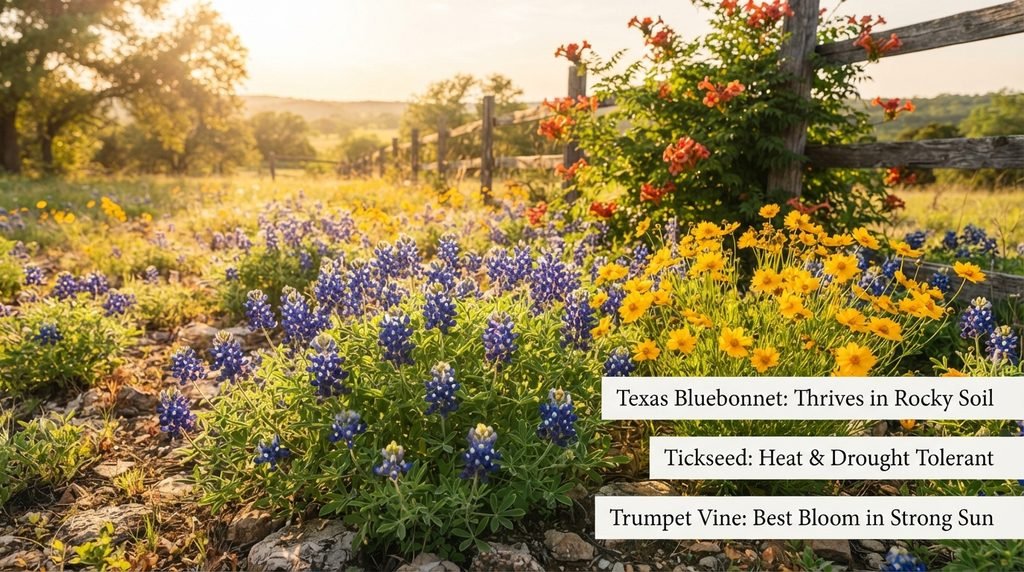
Tulip needs full sun during its bloom window to reach its strongest color, though its foliage tolerates some later shade from deciduous trees once flowering finishes. Trumpet Vine thrives in strong sun, actually blooming more sparsely in shadier spots despite its vigorous growth either way. Tickseed tolerates heat and poor soil about as well as any perennial on this list, holding its color through stretches that wilt more delicate flowers.
- Tulip — full sun during bloom, tolerant of later shade
- Trumpet Vine — blooms best in strong, direct sun
- Tickseed — tolerates heat and poor soil better than most perennials
- Thistle — thrives in poor, dry soil and full sun
- Texas Bluebonnet — needs strong sun and lean, well-drained soil
Texas Bluebonnet deserves a specific mention here. It handles poor, rocky soil about as well as anything on this list, making it a strong pick for a naturalized, low-water meadow planting.
Shade and Partial-Shade Options
Shade narrows this list considerably, but several flowers that start with T genuinely prefer it over full sun. This matters most for anyone gardening under mature trees or along a north-facing wall.
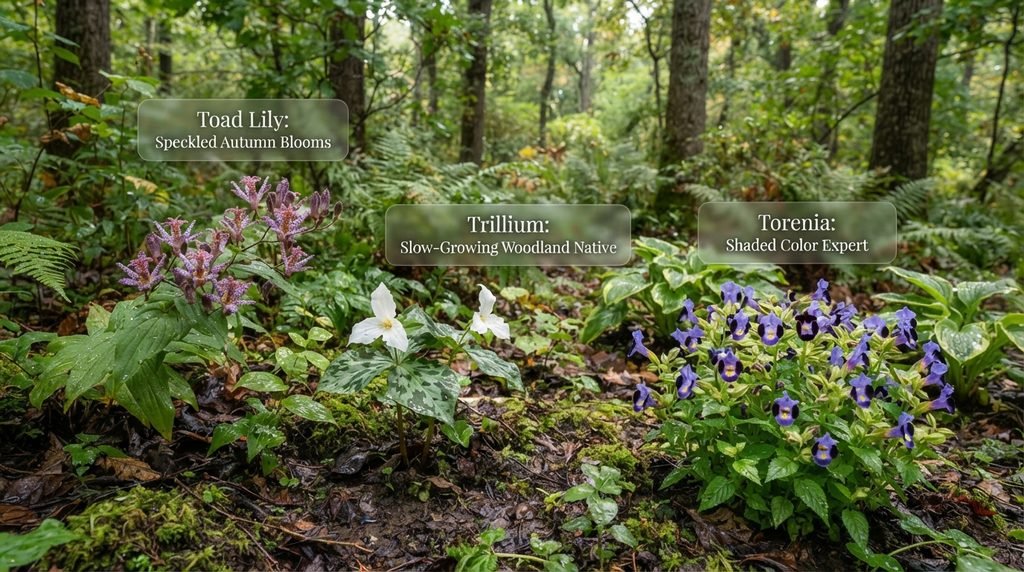
Toad Lily leads this group, needing consistent shade and evenly moist soil to produce its unusual, speckled autumn blooms. Trillium, a slow-growing native woodland wildflower, needs undisturbed shade and rich, humus-heavy soil, making it a poor fit for a bed that gets tilled or replanted often. Torenia tolerates shade surprisingly well for a flowering annual, holding its color in conditions that would fade most other bedding plants.
- Toad Lily — needs consistent shade and evenly moist soil
- Trillium — undisturbed shade, slow to establish, rich soil required
- Torenia — holds color in shade better than most flowering annuals
- Turtlehead — tolerates partial shade in consistently moist soil
Turtlehead rounds out this group. It’s often overlooked for shade plantings, but its late-summer bloom timing fills a gap left by earlier-flowering shade perennials that have already finished for the season.
Fast Bloomers Versus Slow Payoff
Bloom speed shifts which flowers that start with T make sense for a short-timeline project. Some reward you within weeks; others ask for years of patience.
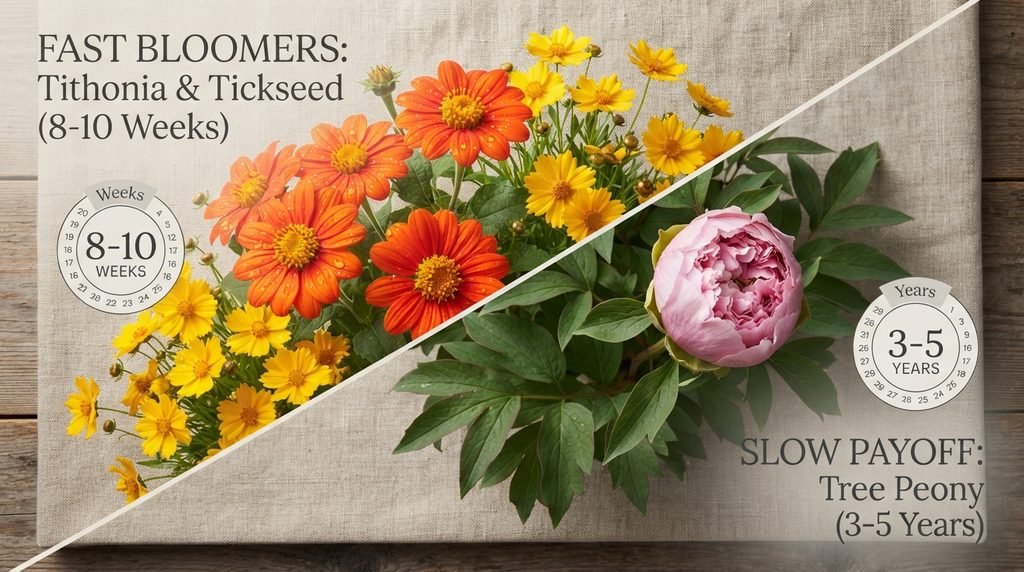
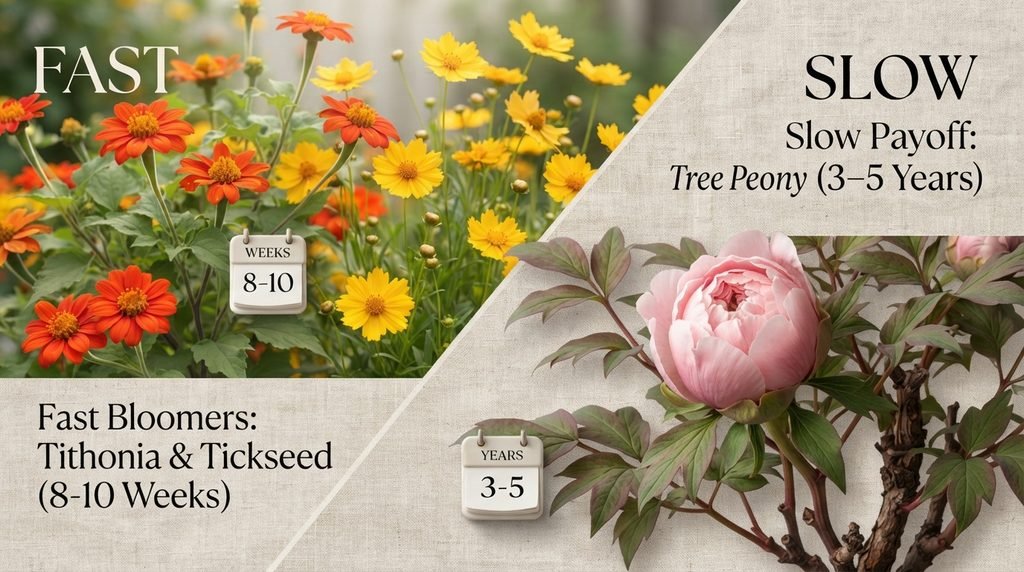
Torenia and Tickseed move fastest among this group, often flowering within eight to ten weeks from seed or nursery transplant. Tithonia, a fast-growing annual related to sunflowers, follows a similar timeline, rewarding a spring sowing with vivid orange-red blooms by midsummer. These three suit gardeners planting mid-season or filling a gap before a specific date.
Tree Peony sits at the opposite end. A newly planted specimen often needs three to five years before producing its first significant bloom, testing the patience of even experienced gardeners. Trillium follows a similarly slow path, sometimes taking seven years or more from seed to first flower in the wild, though nursery-grown divisions bloom considerably sooner. Anyone working against a tight deadline should lean toward the fast annuals rather than these long-term perennial and woodland picks.
What Actually Holds Up With Minimal Care
Several flowers that start with T tolerate real neglect, which matters most for a first-time grower who wants results without a strict schedule.
Tickseed is the standout here, surviving missed waterings and average soil better than most summer perennials while still blooming steadily for months. Thrift, a low-growing groundcover with round pink or white flower heads, is nearly as forgiving, tolerating poor, sandy soil and coastal conditions with little complaint. Torenia rounds out the easy tier, since its shade tolerance means it performs reliably in spots where fussier annuals would struggle regardless of care.
- Tickseed — tolerates missed watering and average soil
- Thrift — handles poor, sandy soil and coastal exposure well
- Torenia — reliable in shade, forgiving of inconsistent care
The pattern across this group is tolerance for inconsistency. None of these three punish a missed watering the way some of the pickier flowers that start with T do further down this list.
The Ones Worth a Warning
A smaller group demands more skill, more specific conditions, or genuine caution around pets and children.
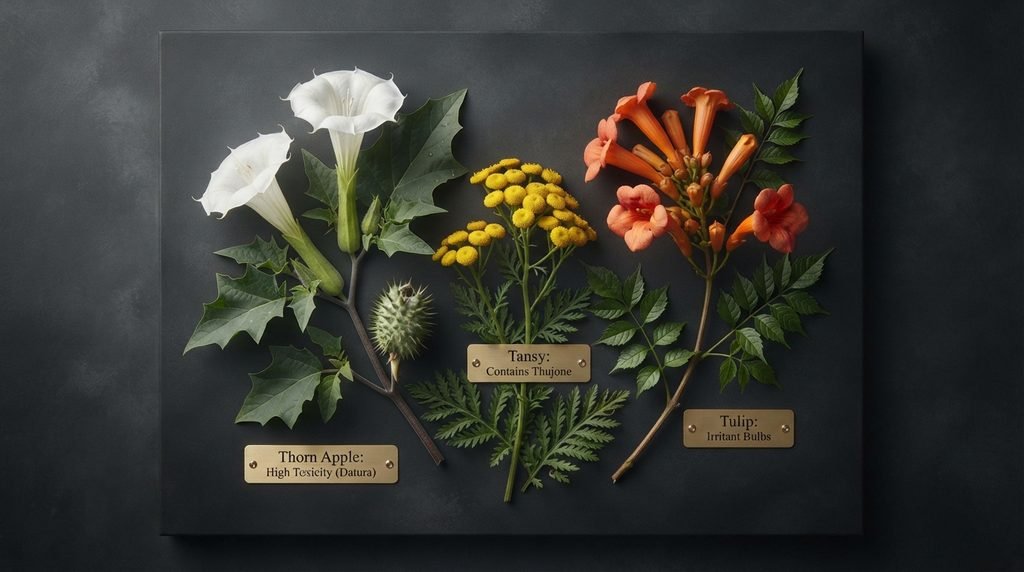
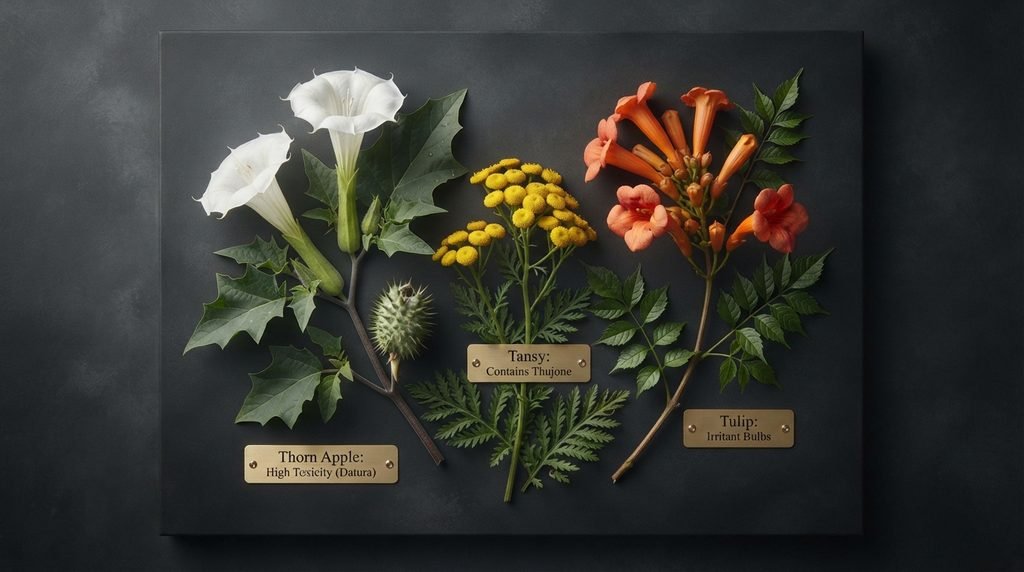
Thorn Apple, commonly known as Datura or Jimsonweed, is the most serious concern in this entire letter. Every part of this plant contains tropane alkaloids, and ingestion has caused hallucinations, seizures, and documented fatalities, particularly among people who mistake it for a harmless ornamental or attempt to use it recreationally. Its trumpet-shaped white or purple flowers are genuinely striking, but it belongs far from vegetable beds, play areas, and anywhere curious pets or teenagers might find it. Tansy carries a lower but real severity, containing thujone, a compound that can cause serious symptoms including seizures if eaten in large quantities. Trumpet Vine, while not seriously toxic, produces a sap that can irritate skin on contact, catching some gardeners off guard during pruning.
- Thorn Apple (Datura) — tropane alkaloids, potentially fatal if ingested
- Tansy — contains thujone, toxic in large quantities
- Trumpet Vine — sap can irritate skin during handling or pruning
- Tulip — bulbs mildly toxic to pets; tulipalin can irritate skin during handling
Tulip deserves a specific note here too. Its bulbs cause mild to moderate stomach upset if a pet digs one up and eats it, and some people develop skin irritation from repeated handling of the bulbs, a condition sometimes called “tulip fingers” among commercial growers.
A Companion Planting Guide
Companion planting works better for some pairings than others, and several flowers that start with T have genuinely useful partners worth knowing before laying out a bed. Pest deterrence, pollinator traffic, and root-space compatibility all factor into these choices.
Tulip pairs well with later-emerging perennials, since its foliage dies back by early summer, leaving space for neighboring plants to fill in without competition. Tickseed grows comfortably alongside Rudbeckia and other summer daisies, sharing similar sun and soil needs while extending the bloom season together. Thistle, despite its weedy reputation, draws pollinators at a rate that benefits nearby fruiting vegetables, making it worth tolerating in a wilder corner of a kitchen garden.
| Flower | Good Companion | Why It Works |
| Tulip | Hostas, later perennials | Foliage dies back, leaving room to fill in |
| Tickseed | Rudbeckia, summer daisies | Similar sun needs, extends bloom season |
| Thistle | Squash, cucumbers | Draws pollinators that boost nearby fruit set |
| Trumpet Vine | Sturdy fences or arbors | Needs strong support, not a plant companion |
| Torenia | Impatiens, other shade annuals | Shares light and moisture needs closely |
Tulip and hostas stand out as a particularly practical pairing, since the timing gap between the two means neither competes with the other for space or light during its active growing period.
A Season-by-Season Care Calendar
Timing changes outcomes for bulbs and fast annuals in this group. A few weeks off schedule can mean missing a bloom window entirely. The calendar below covers the top picks from the Quick Take section.
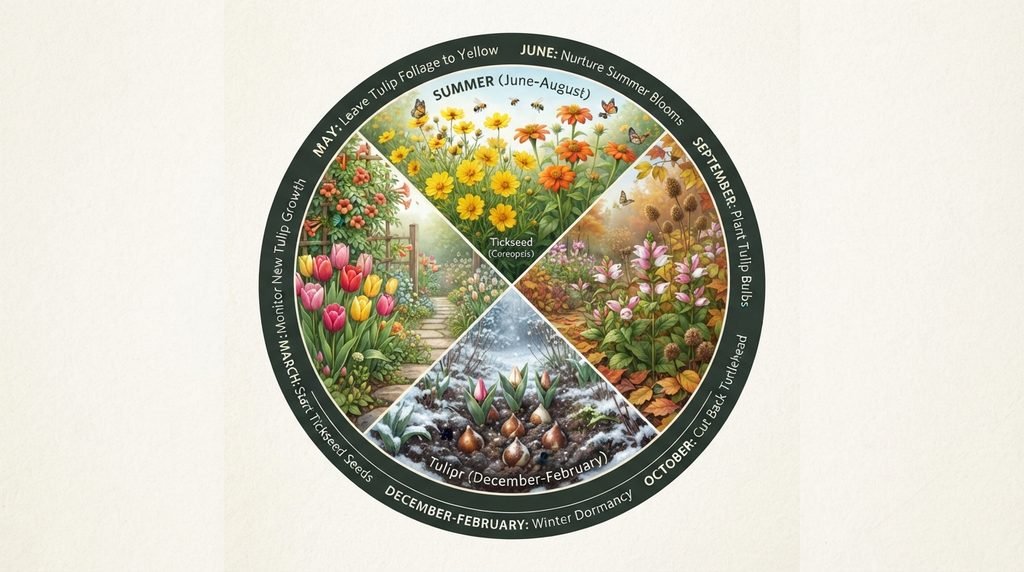
September: Plant Tulip bulbs once soil has cooled, giving roots time to establish before the ground freezes further.
October: Continue planting tulips if the ground hasn’t frozen yet. Divide and transplant Trillium clumps only if absolutely necessary, since they resent disturbance.
March: Start Torenia and Tickseed seeds indoors in cooler climates, or wait to direct-sow once frost risk has passed.
April: Plant out Torenia seedlings in a shaded spot. Provide climbing support for Trumpet Vine early, before growth gets away from you.
May: Watch Tulip foliage begin its natural dieback — resist the urge to cut it early. Plant out Tithonia seedlings once nights stay reliably warm.
June: Deadhead Tickseed regularly to extend bloom into late summer. Watch Trumpet Vine for rapid growth and redirect it onto its support as needed.
October: Cut back Turtlehead after bloom fades to tidy the bed before winter.
The most common timing mistake in this group is cutting Tulip foliage back too soon. That foliage feeds next year’s bulb, and removing it before it yellows naturally weakens future blooms.
Mistakes Beginners Make With This Letter
A few errors show up repeatedly with flowers that start with T, and most trace back to habits that work fine elsewhere but not here.
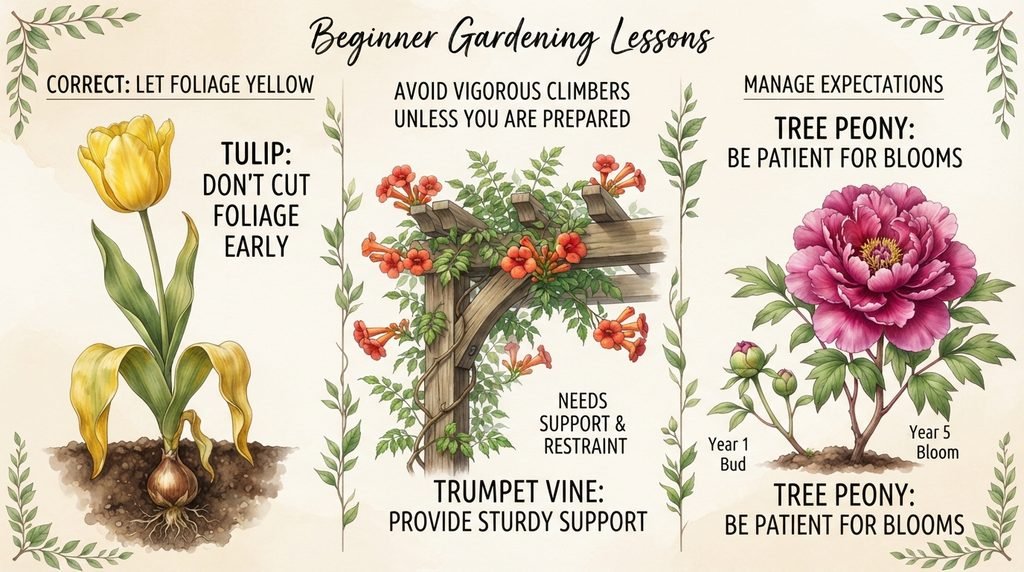
Cutting Tulip foliage back too early is probably the most common mistake, since the plant needs that foliage to store energy for the following year’s bloom. Letting Trumpet Vine grow unsupported or unrestrained is a close second, since this vigorous vine can quickly overtake nearby structures and even send up unwanted suckers some distance from the original planting. Growing Thorn Apple without considering pets, children, or curious teenagers nearby is a serious oversight given how dangerous the plant genuinely is. Expecting Tree Peony to bloom heavily in its first few years is another frequent source of disappointment, when the real payoff typically arrives after three to five years.
- Cutting Tulip foliage back before it yellows naturally
- Letting Trumpet Vine grow unsupported, risking structural damage and suckering
- Growing Thorn Apple without checking for pets, kids, or teenagers nearby
- Expecting significant Tree Peony blooms in the first few years after planting
- Disturbing Trillium clumps, which resent transplanting and are slow to recover
Most of these mistakes come from impatience or applying habits that work for easier, faster plants rather than from a lack of gardening skill generally.
Where to Actually Buy These
Availability shifts noticeably across this letter. Tulip, Tickseed, and Trumpet Vine are nursery staples — nearly every garden center and big-box retailer carries all three in season, usually at a low individual cost. Torenia and Tiger Lily are close behind, widely available as both seed and established nursery starts.
Trillium, Toad Lily, and Tree Peony sit at the other end. These typically require a specialty native-plant nursery or a perennial specialist rather than a general garden center, partly because they’re slower to propagate and less profitable for mass retailers to stock. Thorn Apple is occasionally found in wildflower seed mixes without adequate labeling, which is worth watching for given its toxicity. The specialty tier here commands a noticeably higher price than the common tier, particularly for mature Tree Peony specimens.
If You Only Have Room for Three
Anyone working with a small bed or limited budget benefits from narrowing this list fast. Tulip takes the first spot without much argument, since almost no other bulb delivers as much reliable spring color for so little ongoing effort. Tickseed earns the second spot as the most dependable, low-maintenance summer bloomer on this entire list.
The third spot depends on the space and goal. Gardeners with a fence or arbor to fill quickly should choose Trumpet Vine. Anyone with a shaded corner needing color should choose Torenia instead. Both are strong enough to justify the final spot depending on what the space actually needs.
Handling These Safely
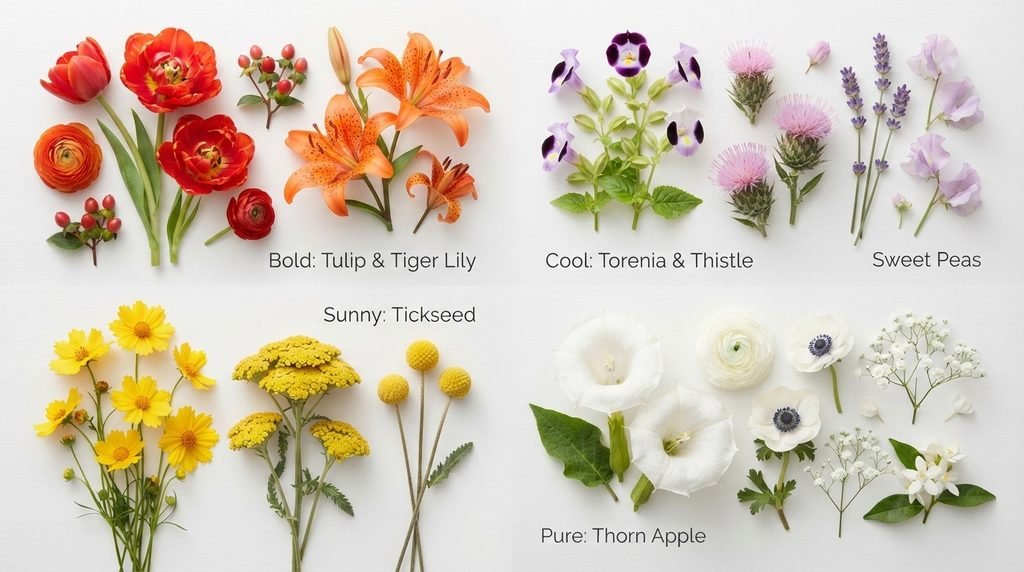
Not every flower that starts with T is safe around pets or small children, and a few deserve real caution rather than a passing mention. Thorn Apple is the most serious concern in this entire letter — its tropane alkaloids can cause hallucinations, seizures, and death, and cases of accidental and intentional poisoning are well documented in medical literature. Tansy contains thujone, a compound capable of causing seizures and other serious symptoms if consumed in large quantities, historically also linked to complications during pregnancy.
Tulip bulbs cause mild to moderate digestive upset in pets that dig them up, and repeated handling can irritate human skin due to a compound called tulipalin. Trumpet Vine’s sap causes contact irritation for some people during pruning, though it poses little risk if simply left undisturbed. Tickseed, by contrast, is one of the safer flowers on this entire list, generally considered non-toxic to both pets and people.
| Flower | Toxicity Level | Main Concern |
| Thorn Apple (Datura) | Severe | Tropane alkaloids, potentially fatal |
| Tansy | Moderate | Thujone content, risk in large quantities |
| Tulip | Mild to moderate | Bulb causes GI upset, skin irritation with handling |
| Trumpet Vine | Mild | Sap can irritate skin during pruning |
| Tickseed | Minimal | Generally considered safe |
Households with pets that dig near planted bulbs should keep an eye on Tulip beds in particular, since the bulb is the part most likely to cause a reaction. Thorn Apple deserves the most serious precaution on this list, ideally removed entirely from any yard shared with children or curious pets.
Sorting These Flowers by Color
Color often decides where a flower actually gets planted more than growing conditions do, since most gardeners are matching an existing scheme rather than starting fresh.
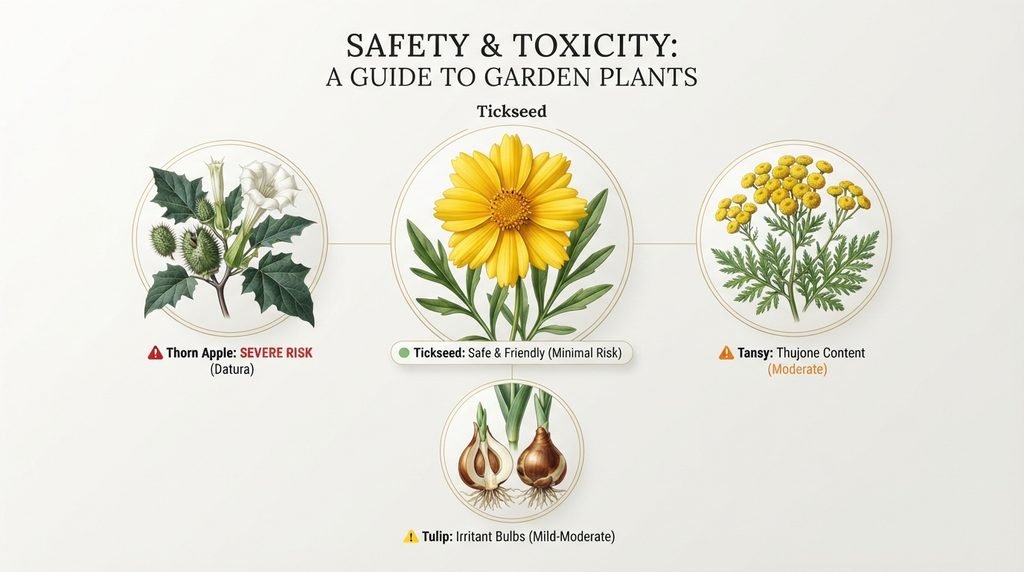
Red and orange flowers lead this letter with real strength, headlined by Tulip and Tiger Lily, both bringing bold, saturated tones that hold up well in a spring or summer border. Purple and pink flowers follow closely with Torenia and Thistle, both offering softer, cooler tones that pair well against warmer neighboring colors. Yellow flowers are well represented too, led by Tickseed and certain Tulip varieties, both bringing cheerful, sun-toned color through a long stretch of the growing season. White flowers round out the letter with Trumpet Vine’s paler cultivars and Thorn Apple, though the latter comes with the safety caveats already covered above.
Full Name Index
The list below rounds up more than 70 flowers that start with T, mixing common names with botanical genus names. Detailed growing notes for the most relevant entries appear in the sections above; this index exists purely as a fast lookup.
- Tulip
- Tiger Lily
- Trumpet Vine
- Tuberose
- Torenia
- Thistle
- Turtlehead
- Trillium
- Toad Lily
- Tickseed (Coreopsis)
- Thrift (Armeria)
- Tree Peony
- Tithonia
- Thorn Apple (Datura)
- Tansy
- Texas Bluebonnet
- Tiarella (Foamflower)
- Tobacco Flower (Nicotiana)
- Trailing Lobelia
- Trumpet Honeysuckle
- Tuberous Begonia
- Tulip Tree Flower
- Turk’s Cap Lily
- Twinflower
- Tassel Flower (Emilia)
- Toadflax (Linaria)
- Trumpet Daffodil
- Trout Lily
- Torch Lily (Kniphofia)
- Teasel
- Texas Sage
- Ti Plant Flower
- Trumpet Creeper
- Turban Buttercup
- Trailing Verbena
- Trumpet Gentian
- Tickseed Sunflower
- Tuberous Vervain
- Twin Sisters Rose
- Tuscan Sunflower
- Torch Ginger
- Tassel Hyacinth
- Trumpet Lily
- Threadleaf Coreopsis
- Tricolor Chrysanthemum
- Trailing Petunia
- Turkey Corn (Dicentra)
- Tower of Jewels
- Texas Star Hibiscus
- Trumpet Flower (Angel’s Trumpet)
- Traveler’s Joy
- Trumpet Narcissus
- Tulip Poplar Flower
- Trumpet Bindweed
- Tanacetum (Painted Daisy)
- Tellima (Fringecups)
- Tricyrtis Hirta
- Tibetan Poppy
- Trumpet Milkweed
- Trailing Rosemary Flower
- Texas Yellow Star
- Trumpet Tree (Tabebuia)
- Tricolor Sage Flower
- Twisted Trillium
- Thai Basil Flower
- Ternstroemia Flower
- Tuberous Jasmine
- Trailing Snapdragon
- Trumpet Gladiolus
- Two-Eyed Violet
- Turkish Poppy
- Tuberous Anemone
- Thistle Poppy
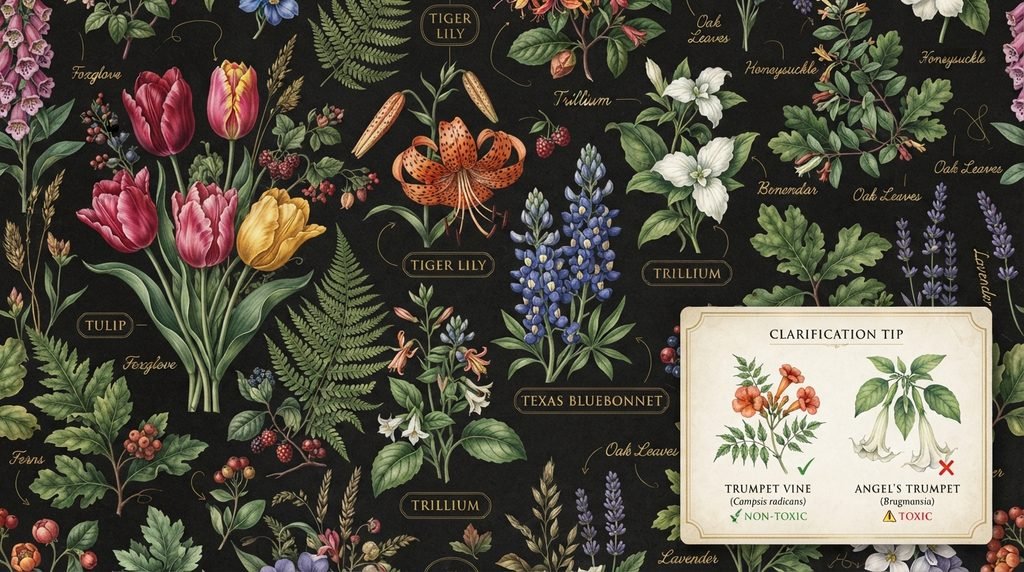
A few names here overlap or confuse buyers. Trumpet Vine and Trumpet Flower (Angel’s Trumpet, Brugmansia) are unrelated plants despite the shared word, with the latter carrying a far more serious toxicity profile. Torch Lily and Tiger Lily also get mixed up occasionally, despite one being a Kniphofia relative and the other a true lily.
Common Name to Botanical Name Crosswalk
Botanical names matter most when ordering online or confirming a nursery tag, since common names shift by region in ways botanical names don’t. The crosswalk below covers the flowers referenced most throughout this guide.
| Common Name | Botanical Name | Family |
| Tulip | Tulipa spp. | Liliaceae |
| Tiger Lily | Lilium lancifolium | Liliaceae |
| Trumpet Vine | Campsis radicans | Bignoniaceae |
| Tuberose | Agave amica | Asparagaceae |
| Torenia | Torenia fournieri | Linderniaceae |
| Thistle | Cirsium spp. | Asteraceae |
| Turtlehead | Chelone spp. | Plantaginaceae |
| Trillium | Trillium spp. | Melanthiaceae |
| Toad Lily | Tricyrtis spp. | Liliaceae |
| Thorn Apple | Datura stramonium | Solanaceae |
| Tansy | Tanacetum vulgare | Asteraceae |
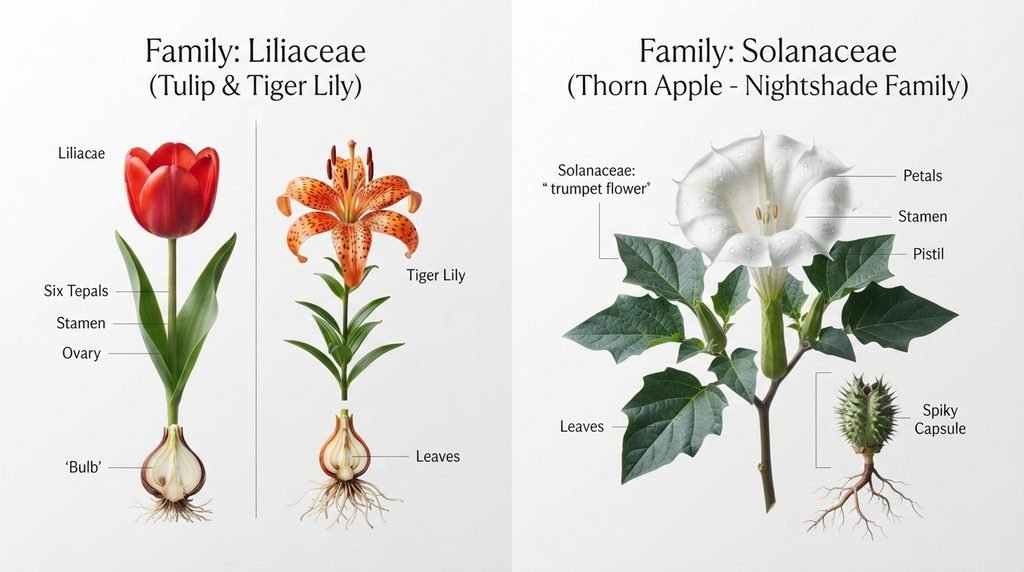
Tulip, Tiger Lily, and Toad Lily sharing the Liliaceae family explains their similar bulb structure and six-petaled bloom pattern, despite fairly different bloom seasons and appearances. Thorn Apple, belonging to Solanaceae, the nightshade family, connects it to several other plants known for toxic alkaloids, a pattern that shows up repeatedly across multiple letters in this series.
What These Flowers Have Meant Through History
Several flowers that start with T carry symbolism reaching well beyond the garden. The tulip has represented perfect or declared love for centuries, an association that reached fever pitch during the Dutch “Tulip Mania” of the 1600s, when single rare bulbs briefly traded for prices comparable to houses. That historical episode is often cited as one of the earliest recorded speculative market bubbles, giving the flower an unusual dual legacy of romance and financial folly.
Thistle carries a very different kind of meaning, serving as the national emblem of Scotland and symbolizing protection, nobility, and defiance, tied to a legend in which the plant’s sharp spines alerted defenders to an approaching enemy attack. Trillium, sacred to several Indigenous North American traditions, has come to represent modesty and quiet elegance, fitting for a woodland flower that takes years to mature and blooms briefly each spring before retreating into dormancy. Tiger Lily, by contrast, has picked up associations with wealth, pride, and confidence, largely thanks to its bold coloring and dramatic, backward-curving petals.
Final Thoughts
Flowers that start with T cover a genuinely wide range once sorted by growing context instead of the alphabet, from the reliably beautiful Tulip to the seriously dangerous Thorn Apple. Starting with sun, shade, and skill level makes it far easier to land on the right flowers that start with T for your specific space, rather than picking one purely because it’s the first familiar name that comes to mind. Whatever combination of color, fragrance, and growing conditions you’re working with, there’s very likely a T flower suited to it.
Frequently Asked Questions
What are the easiest flowers that start with T for beginners?
Tickseed, Thrift, and Torenia are the most forgiving picks. All three tolerate average soil and inconsistent watering without much loss in bloom quality.
Which flowers that start with T are toxic to pets?
Thorn Apple carries the most serious risk, with tropane alkaloids capable of causing severe poisoning. Tulip bulbs and Tansy also pose real but less severe risks.
Why hasn’t my Tulip come back after the first year?
Many modern hybrid tulips are bred for a single spectacular bloom and naturally decline in subsequent years. Species tulips tend to be more reliably perennial.
Is Thorn Apple the same as Angel’s Trumpet?
They’re closely related but distinct plants, both in the nightshade family and both seriously toxic, though they belong to different genera.
What’s the fastest-blooming flower that starts with T?
Torenia and Tickseed typically flower within eight to ten weeks from seed or transplant, making them strong choices for gardeners planting mid-season.
Can Trumpet Vine damage a structure it’s climbing on?
Yes, potentially. Its vigorous growth and clinging root-like structures can damage wood siding, gutters, and mortar over time if left unmanaged.
Why does my Trillium take so long to bloom?
This is normal for the species. Trillium grown from seed can take up to seven years to reach its first flower, though nursery divisions bloom sooner.
Is Tansy safe to grow in a garden with pets?
It’s best kept out of reach. Tansy contains thujone, which can cause serious symptoms including seizures if eaten in large quantities.
What’s a good companion plant for Tulip?
Hostas and other later-emerging perennials work well, since Tulip’s foliage dies back by early summer, leaving room for neighboring plants to fill in.
When should Tulip bulbs be planted?
September through October is the ideal window, giving roots time to establish before the ground freezes for winter.
What flowers that start with T work well in shaded gardens?
Toad Lily, Trillium, and Torenia all perform well in shade, each suited to slightly different moisture and soil conditions.