

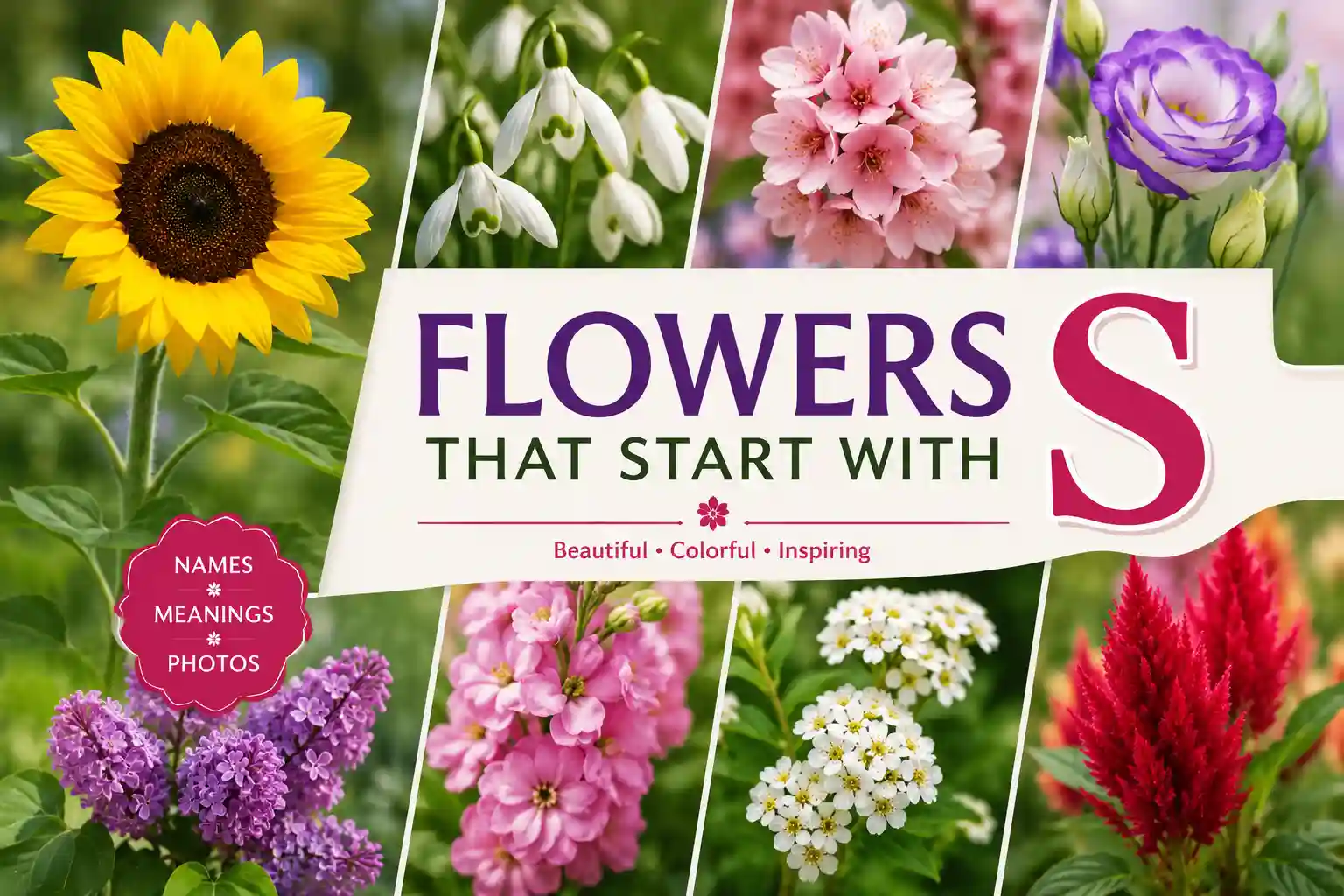
Flowers that start with S cover more ground than almost any other letter in the alphabet. Sunflower alone could anchor a garden on its own, while Sago Palm — technically a cycad rather than a true flowering plant, but frequently grouped here — sits at the opposite end as one of the most dangerous ornamentals commonly sold to pet owners without a warning label.
This guide sorts flowers that start with S by growing context first, not alphabet order. Sun needs, shade tolerance, bloom speed, and skill level all come before any A-Z list. That structure gets you to a usable answer faster than scrolling through 50-plus names looking for the one that actually fits your yard.
The tone stays practical throughout. Easy plants get called easy. A handful of entries here need real caution around pets and children, and those get flagged directly rather than softened. Nothing gets inflated just to fill out the count, even though this particular letter has more than enough real entries to work with.
A full alphabetical index, a botanical name crosswalk, and a toxicity table sit near the end for quick reference, but the growing-context sections that follow carry the real planning value. Given how many strong options this letter offers, narrowing them down by what your yard actually needs matters more here than almost anywhere else in this series.
Quick Take: Where to Start
Sunflower solves the tall, bold-statement problem better than almost any other annual, growing from seed to full height in a single season. Snapdragon works differently, offering cool-season color and a distinctive dragon-mouth bloom that snaps open when gently squeezed, a trait that makes it a favorite with kids.
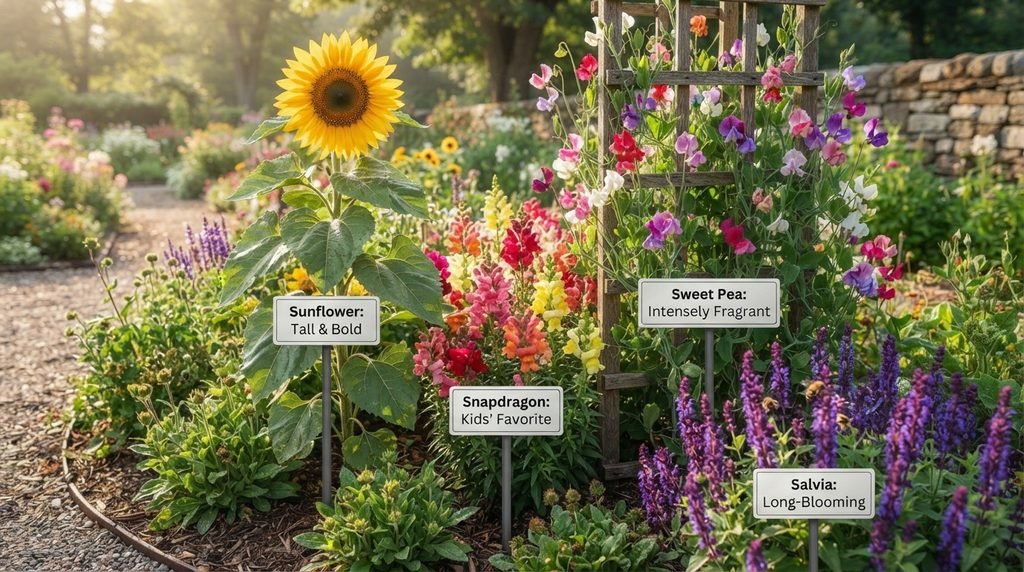
Sweet Pea earns its spot for fragrance, climbing a trellis or fence while producing some of the most scented blooms available to a home gardener. Salvia brings reliable, long-blooming color to a sunny border, and its wide varieties mean there’s a Salvia suited to nearly any climate.
Star Jasmine solves the fragrant-vine problem for warmer climates, covering a fence or arbor in glossy foliage and small, intensely scented white flowers. Stock brings old-fashioned charm and a spicy-sweet scent to cool-season beds, particularly in coastal or mild-winter regions.
Sedum rounds out the group as the low-maintenance succulent pick, tolerating drought and poor soil while still producing broad, pollinator-friendly flower clusters in late summer. Statice closes the list as the dried-flower favorite, holding its color and shape for months after cutting.
Full-Sun Picks That Hold Their Color
A large share of flowers that start with S were built for strong, direct light. These work well on a hot patio, a south-facing border, or any strip of soil that bakes through the afternoon.
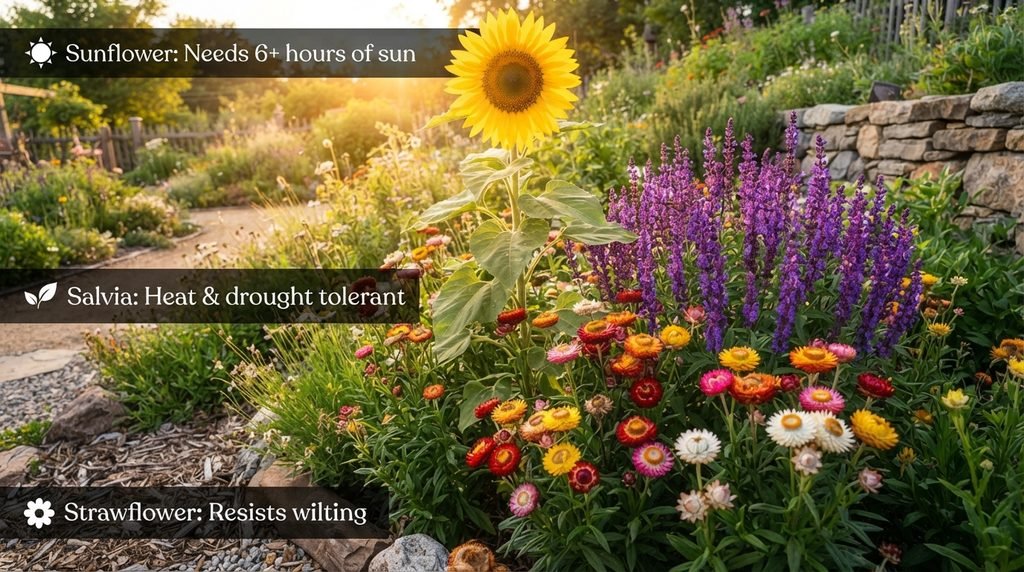
Sunflower needs at least six hours of direct sun to reach its full height and produce a strong central bloom, and it tends to lean noticeably toward available light in shadier spots. Salvia tolerates heat and drought about as well as any perennial on this list, holding its color through stretches that wilt more delicate flowers. Sedum thrives in full sun and poor, well-drained soil, actually struggling in rich, consistently moist beds where its succulent leaves can rot.
- Sunflower — needs at least six hours of direct sun for full height
- Salvia — tolerates heat and drought better than most perennials
- Sedum — prefers poor, well-drained soil over rich, moist beds
- Statice — holds color and form well in hot, dry conditions
- Strawflower — papery petals resist wilting in strong afternoon sun
Strawflower deserves a specific mention here. Its papery, everlasting petals resist wilting in a way that few other annuals manage, making it a strong pick for a hot bed that gets inconsistent watering.
Shade and Partial-Shade Options
Shade narrows this letter down, but several flowers that start with S genuinely prefer it over full sun, more than most other letters in this series. This matters most for anyone gardening under mature trees or along a north-facing wall.
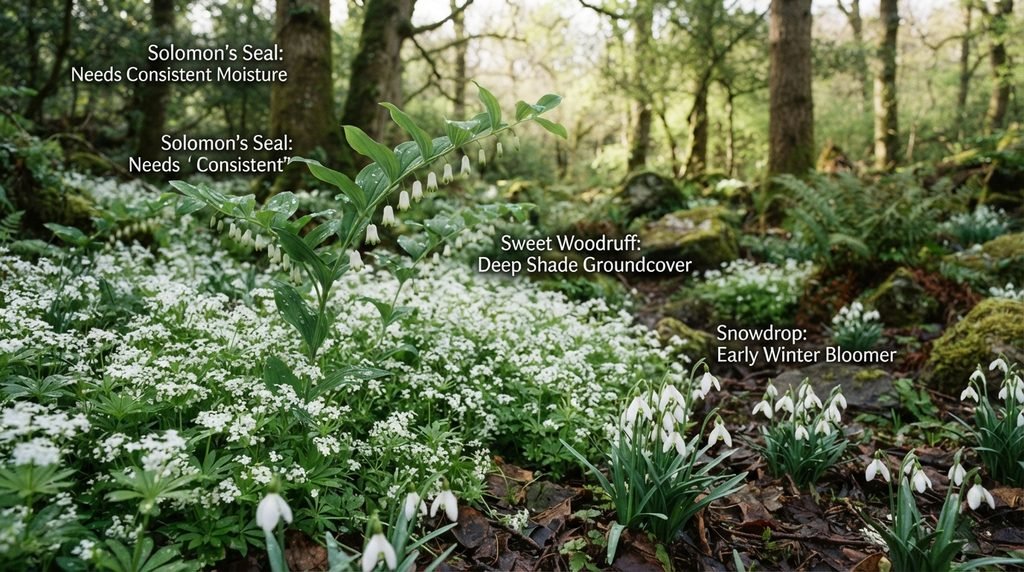
Solomon’s Seal, a native woodland perennial, needs consistent shade and moist, undisturbed soil to establish, spreading slowly into an attractive arching groundcover over time. Sweet Woodruff tolerates deep shade better than almost any other groundcover on this list, spreading steadily under trees where grass typically struggles. Spiderwort tolerates partial shade well, though its blue-purple blooms tend to close by early afternoon regardless of light conditions.
- Solomon’s Seal — needs undisturbed shade and consistent moisture
- Sweet Woodruff — tolerates deep shade, spreads as a groundcover
- Spiderwort — partial shade tolerant, blooms close by early afternoon
- Snowdrop — one of the earliest shade bloomers, before deciduous trees leaf out
Snowdrop rounds out this group as the early-season standout. It blooms in late winter under deciduous trees, finishing its show before the summer canopy closes in and blocks most of the light it needs.
Fast Bloomers Versus Slow Payoff
Bloom speed shifts which flowers that start with S make sense for a short-timeline project. Some reward you within weeks; others ask for years.
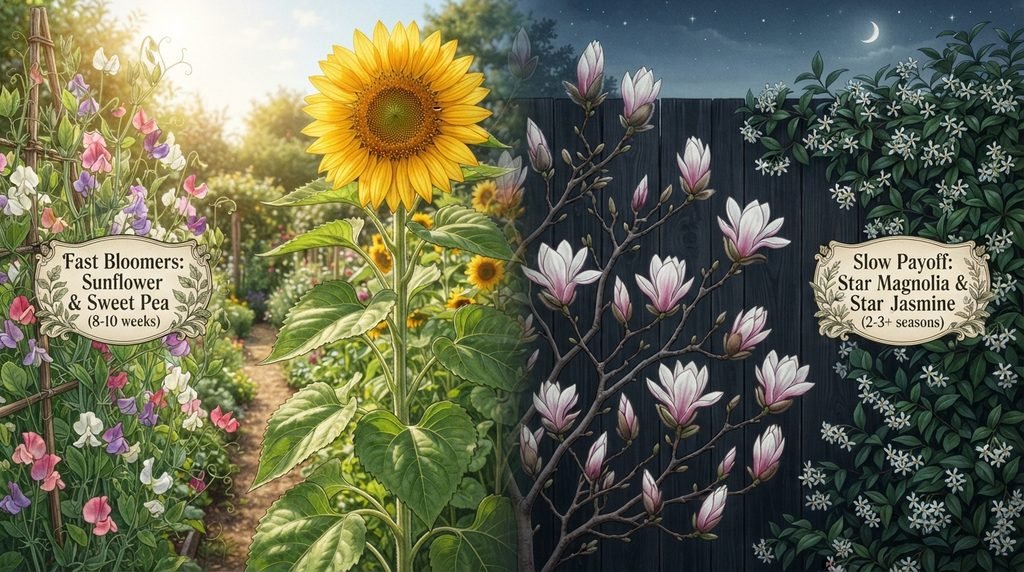
Sunflower and Sweet Pea move fastest among this group, often producing their first blooms within eight to ten weeks of direct sowing. Snapdragon isn’t far behind, typically flowering within two to three months from seed, especially when started indoors ahead of the season. These three suit gardeners planting mid-season or filling a gap before a specific date.
Star Jasmine sits at the opposite end. As a woody vine, it often needs two to three full growing seasons before it produces enough coverage and bloom to feel established on a fence or arbor. Star Magnolia, a flowering tree, can take several years to reach its first significant bloom, particularly when grown from a young sapling rather than a more mature nursery specimen. Anyone working against a tight deadline should lean toward the fast annuals rather than these slower, long-term picks.
What Actually Holds Up With Minimal Care
Several flowers that start with S tolerate real neglect, which matters most for a first-time grower who wants results without a strict schedule.
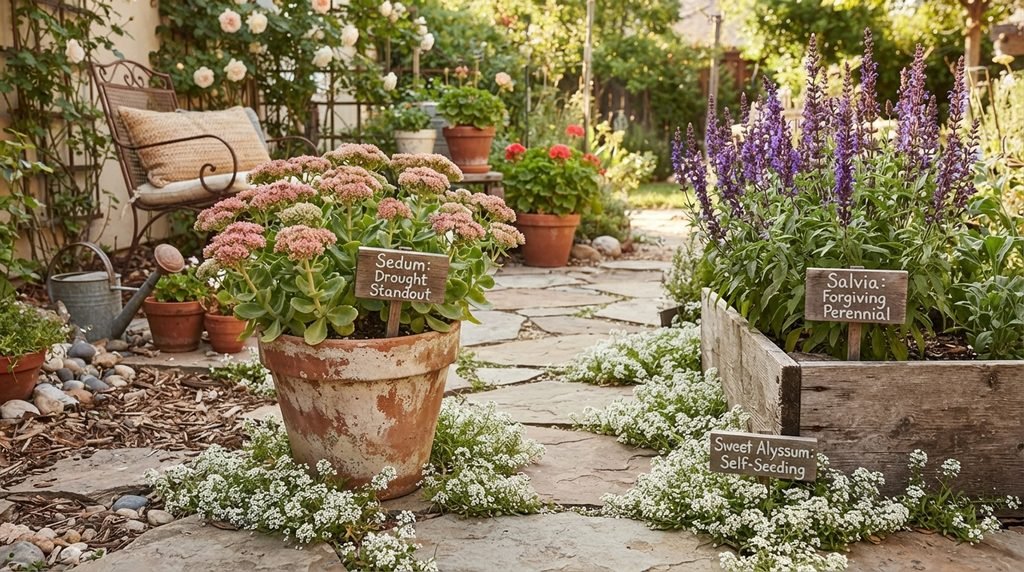
Sedum is the standout here. It survives drought, poor soil, and long stretches of neglect better than almost any flowering perennial, often thriving specifically because it’s left alone. Salvia is nearly as forgiving, tolerating missed waterings and average soil while still producing months of steady bloom. Sweet Alyssum rounds out the easy tier, self-seeding readily and filling in bare patches with fragrant, low-growing color without much encouragement.
- Sedum — thrives on drought and poor soil, resents overwatering
- Salvia — tolerates missed watering, blooms for months regardless
- Sweet Alyssum — self-seeds readily, fills bare patches with minimal care
The pattern across this group is genuine tolerance for inconsistency. None of these three punish a missed watering the way some of the pickier flowers that start with S do further down this list.
The Ones Worth a Warning
A smaller group demands more skill, more specific conditions, or genuine caution around pets and children.
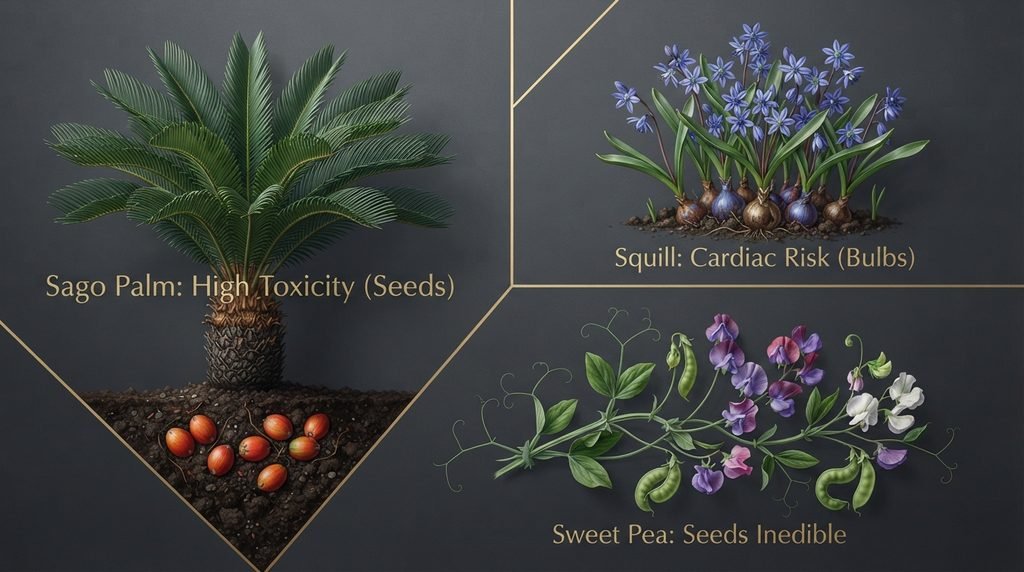
Sago Palm is the most serious concern on this entire letter, despite technically being a cycad rather than a flowering plant in the strict botanical sense. Every part of this popular ornamental is toxic, but the seeds carry the highest concentration of cycasin, a compound that has caused fatal liver failure in dogs that chew on fallen seeds. It’s a striking, palm-like accent plant, but it belongs far from areas where pets roam unsupervised. Spurge, a genus that includes several popular garden varieties, produces a milky sap that causes skin and eye irritation on contact, and it can cause more serious digestive symptoms if ingested. Squill, a spring-blooming bulb related to hyacinth, contains cardiac glycosides that pose a real risk to pets that dig up and chew on the bulbs.
- Sago Palm — seeds contain cycasin, potentially fatal to dogs
- Spurge — milky sap causes skin and eye irritation
- Squill (Scilla) — bulb contains cardiac glycosides, risk to digging pets
- Sweet Pea — seeds mildly toxic in large quantities, unlike the edible garden pea
Sweet Pea deserves a specific clarification here. Its fragrant flowers and vines are a garden favorite, but the seeds are unrelated to edible peas and shouldn’t be eaten, even though the resemblance sometimes causes confusion.
A Companion Planting Guide
Companion planting works better for some pairings than others, and several flowers that start with S have genuinely useful partners worth knowing before laying out a bed. Pest deterrence, pollinator traffic, and root-space compatibility all factor into these choices.
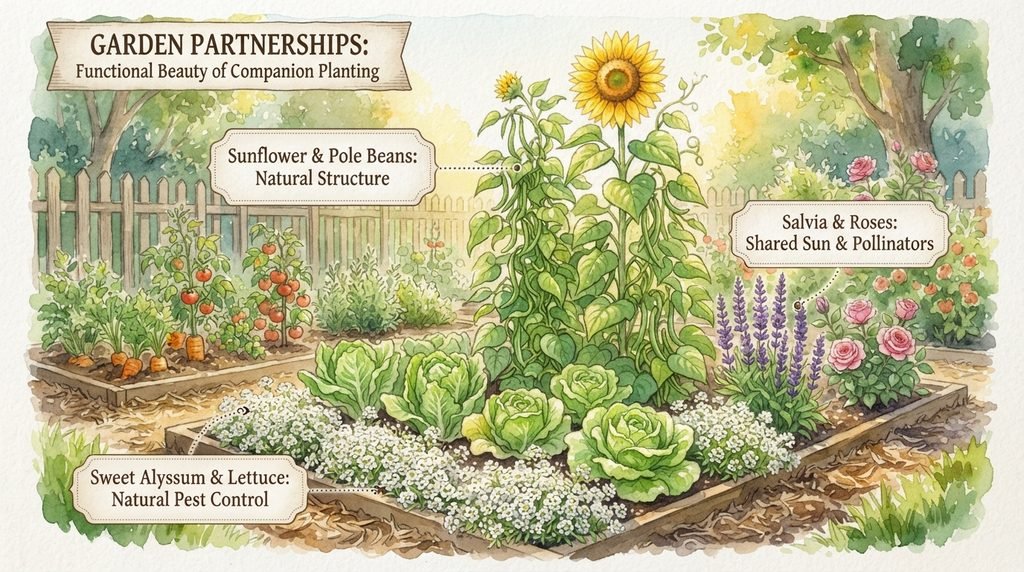
Sunflower pairs well with corn and beans in a traditional three-sisters-style planting, providing a natural climbing structure for vining crops while beans fix nitrogen back into the soil. Salvia grows comfortably alongside roses, sharing similar sun needs while drawing pollinators that benefit the whole bed. Sweet Alyssum works as a functional groundcover near vegetables, since it attracts beneficial insects that help control aphids on nearby crops.
| Flower | Good Companion | Why It Works |
| Sunflower | Corn, pole beans | Provides climbing structure; beans fix nitrogen |
| Salvia | Roses | Shared sun needs, draws beneficial pollinators |
| Sweet Alyssum | Lettuce, brassicas | Attracts beneficial insects that control aphids |
| Statice | Zinnias, cosmos | Complementary bloom timing and texture |
| Sedum | Other drought-tolerant perennials | Matches sun and water needs closely |
Sweet Alyssum’s role here is worth repeating, since it’s one of the few flowers that start with S with a genuinely functional, rather than purely decorative, role in a vegetable garden. Sunflower’s three-sisters pairing is a longstanding practice worth trying for anyone growing both flowers and vegetables in the same space.
A Season-by-Season Care Calendar
Timing changes outcomes for bulbs, seeds, and fast annuals in this group. A few weeks off schedule can mean missing a bloom window entirely. The calendar below covers the top picks from the Quick Take section.
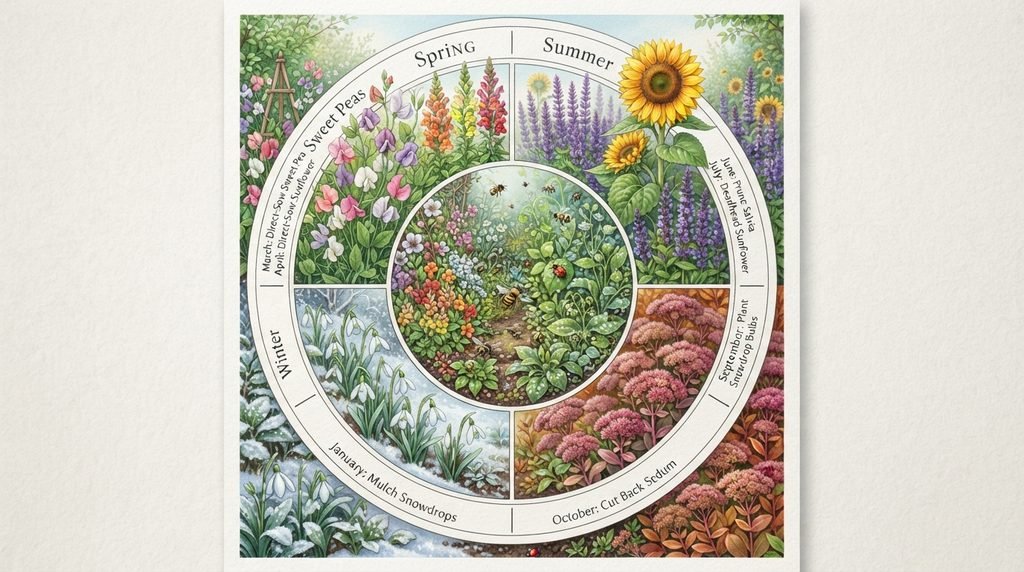
February: Start Snapdragon and Stock seeds indoors in cooler climates, since both tolerate a light frost once transplanted out.
March: Direct-sow Sweet Pea as soon as soil can be worked, since this flower actually performs better in cool spring conditions than summer heat.
April: Plant out Snapdragon and Stock seedlings. Direct-sow Sunflower once frost risk has fully passed.
May: Plant out Salvia and Sedum divisions. Provide climbing support for Sweet Pea early, before vines get tangled.
June: Deadhead Snapdragon and Sweet Pea regularly to extend bloom before summer heat causes both to fade.
September: Plant Snowdrop and Squill bulbs for late-winter and early-spring color the following year.
October: Cut back Sedum after bloom fades, or leave seed heads standing for winter interest and bird activity.
The most common timing mistake in this group involves Sweet Pea. Planting it too late in warm climates often means the vines hit peak summer heat before they’ve had a chance to establish, cutting the bloom season short.
Mistakes Beginners Make With This Letter
A few errors show up repeatedly with flowers that start with S, and most trace back to habits that work fine elsewhere but not here.
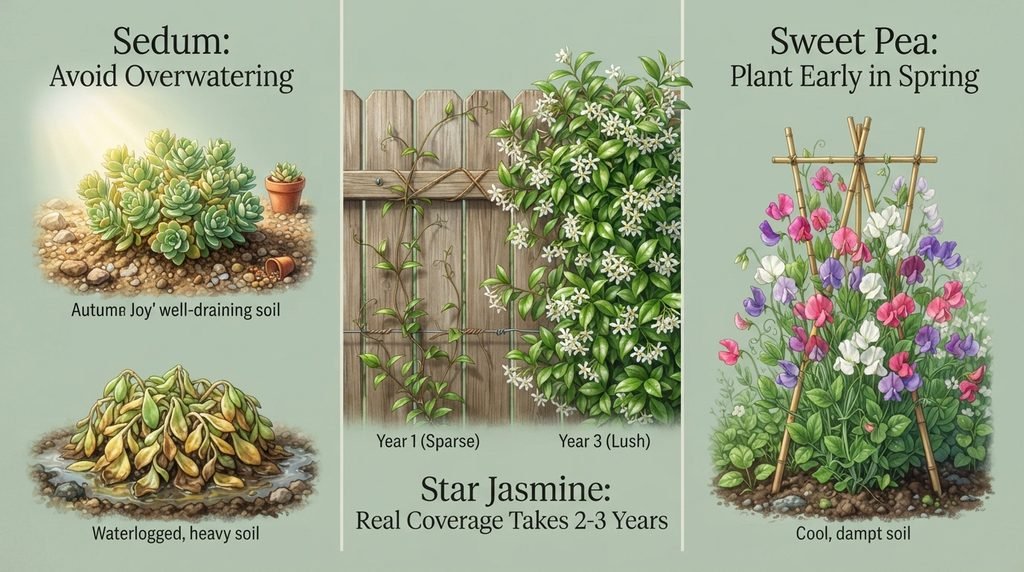
Overwatering Sedum is probably the most common mistake, since gardeners used to daily watering routines end up rotting a plant that actually prefers to dry out completely between waterings. Planting Sweet Pea too late in warm climates is a close second, since the vine performs best in cool spring weather and fades quickly once summer heat arrives. Keeping Sago Palm in a home with dogs that chew on plants, without restricting access, is a serious oversight given how toxic its seeds are. Expecting Star Jasmine to cover a fence in its first season is another frequent source of disappointment, when real coverage typically arrives in year two or three.
- Overwatering Sedum instead of letting it dry out completely
- Planting Sweet Pea too late in warm-climate regions
- Keeping Sago Palm accessible to dogs that chew on plants
- Expecting full Star Jasmine coverage in the very first season
- Cutting Snowdrop foliage back before it yellows naturally
Most of these mistakes come from applying habits that work for other, easier plants — rich watering schedules, warm-season timing, casual pet access — rather than from a lack of gardening skill generally.
Where to Actually Buy These
Availability is genuinely strong across most of this letter compared to many others in this series. Sunflower, Snapdragon, Sweet Pea, and Salvia are nursery staples — nearly every garden center and big-box retailer carries all four in season, usually at a low individual cost. Sedum, Statice, and Sweet Alyssum are close behind, widely available as both seed and established nursery starts.
Star Jasmine, Star Magnolia, and specific rare Salvia varieties sit at the higher-cost end, typically requiring a full-service nursery rather than a big-box garden center, particularly for named cultivars. Sago Palm is widely sold as a houseplant and landscape accent, which makes its lack of prominent toxicity labeling at most retailers a genuine concern for pet-owning buyers. The specialty tier here still commands a higher price than the common tier, though this letter overall skews toward affordable and widely available options.
If You Only Have Room for Three
Anyone working with a small bed or limited budget benefits from narrowing this list fast, even though this particular letter makes that harder than most. Sunflower takes the first spot, since almost no other annual on this list delivers as much bold, fast-growing impact for so little effort. Salvia earns the second spot as the most reliable, long-blooming perennial color source on this entire list.
The third spot depends on climate and goal. Gardeners chasing fragrance should choose Sweet Pea for a cool-season trellis or Star Jasmine for a warm-climate vine. Anyone gardening primarily for drought tolerance should choose Sedum instead. All three are strong enough to justify the final spot depending on what the space actually needs.
Handling These Safely
Not every flower that starts with S is safe around pets or small children, and a few deserve real caution rather than a passing mention. Sago Palm is the most serious concern in this entire letter — its seeds contain cycasin, and ingestion has caused fatal liver failure in dogs, making it one of the more dangerous ornamentals commonly sold without adequate warning. Spurge’s milky sap causes skin and eye irritation on contact and can cause more serious digestive symptoms if ingested in quantity. Squill contains cardiac glycosides that pose a genuine risk to pets that dig up and chew on the bulbs.
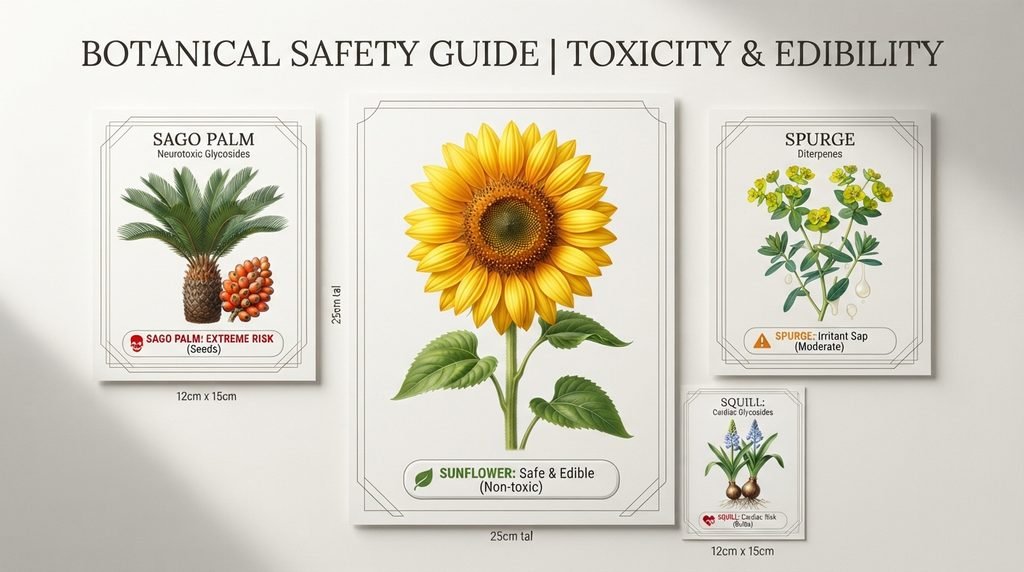
Sweet Pea seeds carry mild toxicity if eaten in large amounts, distinct from the edible garden pea they’re sometimes confused with. Sunflower, by contrast, is one of the safer flowers on this entire list, generally considered non-toxic to both pets and people, with its seeds even commonly eaten by humans and birds alike.
| Flower | Toxicity Level | Main Concern |
| Sago Palm | Severe | Seeds contain cycasin, which can cause fatal liver failure in dogs |
| Spurge | Moderate | Milky sap causes skin and eye irritation |
| Squill (Scilla) | Moderate | Cardiac glycosides; risk to digging pets |
| Sweet Pea | Mild | Seeds mildly toxic in large quantities |
| Snowdrop | Mild | Bulb contains alkaloids, causes stomach upset |
| Sunflower | Minimal | Generally considered safe; seeds are edible |
Households with dogs that chew on garden plants should treat Sago Palm as a genuine emergency risk rather than a minor caution, given how quickly and severely poisoning can progress. Sunflower and Salvia, by contrast, can reasonably sit anywhere in a yard shared with curious pets or kids.
Sorting These Flowers by Color
Color often decides where a flower actually gets planted more than growing conditions do, since most gardeners are matching an existing scheme rather than starting fresh.
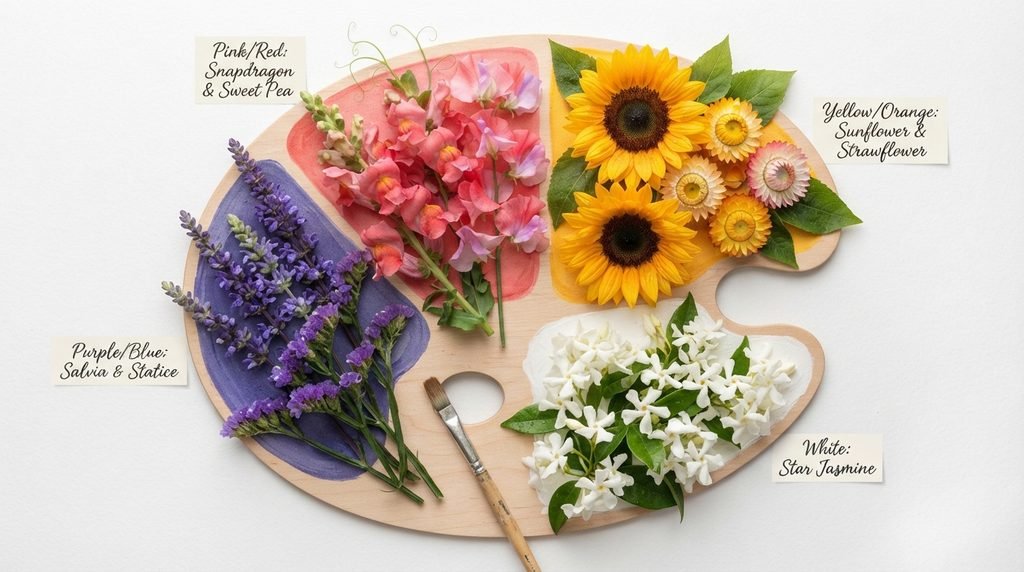
Yellow and orange flowers lead this letter with real strength, headlined by Sunflower and Strawflower, both bringing warm, saturated tones that hold up well in strong sun. Pink and red flowers follow closely with Snapdragon and Sweet Pea, both offering a wide range of shades within a single plant type depending on variety. Purple and blue flowers are especially well represented here, led by Salvia, Statice, and Spiderwort, each offering a genuinely saturated violet-blue tone that few other letters can match in volume. White flowers round out the letter with Star Jasmine and Snowdrop, both prized as much for fragrance and early timing as for their pale, delicate petals.
Full Name Index
The list below rounds up more than 50 flowers that start with S, mixing common names with botanical genus names. Detailed growing notes for the most relevant entries appear in the sections above; this index exists purely as a fast lookup.
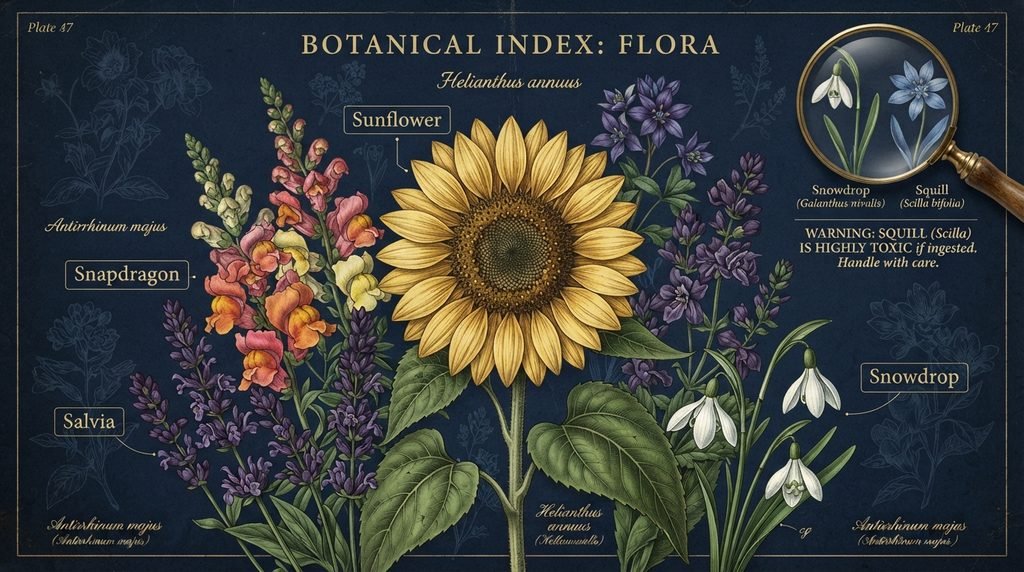
- Sunflower
- Snapdragon
- Sweet Pea
- Salvia
- Star Jasmine
- Stock
- Statice
- Sedum
- Scabiosa
- Shasta Daisy
- Sweet Alyssum
- Spider Flower (Cleome)
- Snowdrop
- Squill (Scilla)
- Sweet William
- Star Magnolia
- Spiderwort
- Solomon’s Seal
- Sweet Woodruff
- Sea Holly
- Strawflower
- Sea Lavender
- Society Garlic
- Speedwell (Veronica)
- Stargazer Lily
- Sago Palm
- Spurge
- Snow-in-Summer
- Sunset Hibiscus
- Silver Sage
- Sweet Autumn Clematis
- Snowball Bush
- Sweet Broom
- Sea Thrift
- Spanish Bluebell
- Star Flower (Ipheion)
- Sweetheart Rose
- Silene
- Spirea
- Sweet Basil Flower
- Star Anemone
- Sweetshrub
- Snake’s Head Fritillary
- Southernwood
- Sweet Violet
- Sword Lily (Gladiolus)
- Silver Lace Vine
- Star Cluster (Pentas)
- Storksbill
- Sea Pink
A few names here overlap or confuse buyers. Sedum and Sempervivum are often mixed up in nursery labeling, despite belonging to different genera within the same succulent family. Snowdrop and Squill also get confused occasionally, since both are small, early-blooming bulbs, though Squill’s cardiac glycoside content makes correct identification worth the extra effort.
Common Name to Botanical Name Crosswalk
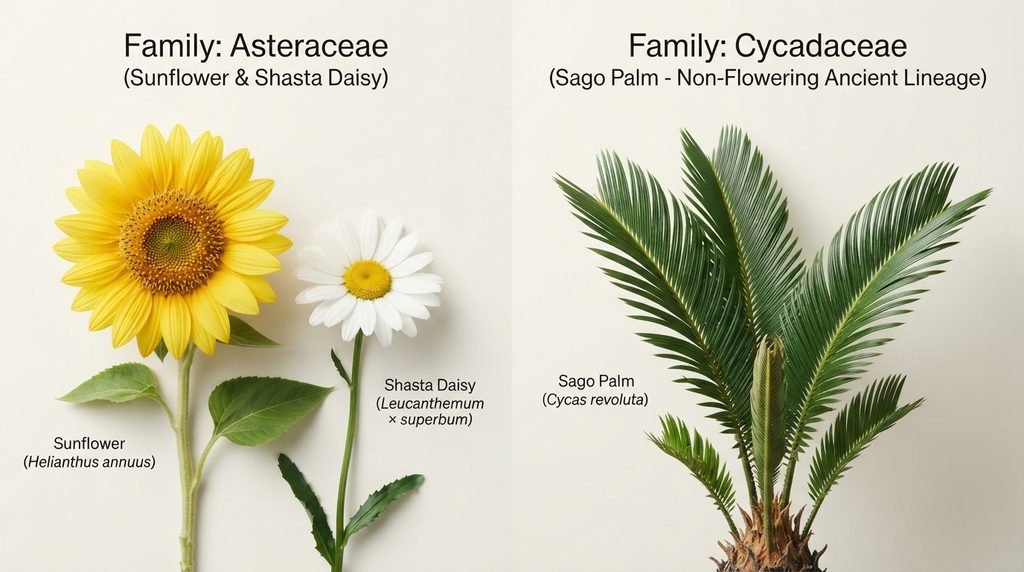
Botanical names matter most when ordering online or confirming a nursery tag, since common names shift by region in ways botanical names don’t. The crosswalk below covers the flowers referenced most throughout this guide.
| Common Name | Botanical Name | Family |
| Sunflower | Helianthus annuus | Asteraceae |
| Snapdragon | Antirrhinum majus | Plantaginaceae |
| Sweet Pea | Lathyrus odoratus | Fabaceae |
| Salvia | Salvia spp. | Lamiaceae |
| Sedum | Hylotelephium spp. | Crassulaceae |
| Statice | Limonium spp. | Plumbaginaceae |
| Shasta Daisy | Leucanthemum × superbum | Asteraceae |
| Sago Palm | Cycas revoluta | Cycadaceae |
| Squill | Scilla spp. | Asparagaceae |
| Star Jasmine | Trachelospermum jasminoides | Apocynaceae |
Sunflower and Shasta Daisy sharing the Asteraceae family explains their similar daisy-like flower structure, despite very different heights and growth habits. Sago Palm’s placement in Cycadaceae, an ancient plant lineage separate from true flowering plants, explains why it’s technically not a flower at all, even though it appears constantly on lists like this one.
What These Flowers Have Meant Through History
Several flowers that start with S carry symbolism reaching well beyond the garden. The sunflower has long represented adoration and loyalty, a meaning rooted partly in its habit of turning to follow the sun across the sky during its early growth stages. That physical behavior, called heliotropism, gave the flower a lasting association with unwavering devotion in cultures well beyond its native range.
Sweet Pea carries a gentler, more layered meaning in Victorian flower language, often used to express blissful pleasure but also, somewhat contradictorily, a delicate goodbye, making it a flower chosen as often for farewells as for celebrations. Snapdragon’s symbolism ties directly to its unusual bloom shape, historically associated with both grace under pressure and a hint of deception, since its “dragon mouth” appears to snap shut when gently squeezed. Statice, prized heavily in dried arrangements, has come to represent remembrance and lasting sympathy, fitting for a flower that holds its color and form for months after cutting.
Final Thoughts
Flowers that start with S cover more genuine range than almost any other letter, from the towering, fast-growing Sunflower to the seriously toxic Sago Palm. Starting with sun, shade, and skill level makes it far easier to land on the right flowers that start with S for your specific space, rather than picking one purely because it’s the first familiar name that comes to mind. Whatever combination of color, fragrance, and growing conditions you’re working with, there’s very likely an S flower suited to it, and probably several.
Frequently Asked Questions
What are the easiest flowers that start with S for beginners?
Sedum, Salvia, and Sweet Alyssum are the most forgiving picks. All three tolerate average soil and inconsistent watering without much loss in bloom quality.
Which flowers that start with S are toxic to pets?
Sago Palm carries the most serious risk, with seeds that have caused fatal poisoning in dogs. Spurge and Squill also pose real but less severe risks.
Is Sago Palm actually a flower?
Not technically. It’s a cycad, an ancient plant lineage separate from true flowering plants, but it’s commonly included on lists like this one due to its ornamental popularity.
Why does my Sunflower keep turning to face different directions?
Young sunflowers exhibit heliotropism, tracking the sun’s movement during early growth. Mature flowers typically settle into a fixed east-facing position once fully developed.
What’s the fastest-blooming flower that starts with S?
Sunflower and Sweet Pea typically flower within eight to ten weeks of direct sowing, making them strong choices for gardeners planting mid-season.
Can Sweet Pea seeds be eaten like garden peas?
No. Despite the visual similarity, Sweet Pea seeds are mildly toxic in large quantities and are unrelated to edible garden peas.
Why is Star Jasmine taking so long to cover my fence?
This is normal. As a woody vine, it typically needs two to three growing seasons to establish enough growth for full coverage.
Is Sago Palm safe to keep if I have a dog?
It’s not recommended without strict access control. Its seeds contain cycasin, a toxin that has caused fatal liver failure in dogs that chew on them.