

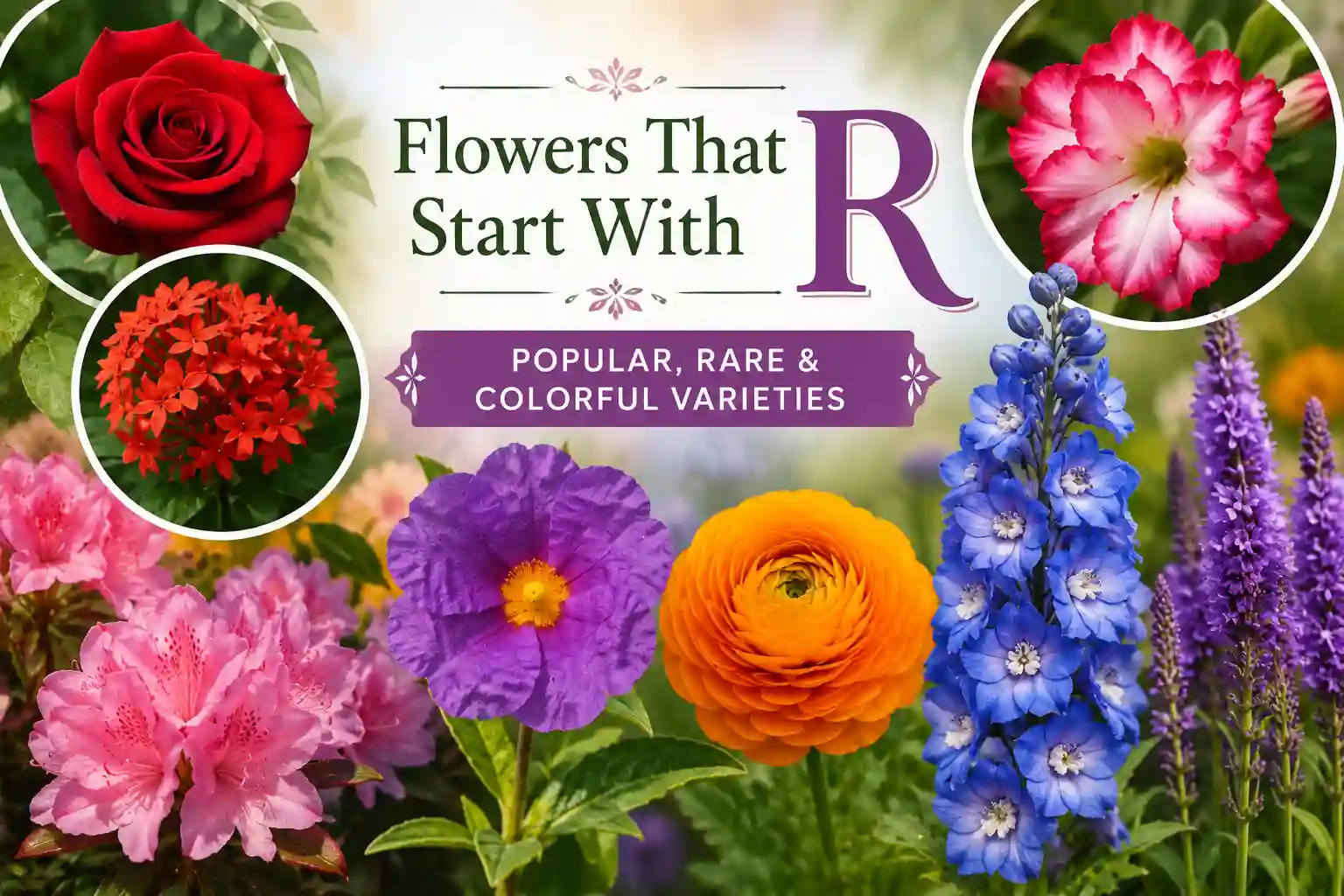
Flowers that start with R include one of the most universally recognized blooms in the world, the Rose, sitting alongside a genuinely dangerous plant most gardeners have never heard of, Ricinus, or Castor Bean. That contrast between the familiar and the hazardous makes this letter worth sorting carefully rather than scanning through in alphabetical order.
This guide organizes flowers that start with R by growing context first. Sun needs, shade tolerance, bloom speed, and skill level all come before any A-Z list. That structure gets you to a usable answer faster than scrolling through 40-plus names looking for the one that actually fits your yard.
The tone stays practical throughout. Easy plants get called easy. A few entries here need real caution around pets, children, and even grazing livestock, and those get flagged directly rather than softened. Nothing gets inflated just to fill out the count.
A full alphabetical index, a botanical name crosswalk, and a toxicity table sit near the end for quick reference, but the growing-context sections that follow carry the real planning value. Rose alone could fill an entire guide, but this one covers the full range this letter has to offer.
Quick Take: Where to Start
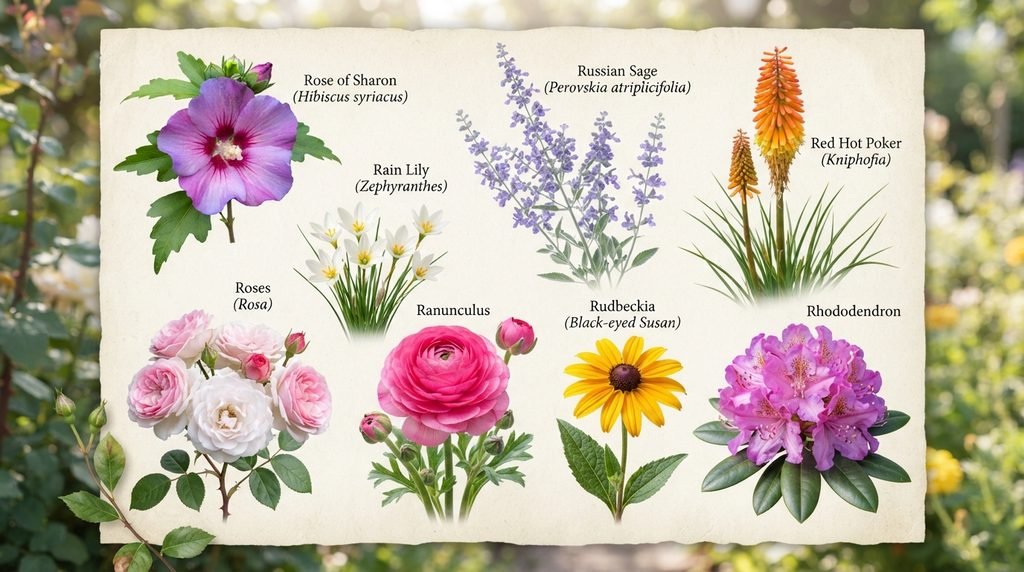
Rose solves the classic cutting-garden problem better than almost any other flower, offering a color range and fragrance depth that few competitors match. Ranunculus works differently, producing layered, paper-thin petals from an inexpensive corm that rivals the look of a peony at a fraction of the cost.
Rudbeckia, commonly called Black-Eyed Susan, earns its spot for reliability. It blooms through summer heat that wilts fussier annuals and keeps going until frost. Rhododendron brings dramatic spring color to a shaded bed, though it demands acidic soil that not every yard naturally provides.
Red Hot Poker solves a specific problem: hummingbird traffic. Its tall, torch-shaped spikes draw pollinators from a distance that shorter blooms simply can’t match. Russian Sage earns its place as the low-maintenance perennial pick, tolerating poor soil and drought while still producing a hazy cloud of purple-blue flowers all summer.
Rain Lily rounds out the group with a genuine party trick — its blooms appear almost overnight after a good rain, which makes it a favorite in regions with distinct wet and dry seasons. Rose of Sharon closes the list as the late-summer shrub pick, filling a bloom gap most other flowering shrubs have already finished by August.
Full-Sun Picks That Hold Their Color
A handful of flowers that start with R were built for strong, direct light. These work well on a hot patio, a south-facing border, or any strip of soil that bakes through the afternoon.
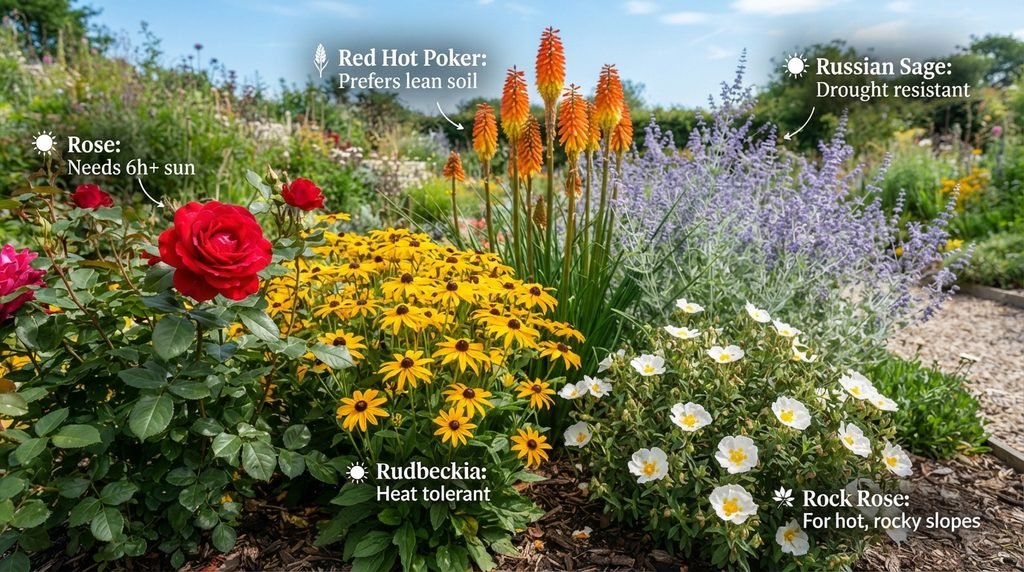
Rose generally performs best with at least six hours of direct sun, producing fewer and weaker blooms in shadier spots regardless of variety. Rudbeckia tolerates heat and poor soil about as well as any summer annual on this list, holding its color through stretches that wilt more delicate flowers. Red Hot Poker thrives in full sun and actually prefers slightly poor, well-drained soil over rich garden beds, where it can become leggy and floppy.
- Rose — needs at least six hours of direct sun for strong blooms
- Rudbeckia — tolerates heat and poor soil better than most annuals
- Red Hot Poker — prefers lean, well-drained soil over rich beds
- Russian Sage — thrives in full sun and drought once established
- Rock Rose (Cistus) — Mediterranean shrub built for hot, dry, sunny slopes
Rock Rose deserves a specific mention here. It handles reflected heat and poor, rocky soil about as well as anything on this list, making it a strong pick for a Mediterranean-style bed that gets minimal irrigation.
Shade and Partial-Shade Options
Shade narrows this list considerably, but a few flowers that start with R genuinely prefer it over full sun. This matters most for anyone gardening under mature trees or along a north-facing wall.
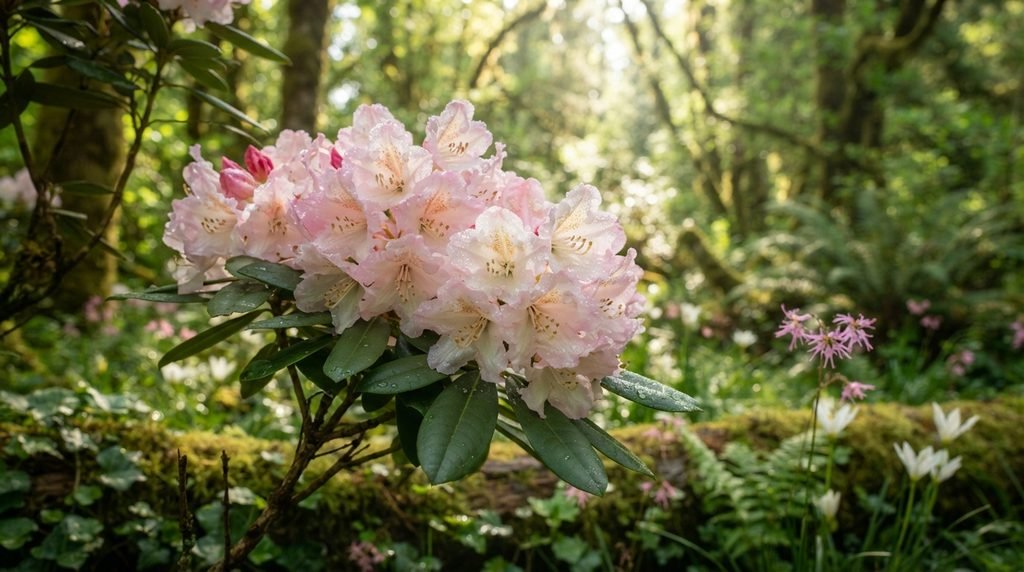
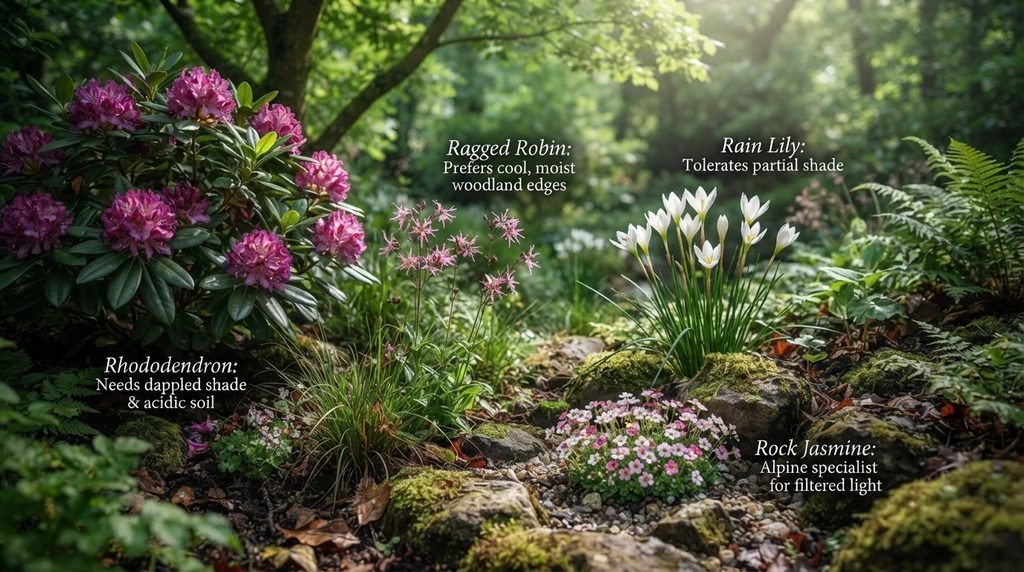
Rhododendron leads this group by a wide margin, needing dappled shade and acidic soil to avoid leaf scorch, which makes it a poor fit for an open, sunny bed regardless of watering schedule. Ragged Robin, a native wildflower with fringed pink petals, prefers the cooler, more consistently moist conditions found at a woodland edge over an open, dry border. Rain Lily tolerates partial shade reasonably well, though its surprise post-rain blooms tend to be slightly more reliable with a few hours of direct morning sun.
- Rhododendron — needs dappled shade and acidic soil
- Ragged Robin — prefers cool, consistently moist woodland-edge conditions
- Rain Lily — tolerates partial shade, blooms best with some morning sun
- Rock Jasmine — alpine species suited to filtered light and sharp drainage
Rock Jasmine rounds out this group as the specialist pick. It’s an alpine plant that needs filtered light and unusually sharp drainage, making it a poor match for a typical shaded border despite its shade tolerance on paper.
Fast Bloomers Versus Slow Payoff
Bloom speed shifts which flowers that start with R make sense for a short-timeline project. Some reward you within weeks; others ask for years of patience.
Ranunculus moves fastest among the bulbs and corms here, often producing its first flowers within ten to twelve weeks of planting in cool weather. Rudbeckia isn’t far behind when grown as an annual, typically blooming within two to three months from seed. Rocket Larkspur follows a similar timeline, rewarding a spring sowing with tall flower spikes by early summer.
Rose sits in the middle of this range depending on the type. Own-root roses often need two to three years to reach full bloom potential, while grafted varieties may flower sooner but with less long-term vigor. Rhododendron and Royal Poinciana, a flowering tree grown in warm climates, both sit at the slow end, often needing several years of establishment before their first significant bloom. Anyone working against a tight deadline should lean toward Ranunculus or annual Rudbeckia rather than these longer-term picks.
What Actually Holds Up With Minimal Care
A few flowers that start with R tolerate real neglect, which matters most for a first-time grower who wants results without a strict schedule.
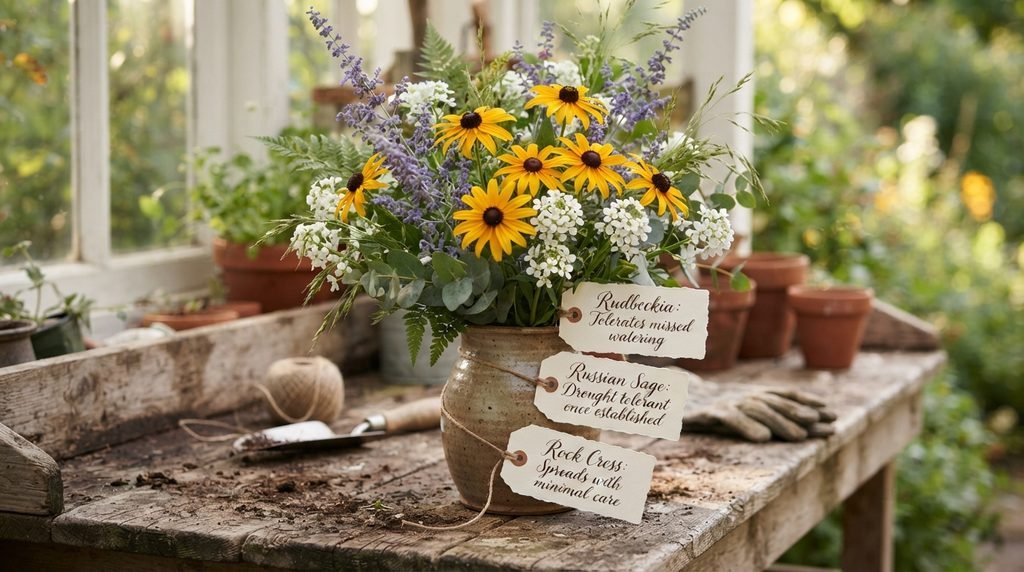
Rudbeckia is the standout among the annuals and short-lived perennials, surviving missed waterings and average soil better than most summer bloomers. Russian Sage is nearly as forgiving, and its drought tolerance actually improves once the plant is a year or two established. Rock Cress rounds out the easy tier, spreading readily over rock walls and border edges with almost no supplemental care beyond an occasional trim after bloom.
- Rudbeckia — tolerates missed watering and average soil
- Russian Sage — improves in drought tolerance as it matures
- Rock Cress — spreads with minimal care, needs only a post-bloom trim
The pattern across this group is tolerance for inconsistency. None of these three punish a missed watering the way some of the pickier flowers that start with R do further down this list.
The Ones Worth a Warning
A smaller group demands more skill, more specific conditions, or genuine caution around pets, children, and even grazing animals.
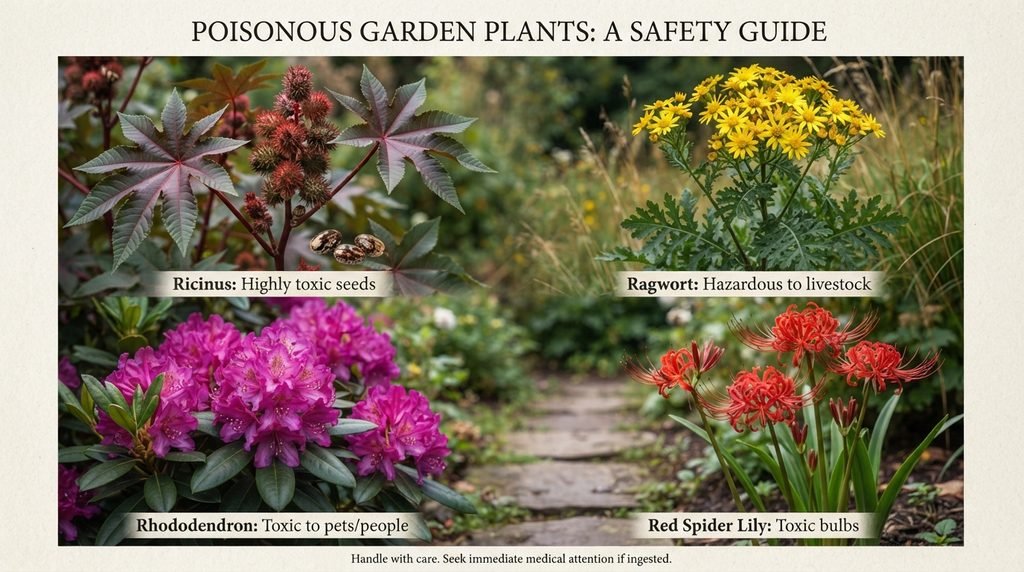
Ricinus, commonly known as Castor Bean, is the most serious concern in this entire letter. Its seeds contain ricin, one of the most potent natural toxins known, and even a small number of properly chewed seeds have been linked to fatal poisoning in documented cases. It’s grown ornamentally for its dramatic, tropical-looking foliage, but it belongs far from vegetable beds, play areas, and anywhere children or pets might find a fallen seed pod. Ragwort carries a different kind of severity, since it’s less dangerous to people but genuinely hazardous to grazing livestock, causing cumulative liver damage in horses and cattle that eat it repeatedly. Rhododendron rounds out this group with grayanotoxins that can cause serious symptoms if ingested in quantity, a risk shared with several other members of its plant family.
- Ricinus (Castor Bean) — seeds contain ricin, potentially fatal if chewed
- Ragwort — causes cumulative liver damage in grazing livestock
- Rhododendron — grayanotoxins pose a risk to pets and people if eaten
- Red Spider Lily (Lycoris) — bulb contains lycorine, similar to Narcissus
Red Spider Lily deserves a specific mention. Its bulb carries the same lycorine compound found in daffodil bulbs, which can cause vomiting if a pet digs it up and chews it.
A Companion Planting Guide
Companion planting works better for some pairings than others, and a few flowers that start with R have genuinely useful partners worth knowing before laying out a bed. Pest deterrence, pollinator traffic, and root-space compatibility all factor into these choices.
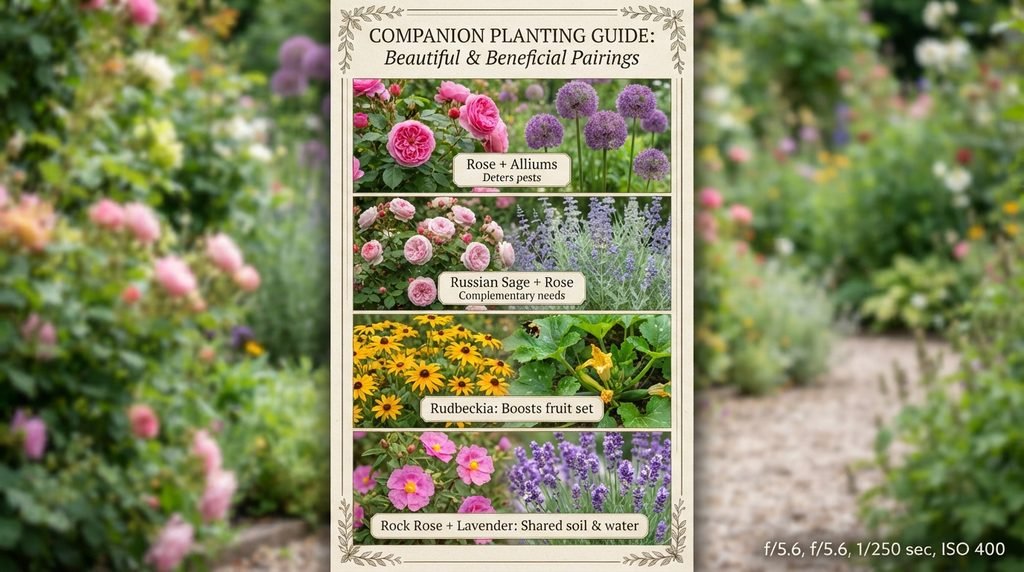
Rose pairs well with alliums and garlic, since the scent of the latter is commonly credited with helping deter aphids and certain beetles that target rose buds. Russian Sage grows comfortably alongside roses too, sharing similar sun and drought needs while adding a softer, hazy texture that offsets a rose’s more structured form. Rudbeckia attracts pollinators at a rate that benefits nearby vegetable crops, making it a smart border plant around a small kitchen garden.
| Flower | Good Companion | Why It Works |
| Rose | Alliums, garlic | Scent may help deter aphids and beetles |
| Russian Sage | Roses | Similar sun and drought needs, complementary texture |
| Rudbeckia | Squash, cucumbers | Draws pollinators that boost nearby fruit set |
| Red Hot Poker | Ornamental grasses | Similar drought tolerance and upright form |
| Rock Rose | Lavender, other Mediterranean plants | Shares sun, soil, and water needs closely |
Rose and alliums stand out as the pairing worth remembering most, since gardeners often plant the two together anyway for visual contrast without realizing the added pest-deterrent benefit.
A Season-by-Season Care Calendar
Timing changes outcomes for bulbs, corms, and fast annuals in this group. A few weeks off schedule can mean missing a bloom window entirely. The calendar below covers the top picks from the Quick Take section.
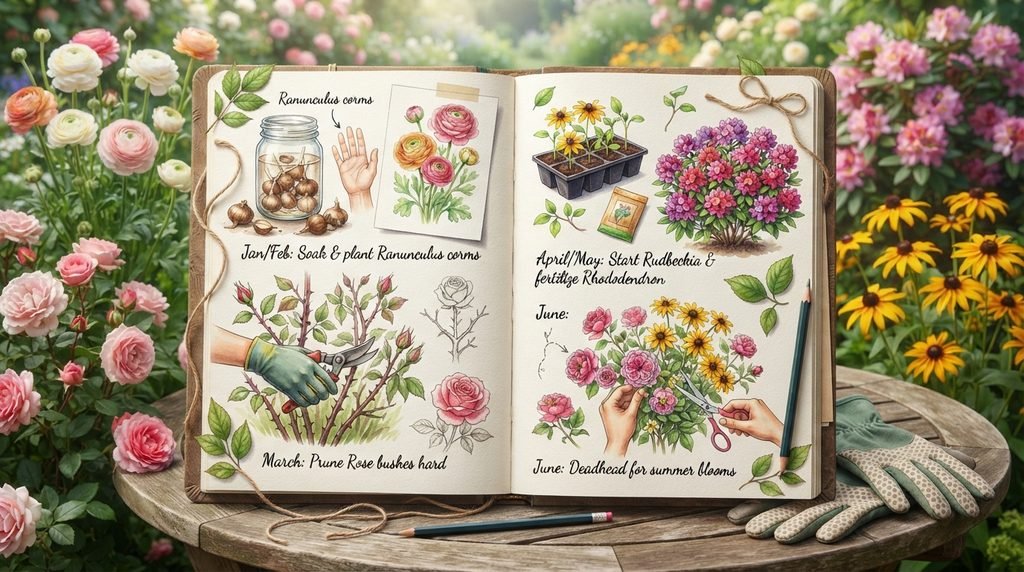
January: Soak Ranunculus corms before planting in mild climates, giving them a head start on root development.
February: Plant Ranunculus corms directly in the ground in areas without hard freezes, or start them indoors elsewhere.
March: Prune Rose bushes back hard before new growth begins, removing any dead or crossing canes. Start Rudbeckia seeds indoors in cooler climates.
April: Plant out Rudbeckia seedlings once frost risk has passed. Fertilize Rhododendron with an acid-formulated feed as new growth emerges.
May: Divide and transplant Russian Sage if clumps have outgrown their space. Watch Rain Lily bulbs for surprise blooms following the season’s first heavy rains.
June: Deadhead Rose and Rudbeckia regularly to extend bloom into late summer. Prune Rhododendron immediately after its spring bloom finishes, not before.
September: Plant Rain Lily and other R bulbs that benefit from a fall planting window in mild climates.
The most common timing mistake in this group involves pruning Rhododendron at the wrong time. Pruning too late in the season removes next year’s flower buds before they’ve had a chance to set.
Mistakes Beginners Make With This Letter
A few errors show up repeatedly with flowers that start with R, and most trace back to habits that work fine elsewhere but not here.
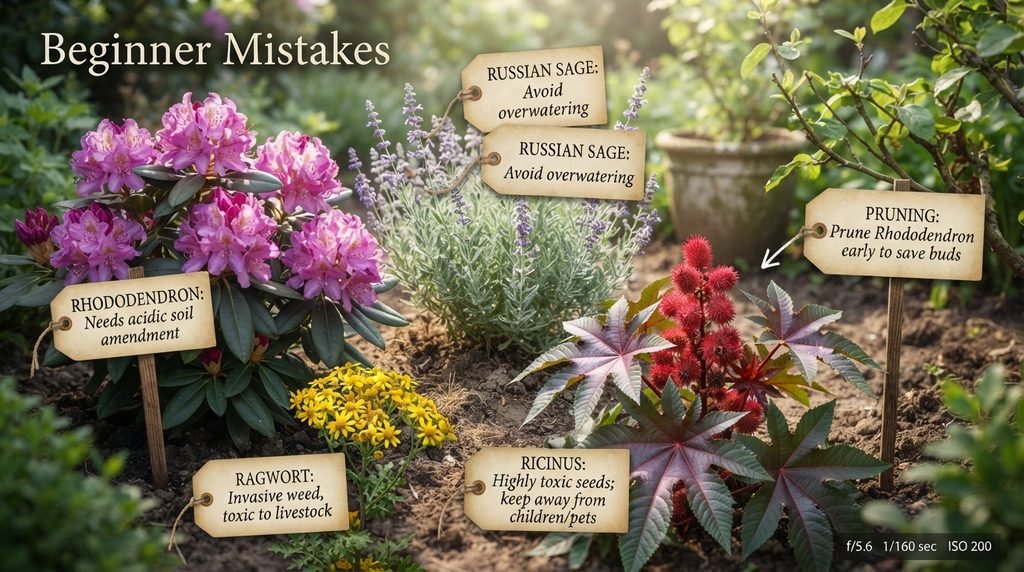
Planting Rhododendron in regular, non-acidic garden soil without amendment is probably the most common mistake, since the shrub struggles and yellows quickly outside its preferred pH range. Overwatering Russian Sage is a close second, since gardeners used to richer, thirstier perennials end up encouraging root rot in a plant that actually prefers to stay on the drier side. Growing Ricinus without considering pets or small children nearby is a serious oversight given how toxic its seeds are. Pruning Rhododendron too late in the season, after flower buds have already formed, is another frequent source of disappointment the following spring.
- Planting Rhododendron in non-acidic soil without amendment
- Overwatering Russian Sage instead of letting it dry between waterings
- Growing Ricinus without checking for pets or kids nearby
- Pruning Rhododendron after flower buds have already set for next year
- Ignoring Ragwort in a pasture or field where livestock graze
Most of these mistakes come from applying habits that work for other, easier plants — rich soil, frequent watering, casual pruning timing — rather than from a lack of gardening skill generally.
Where to Actually Buy These
Availability shifts noticeably across this letter. Rose, Rudbeckia, and Rhododendron are nursery staples — nearly every garden center and big-box retailer carries all three in season, usually at a reasonable individual cost. Ranunculus corms and Russian Sage are close behind, widely available as both seed, corm, and established nursery starts.
Ricinus, Red Spider Lily, and specific rare Rose varieties sit at the other end. Ricinus is sometimes stocked as an ornamental foliage plant but rarely marketed with clear toxicity warnings, so buyers should ask directly. Red Spider Lily and heirloom or antique Rose varieties typically require a specialty bulb supplier or a dedicated rose nursery rather than a general garden center. The specialty tier here commands a noticeably higher price than the common tier, particularly for named heirloom rose cultivars.
If You Only Have Room for Three
Anyone working with a small bed or limited budget benefits from narrowing this list fast. Rose takes the first spot without much argument, since no other flower on this list offers the same combination of fragrance, color range, and cut-flower versatility. Rudbeckia earns the second spot as the most reliable, low-effort summer color source on this entire list.
The third spot depends on the space and goal. Gardeners with a shaded area under trees should choose Rhododendron for spring drama where little else performs as well. Anyone chasing drought tolerance and a softer, hazy texture should choose Russian Sage instead. Both are strong enough to justify the final spot depending on what the space actually needs.
Handling These Safely
Not every flower that starts with R is safe around pets, children, or grazing animals, and a few deserve real caution rather than a passing mention. Ricinus is the most serious concern by a wide margin — its seeds contain ricin, and ingestion of even a small number of properly chewed seeds has been linked to fatal poisoning in documented cases. Ragwort poses less risk to people directly but causes cumulative, often irreversible liver damage in horses and cattle that graze on it repeatedly over time. Rhododendron contains grayanotoxins that can cause serious cardiac and digestive symptoms in pets and people if eaten in quantity.
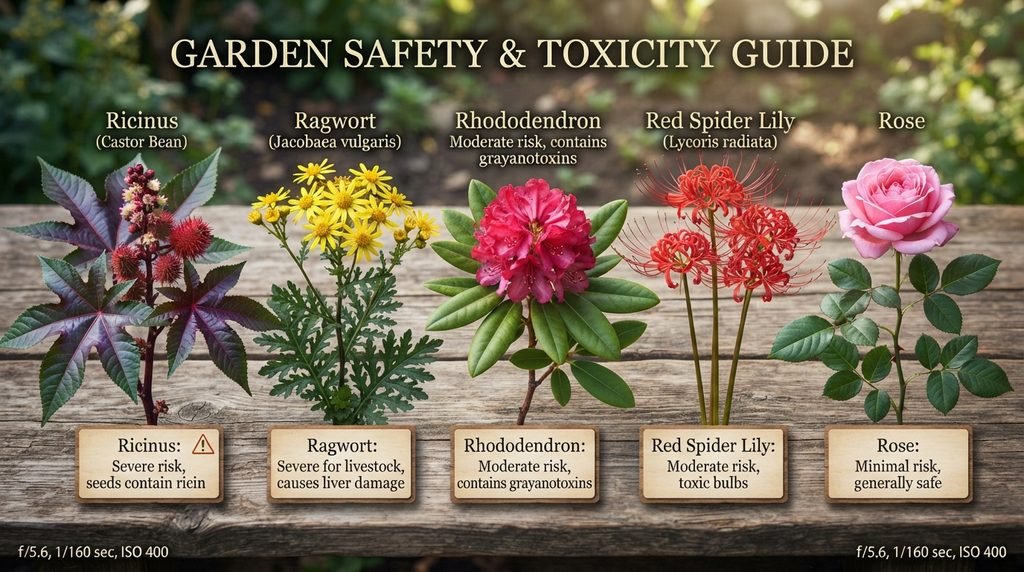
Red Spider Lily’s bulb contains lycorine, the same compound found in daffodil bulbs, causing vomiting if chewed or dug up by a curious pet. Rose, by contrast, is one of the safer flowers on this entire list, generally considered non-toxic to both pets and people, aside from the physical risk posed by its thorns.
| Flower | Toxicity Level | Main Concern |
| Ricinus (Castor Bean) | Severe | Seeds contain ricin, potentially fatal |
| Ragwort | Severe (to livestock) | Cumulative liver damage in grazing animals |
| Rhododendron | Moderate | Grayanotoxins affect heart and digestion |
| Red Spider Lily | Moderate | Bulb contains lycorine, causes vomiting |
| Rain Lily | Mild | Alkaloids can cause mild stomach upset |
| Rose | Minimal | Generally safe aside from thorns |
Households with pets that dig or graze near garden plants should keep Ricinus and Ragwort well out of reach entirely. Anyone keeping horses or cattle should walk pastures specifically checking for Ragwort, since it often establishes in overgrazed or disturbed field edges.
Sorting These Flowers by Color
Color often decides where a flower actually gets planted more than growing conditions do, since most gardeners are matching an existing scheme rather than starting fresh.
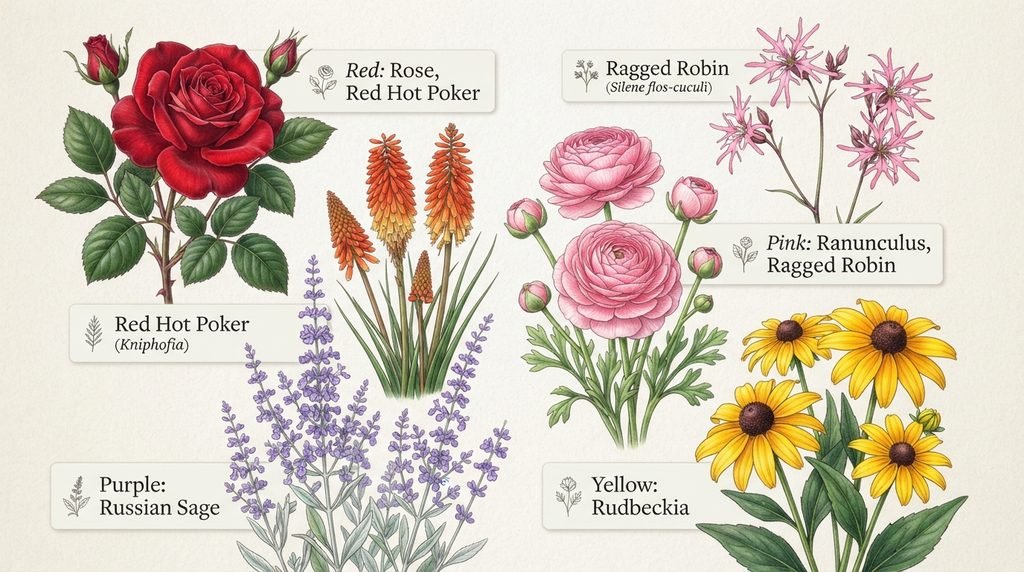
Red flowers dominate this letter more than most others, with Rose, Red Hot Poker, and Red Spider Lily all offering saturated tones that hold up well in a sunny border. Pink flowers follow closely with Ranunculus and Ragged Robin, both bringing a softer, more romantic tone than their red counterparts. Purple flowers are well represented too, led by Russian Sage and certain Rhododendron varieties, each offering a genuinely saturated violet-blue tone that reads as cooling against warmer neighboring colors. Yellow and gold flowers round out the letter with Rudbeckia and Rose of Sharon, both bringing warm, cheerful color through the hottest stretch of summer.
Full Name Index
The list below rounds up more than 40 flowers that start with R, mixing common names with botanical genus names. Detailed growing notes for the most relevant entries appear in the sections above; this index exists purely as a fast lookup.
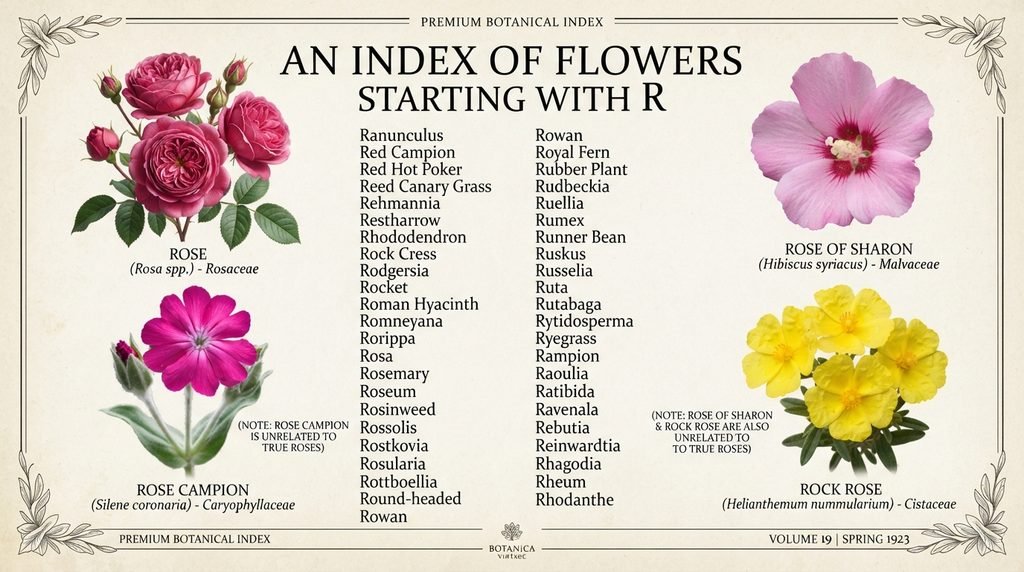
- Rose
- Ranunculus
- Rhododendron
- Rudbeckia (Black-Eyed Susan)
- Red Hot Poker
- Rain Lily
- Russian Sage
- Rose of Sharon
- Rose Campion
- Ricinus (Castor Bean)
- Ragwort
- Red Valerian
- Rock Jasmine
- Redbud
- Rocket Larkspur
- Rugosa Rose
- Royal Poinciana
- Ruellia (Mexican Petunia)
- Rock Soapwort
- Rosy Periwinkle
- Red Spider Lily
- Sweet Rocket
- Rambling Rose
- Rosebay Willowherb
- Rock Rose (Cistus)
- Rock Cress
- Ragged Robin
- Rain Daisy
- Reblooming Iris
- Rhubarb Flower
- Ribbon Bush
- Rock Purslane
- Rocket Snapdragon
- Rose Mallow
- Ravenna Grass Bloom
- Red Buckeye Flower
- Rain Bells (Cardiocrinum)
- Rocket Candytuft
- Rosinweed
- Rock Daisy
- Rain Orchid
- Rosemary Flower
A few names here overlap or confuse buyers. Rose Campion and Rose of Sharon are unrelated despite the shared first word, belonging to entirely different plant families with very different growth habits. Rock Rose and Rose of Sharon also get mixed up occasionally, despite one being a low Mediterranean shrub and the other a tall, hardy hibiscus relative.
Common Name to Botanical Name Crosswalk
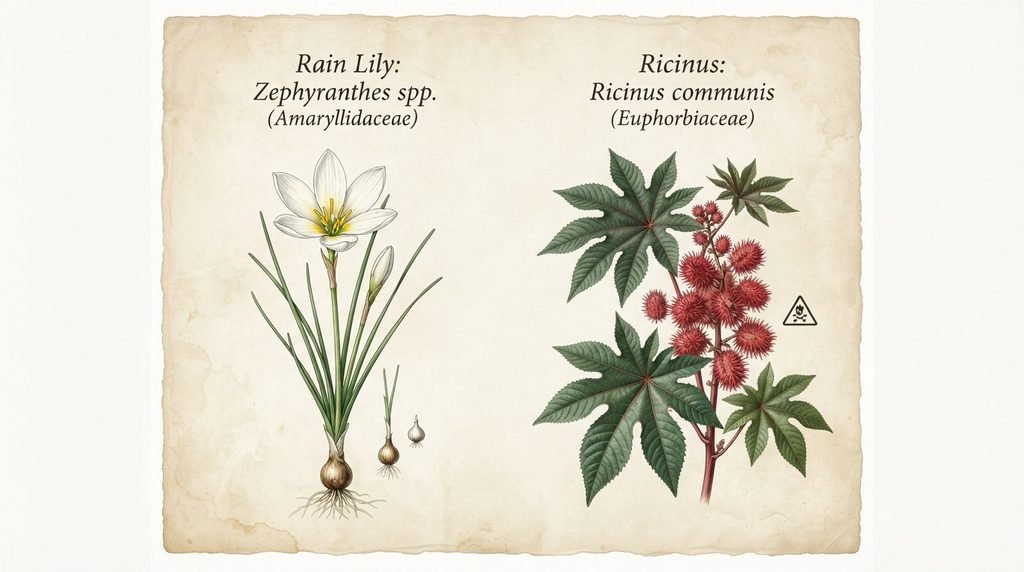
Botanical names matter most when ordering online or confirming a nursery tag, since common names shift by region in ways botanical names don’t. The crosswalk below covers the flowers referenced most throughout this guide.
| Common Name | Botanical Name | Family |
| Rose | Rosa spp. | Rosaceae |
| Ranunculus | Ranunculus asiaticus | Ranunculaceae |
| Rhododendron | Rhododendron spp. | Ericaceae |
| Rudbeckia | Rudbeckia hirta | Asteraceae |
| Red Hot Poker | Kniphofia spp. | Asphodelaceae |
| Rain Lily | Zephyranthes spp. | Amaryllidaceae |
| Russian Sage | Perovskia atriplicifolia | Lamiaceae |
| Rose of Sharon | Hibiscus syriacus | Malvaceae |
| Ricinus | Ricinus communis | Euphorbiaceae |
| Ragwort | Jacobaea vulgaris | Asteraceae |
Rain Lily and Red Spider Lily sharing the Amaryllidaceae family explains why both grow from true bulbs and carry similar lycorine-related toxicity concerns. Ricinus belonging to Euphorbiaceae, the spurge family, connects it to several other plants known for toxic sap and seeds, a pattern that shows up across multiple letters in this series.
What These Flowers Have Meant Through History
A few flowers that start with R carry symbolism reaching well beyond the garden. Rose holds perhaps the richest and most specific meaning of any flower in cultivation, with different colors carrying distinct messages — red for romantic love, white for purity or remembrance, yellow for friendship, and deep crimson for mourning in some traditions. That color-coded language developed extensively during the Victorian era, when flowers were often used to communicate sentiments too delicate to state outright.
Ranunculus carries a gentler, less universally known meaning tied to charm and attractiveness, occasionally translated in Victorian flower language as an expression of radiant admiration. Rhododendron’s symbolism leans more cautionary, historically associated with danger or warning in some traditions, a meaning that lines up notably well with its real toxicity. Rudbeckia, by contrast, has come to represent justice and encouragement in modern floral symbolism, often chosen for gifts meant to encourage someone through a difficult stretch.
Final Thoughts
Flowers that start with R cover a genuinely wide range once sorted by growing context instead of the alphabet, from the universally loved Rose to the seriously toxic Ricinus. Starting with sun, shade, and skill level makes it far easier to land on the right flowers that start with R for your specific space, rather than picking one purely because it’s the most recognizable name on the list. Whatever combination of color, fragrance, and growing conditions you’re working with, there’s very likely an R flower suited to it.
Frequently Asked Questions
What are the easiest flowers that start with R for beginners?
Rudbeckia, Russian Sage, and Rock Cress are the most forgiving picks. All three tolerate average soil and inconsistent watering without much loss in bloom quality.
Which flowers that start with R are toxic to pets?
Ricinus and Rhododendron carry the most serious risk. Red Spider Lily and Rain Lily can also cause digestive upset if eaten.
Is Rose actually hard to grow?
It depends on the variety. Modern shrub roses are fairly forgiving, while some heirloom and hybrid tea types need more attentive pruning and disease management.
Why won’t my Rhododendron bloom well?
Non-acidic soil is the most common cause. Testing and amending soil pH, along with avoiding late-season pruning, usually improves bloom the following year.
What’s the fastest-blooming flower that starts with R?
Ranunculus typically flowers within ten to twelve weeks of planting, making it a strong choice for gardeners wanting quick, showy results.
Is Ricinus safe to grow if I have children?
It’s not recommended. Its seeds contain ricin, one of the most potent natural toxins known, so it’s better suited to gardens without small children nearby.
Why do my Rain Lilies bloom so unpredictably?
This is normal. Rain Lily blooms are triggered by rainfall after a dry period, so flowering timing follows weather rather than a fixed calendar.
What’s a good companion plant for Rose?
Alliums and garlic work well, since their scent is commonly credited with helping deter aphids and certain beetles from rose buds.
Is Ragwort dangerous to have in a pasture?
Yes, particularly for horses and cattle. It causes cumulative liver damage if grazed on repeatedly, so removing it from pastures is strongly recommended.
When should Rhododendron be pruned?
Right after its spring bloom finishes. Pruning later in the season risks removing flower buds that have already set for the following year.
What flowers that start with R work well in containers?
Ranunculus and Rudbeckia both perform well in pots, provided they get consistent sun and well-draining soil.
Are all Rose varieties fragrant?
No. Many modern hybrid roses were bred primarily for color and bloom size, and fragrance varies significantly between varieties.
What does the Rose flower symbolize?
Meaning varies by color — red for romantic love, white for purity, yellow for friendship — a tradition that developed extensively during the Victorian era.
Which R flower is best for attracting hummingbirds?
Red Hot Poker draws hummingbirds reliably, thanks to its tall, torch-shaped spikes visible from a distance.
Is Rosy Periwinkle the same as common Periwinkle?
No. Rosy Periwinkle, botanically Catharanthus roseus, is a different genus from common Periwinkle, Vinca minor, despite the similar common name.