

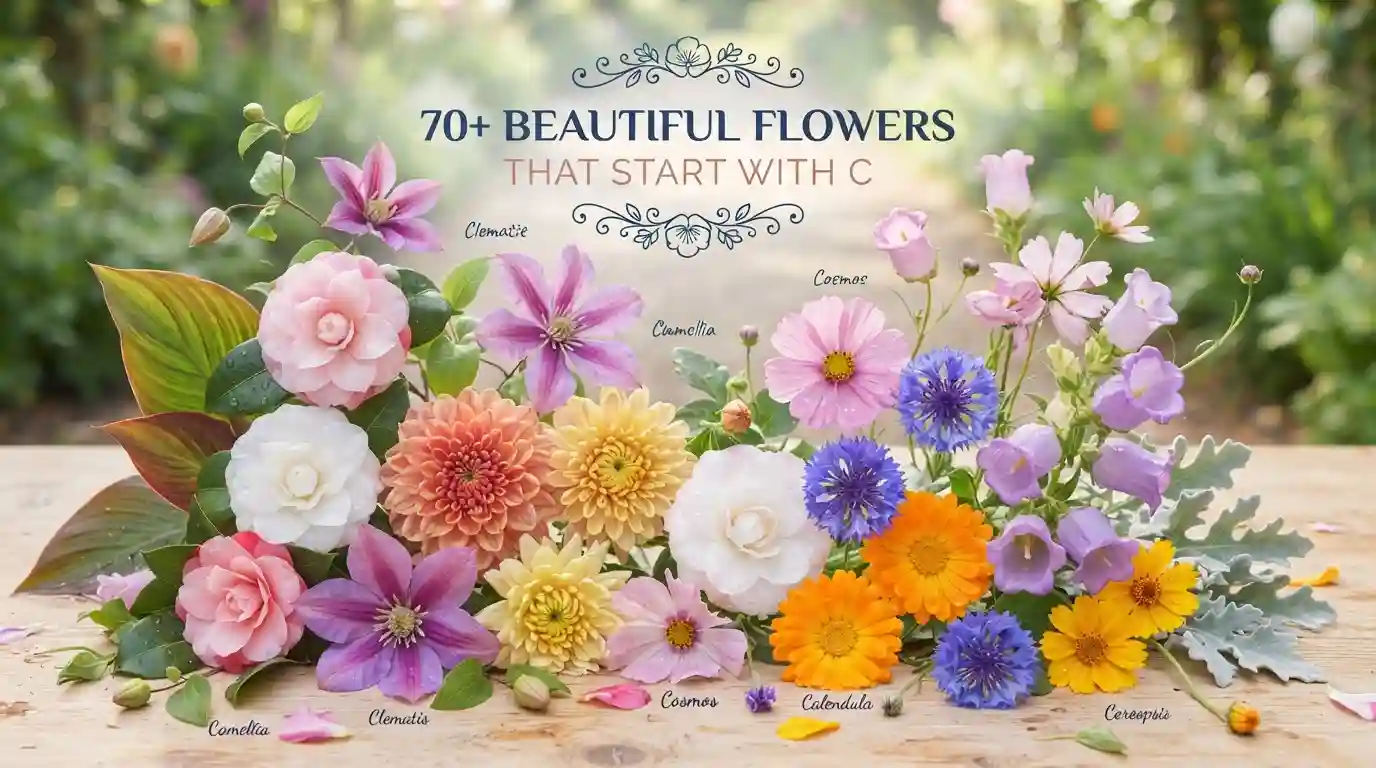
Finding beautiful flowers that start with C is easier than finding the right ones for a specific garden. Many flower lists simply present names from A to Z, but they rarely explain which flowers actually perform well in different growing conditions.
Some C flowers thrive in hot summer gardens. Others prefer cool weather, filtered shade, or consistently moist soil. A few reward gardeners with months of blooms, while others require more attention and experience.
Instead of overwhelming readers with a giant alphabetical directory from the start, this guide focuses on practical growing situations first. That approach helps gardeners choose flowers based on real needs rather than appearance alone.
Later in the article, a complete alphabetical index provides quick reference access to more than 70 flowers that start with C. This combination of practical advice and comprehensive coverage makes it easier to choose plants that will truly succeed.
Quick Take: 10 C Flowers Worth Growing First
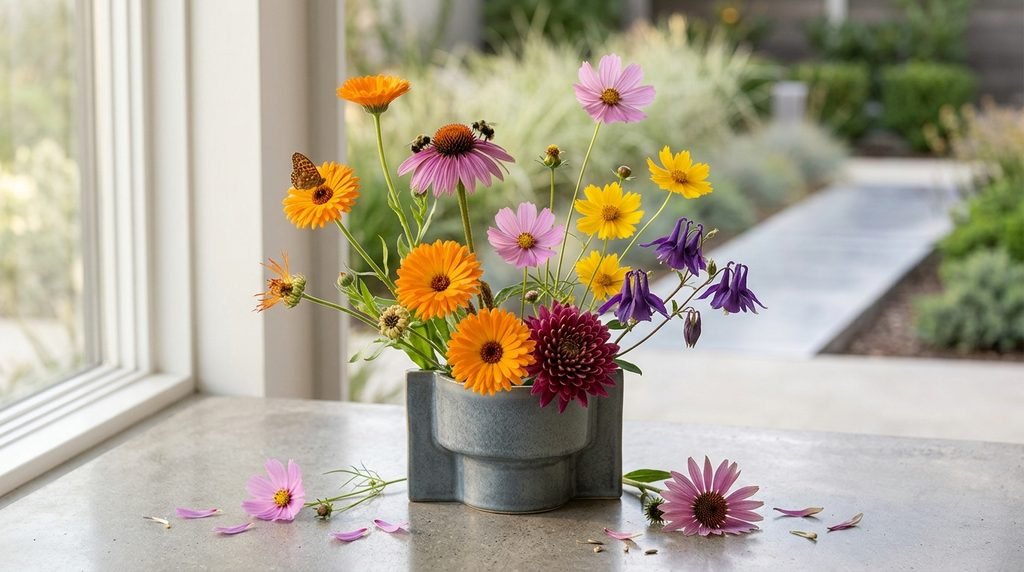
Many gardeners do not need seventy different flowers. They simply need a few reliable choices that provide beauty, long bloom periods, and manageable care requirements.
The following flowers stand out because they perform well across different garden styles and climates.
| Flower | Why It Stands Out |
| Calendula | Long flowering season |
| Coreopsis | Excellent drought tolerance |
| Cosmos | Easy from seed |
| Camellia | Stunning winter and spring blooms |
| Coneflower | Pollinator favorite |
| Candytuft | Reliable ground cover |
| Columbine | Shade-friendly beauty |
| Chrysanthemum | Fall color |
| Cyclamen | Excellent for cool seasons |
| Canna Lily | Tropical appearance |
These flowers represent a wide range of growing situations. Some excel in containers, while others become landscape focal points.
Gardeners with limited space often achieve excellent results by combining Calendula, Coneflower, and Coreopsis.
What Actually Thrives Without Constant Attention
Many gardeners want flowers that look impressive without requiring daily care. Fortunately, several flowers that start with C fit that description.
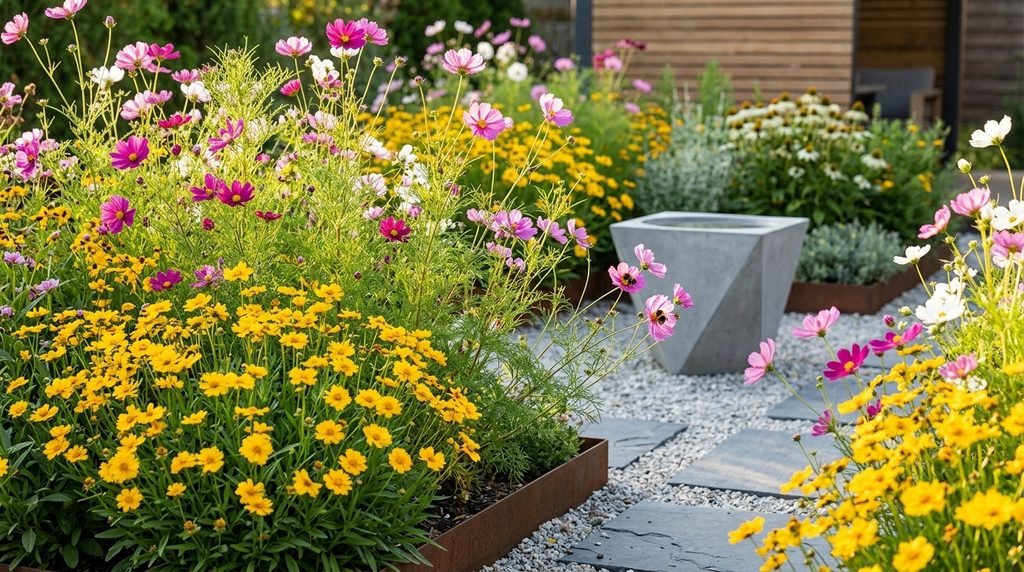
The following selections generally tolerate occasional watering mistakes and average soil conditions.
| Flower | USDA Zones | Care Level |
| Coreopsis | 4–9 | Easy |
| Cosmos | 2–11 | Easy |
| Calendula | 2–11 | Easy |
| Candytuft | 3–9 | Easy |
| Coneflower | 3–9 | Easy |
| Chrysanthemum | 5–9 | Moderate |
Coreopsis deserves special attention because it handles heat and drought surprisingly well once established.
Cosmos remains one of the easiest flowers for beginners because it grows rapidly from seed and blooms generously.
Coreopsis
When summer temperatures rise, many flowers begin to struggle. Coreopsis often continues blooming while demanding very little maintenance. Its bright yellow flowers add color from early summer into fall.
Cosmos
For gardeners who enjoy growing flowers from seed, Cosmos offers one of the easiest paths to success. Tall stems, delicate foliage, and colorful blooms create a relaxed cottage-garden appearance.
Calendula
Cool-weather gardens benefit greatly from Calendula. Orange and yellow blooms brighten beds while attracting beneficial insects.
Candytuft
Instead of growing upward, Candytuft spreads outward to create attractive flowering mats. This makes it particularly useful along borders and pathways.
Coneflower
Pollinator gardens frequently include Coneflowers because bees and butterflies visit them throughout the growing season. Their sturdy stems also provide winter interest.
Chrysanthemum
When summer flowers begin fading, Chrysanthemums take over. Their late-season blooms extend garden color well into autumn.
The Best C Flowers for Sunny Gardens
Full sun creates ideal conditions for many flowering plants, but only if the species can tolerate extended exposure to heat and light.
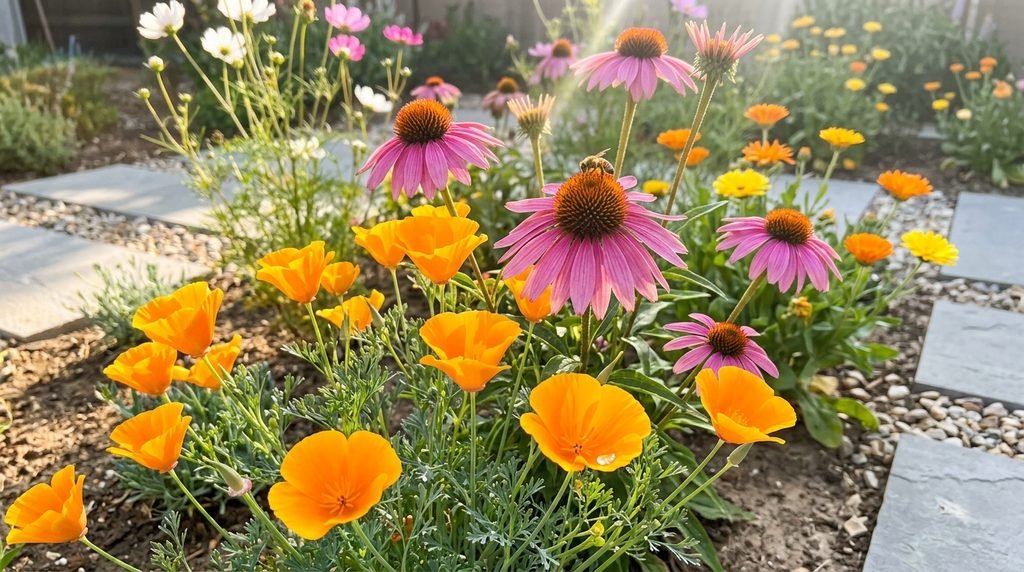
The flowers below generally perform best with at least six hours of direct sunlight daily.
| Flower | Bloom Season | Pollinator Value |
| Coreopsis | Summer–Fall | High |
| Cosmos | Summer–Fall | High |
| Calendula | Spring–Fall | Medium |
| Coneflower | Summer–Fall | Very High |
| Canna Lily | Summer | Medium |
| California Poppy | Spring–Summer | High |
These flowers provide different benefits throughout the growing season.
California Poppy often produces one of the earliest displays, while Coneflower continues supporting pollinators later in the year.
California Poppy
Dry climates often challenge flowering plants. California Poppy solves that problem by thriving in sunny, well-drained locations. Its orange blooms create striking displays.
Canna Lily
For gardeners seeking a tropical appearance, Canna Lily delivers dramatic foliage and large blooms. It works especially well as a focal point.
Coneflower
Few flowers support wildlife as effectively as the coneflower. Bees, butterflies, and seed-eating birds all benefit from its presence.
Calendula
Many flowers slow down in cooler weather, but Calendula often continues blooming through mild autumn conditions.
Cosmos
Tall, airy stems make Cosmos useful in cottage gardens where a more natural appearance is desired.
Shade-Loving Choices That Deserve More Attention
Not every garden receives all-day sunlight. Trees, fences, and buildings often create shaded areas that require different plant choices.
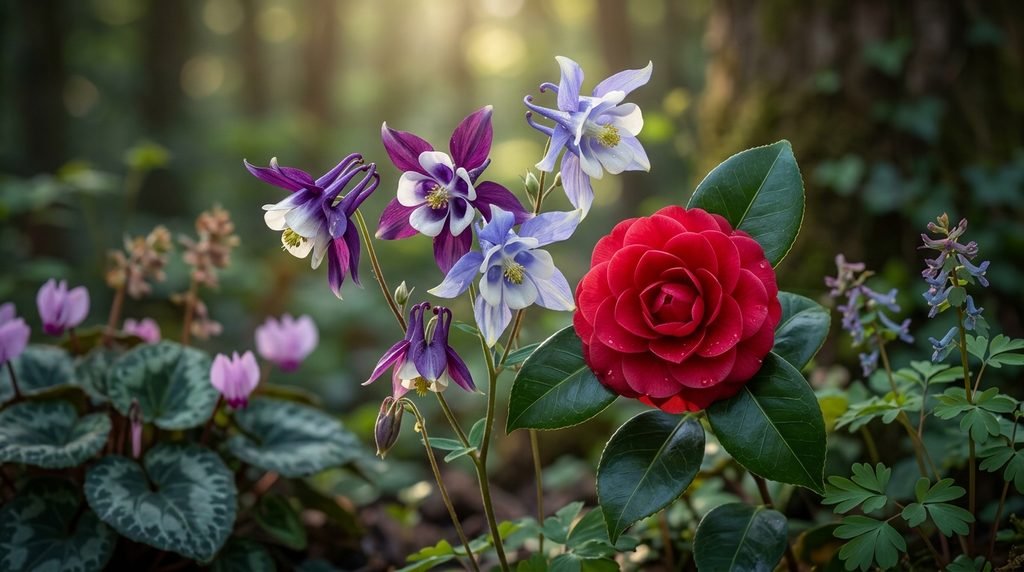
Fortunately, several flowers that start with C perform surprisingly well in reduced light.
| Flower | Shade Tolerance | Best Use |
| Columbine | Excellent | Woodland gardens |
| Cyclamen | Excellent | Containers |
| Camellia | Good | Landscape shrubs |
| Corydalis | Excellent | Shade borders |
| Celandine Poppy | Good | Naturalized gardens |
Shade gardens frequently suffer from a lack of color. These flowers help solve that problem.
Camellias, in particular, offer spectacular blooms during seasons when many other plants remain dormant.
Columbine
Spring shade gardens benefit enormously from Columbine. Its unusual flowers attract hummingbirds while adding elegance to woodland spaces.
Cyclamen
Cool temperatures and partial shade create ideal growing conditions for Cyclamen. The plant’s decorative foliage adds beauty even when flowers are absent.
Camellia
Winter and early spring gardens often lack visual interest. Camellias help fill that gap with large, showy blooms.
Corydalis
Few shade flowers bloom as generously as Corydalis. Under suitable conditions, flowering can continue for extended periods.
Celandine Poppy
Native woodland gardens frequently include Celandine Poppy because it adapts naturally to partially shaded environments.
Fast Bloomers for Impatient Gardeners
Some flowers require years of patience before producing impressive displays. Others bloom within a single season.
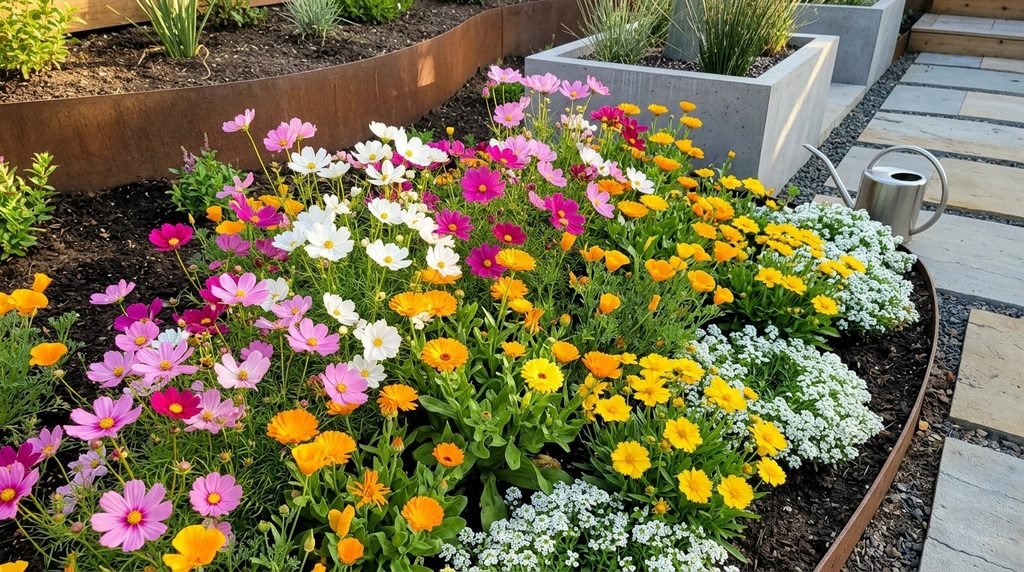
Gardeners seeking quick results often prefer the following choices.
| Flower | Bloom Speed |
| Cosmos | Fast |
| Calendula | Fast |
| California Poppy | Fast |
| Candytuft | Moderate |
| Coreopsis | Moderate |
Fast-growing flowers provide early success and immediate visual impact.
This makes them particularly useful for new garden beds or recently landscaped spaces.
Fast-Bloom Favorites
Cosmos often flowers within a few months from seed.
Calendula develops rapidly during cool growing seasons.
California Poppy creates colorful displays shortly after establishment.
Candytuft becomes valuable once it forms dense flowering mats.
Coreopsis rewards gardeners with a long bloom period after initial growth.
Companion Planting Combinations That Deliver Better Results
Successful gardens rarely rely on individual plants growing alone. Flowers often perform better when paired with companions that share similar moisture, sunlight, and soil preferences. Good companion planting can also increase pollinator activity and improve the overall appearance of a flower bed.
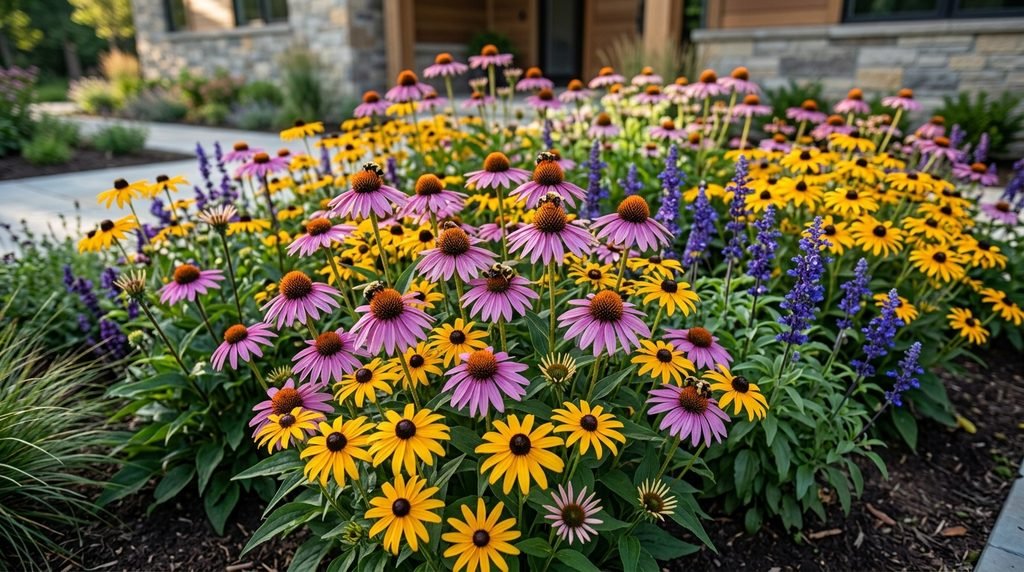
The following combinations work especially well with many popular flowers that start with C. These pairings are practical choices for both beginner and experienced gardeners.
| C Flower | Recommended Companions | Benefit |
| Coneflower | Black-Eyed Susan, Salvia | Extended pollinator support |
| Calendula | Marigold, Lavender | Beneficial insect attraction |
| Coreopsis | Blanket Flower, Yarrow | Drought-tolerant display |
| Cosmos | Zinnia, Sunflower | Cottage garden effect |
| Camellia | Azalea, Ferns | Woodland-style planting |
| Columbine | Hosta, Astilbe | Shade garden texture |
| Candytuft | Creeping Phlox | Ground-cover combination |
| California Poppy | Lupine | Native garden pairing |
These combinations create stronger visual interest throughout the season. They also help gardeners avoid awkward gaps that occur when one flower finishes blooming before another begins.
Coneflower and Black-Eyed Susan remain one of the most dependable pairings because they support pollinators while providing color for several months.
USDA Hardiness Zones for Popular C Flowers
Climate compatibility is one of the most overlooked factors in gardening. A flower may appear healthy at purchase but struggle if local winter temperatures fall outside its hardiness range.
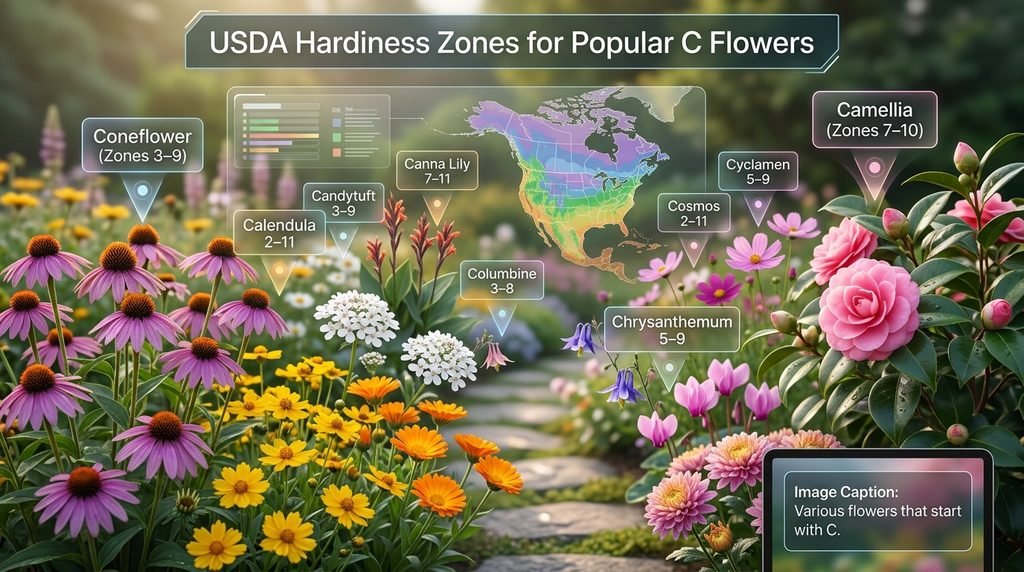
Checking USDA zones before planting reduces losses and helps gardeners select flowers that will thrive long-term.
| Flower | USDA Zones |
| Calendula | 2–11 |
| Camellia | 7–10 |
| Candytuft | 3–9 |
| Canna Lily | 7–11 |
| Coneflower | 3–9 |
| Columbine | 3–8 |
| Coreopsis | 4–9 |
| Cosmos | 2–11 |
| Cyclamen | 5–9 |
| Chrysanthemum | 5–9 |
Among these flowers, Cosmos and Calendula adapt to some of the widest climate ranges. Camellias, however, prefer regions with milder winters.
Gardeners living in colder climates often achieve the best long-term results with Coneflowers, Columbines, and Coreopsis.
Mistakes That Cause the Most Problems
Even experienced gardeners occasionally lose plants because of preventable errors. Many C flowers are relatively easy to grow, but a few recurring mistakes continue to cause problems.
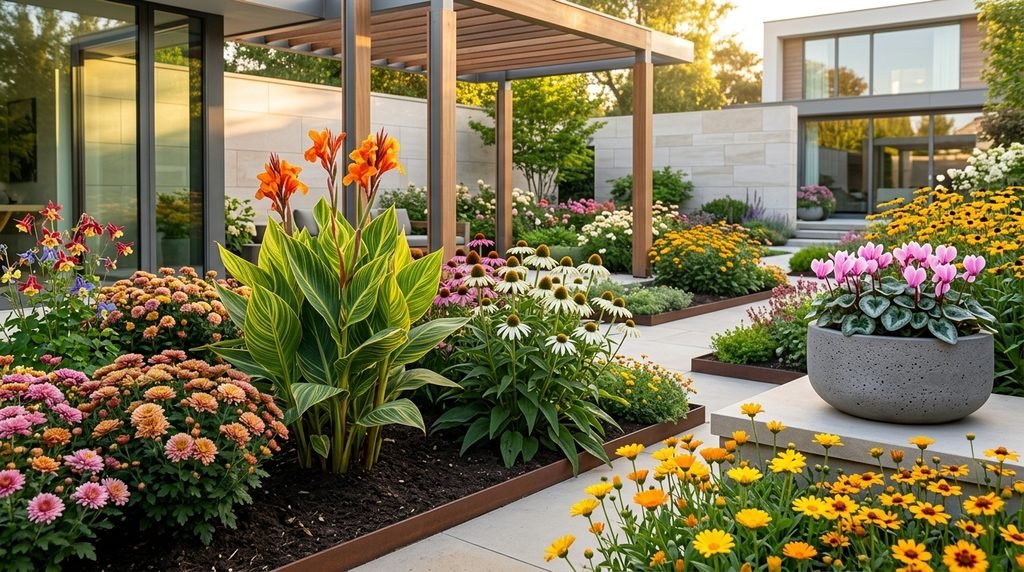
Understanding these issues before planting saves both time and money.
Common Mistakes
- Overwatering Canna Lilies in poorly drained soil
- Growing Camellias in highly alkaline conditions
- Planting Columbines in intense afternoon sun
- Overfertilizing Coreopsis
- Crowding Chrysanthemums too closely
- Allowing Calendula to dry out during seedling growth
- Ignoring airflow around Coneflowers
- Planting Cyclamen in waterlogged containers
Most of these problems have simple solutions. Proper spacing and drainage prevent a large percentage of flower-related issues.
Gardeners often discover that location selection matters more than fertilizer or pruning routines.
Month-by-Month Care Calendar
A seasonal calendar helps gardeners stay ahead of common maintenance tasks. Small actions completed at the right time often produce much better results than major interventions later.
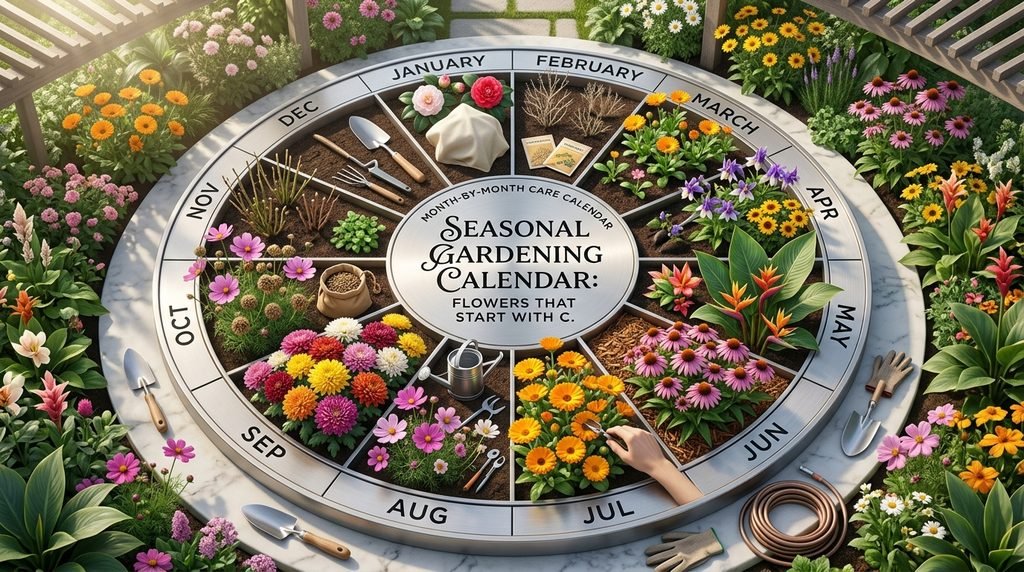
The following calendar focuses on several of the most popular flowers that start with C.
| Month | Recommended Task |
| January | Protect Camellias from severe cold |
| February | Plan seed orders |
| March | Start Calendula and Cosmos seeds |
| April | Plant Columbines and Coreopsis |
| May | Install Canna Lilies outdoors |
| June | Mulch around Coneflowers |
| July | Deadhead Calendula regularly |
| August | Monitor watering during heat |
| September | Divide Chrysanthemums if needed |
| October | Collect Cosmos seeds |
| November | Cut back perennials |
| December | Prepare beds for winter |
Spring remains the busiest season because most planting and establishment work occurs during this period.
Autumn shifts attention toward dividing mature plants, collecting seeds, and preparing flower beds for winter weather.
Important Safety Information Before Planting
Many gardens are shared with children and pets. While most flowers are grown for their beauty, some contain compounds that may cause health concerns if consumed.
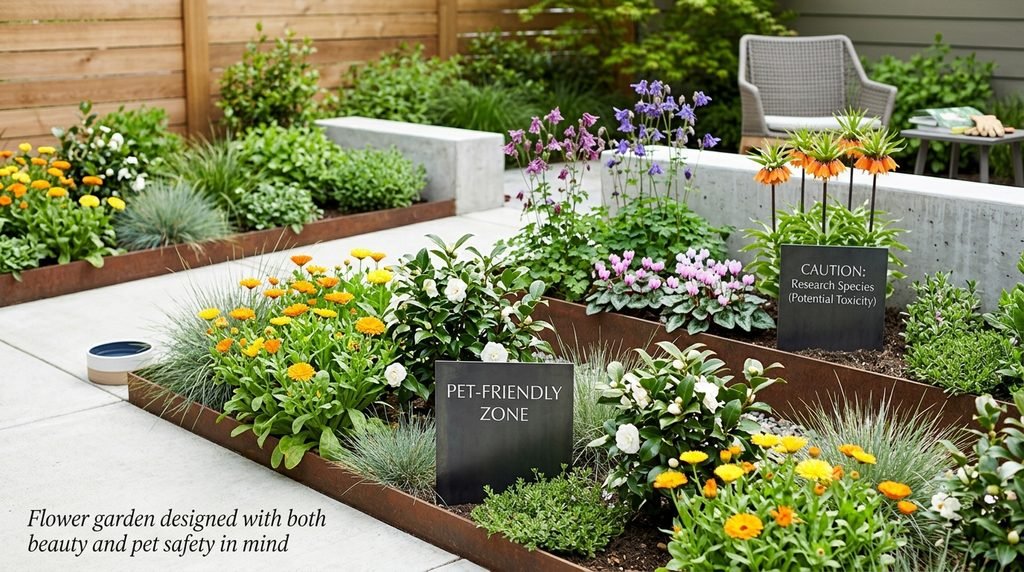
Researching toxicity before planting is especially important for households with curious pets.
| Flower | Safety Note |
| Camellia | Generally considered low concern |
| Calendula | Generally considered safer |
| Canna Lily | Low toxicity concern |
| Chrysanthemum | May irritate pets |
| Cyclamen | Toxic if ingested |
| Columbine | Mild toxicity concern |
| Celandine Poppy | Toxic if consumed |
| Crown Imperial | Toxic if ingested |
Toxicity levels vary significantly between species. Some flowers cause mild digestive upset, while others can lead to more serious symptoms.
When uncertainty exists, planting potentially harmful flowers away from high-traffic areas is often the safest option.
Looking at C Flowers Through Color
Color influences how flowers fit within a garden design. White-flowering Candytuft creates clean borders and helps brighten pathways. It pairs particularly well with darker foliage plants.
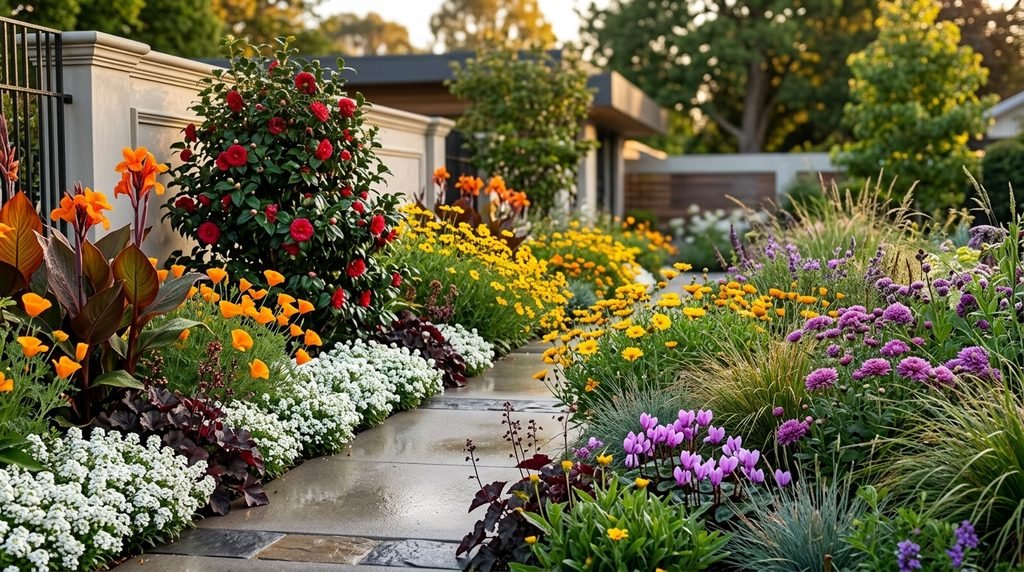
Yellow flowers such as Coreopsis and Calendula bring warmth and energy to flower beds. These blooms remain highly visible from a distance and work well in cottage gardens.
Purple and pink flowers, including Cyclamen and Chrysanthemums, create softer displays. They blend naturally with ornamental grasses and woodland-style plantings.
Orange blooms such as California Poppy and Canna Lily create bold focal points. These flowers often become the most noticeable plants in a mixed border.
Red Camellias deliver dramatic spring displays and work exceptionally well as landscape anchors.
Complete Alphabetical Index of 70+ Flowers That Start With C
Many readers prefer having a complete reference section for quick browsing. The following index includes more than 70 flowers that start with C.
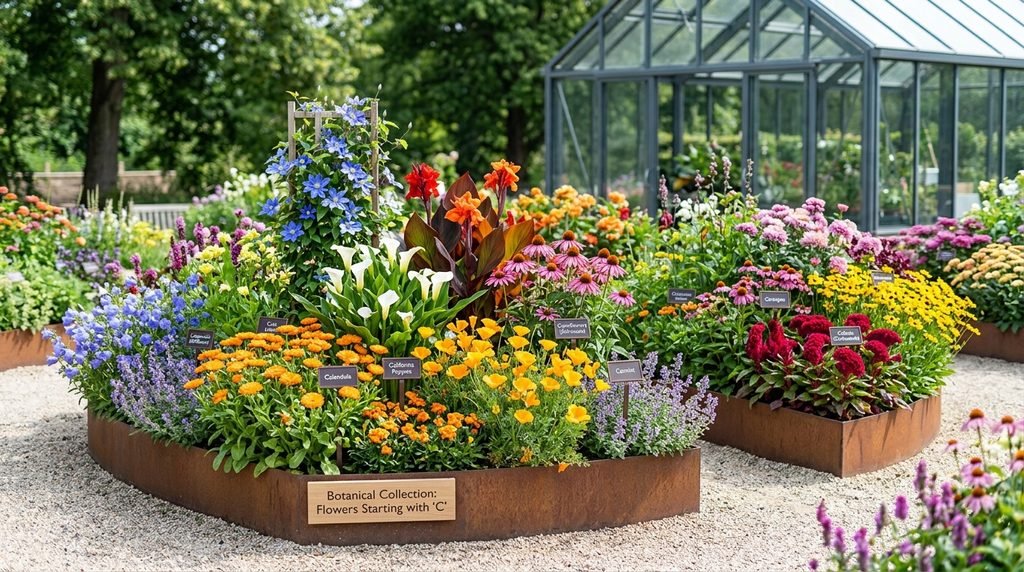
- Calendula
- California Poppy
- Calla Lily
- Camellia
- Campanula
- Candytuft
- Canna Lily
- Cardinal Flower
- Carnation
- Catmint
- Celosia
- Celandine Poppy
- China Aster
- Chinese Lantern
- Chrysanthemum
- Clarkia
- Clematis
- Clivia
- Cockscomb
- Columbine
- Coneflower
- Coral Bells
- Coreopsis
- Cosmos
- Crown Imperial
- Crown Daisy
- Cyclamen
- Cuphea
- Cornflower
- Christmas Rose
- Carolina Jessamine
- Cranesbill
- Creeping Phlox
- Chocolate Cosmos
- Chinese Forget-Me-Not
- Canterbury Bells
- Coral Vine
- Curcuma Flower
- Cineraria
- Cobra Lily
- Cape Daisy
- Chinese Peony
- Cotton Lavender
- Chinese Wisteria
- Cliff Rose
- Cuban Lily
- Coral Nymph Salvia
- Calceolaria
- Candlestick Plant
- Cape Primrose
- Cat’s Ear Flower
- Cushion Spurge
- Chinese Foxglove
- Chrysogonum
- Cotton Rose
- Coral Plant
- Candle Larkspur
- Coral Bean Flower
- Carolina Lupine
- Caper Flower
- Coastal Daisy
- Crimson Clover
- Clustered Bellflower
- Common Soapwort
- Chinese Violet Cress
- Cuckoo Flower
- Chilean Glory Flower
- Common Bluebell
- Carolina Allspice Flower
- Chinese Hibiscus
- Cretan Mullein
- Chinese Ground Orchid
This alphabetical index works best as a quick-reference tool. Gardeners should still consider growing conditions before selecting any flower.
A flower that fits the local climate and soil conditions will almost always outperform a more attractive plant growing in the wrong environment.
Botanical Name Quick Reference
Common names can vary from region to region. Botanical names provide a more accurate way to identify plants.
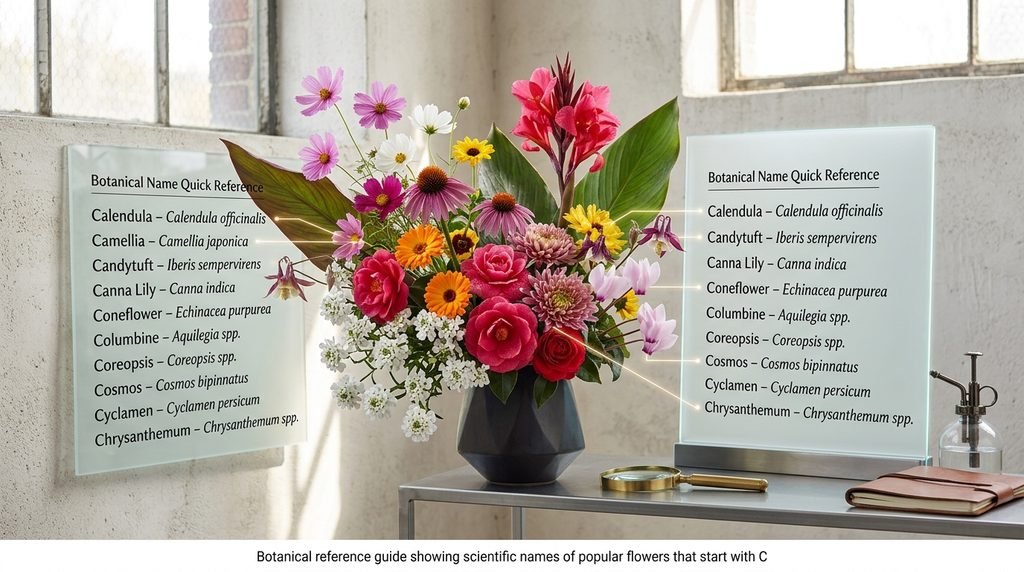
The table below covers some of the most popular flowers that start with C.
| Common Name | Botanical Name |
| Calendula | Calendula officinalis |
| Camellia | Camellia japonica |
| Candytuft | Iberis sempervirens |
| Canna Lily | Canna indica |
| Coneflower | Echinacea purpurea |
| Columbine | Aquilegia spp. |
| Coreopsis | Coreopsis spp. |
| Cosmos | Cosmos bipinnatus |
| Cyclamen | Cyclamen persicum |
| Chrysanthemum | Chrysanthemum spp. |
Using botanical names becomes especially useful when ordering plants online or searching for specific cultivars.
They also help avoid confusion when multiple plants share similar common names.
Meanings and Symbolism
Flowers often carry symbolic meanings that influence gifts, celebrations, and garden themes.
Carnations are frequently associated with admiration and affection. Different colors may represent different emotions.
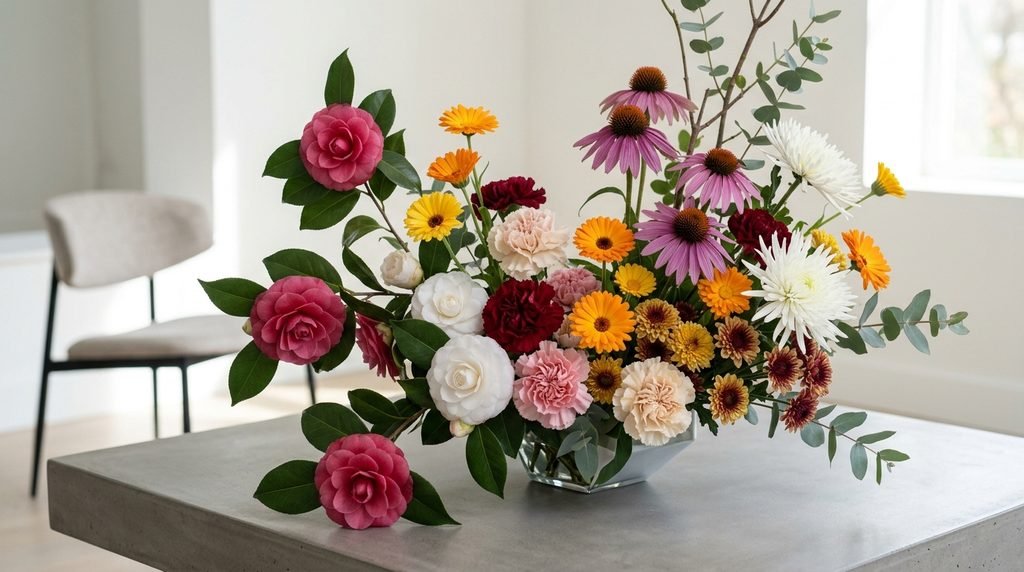
Camellias often symbolize appreciation and elegance. Their large blooms have made them popular in ornamental gardens for generations.
Coneflowers are commonly linked with strength and resilience because of their ability to withstand difficult conditions.
Calendulas traditionally represent warmth, optimism, and positive energy. Their bright colors naturally reinforce those meanings.
Chrysanthemums frequently symbolize longevity and happiness in many cultures.
Expanded Flower Profiles
Before moving into the FAQ section, it helps to take a closer look at some of the most popular flowers that start with C. These flowers appear frequently in home gardens because they offer a balance of beauty, reliability, and practical growing benefits.
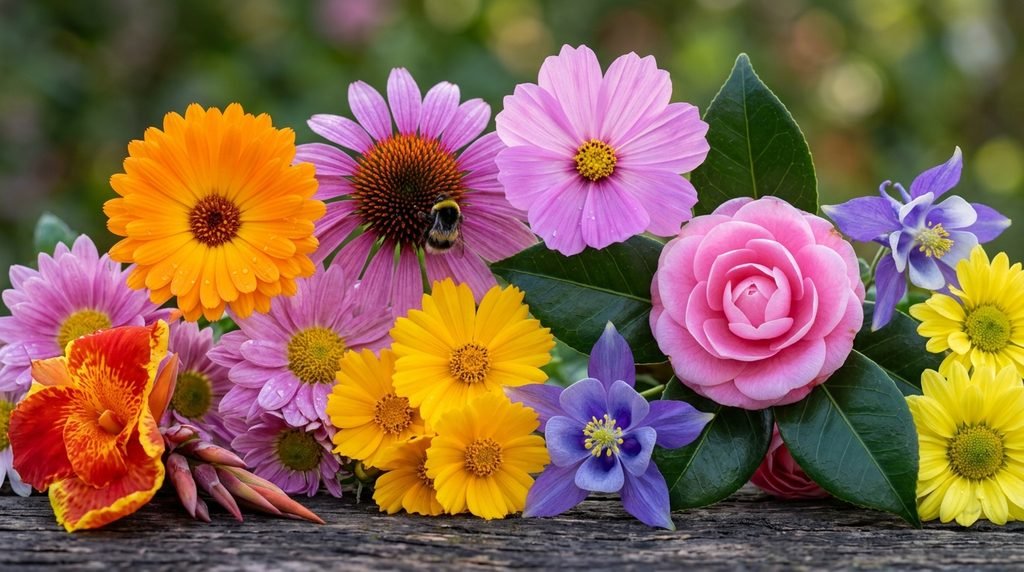
The following profiles provide additional details about bloom time, growing conditions, and garden uses.
Calendula
Gardeners who want long-lasting color during cool seasons often choose Calendula. Its bright orange and yellow blooms can appear from spring through fall in suitable climates.
Calendula performs best in full sun with well-drained soil. Regular deadheading encourages continuous flowering and helps prevent the plant from directing energy toward seed production too early.
Besides its ornamental value, Calendula is frequently included in pollinator gardens because it attracts beneficial insects.
Image Caption: Bright orange Calendula flowers blooming in a sunny flower bed.
Camellia
Winter and early spring landscapes sometimes lack color. Camellias solve that problem by producing large, elegant blooms when many other flowering plants remain dormant.
Most Camellias prefer slightly acidic soil and protection from harsh afternoon sunlight. Once established, these shrubs can remain attractive for decades.
Their glossy evergreen foliage provides year-round structure, even after the flowers disappear.
Image Caption: Pink Camellia flowers blooming against dark green evergreen foliage.
Coneflower
Pollinator gardens rarely feel complete without Coneflowers. Bees, butterflies, and other beneficial insects visit these flowers throughout the growing season.
Coneflowers thrive in full sun and tolerate drought surprisingly well after establishment. Their seed heads also provide food for birds during colder months.
Because of their durability, they are often recommended for beginner gardeners.
Image Caption: Purple Coneflowers attracting pollinators in a summer garden.
Cosmos
Few flowers offer as much reward for so little effort. Cosmos germinate quickly, grow rapidly, and produce abundant flowers throughout summer.
Their airy appearance blends naturally into cottage gardens and wildlife-friendly landscapes. Taller varieties can also create attractive background plantings.
Regular deadheading extends the flowering season and helps maintain a tidy appearance.
Image Caption: Colorful Cosmos flowers swaying in a cottage-style garden.
Coreopsis
Heat and drought can challenge many flowering plants. Coreopsis responds differently by continuing to bloom through difficult conditions.
Its cheerful yellow flowers brighten borders, pollinator gardens, and mixed perennial beds. Wide varieties of flowers for months with minimal intervention.
Gardeners seeking low-maintenance color frequently place Coreopsis near the top of their planting lists.
Image Caption: Golden Coreopsis flowers thriving in a sunny landscape.
Columbine
Shade gardens often lack visual diversity. Columbines help solve that problem with their unique flower shape and graceful appearance.
The blooms attract hummingbirds and appear in a range of colors, including blue, purple, pink, yellow, and white.
Because they tolerate partial shade, Columbines work especially well beneath trees and along woodland pathways.
Image Caption: Delicate Columbine flowers growing in a shaded woodland garden.
Canna Lily
For gardeners seeking bold visual impact, Canna Lilies are difficult to ignore. Large leaves and vibrant blooms create a tropical atmosphere even in temperate regions.
Cannas perform best in warm weather and fertile soil. Their height makes them useful as background plants or focal points.
Many gardeners use them around ponds, patios, and large containers.
Image Caption: Tall Canna Lily flowers creating a tropical garden effect.
Chrysanthemum
Autumn gardens depend heavily on Chrysanthemums for seasonal color. Their flowers appear when many summer plants begin fading.
Available in numerous colors and flower forms, Chrysanthemums adapt well to borders, containers, and landscape beds.
Proper spacing improves airflow and reduces disease pressure during humid weather.
Image Caption: Colorful Chrysanthemums providing vibrant autumn garden color.
Conclusion
The world of flowers that start with C is far more diverse than most gardeners realize. From low-maintenance Coreopsis and colorful Cosmos to elegant Camellias and shade-loving Columbines, there are options for nearly every growing situation. By choosing flowers based on climate, sunlight, and maintenance needs rather than appearance alone, gardeners can enjoy healthier plants and longer-lasting blooms.
Frequently Asked Questions About Flowers That Start With C
1. What are the most popular flowers that start with C?
Some of the most widely grown flowers include Calendula, Camellia, Carnation, Coneflower, Coreopsis, Cosmos, Chrysanthemum, and Columbine. These plants are popular because they combine beauty with dependable garden performance.
2. Which flowers that start with C are easiest for beginners?
Calendula, Cosmos, Coreopsis, and Coneflower are often recommended for beginners. They tolerate minor mistakes and generally establish quickly.
3. Which C flowers attract butterflies?
Coneflowers, Cosmos, Coreopsis, and Cardinal Flowers are excellent butterfly attractors. Their nectar-rich blooms support pollinators throughout the growing season.
4. Are there shade-loving flowers that start with C?
Yes. Columbine, Cyclamen, Camellia, Corydalis, and Celandine Poppy all perform well in partial shade or woodland conditions.
5. Which C flowers bloom the longest?
Calendula, Cosmos, Coreopsis, and Coneflower often produce flowers for several months when properly maintained.
6. Are any flowers that start with C toxic to pets?
Some are. Cyclamen, Crown Imperial, and Celandine Poppy may cause problems if consumed by pets. Always research specific plants before planting around animals.
7. What is the best flower that starts with C for pollinator gardens?
Coneflower is one of the strongest choices because it supports bees, butterflies, and seed-eating birds.
8. Which C flowers work well in containers?
Cyclamen, Calendula, Chrysanthemums, Camellias, and Canna Lilies can all grow successfully in containers with proper care.
9. What flower that starts with C tolerates drought?
Coreopsis, California Poppy, and Coneflower perform well in dry conditions once established.
10. Which C flowers are suitable for cottage gardens?
Cosmos, Candytuft, Calendula, Cornflower, and Coreopsis fit naturally into cottage-style plantings.
11. Are Camellias difficult to grow?
Not usually. They simply require appropriate soil conditions, consistent moisture, and protection from extreme afternoon heat.
12. Which flowers that start with C bloom in fall?
Chrysanthemums, Asters, and some Coneflower varieties continue providing color late in the season.
13. Can flowers that start with C grow from seed?
Many can. Cosmos, Calendula, Coreopsis, Cornflower, and California Poppy are commonly grown from seed.
14. Which C flower has the most unusual appearance?
Cobra Lily, Crown Imperial, and Cockscomb are often considered among the most unusual due to their distinctive flower shapes.
15. What are the best flowers that start with C for small gardens?
Calendula, Candytuft, Cyclamen, and compact Chrysanthemum varieties work particularly well in limited spaces.
Image Caption: Popular flowers that start with C growing in home gardens and containers.