

Why Growing Conditions Come Before the Alphabet Here
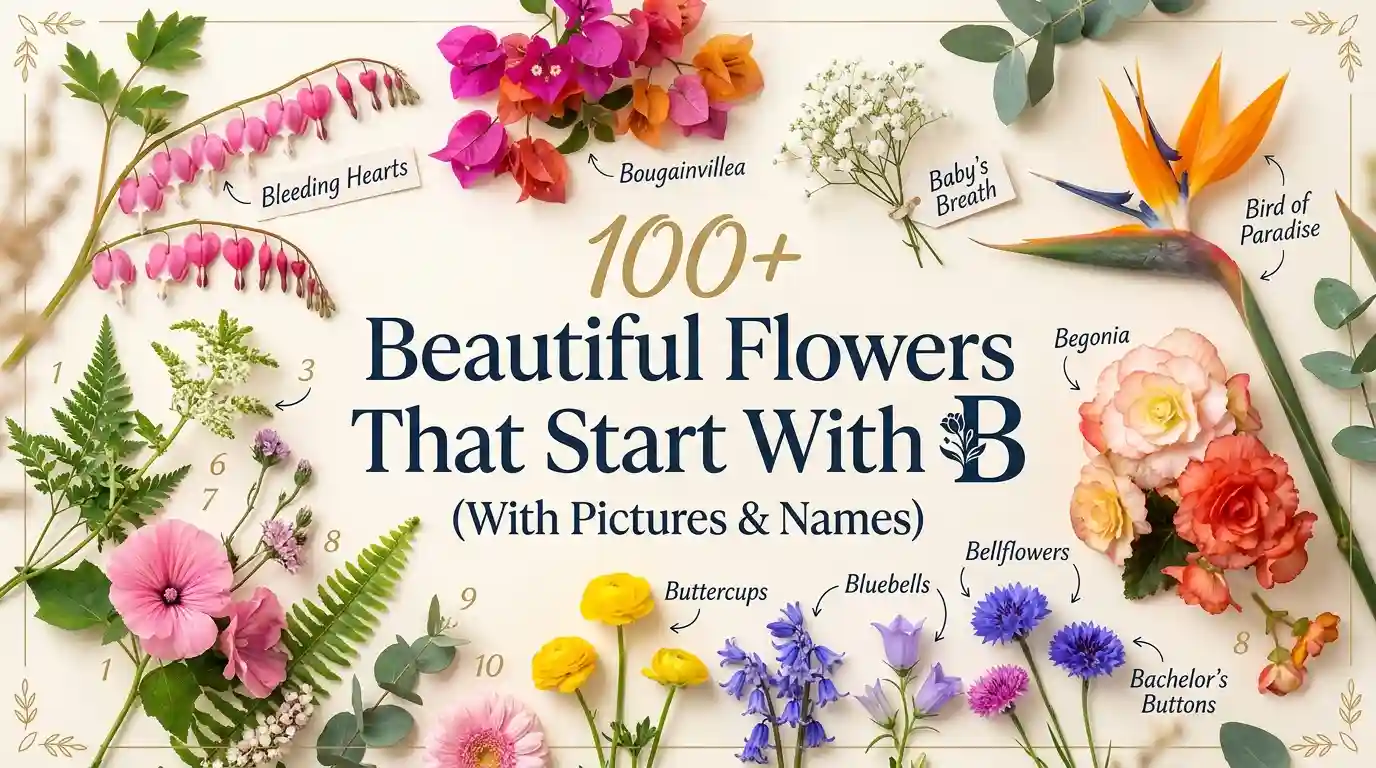
B is one of the richest letters in the flower alphabet, covering everything from cottage-garden staples like Bachelor’s Button and Bee Balm to tropical showstoppers like Bird of Paradise and Bougainvillea. A flat A-to-Z rundown treats a drought-tolerant Blanket Flower the same way it treats a shade-loving Bleeding Heart, which isn’t especially useful when the real question is what will thrive in a specific spot.
This guide sorts B-flowers by the conditions that actually determine success: how much sun a bed gets, how fast color is needed, and how much hands-on care a plant realistically requires. That structure lets a reader jump straight to the section that matches their yard instead of scanning past a hundred names to find the handful that fit.
The complete alphabetical list still appears in this article, positioned near the end as a quick-reference appendix rather than the organizing framework. Anyone who already knows what they’re looking for can head there directly.
Every plant included here reflects a genuinely documented flower with a common name starting with B, spanning annuals, perennials, bulbs, shrubs, vines, and a handful of orchids. Some names on this list, like Blue Puya and Black Bat Flower, are considerably rarer than everyday picks like Begonia and Buttercup, and that distinction is called out clearly rather than blurred.
Quick Take: Standout B-Flowers Worth Growing
These ten stand out for practical reasons that go beyond just looking good in a photo.
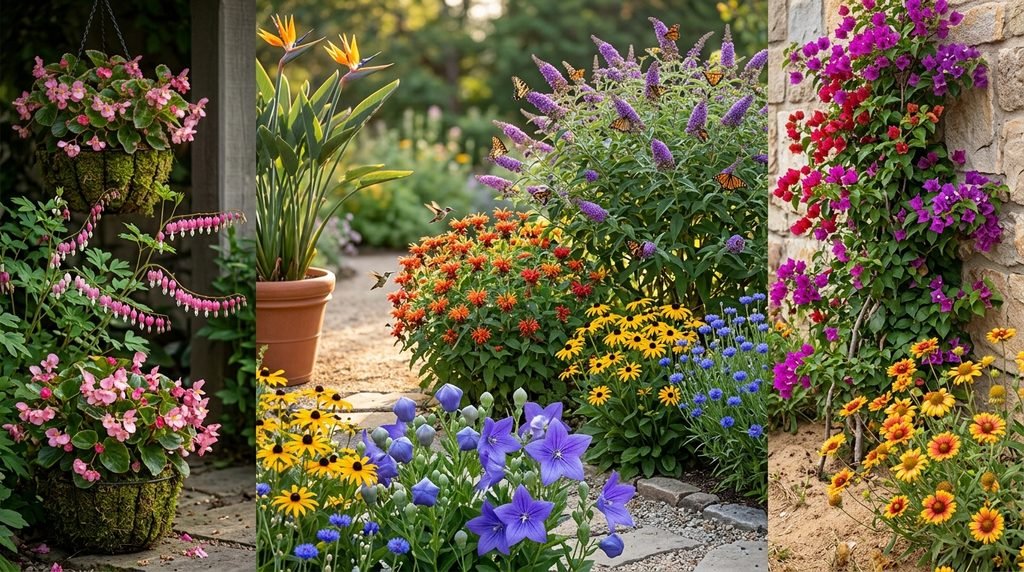
- Begonia — dependable shade-container color that keeps blooming with minimal fuss.
- Black-Eyed Susan — a tough, drought-tolerant native that reseeds and returns reliably.
- Bee Balm (Monarda) — a strong hummingbird and pollinator draw for a sunny bed.
- Bleeding Heart — one of the more distinctive spring shade perennials, with heart-shaped blooms that draw attention.
- Bougainvillea — the vine of choice for a warm-climate wall or trellis needing bold color.
- Bachelor’s Button — fast, low-effort color that self-seeds well in a cottage-style border.
- Butterfly Bush — a reliable pollinator magnet that blooms for months with little upkeep.
- Blanket Flower (Gaillardia) — a genuinely low-maintenance pick for poor, dry soil.
- Balloon Flower — an unusual bud shape that makes it a conversation piece before it even opens.
- Bird of Paradise — the plant to choose for a dramatic tropical accent in a warm, sunny spot.
Full-Sun B-Flowers That Handle Real Heat
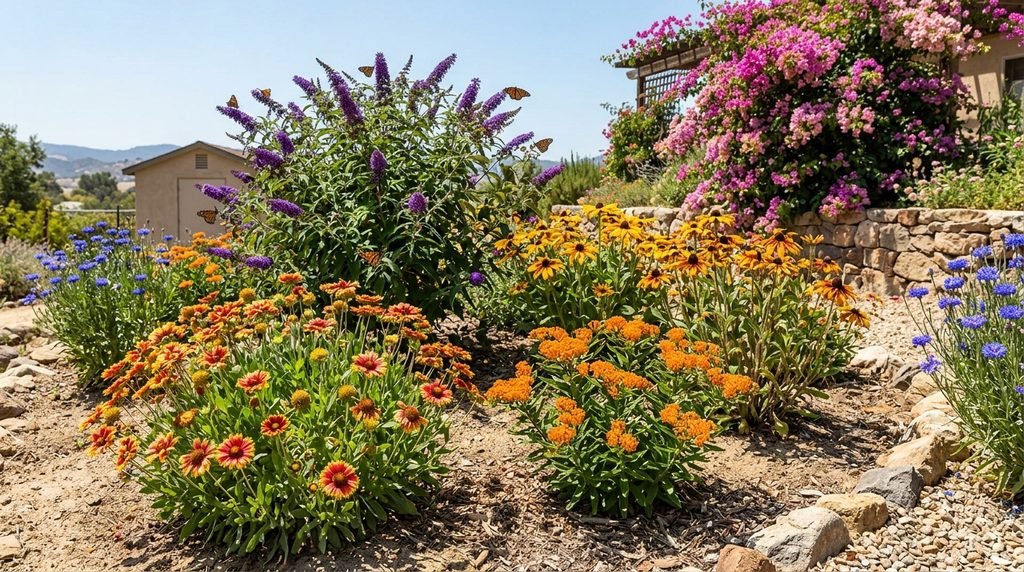
A large share of B-flowers genuinely prefer full sun and hold up well through sustained heat rather than merely tolerating it. Blanket Flower and Butterfly Bush stand out here, both performing better in lean, well-drained soil than in rich, heavily amended beds.
| Flower | Sun Requirement | Heat Tolerance | Watering Once Established |
| Blanket Flower (Gaillardia) | Full sun | High | Low |
| Butterfly Bush | Full sun | High | Low |
| Black-Eyed Susan | Full sun | High | Low to moderate |
| Bougainvillea | Full sun | High | Low |
| Bachelor’s Button | Full sun | Moderate to high | Low |
| Butterfly Weed | Full sun | High | Low |
Blanket Flower and Butterfly Weed are the two most forgiving choices for genuinely dry, exposed sites, since both actually decline in soil that stays consistently damp. Bougainvillea handles heat well but needs a warm climate year-round to perform at its best, making it more of a container or greenhouse plant in cooler regions than a permanent garden fixture.
Shade and Part-Shade Options Worth Planting
Several B-flowers are genuinely built for filtered or indirect light rather than simply surviving there. Begonia and Bleeding Heart are the two most dependable shade performers in this group, both delivering strong color in beds that get little direct sun.
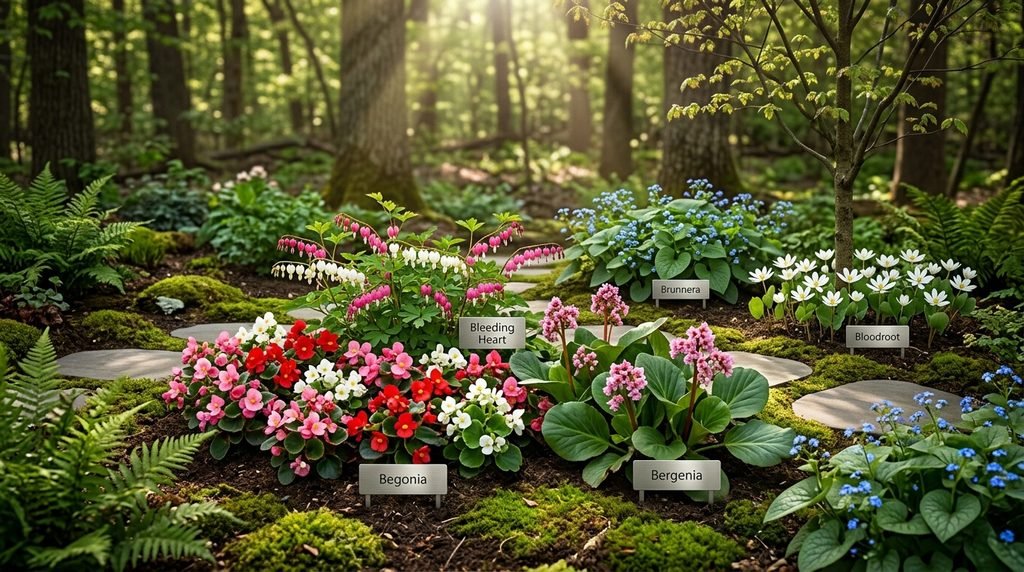
- Begonia — steady bloom in shaded containers and beds through the growing season
- Bleeding Heart — distinctive spring blooms that fade gracefully as summer heat arrives
- Bergenia — early spring flowers paired with bold, leathery foliage that holds interest afterward
- Brunnera — small blue flowers over heart-shaped leaves, well suited to a woodland bed
- Bloodroot — one of the earliest native spring bloomers, often flowering before trees leaf out
Begonia is the more versatile of the group, tolerating a range of light levels from deep shade to partial sun depending on the variety, while Bleeding Heart genuinely needs cooler, shadier conditions to avoid going dormant early in hot climates. Bloodroot rewards patience with an especially early bloom, though its flowers are notably short-lived compared to the others on this list.
Which B-Flowers Bloom the Fastest
For anyone planting on a deadline, bloom speed varies considerably across this letter. Bachelor’s Button and Baby Blue Eyes are among the fastest, both capable of flowering within a couple of months of direct sowing.
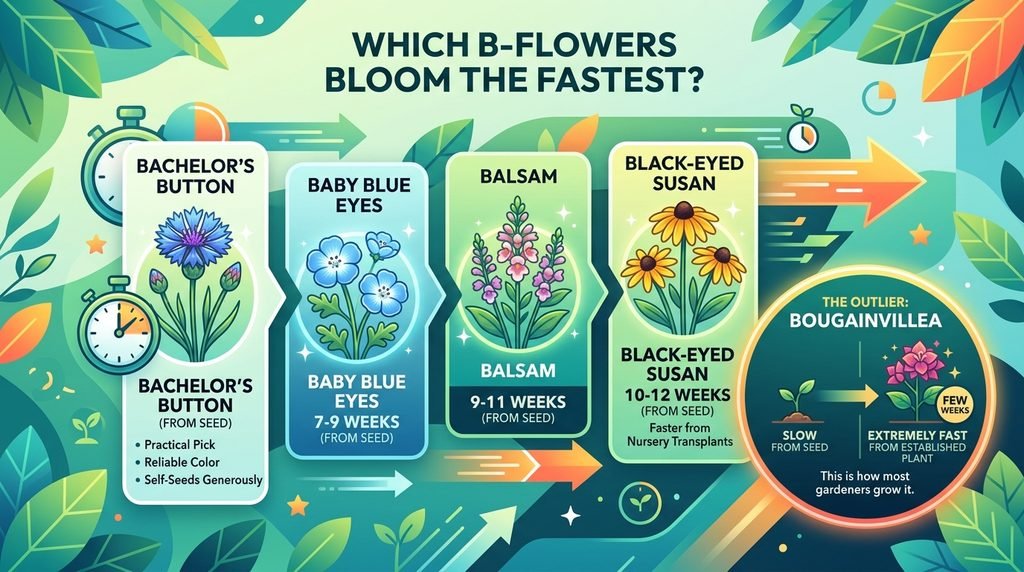
- Bachelor’s Button — often blooms within 6–8 weeks from seed
- Baby Blue Eyes — typically 7–9 weeks from seed to first bloom
- Balsam — usually flowers within 9–11 weeks from seed
- Black-Eyed Susan — generally 10–12 weeks from seed, faster from nursery transplants
- Bougainvillea — established nursery plants often bloom within a few weeks of transplanting, though a first-year seedling can take considerably longer
Bachelor’s Button is the practical pick for fast, reliable color, and it tends to self-seed generously enough that a single planting often returns for several seasons. Bougainvillea is the outlier here — it’s slow from seed but extremely fast to bloom once purchased as an established nursery plant, which is how most gardeners grow it in practice.
Matching B-Flowers to Gardening Experience
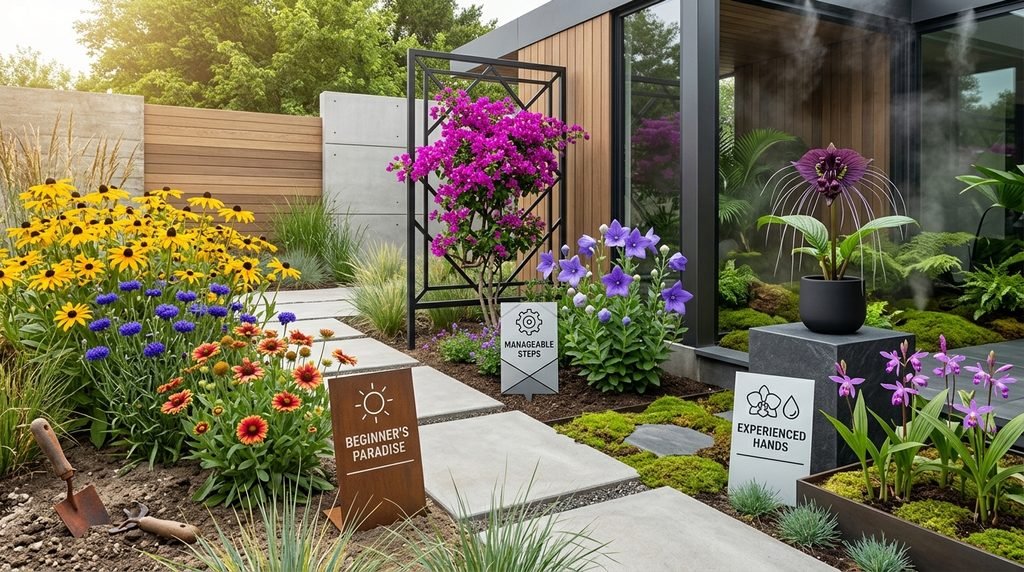
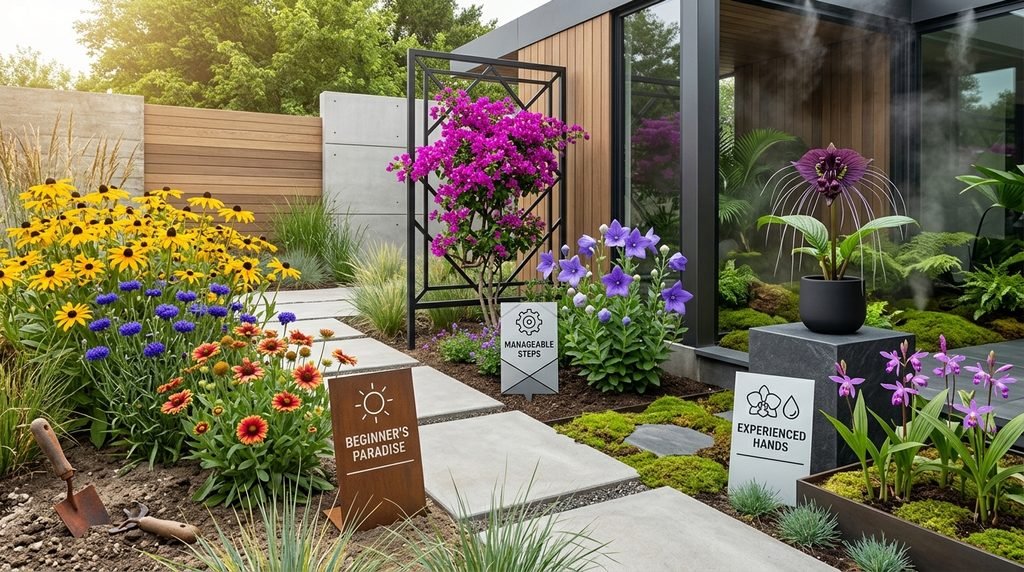
Some B-flowers tolerate real neglect, while a few ask for more specific handling than a beginner might expect. Black-Eyed Susan, Bachelor’s Button, and Begonia are dependable starting points that handle average soil and inconsistent watering without much trouble. Bat Flower sits at the more demanding end — it needs warm, humid, shaded conditions similar to an orchid, along with very specific soil moisture, which makes it a poor first project for someone still building basic plant-care habits.
- Solid starting points: Black-Eyed Susan, Bachelor’s Button, Begonia, Blanket Flower
- Manageable with some attention: Bougainvillea (needs regular pruning to control size), Balloon Flower (slow to emerge in spring, easy to accidentally dig up)
- Better left to experienced growers: Bat Flower (specific humidity and shade needs), Bletilla (sensitive to standing water at the crown)
A Shortlist If Space Is Tight
For a small garden, three B-flowers can cover most practical needs without overlap. Begonia supplies reliable shaded-container color, Black-Eyed Susan anchors a sunny spot with tough, drought-tolerant blooms that return on their own, and Bachelor’s Button fills in fast, low-effort color for the gaps between. Between the three, a small space gets shade coverage, sun-tolerant structure, and quick seasonal color without any of them competing for the same role.
Pairing B-Flowers With Good Neighbors
Companion planting tends to work best when nearby plants share similar sun and water needs, or when one plant offers the other a practical benefit, such as pollinator traffic or pest deterrence. Mismatches usually show up gradually, with one plant thriving while its neighbor quietly struggles.
| Flower | Good Companion | Why It Works | Avoid Planting Near |
| Bee Balm | Coneflower | Similar bloom season, both strong pollinator draws | Delicate shade perennials (light mismatch) |
| Begonia | Impatiens | Shared shade and moisture preferences | Full-sun succulents (light mismatch) |
| Butterfly Bush | Salvia | Both heat-tolerant with a long bloom season | Hostas (moisture mismatch) |
| Bachelor’s Button | Poppies | Similar cool-season sowing timing | Aggressive spreaders like mint (root competition) |
| Bleeding Heart | Ferns | Shared shade and consistent-moisture needs | Full-sun annuals (light mismatch) |
The Bee-Balm-and-coneflower pairing works especially well in a pollinator bed, since both bloom over a similarly long stretch of summer and draw a comparable mix of bees and butterflies. The wider pattern across this table is that most B-flower pairing failures come down to a sun or moisture mismatch, so checking that detail matters more than color coordination when choosing a neighbor.
A Month-by-Month Calendar for the Top Picks
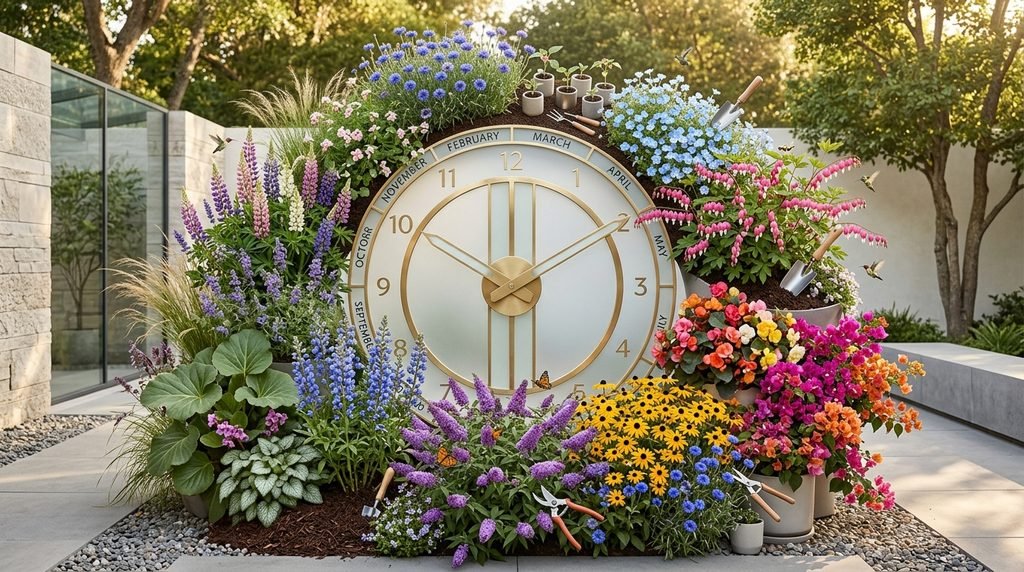
Timing plays a real role in how well several B-flowers establish and bloom. Bachelor’s Button benefits from an early sowing date to beat summer heat, while Bougainvillea needs a defined pruning schedule to stay full and floriferous rather than leggy.
| Month | Task |
| February | Start Bachelor’s Button and Balsam seeds indoors for earlier bloom |
| March | Direct sow Baby Blue Eyes once the soil is workable |
| April | Divide overcrowded Bleeding Heart clumps before new growth fills in |
| May | Transplant Begonia and Bougainvillea once frost risk has passed |
| June | Deadhead Black-Eyed Susan and Bachelor’s Button to extend bloom |
| July | Prune Butterfly Bush lightly to encourage continued flowering |
| September | Plant Baptisia and other bare-root perennials for root establishment before winter |
| November | Mulch Bergenia and Brunnera roots ahead of frost |
The April Bleeding Heart division is easy to miss but matters, since disturbing the roots later in the season, once foliage has fully emerged, tends to set the plant back more than an early-spring division would. The July Butterfly Bush pruning is worth doing consistently, since letting the shrub grow unchecked for several seasons tends to reduce bloom density even though the plant itself stays healthy.
Where Real Caution Is Needed
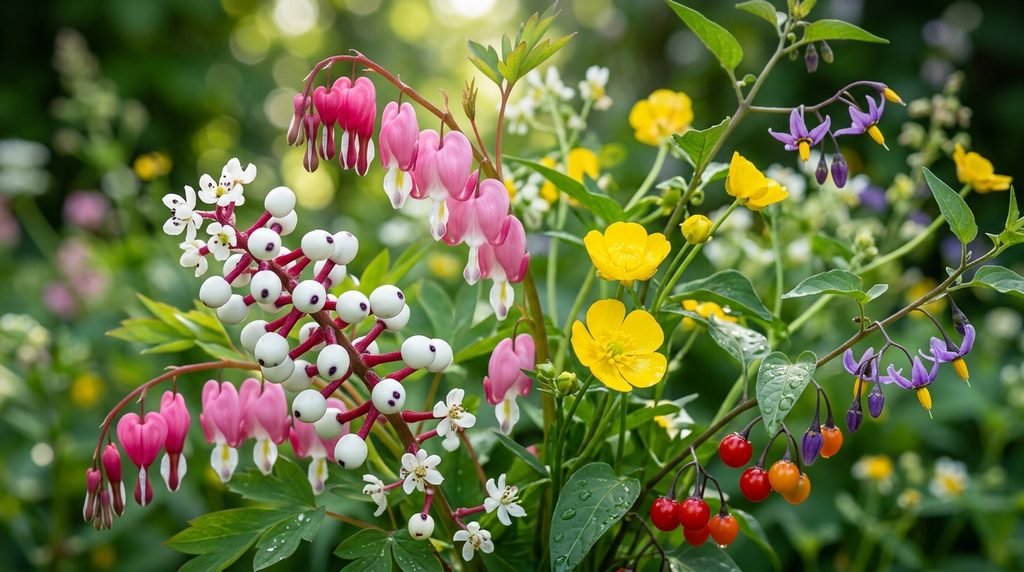
Several B-flowers carry genuine risk to pets, children, or livestock, and that information deserves clear treatment rather than a passing mention. Baneberry produces small, strikingly colored berries that are highly toxic if eaten, with as few as a handful of berries posing a serious risk to a child or pet. Bittersweet Nightshade contains solanine throughout the plant, and its berries are particularly tempting to pets and children due to their bright color, despite being toxic if ingested in quantity. Buttercup contains a compound called protoanemonin that causes irritation to the mouth and digestive tract if chewed, though the bitter taste generally discourages animals from eating much of it. Bleeding Heart contains mild alkaloids that can cause digestive upset in pets if a large amount is ingested, though serious poisoning is uncommon.
| Flower | Toxic To | Main Risk | Symptom Severity |
| Baneberry | Humans, pets | Ingestion of berries | Severe |
| Bittersweet Nightshade | Humans, pets | Ingestion of berries and leaves | Moderate to severe |
| Buttercup | Pets, livestock | Ingestion, skin contact with sap | Mild to moderate |
| Bleeding Heart | Pets | Ingestion (large quantities) | Mild |
Baneberry deserves the most caution of this group, and its berries are dangerous enough that it’s worth avoiding entirely in a garden used by young children. Bittersweet Nightshade is often encountered as an uninvited vine rather than something deliberately planted, so it’s worth identifying and removing if it shows up in a yard with pets or kids.
Color Groupings Across the B-Flowers
Blue and purple show up strongly in Bluebell, Bachelor’s Button, Blue Star, and Baptisia, making this the range most associated with a classic, cottage-garden color palette at this letter.
Yellow and gold are common in Black-Eyed Susan, Blanket Flower, and Buttercup, all of which hold their color well through direct summer sun without fading the way some paler tones do.
Pink and red appear in Begonia, Bleeding Heart, and Bee Balm, a combination that works particularly well in a bed that needs a soft, warm accent rather than a bold, high-contrast statement.
White and cream are present in Baby’s Breath and Bells of Ireland, both of which function more as texture and filler in arrangements than as a standalone focal color, which is exactly why they’re so common in bouquets.
The Full Alphabetical List of B-Flowers
Anyone who came here specifically for the complete name list can find it below, gathering every flower mentioned above along with additional genuine B-names worth knowing.
- Baby Blue Eyes
- Baby’s Breath
- Baby’s Slippers (Calceolaria)
- Baby Sun Rose
- Bachelor’s Button (Cornflower)
- Balloon Flower
- Balloon Vine
- Balsam
- Banana Flower
- Baneberry
- Baptisia (False Indigo)
- Barberton Daisy (Gerbera)
- Barleria
- Basil Flower
- Basket Flower
- Basket of Gold
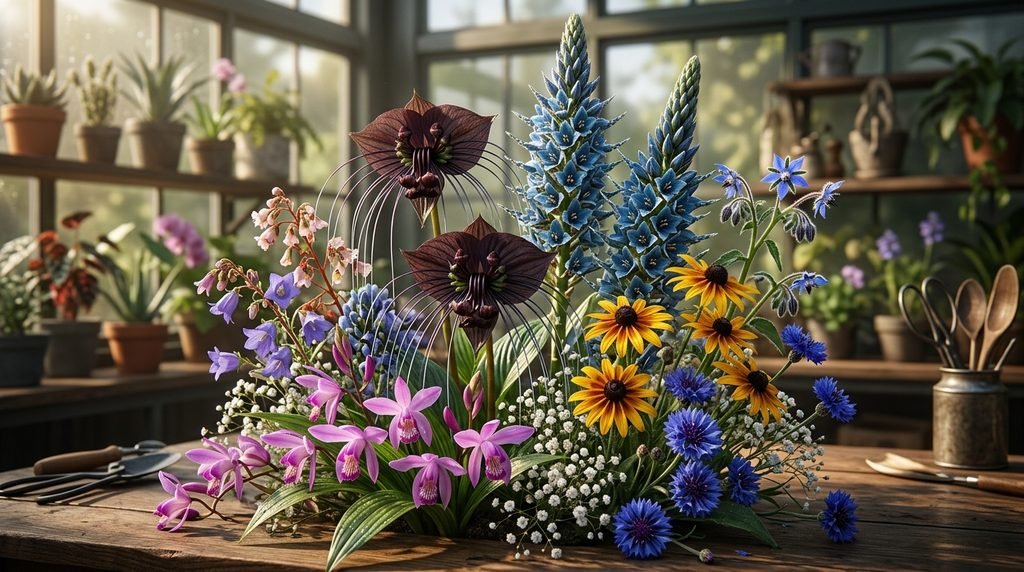
- Bat Flower (Black Bat Flower)
- Batface Cuphea
- Beach Sunflower
- Bear’s Breeches (Acanthus)
- Beardtongue (Penstemon)
- Beauty Berry
- Beauty Bush
- Bee Balm (Monarda)
- Bee Orchid
- Begonia
- Bellflower (Campanula)
- Bellis (English Daisy)
- Bells of Ireland
- Bergamot (Wild Bergamot)
- Bergenia
- Betony
- Big Flax
- Bighead Knapweed
- Billy Buttons
- Bindweed
- Bird of Paradise
- Bird Vetch
- Bird’s Eye Primrose
- Bird’s Foot Trefoil
- Bird’s Nest Orchid
- Birthwort
- Bishop’s Cap
- Bishop’s Flower (Ammi majus)
- Bittersweet Nightshade
- Black-Eyed Susan
- Black-Eyed Susan Vine
- Black Cohosh
- Black Hollyhock
- Blanket Flower (Gaillardia)
- Blazing Star (Liatris)
- Blessed Thistle
- Bleeding Heart
- Bletilla (Chinese Ground Orchid)
- Blood Flower
- Blood Lily
- Bloodroot
- Blue Daisy (Felicia)
- Blue Eyed Grass
- Blue Flax
- Blue Jade Vine
- Blue Mist Flower
- Blue Poppy
- Blue Puya
- Blue Salvia
- Blue Star (Amsonia)
- Blue Throatwort
- Blue Trumpet Vine
- Bluebeard (Caryopteris)
- Bluebell
- Bluebonnet
- Bocconia (Plume Poppy)
- Bog Bean
- Bog Rosemary
- Borage
- Bottle Gentian
- Bottlebrush
- Bougainvillea
- Bouvardia
- Bowman’s Root
- Brazilian Verbena
- Bridal Wreath Spirea
- Bristly Locust
- Broom (Scotch Broom)
- Brunnera
- Bugbane
- Bugleweed (Ajuga)
- Bugloss (Anchusa)
- Bulbine
- Bunchberry
- Bur Marigold
- Burnet
- Bush Violet (Browallia)
- Busy Lizzie
- Butter and Eggs (Toadflax)
- Buttercup
- Butterfly Bush (Buddleja)
- Butterfly Iris (Dietes)
- Butterfly Pea
- Butterfly Weed
- Butterwort
- Button Bush
- Byzantine Gladiolus
A number of these, particularly Blue Puya, Bat Flower, and Bletilla, are considerably harder to find than everyday picks like Begonia or Black-Eyed Susan, and are more realistically sourced through specialty growers than a typical big-box nursery.
Common Names vs. Botanical Names
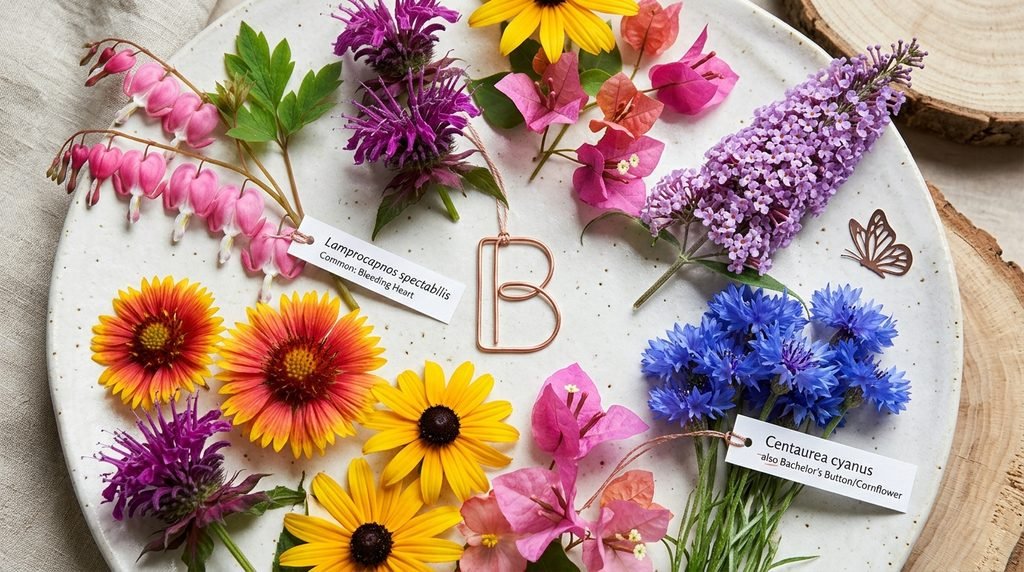
Botanical names help avoid confusion when ordering online, especially at a letter like B where several common names describe unrelated plants across different families. This table covers the botanical names for the most frequently grown picks on this list.
| Common Name | Botanical Name |
| Begonia | Begonia spp. |
| Black-Eyed Susan | Rudbeckia hirta |
| Bee Balm | Monarda didyma |
| Bleeding Heart | Lamprocapnos spectabilis |
| Bougainvillea | Bougainvillea spp. |
| Butterfly Bush | Buddleja davidii |
| Blanket Flower | Gaillardia spp. |
Bachelor’s Button is worth double-checking before ordering, since it’s also widely sold under its other common name, Cornflower, and searching by only one of the two names can miss relevant listings depending on the supplier.
What These Flowers Have Meant to People Over Time
Flower symbolism still influences how people choose plants for meaningful occasions, and several B-flowers carry a long history in this regard. Bachelor’s Button has been associated with devotion and hopeful love in European folk tradition, a meaning some sources trace to the custom of unmarried men wearing the flower to signal their romantic intentions. Begonia, somewhat less romantically, has often been linked to caution or a warning in Victorian flower language, an association that isn’t fully explained by anything specific about the plant itself.
Black-Eyed Susan carries associations with encouragement and justice in some American folk traditions, tied loosely to its resilience and long bloom season even in poor soil. Bleeding Heart’s symbolism is more visually literal than most, tied closely to romantic longing and heartbreak, a meaning drawn directly from the flower’s distinctive heart-shaped silhouette.
Bringing the B-Flowers Together
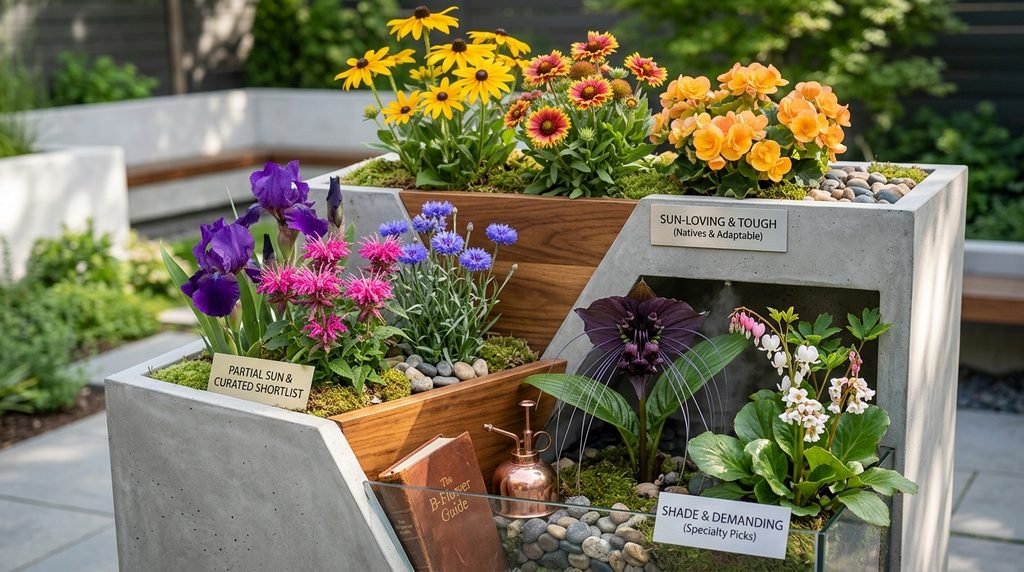
Flowers that start with B cover more ground than almost any other letter, from tough, drought-tolerant natives like Black-Eyed Susan to demanding specialty picks like Bat Flower, and that range is exactly why sorting by growing conditions works better than a flat alphabetical list. Anyone using this guide should be able to match their own sun, shade, and experience level to a realistic shortlist of B-flowers rather than working through a hundred names one at a time.
Frequently Asked Questions
What are the easiest flowers that start with B for a beginner to grow?
Black-Eyed Susan, Bachelor’s Button, and Begonia are the most forgiving choices, tolerating average soil and inconsistent watering without much trouble.
Which B-flowers are toxic to pets?
Baneberry and Bittersweet Nightshade carry the most serious risk, while Buttercup and Bleeding Heart pose milder but still notable concerns.
How fast does Bachelor’s Button bloom from seed?
Typically within six to eight weeks, making it one of the fastest-blooming options among flowers that start with B.
Is Bat Flower difficult to grow? Yes, it needs warm, humid, shaded conditions similar to an orchid, which makes it a better fit for experienced growers than beginners.
What’s the difference between Bachelor’s Button and Cornflower?
They’re the same plant known by two common names, so it’s worth searching both terms when shopping for seeds or plants online.
Do Bee Balm flowers really attract hummingbirds?
Yes, their tubular, nectar-rich blooms are a strong draw for hummingbirds, particularly during peak bloom in mid to late summer.
Which B-flowers tolerate shade best?
Begonia, Bleeding Heart, and Brunnera handle shaded, filtered-light conditions better than most other flowers on this list.
Is Bougainvillea hard to grow outside warm climates?
It can be, since it needs consistent warmth to bloom well and is usually grown as a container plant that’s brought indoors before frost in cooler regions.
What are good companion plants for Bee Balm?
Coneflower works well due to a shared bloom season and similar pollinator appeal, while shade-loving plants are better kept in a separate, less sunny bed.
When should Bleeding Heart be divided?
Early spring, before new growth fully emerges, gives the plant the best chance to recover without much visible setback.