


Flowers that start with N don’t get much attention. Most alphabet guides rush past this letter. But it hides real standouts — Narcissus, Nasturtium, and Nigella among them. It also hides a few genuine risks, like Oleander’s cousin Nerium, which belongs on every pet owner’s caution list.
This guide skips the flat alphabetical dump. Instead, it groups flowers that start with N by what they actually need. Sun or shade. Fast bloom or slow payoff. Beginner-safe or experienced-only. That structure gets you to a usable answer faster than scanning 45 names in order.
The tone here stays practical throughout. If a flower is easy, that gets said plainly. If it needs specific soil, acidic conditions, or a warm climate, that gets flagged too. Nothing on this list gets dressed up just to pad the count.
A full alphabetical index sits near the end, along with a botanical name crosswalk and a toxicity table. But the sections that matter most come first — the ones built around your actual growing conditions, not the letter N itself.
Quick Take: Where to Start
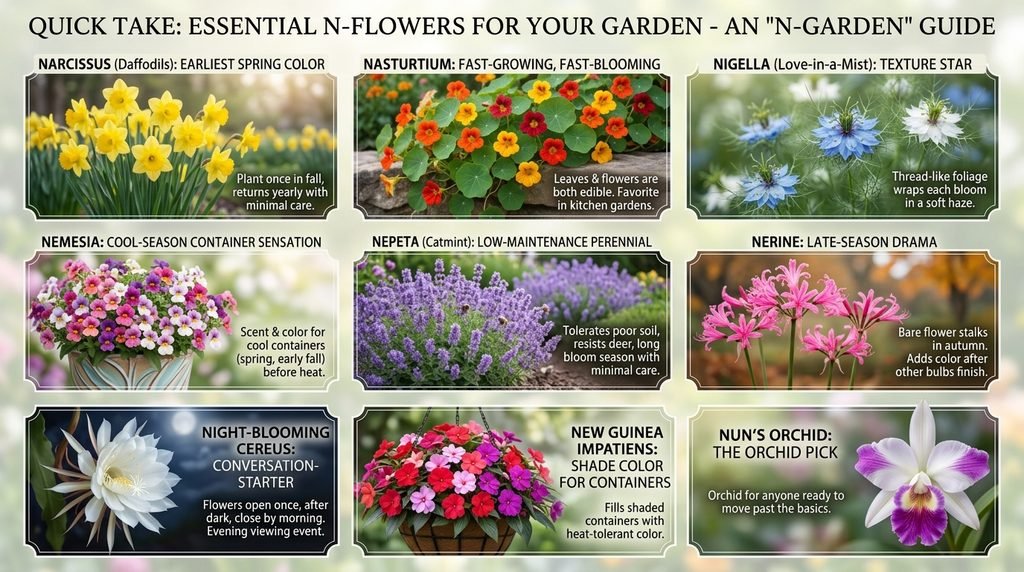
Narcissus solves the earliest spring color problem better than almost any other bulb. Plant it once in fall, and it returns every year with almost no ongoing care. Nasturtium works differently. It grows fast, blooms fast, and the leaves and flowers are both edible, which makes it a favorite in kitchen gardens.
Nigella, often called Love-in-a-Mist, earns its spot for texture. Its thread-like foliage wraps each bloom in a soft haze that few other annuals can match. Nemesia brings scent and color to cool-season containers, particularly in spring and early fall before summer heat sets in.
Nepeta, better known as Catmint, is the low-maintenance perennial pick. It tolerates poor soil, resists deer, and blooms for months with almost no deadheading. Nerine adds late-season drama, sending up bare flower stalks in autumn after most other bulbs have finished for the year.
Night-Blooming Cereus is the conversation-starter on this list. Its flowers open once, after dark, and close by morning, drawing crowds of gardeners who plan their evening around a single bloom. New Guinea Impatiens fills shaded containers with color that regular impatiens can’t always match in heat. Nun’s Orchid rounds out the group as the orchid pick for anyone ready to move past the basics.
Full-Sun Picks That Don’t Struggle
Some flowers that start with N are adapted to strong, direct light. These are the ones to reach for on a hot patio, a south-facing bed, or a strip of soil that bakes all afternoon. What separates this group is drought tolerance paired with a long bloom window.
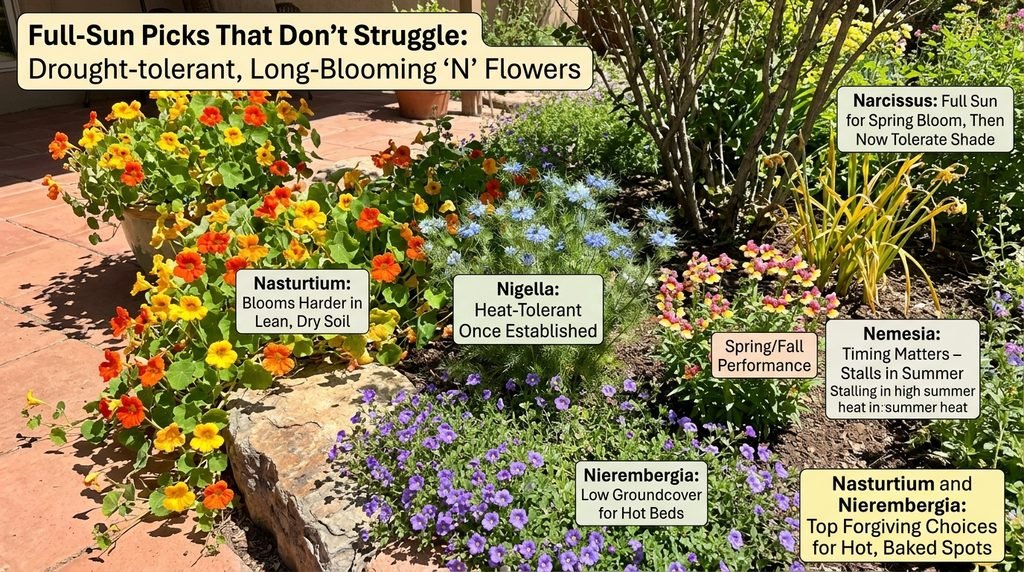
Nasturtium tops the list. It blooms more vigorously in lean, dry soil than in rich beds, where too much nitrogen promotes leaves over flowers. Nigella follows close behind, tolerating heat well once established, though it prefers cooler soil at the seedling stage. Nemesia performs best in full sun during spring and fall but often stalls once summer heat peaks, so timing matters more than soil for this one.
Narcissus needs full sun only during its short spring bloom window. Once summer arrives, its foliage dies back, so it tolerates shade from deciduous trees that haven’t fully leafed out yet. Nierembergia, or Cupflower, spreads low and wide in full sun, forming a dense mat of small purple-blue blooms that holds up well against heat.
- Nasturtium — thrives in poor, dry soil and full sun
- Nigella — heat-tolerant once established, prefers cooler starts
- Nemesia — best in spring and fall sun, weak in summer heat
- Narcissus — full sun during bloom, tolerant of later shade
- Nierembergia — low, spreading groundcover for hot beds
Nasturtium and Nierembergia stand out here as the two most forgiving choices for a hot, sun-baked spot. Nemesia is the one exception worth watching closely, since its performance shifts sharply with the season.
Shade-Tolerant Options Worth Planting
Shade narrows this list considerably, but a few flowers that start with N genuinely prefer it. This matters for anyone gardening under trees or along a north-facing wall.
New Guinea Impatiens leads this group by a wide margin. It holds color in shade better than almost any other annual, and its thicker leaves resist the fungal issues that plague older impatiens varieties. Navelwort, a low-growing perennial with small blue flowers, spreads well in dappled woodland shade and asks for very little in return. Nodding Trillium, a native woodland wildflower, needs consistent shade and undisturbed soil to establish, making it a poor fit for a bed that gets tilled or replanted often.
- New Guinea Impatiens — strong color in shade, resists common fungal issues
- Navelwort — low groundcover for dappled woodland light
- Nodding Trillium — needs undisturbed shade, slow to establish
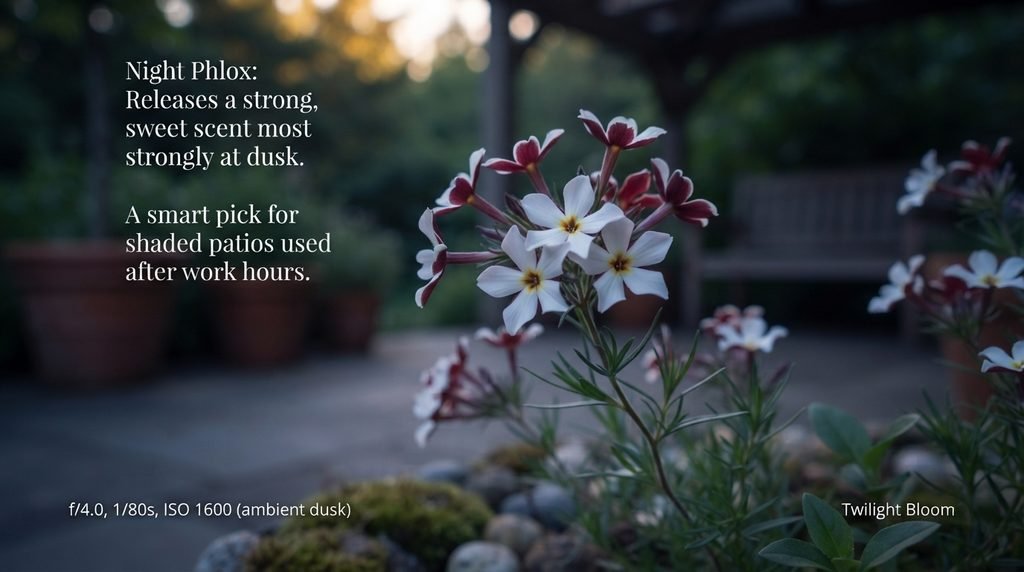
- Night Phlox — tolerates partial shade, releases scent most strongly at dusk
Night Phlox deserves a specific mention. Its flowers look plain during the day but release a strong, sweet scent in the evening, which makes it a smart pick near a shaded patio used mostly after work hours.
Fast Bloomers Versus Slow Payoff
Bloom speed changes which flowers that start with N make sense for a short-timeline project. Some reward you within weeks. Others ask for a full season or more before doing much of anything.
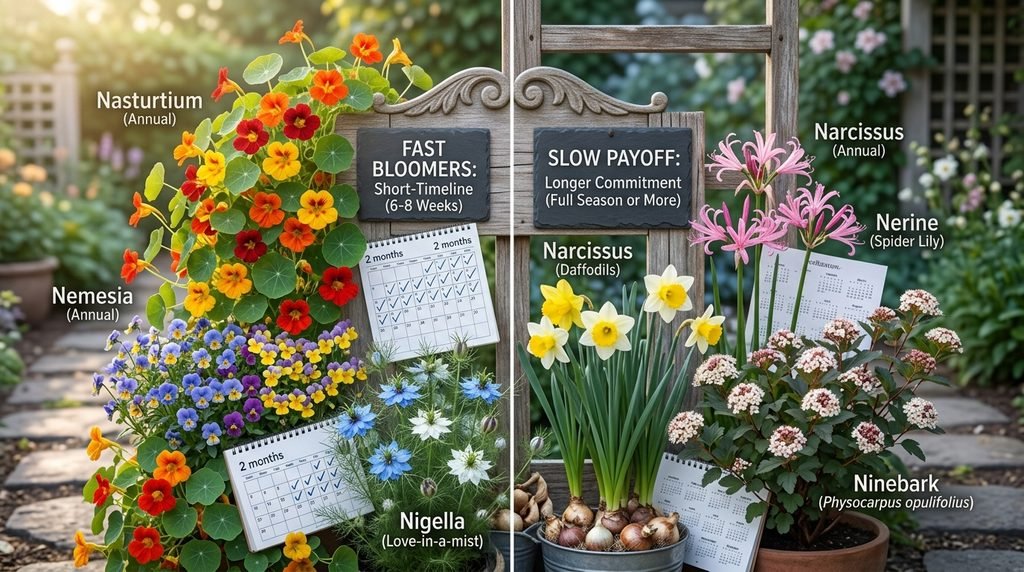
Nasturtium and Nemesia move fastest, often flowering within six to eight weeks from seed. Nigella isn’t far behind, typically blooming within two months of direct sowing. These three are the strongest picks for anyone planting later in the season or filling a gap before a specific date.
Narcissus and Nerine sit on the slower end, but for a different reason than most slow bloomers. Both are bulbs that need a full season underground before their first flush of flowers, and Nerine specifically needs a full year of undisturbed growth to bloom well. Ninebark, a flowering shrub, typically needs one to two growing seasons to establish before its clusters of small white or pink flowers reach full size.
Anyone working against a deadline should lean on the annual, fast-bloom group. The bulbs and shrubs are worth planting too, just not as the centerpiece of a short-timeline plan.
What Holds Up Without Constant Attention
A few flowers that start with N tolerate real neglect, which matters most for a first-time grower who wants results without a strict schedule.
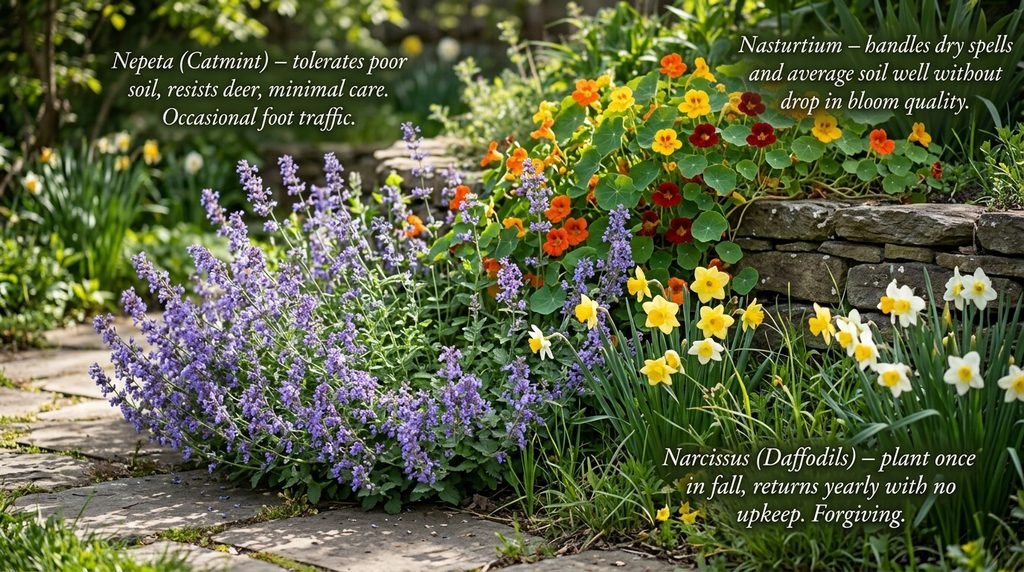
Nepeta is the standout here. It survives poor soil, missed watering, and even occasional foot traffic, and it tends to look better with less fussing rather than more. Narcissus is nearly as forgiving once planted — a fall bulb planting requires almost no follow-up care to return each spring. Nasturtium rounds out the easy tier, tolerating dry spells and average soil without much drop in bloom quality.
- Nepeta — tolerates poor soil, resists deer, minimal care
- Narcissus — plant once in fall, returns yearly with no upkeep
- Nasturtium — handles dry spells and average soil well
The pattern across this group is tolerance for inconsistency. None of these three punish a missed watering the way some of the pickier flowers that start with N do further down this list.
The Ones Worth a Warning
A smaller group demands more skill, more specific conditions, or real caution around pets and children. These aren’t bad plants, but they’re poor first choices.
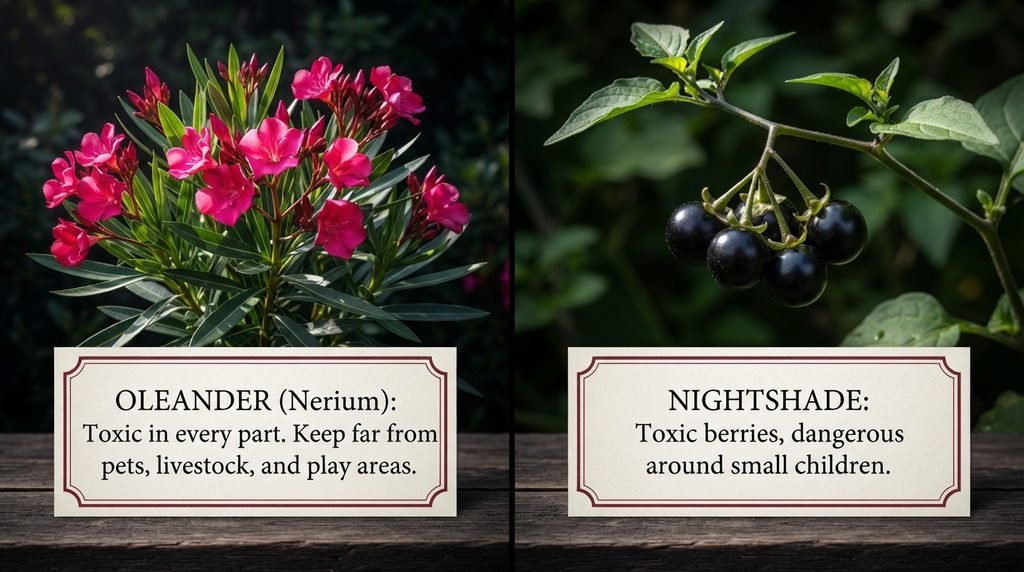
Nerium, commonly known as Oleander, is the clearest case. Every part of this shrub is toxic, and even the smoke from burning trimmed branches has caused reactions in people nearby. It’s a striking flowering shrub, but it belongs far from vegetable beds, play areas, and anywhere livestock might graze. Nightshade carries similar severity, with berries that look tempting to a curious child but carry a real poisoning risk. Night-Blooming Cereus, while not dangerous, demands patience and the right conditions — many growers wait years for a single bloom cycle to align with a night they’re actually home to see it.
- Nerium (Oleander) — toxic in every part; avoid near pets and livestock
- Nightshade — toxic berries, dangerous around small children
- Night-Blooming Cereus — needs patience and specific timing, not dangerous but demanding
- Nerine — sensitive to disturbance, often skips a bloom cycle after transplanting
Nerine’s inclusion here isn’t about danger. It’s about frustration. Transplant it at the wrong time, and it may skip flowering entirely for a full year, which catches a lot of first-time growers off guard
A Companion Planting Guide
Companion planting works for some pairings more than others, and a few flowers that start with N have genuinely useful partners worth knowing before laying out a bed. Pest deterrence, pollinator traffic, and simple root-space compatibility all factor in here.
Nasturtium is the standout companion on this list, often planted near squash and cucumbers as a trap crop that draws aphids away from the main vegetable rows. Nepeta pairs well with roses, since its scent is commonly credited with confusing pests that would otherwise target rose buds directly. Narcissus and Nemesia both pair easily with spring-blooming perennials, since their root systems sit at different depths and rarely compete for the same nutrients.
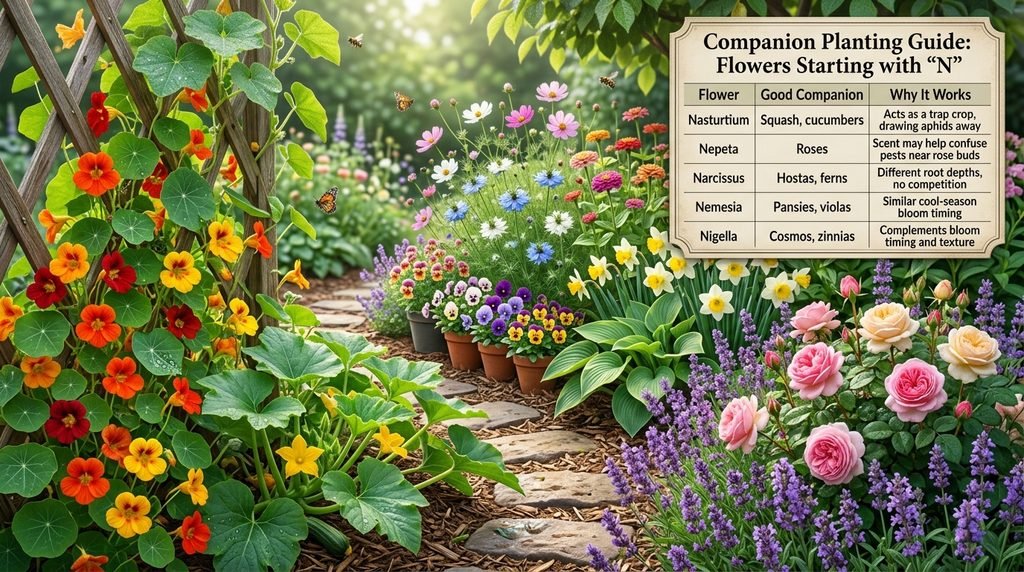
| Flower | Good Companion | Why It Works |
| Nasturtium | Squash, cucumbers | Acts as a trap crop, drawing aphids away |
| Nepeta | Roses | Scent may help confuse pests near rose buds |
| Narcissus | Hostas, ferns | Different root depths, no competition |
| Nemesia | Pansies, violas | Similar cool-season bloom timing |
| Nigella | Cosmos, zinnias | Complements bloom timing and texture |
Nasturtium’s role as a trap crop is worth repeating, since it’s one of the few flowers that start with N with a genuinely functional, rather than purely decorative, role in a vegetable garden. Narcissus and hostas make a particularly low-effort pairing, since the bulb’s early bloom finishes right as hosta foliage fills in.
A Season-by-Season Care Calendar
Timing changes outcomes significantly for bulbs and fast annuals in this group. A few weeks off schedule can mean missing a bloom window entirely. The calendar below covers the top picks from the Quick Take section.
September: Plant Narcissus and Nerine bulbs. Both need a fall planting window to establish roots before the ground cools further.
October: Continue planting Narcissus if the ground hasn’t frozen. Cut back Nepeta lightly to keep growth compact heading into winter.
March: Start Nasturtium and Nigella seeds indoors in cooler climates, or direct-sow once frost risk has mostly passed.
April: Direct-sow Nemesia for spring color. Divide established Nepeta clumps if they’ve outgrown their space.
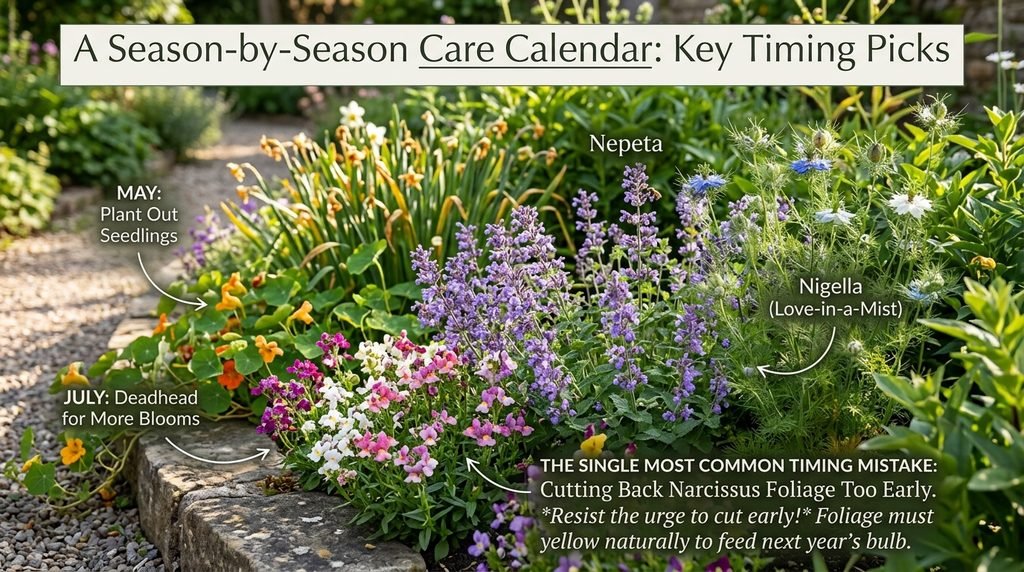
May: Plant out Nasturtium seedlings once nights stay reliably above 50°F. Watch for Narcissus foliage dying back — resist the urge to cut it early.
July: Deadhead Nemesia and Nasturtium regularly to extend bloom into late summer. Watch Night-Blooming Cereus buds closely if a bloom cycle appears imminent.
The single most common timing mistake in this group is cutting back Narcissus foliage too early. That foliage feeds next year’s bulb, and removing it before it yellows naturally weakens future blooms.
Mistakes Beginners Make With This Letter
A few errors show up repeatedly with flowers that start with N, and most trace back to habits that work fine for other plants but not this group.
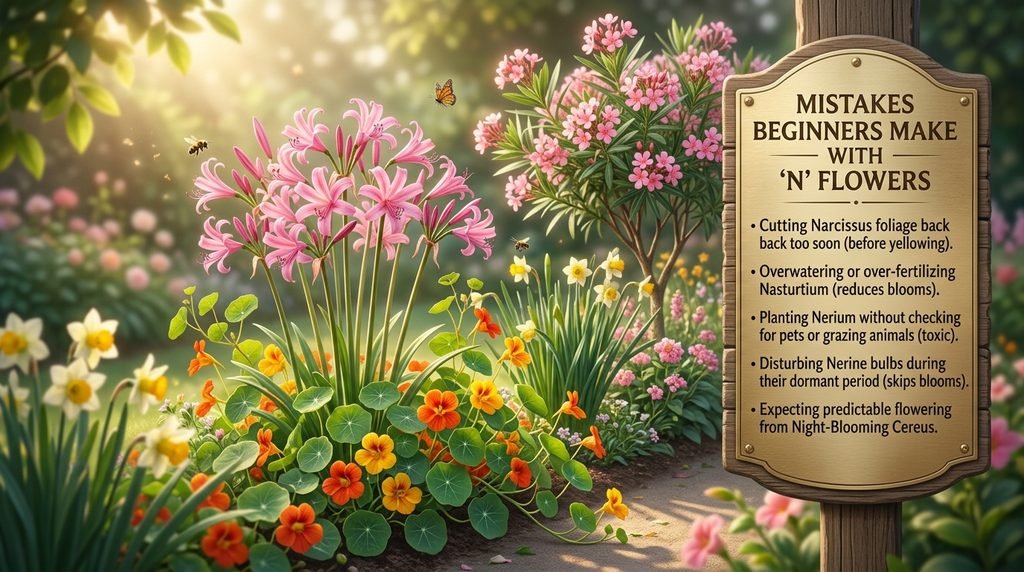
Cutting Narcissus foliage back too soon is the most common mistake by far. Overwatering Nasturtium is a close second — rich, wet soil pushes leafy growth at the expense of flowers. Planting Nerium without checking for pets or grazing animals nearby is a serious oversight given how toxic the plant is. Disturbing Nerium bulbs during their dormant period often causes a full year without blooms, catching gardeners off guard when a reliable bloomer suddenly goes quiet.
- Cutting back Narcissus foliage before it yellows naturally
- Overwatering or over-fertilizing Nasturtium, which reduces blooms
- Planting Nerium without considering pets, kids, or livestock nearby
- Disturbing Nerine bulbs during dormancy, which can skip a bloom cycle
- Expecting Night-Blooming Cereus to flower on a predictable schedule
Most of these mistakes come from impatience rather than a lack of skill. Waiting out a dying-back bulb or a dormant Nerine clump takes more patience than most beginners expect.
Where to Actually Buy These
Availability shifts more than expected across this letter. Narcissus, Nasturtium, and Nepeta are nursery staples — nearly every garden center carries all three in season, usually at a low individual cost. Nemesia and Nigella are close behind, widely available as seed packets or spring bedding plants at most full-service nurseries.
Nerine, Night-Blooming Cereus, and Nun’s Orchid sit at the other end. These typically require a specialty bulb supplier or an orchid nursery rather than a general garden center. That gap in availability often reflects the specific conditions these plants need, which mainstream nurseries aren’t always set up to guarantee. The specialty tier here also tends to cost noticeably more per plant than the common tier.
If You Only Have Room for Three
Anyone working with limited space benefits from narrowing this list down fast. Narcissus takes the first spot, since almost no other bulb delivers reliable spring color for so little ongoing effort. Nasturtium takes the second spot as the fastest, most forgiving annual on this entire list, with the bonus of edible flowers and leaves.
The third spot depends on the space itself. Gardeners with a shaded patio should choose New Guinea Impatiens for consistent color where little else performs. Anyone chasing scent and texture over color alone should choose Nigella instead. Both are strong enough to justify the final spot.
Handling These Safely
Not every flower that starts with N is safe around pets or small children, and a few require real caution. Nerium is the most serious concern on this entire list — every part of the plant is toxic, and ingestion can affect heart rhythm seriously enough to require emergency veterinary or medical care. Nightshade carries a similar level of risk, particularly from its berries, which can look appealing to a curious child or pet. Narcissus bulbs contain lycorine, a compound that causes vomiting if chewed or eaten, most often when mistaken for an onion.
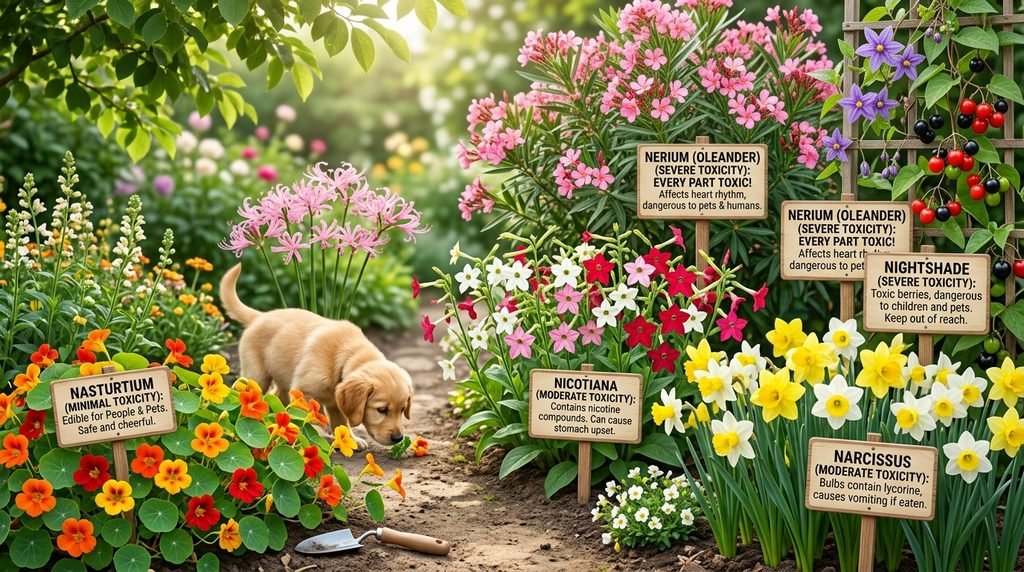
Nicotiana, or Flowering Tobacco, contains nicotine-related compounds that can cause stomach upset in moderate amounts. Nasturtium, by contrast, is genuinely safe — its flowers and leaves are edible for people, and it carries no significant toxicity risk for pets either.
| Flower | Toxicity Level | Main Concern |
| Nerium (Oleander) | Severe | Toxic in every part, affects heart rhythm |
| Nightshade | Severe | Toxic berries, dangerous to children and pets |
| Narcissus | Moderate | Bulbs contain lycorine, cause vomiting if eaten |
| Nicotiana | Moderate | Nicotine-related compounds; stomach upset |
| Nerine | Mild | Bulb can cause mild digestive upset |
| Nasturtium | Minimal | Generally safe, edible for people |
Households with pets that chew on garden plants should keep Nerium and Nightshade well out of reach entirely. Narcissus bulbs deserve a second thought too, particularly in homes where dogs like to dig near freshly planted beds.
Sorting These Flowers by Color
Color often decides where a flower gets planted more than growing conditions do, since most gardeners are matching an existing scheme rather than starting fresh.
Yellow and orange flowers that start with N bring warmth to spring beds — Narcissus and Nasturtium lead this group, and both hold their color well in strong sun. White flowers lean toward elegance and fragrance, with Night-Blooming Cereus and Nun’s Orchid standing out; the Cereus in particular is worth planting specifically for its dramatic, once-a-year evening display. Blue and purple flowers are rarer across this letter, but Nigella, Nierembergia, and Navelwort cover that gap well, each offering a genuinely saturated blue-violet tone rather than a washed-out lavender. Pink and red flowers close the group with Nerine and Nerium, though the latter comes with the safety caveats already covered above.
Image Caption: Nigella’s thread-like foliage wraps each bloom in a soft haze, making it one of the most distinctive blue flowers that start with N.
Full Name Index
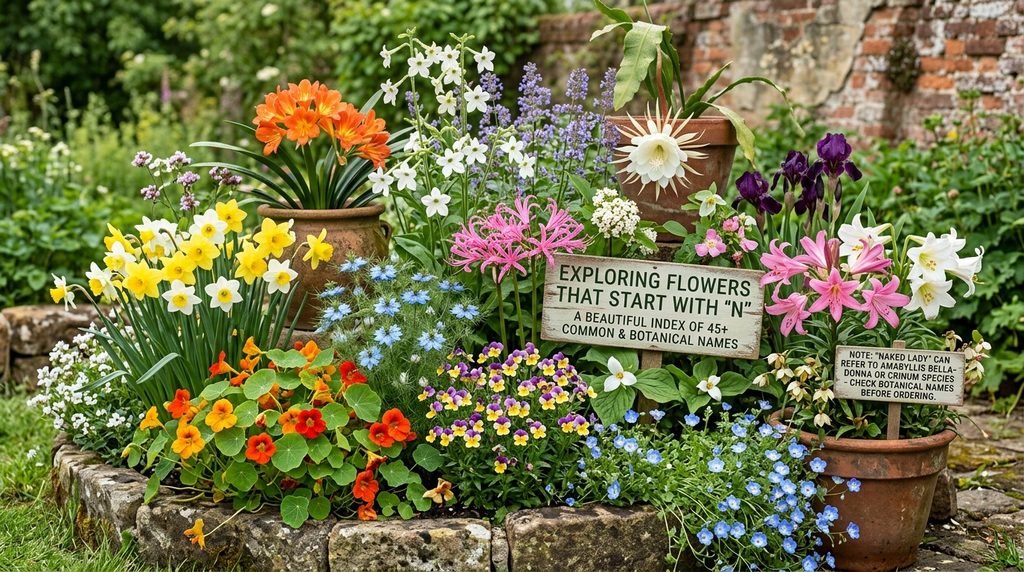
The list below rounds up more than 45 flowers that start with N, mixing common names with botanical genus names. Detailed growing notes for the most relevant entries appear in the sections above; this index exists purely as a fast lookup.
- Narcissus (Daffodil)
- Nasturtium
- Nigella (Love-in-a-Mist)
- Nemesia
- Nerine
- Night-Blooming Cereus
- Nicotiana (Flowering Tobacco)
- Naked Lady (Amaryllis belladonna)
- Nepeta (Catmint)
- New Guinea Impatiens
- Nolana
- Nemophila (Baby Blue Eyes)
- Nerium (Oleander)
- Navelwort
- Nun’s Orchid
- Ninebark
- Night Phlox
- Natal Plum
- Nierembergia (Cupflower)
- Nodding Onion
- Nodding Trillium
- Natal Lily (Clivia)
- New England Aster
- Nootka Rose
- Northern Bush Honeysuckle
- Netted Iris
- Nightshade
- Norfolk Island Hibiscus
- Nasturtium Vine
- Nemesia Sunsatia
- Nerine Sarniensis
- Nigella sativa
- Narrow-Leaved Ironweed
- Ninebark Coral Burst
- Night-Blooming Cactus (Epiphyllum)
- Nankeen Lily
- Native Bluebell
- Nerve Plant
- North Pole Hydrangea
- Nosegay Pink (Dianthus)
- Naked Lady Crinum
- Nemesia Strumosa
- Nolana Paradoxa
- Northern Sea Lavender
- Nerine Bowdenii
- Narrow-Petaled Coneflower
A few names here overlap or confuse buyers. Naked Lady refers to both Amaryllis belladonna and certain Crinum species, depending on the region, so checking the botanical name before ordering avoids surprises. Nierembergia and Nemesia also get mixed up occasionally, despite being unrelated genera with very different growth habits.
Common Name to Botanical Name Crosswalk
Botanical names matter most when ordering online or confirming a nursery tag, since common names shift by region in ways botanical names don’t. The crosswalk below covers the flowers referenced most throughout this guide.
| Common Name | Botanical Name | Family |
| Narcissus | Narcissus spp. | Amaryllidaceae |
| Nasturtium | Tropaeolum majus | Tropaeolaceae |
| Nigella | Nigella damascena | Ranunculaceae |
| Nemesia | Nemesia spp. | Scrophulariaceae |
| Nerine | Nerine bowdenii | Amaryllidaceae |
| Nerium | Nerium oleander | Apocynaceae |
| Nepeta | Nepeta spp. | Lamiaceae |
| Night-Blooming Cereus | Selenicereus spp. | Cactaceae |
| Nicotiana | Nicotiana alata | Solanaceae |
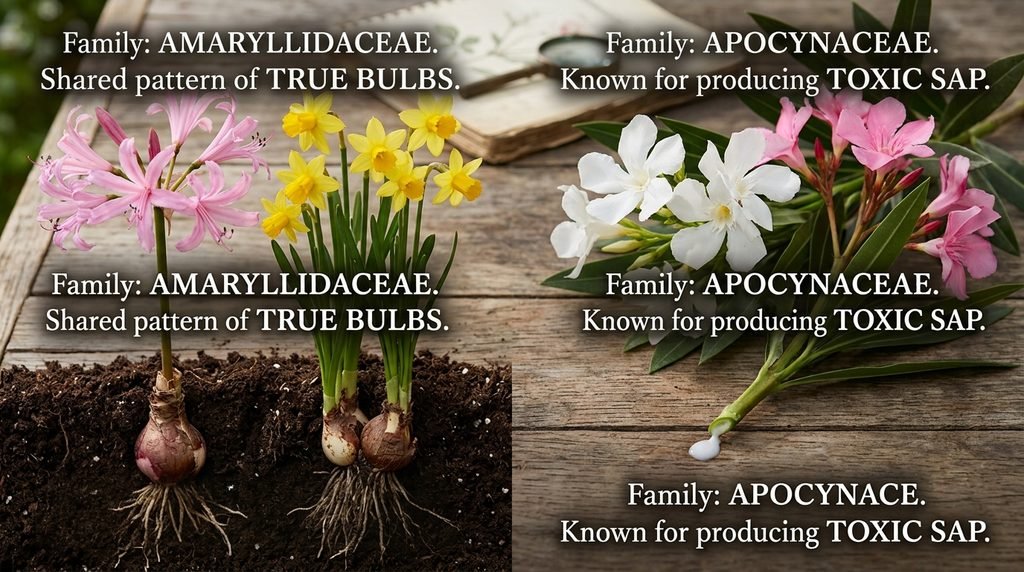
Narcissus and Nerium sharing the Amaryllidaceae family explains why both grow from true bulbs and follow a similar underground growth pattern. Nerium’s placement in Apocynaceae puts it in the same family as Milkweed and Mandevilla, a family known broadly for producing toxic sap.
What These Flowers Have Meant Through History
A few flowers that start with N carry symbolism that reaches well past the garden. Narcissus ties directly to Greek mythology, named for a young man who fell in love with his own reflection and was transformed into the flower that now bears his name. That story has kept Narcissus associated with self-reflection and, less flatteringly, vanity, across centuries of literature.
Nasturtium carries a gentler meaning, often linked to patriotism and conquest in older European flower symbolism, partly because its shape was compared to a shield and helmet by early botanists. Nigella’s folk name, Love-in-a-Mist, comes directly from its hazy ring of foliage, and it has long symbolized a love that’s real but somehow just out of reach. Night-Blooming Cereus carries a more modern symbolic weight, often associated with fleeting beauty and rare opportunity, given how briefly its flowers actually stay open.
Final Thoughts
Flowers that start with N cover more range than most people expect once sorted by growing context instead of the alphabet. From the nearly effortless Narcissus to the specialist-only Night-Blooming Cereus, this letter includes fast annuals, slow bulbs, and a few flowers that genuinely deserve caution. Starting with sun, shade, and skill level makes it far easier to land on the right flowers that start with N for your specific yard, rather than picking one because it happened to fit the letter.
Frequently Asked Questions
What are the easiest flowers that start with N for beginners?
Nepeta, Narcissus, and Nasturtium are the most forgiving picks. All three tolerate average soil and inconsistent watering without much loss in bloom quality.
Which flowers that start with N are toxic to pets?
Nerium and Nightshade carry the most serious risk. Narcissus bulbs and Nicotiana leaves can also cause digestive upset if eaten.
Is Nasturtium actually edible? Yes. Both the leaves and flowers are edible for people, with a peppery flavor often compared to watercress.
Why didn’t my Nerine bloom this year?
Nerine often skips a bloom cycle after being transplanted or disturbed during dormancy. It typically resumes flowering the following year once settled.
How often does Night-Blooming Cereus actually flower?
Mature plants may bloom once or several times a year, but each individual flower opens for a single night before closing permanently.
What’s the fastest-blooming flower that starts with N?
Nasturtium and Nemesia typically bloom within six to eight weeks from seed, making them strong choices for late-season planting.
Can Narcissus grow in partial shade?
Yes, especially under deciduous trees, since its bloom window finishes before summer leaf canopy fully closes in.
Is Nerium safe to grow if I have pets?
It’s not recommended. Every part of the plant is toxic, and it’s better suited to gardens without grazing animals or curious pets nearby.
What’s a good companion plant for Nasturtium?
Squash and cucumbers work well, since Nasturtium often acts as a trap crop that draws aphids away from the main vegetable rows.
When should Narcissus bulbs be planted?
September through October is the ideal window, giving roots time to establish before the ground cools further.
Do Nepeta plants really repel pests?
Its scent is widely credited with confusing certain pests near roses, though results vary by garden and pest pressure.