

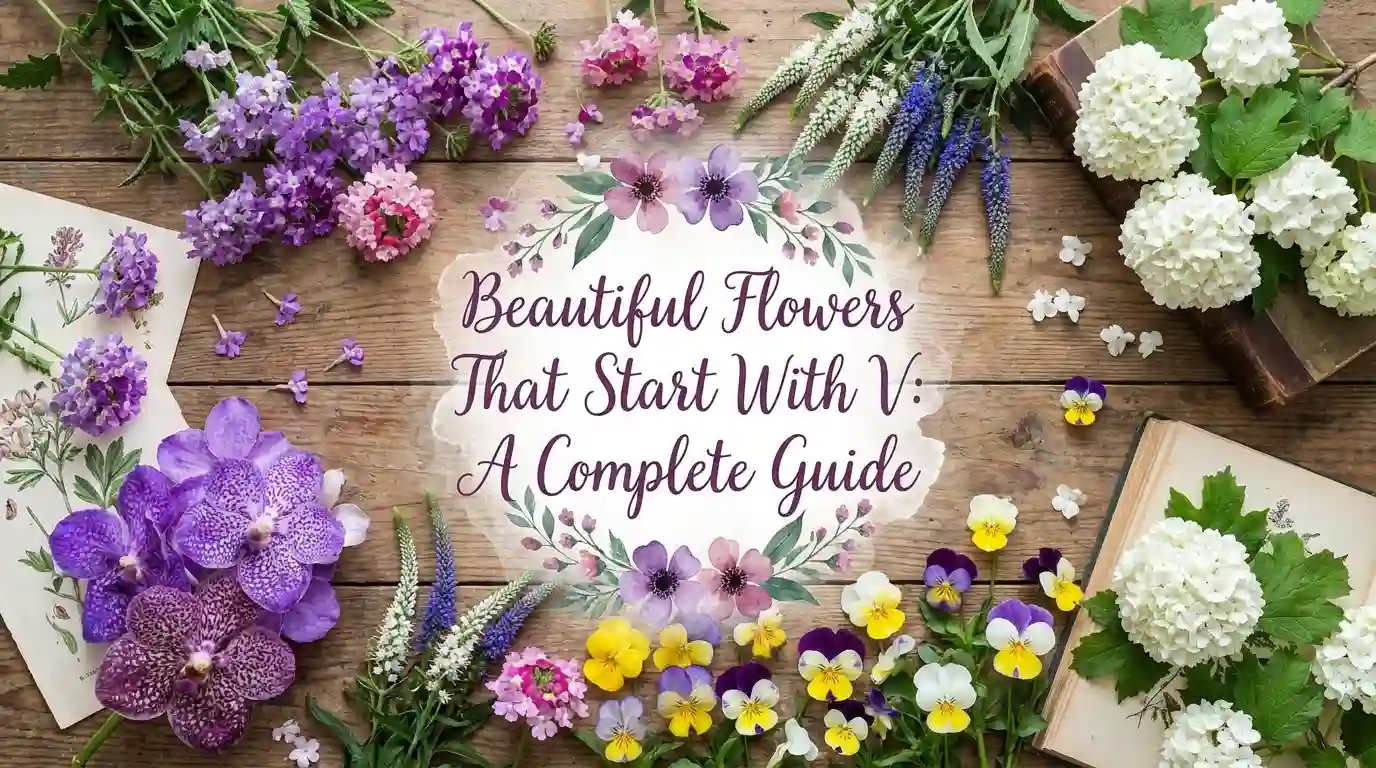
Flowers that start with V range from Violet, a shade-loving classic tied to centuries of symbolism, to Voodoo Lily, a genuinely strange and mildly toxic plant most gardeners have never grown on purpose. That spread between the familiar and the unusual makes this letter worth sorting carefully rather than scanning through in alphabetical order.
This guide organizes flowers that start with V by growing context first. Sun needs, shade tolerance, bloom speed, and skill level all come before any A-Z list. That structure gets you to a usable answer faster than scrolling through 35-plus names looking for the one that actually fits your yard.
The tone stays practical throughout. Easy plants get called easy. A few entries here need real caution around pets, and those get flagged directly rather than softened. Nothing gets inflated just to fill out the count, though this letter has enough genuine variety to make that unnecessary anyway.
A full alphabetical index, a botanical name crosswalk, and a toxicity table sit near the end for quick reference, but the growing-context sections that follow carry the real planning value. Between fragrant groundcovers, tough sun-lovers, and a couple of genuinely odd specialty plants, this letter covers more ground than its size might suggest.
Quick Take: Where to Start
Verbena solves the long-blooming container problem better than almost any other annual, spilling over the edges of a pot and flowering steadily from late spring through frost. Viola works differently, tolerating cool spring and fall temperatures that would stop most other flowering annuals in their tracks.
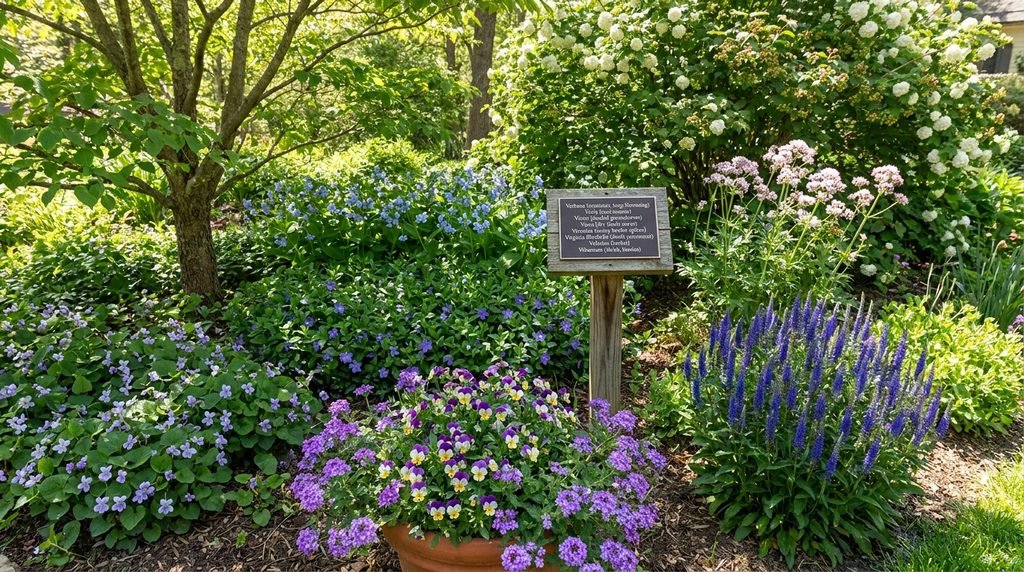
Violet earns its spot as the classic shaded groundcover, spreading slowly under trees and producing small, fragrant purple blooms each spring. Vinca, in its groundcover form, solves a specific problem: covering dry, shaded soil where grass refuses to grow, all while adding a steady show of blue-purple flowers.
Veronica brings reliable, upright spikes of blue or purple color to a sunny perennial border, blooming for weeks with minimal deadheading required. Virginia Bluebells rounds out the shade-loving group as a native spring ephemeral, carpeting a woodland floor in soft blue before disappearing entirely by summer.
Valerian closes the list with a dual purpose, producing clusters of pale pink or white flowers alongside a root long used in herbal preparations. Viburnum earns its place as the shrub pick, offering fragrant spring blooms followed by berries that birds rely on through fall and winter.
Full-Sun Picks That Hold Their Color
A handful of flowers that start with V were built for strong, direct light. These work well on a hot patio, a south-facing border, or any strip of soil that bakes through the afternoon.
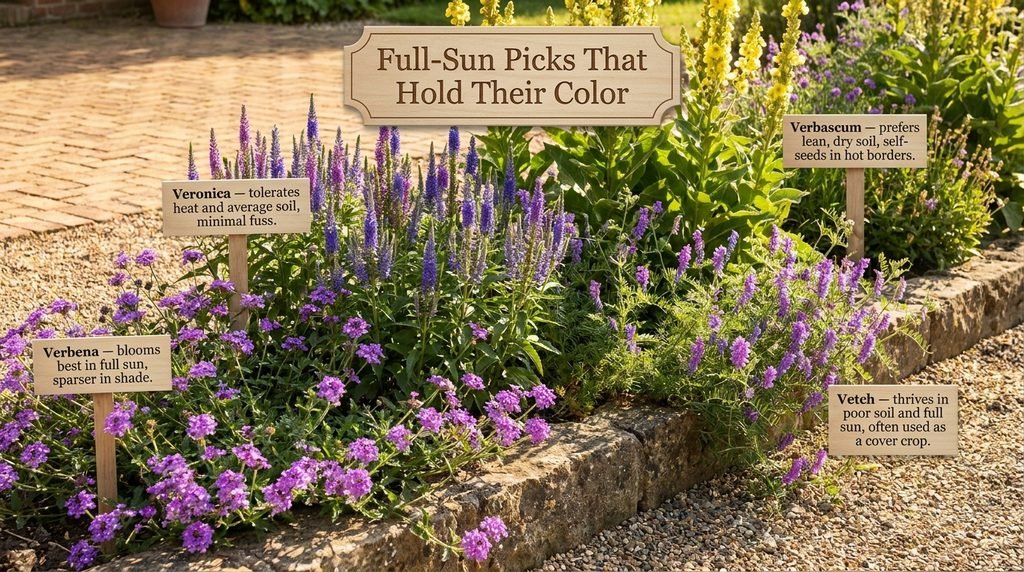
Verbena thrives in full sun and actually blooms more sparsely in shadier spots, where its trailing stems tend to stretch toward available light instead of flowering. Veronica tolerates heat and average soil well, holding its upright flower spikes through a full summer without much fuss. Verbascum, a tall biennial or short-lived perennial, prefers lean, dry soil in full sun, often self-seeding readily along a hot, gravelly border.
- Verbena — blooms best in full sun, sparser in shade
- Veronica — tolerates heat and average soil, minimal fuss
- Verbascum — prefers lean, dry soil, self-seeds in hot borders
- Vetch — thrives in poor soil and full sun, often used as a cover crop
Vetch deserves a specific mention here. It’s grown as often for soil improvement as for its small purple flowers, since its nitrogen-fixing roots make it a useful cover crop in a sunny vegetable garden between growing seasons.
Shade and Partial-Shade Options
Shade suits a genuinely strong share of flowers that start with V, more than several other letters in this series. This matters most for anyone gardening under mature trees or along a north-facing wall.
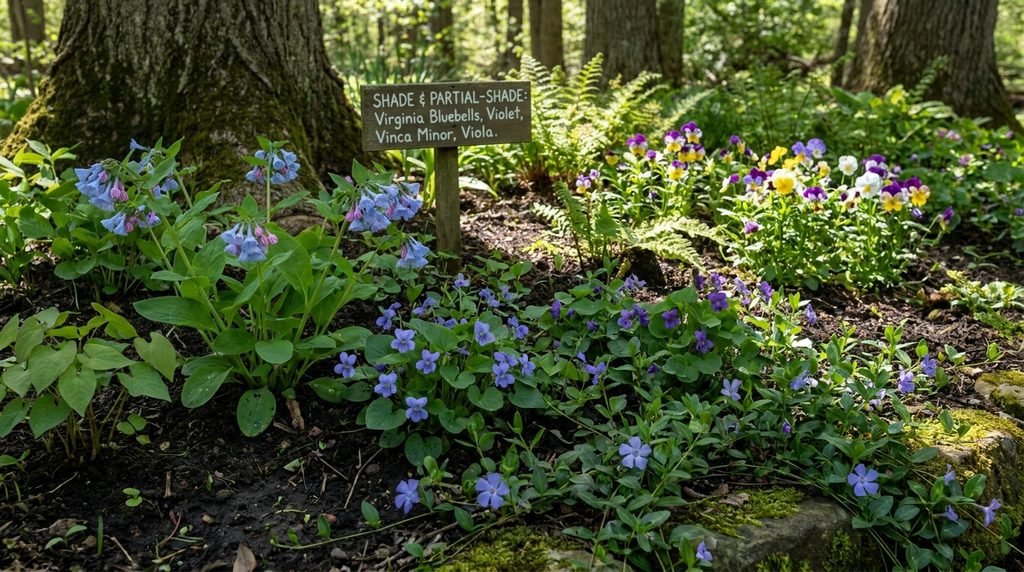
Virginia Bluebells lead this group as a true woodland specialist, needing the cool, moist shade of a deciduous forest floor to thrive, and disappearing back into dormancy once the tree canopy closes in for summer. Violet tolerates shade about as well as any flowering groundcover on this list, spreading steadily under trees where grass typically struggles. Vinca Minor, a low, trailing groundcover, handles deep shade and dry soil in combination, a pairing that defeats many other flowering plants outright.
- Virginia Bluebells — needs cool, moist woodland shade, goes dormant by summer
- Violet — tolerates shade, spreads as a groundcover under trees
- Vinca Minor — handles both deep shade and dry soil together
- Viola — tolerates partial shade, especially in warmer climates
Viola rounds out this group. It performs fine in full sun during cooler months, but in warmer climates, a bit of afternoon shade helps extend its bloom period before summer heat causes it to fade.
Fast Bloomers Versus Slow Payoff
Bloom speed shifts which flowers that start with V make sense for a short-timeline project. Some reward you within weeks; others ask for years.
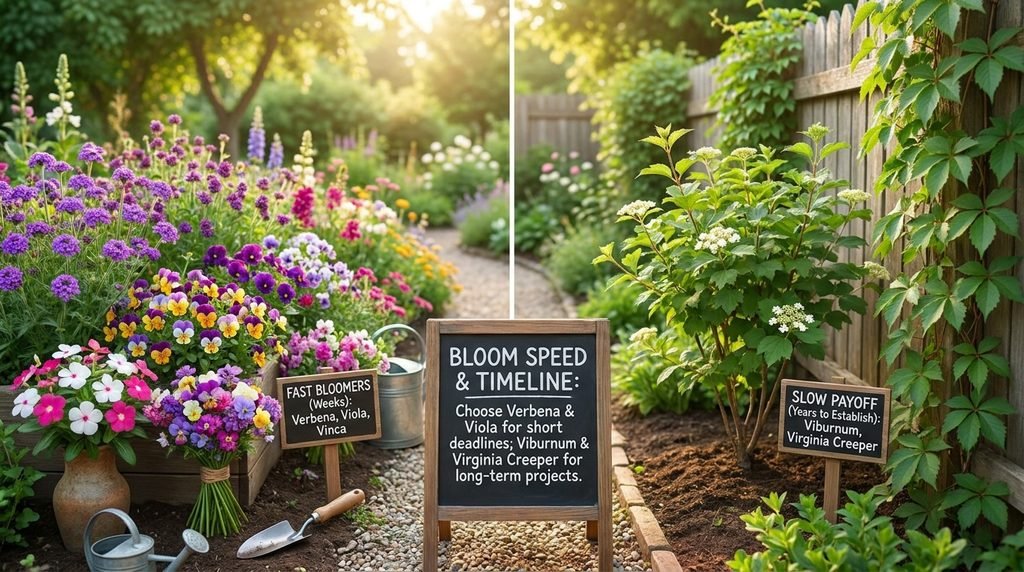
Verbena and Viola move fastest among this group, often flowering within seven to nine weeks from seed or a nursery transplant. Vinca, grown as an annual bedding plant, follows a similar timeline, rewarding a spring planting with steady summer color by early to midsummer. These three suit gardeners planting mid-season or filling a gap before a specific date.
Viburnum sits at the slower end, since most varieties need two to three growing seasons to establish before producing a full flush of spring blooms. Virginia Creeper, grown as a climbing vine, can take a full season or two to cover a fence or wall, even though its growth rate accelerates considerably once established. Anyone working against a tight deadline should lean toward Verbena or Viola rather than these longer-term shrub and vine picks.
What Actually Holds Up With Minimal Care
Several flowers that start with V tolerate real neglect, which matters most for a first-time grower who wants results without a strict schedule.
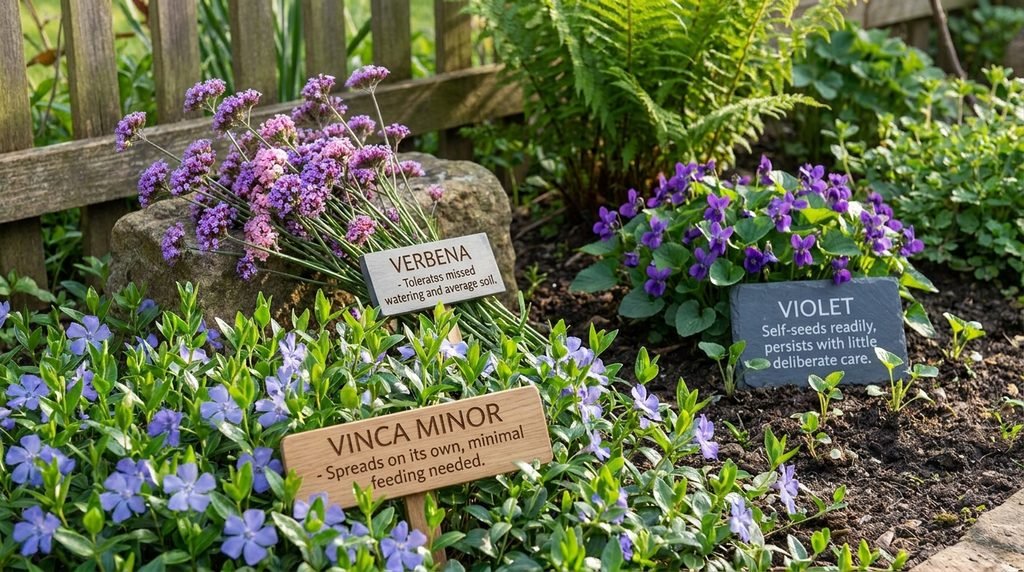
Vinca Minor is the standout here, spreading on its own once established and rarely needing supplemental feeding or watering beyond its first season. Verbena is nearly as forgiving, surviving missed waterings and average soil better than many other flowering annuals. Violet rounds out the easy tier, since its shade tolerance and self-seeding habit mean it often persists in a garden with almost no deliberate effort at all.
- Vinca Minor — spreads on its own, minimal feeding needed
- Verbena — tolerates missed watering and average soil
- Violet — self-seeds readily, persists with little deliberate care
The pattern across this group is genuine tolerance for inconsistency. None of these three punish a missed watering the way some of the pickier flowers that start with V do further down this list.
The Ones Worth a Warning
A smaller group demands more skill, more specific conditions, or genuine caution around pets and children.
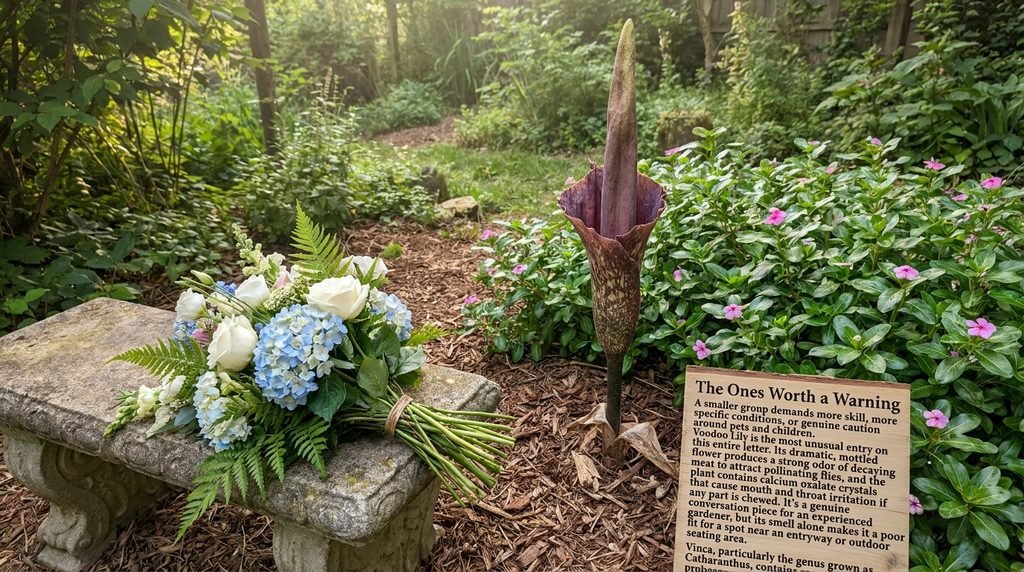
Voodoo Lily is the most unusual entry on this entire letter. Its dramatic, mottled flower produces a strong odor of decaying meat to attract pollinating flies, and the plant contains calcium oxalate crystals that cause mouth and throat irritation if any part is chewed. It’s a genuine conversation piece for an experienced gardener, but its smell alone makes it a poor fit for a spot near an entryway or outdoor seating area. Vinca, particularly the genus grown as Catharanthus, contains vinca alkaloids that can cause vomiting and other symptoms if ingested in quantity, a compound family notable enough that related alkaloids are used in certain chemotherapy treatments under strict medical supervision. Virginia Creeper’s berries carry a mild toxicity risk as well, causing stomach upset in both people and pets if eaten in any real quantity.
- Voodoo Lily — calcium oxalate crystals, strong odor, poor placement near seating
- Vinca (Catharanthus) — contains vinca alkaloids, toxic if ingested in quantity
- Virginia Creeper — berries cause stomach upset if eaten
Virginia Creeper deserves a specific note here too. It’s grown mainly for its brilliant fall foliage color, and while its berries are a food source for birds, they’re not intended for human or pet consumption.
A Companion Planting Guide
Companion planting works better for some pairings than others, and several flowers that start with V have genuinely useful partners worth knowing before laying out a bed. Pest deterrence, pollinator traffic, and soil improvement all factor into these choices.
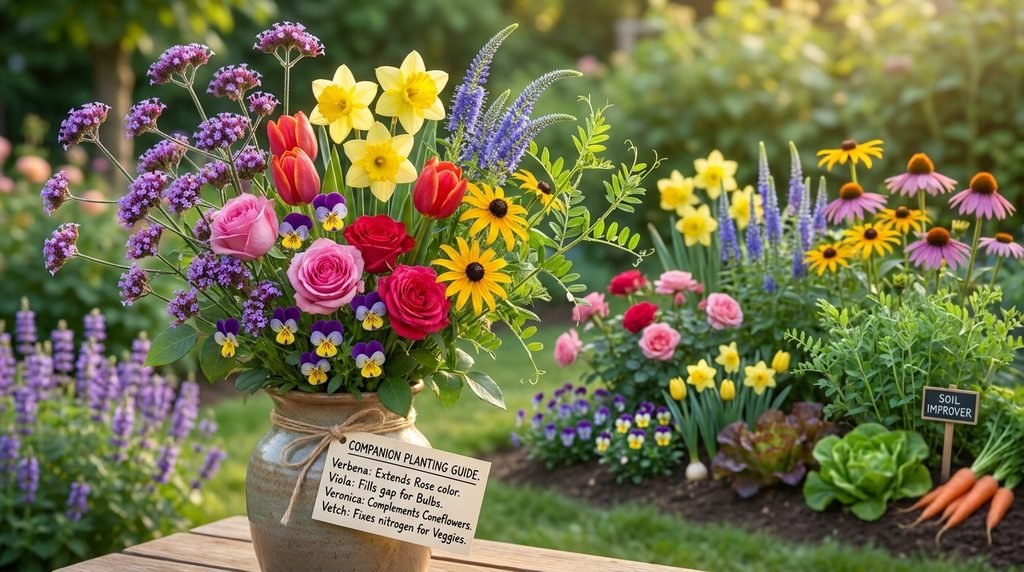
Verbena pairs well with roses, since its long bloom period extends color at the base of a rose bush after the rose’s own flush has slowed. Viola grows comfortably alongside spring-blooming bulbs, filling the visual gap at ground level while taller bulbs finish their display overhead. Vetch, when grown as a cover crop, benefits nearby vegetables directly by fixing nitrogen into the soil, a genuinely functional rather than purely decorative pairing.
| Flower | Good Companion | Why It Works |
| Verbena | Roses | Extends bloom color at the base after roses slow down |
| Viola | Spring bulbs | Fills ground-level gap while bulbs finish blooming |
| Vetch | Vegetables, grain crops | Fixes nitrogen into soil as a cover crop |
| Veronica | Coneflowers, black-eyed susans | Similar sun needs, complementary bloom timing |
Vetch stands out as the most functionally useful companion on this list, since its role in improving soil goes beyond simple visual pairing. That’s a genuinely practical benefit not every letter in this series offers in such a direct form.
A Season-by-Season Care Calendar
Timing changes outcomes for bulbs, seeds, and fast annuals in this group. A few weeks off schedule can mean missing a bloom window entirely. The calendar below covers the top picks from the Quick Take section.
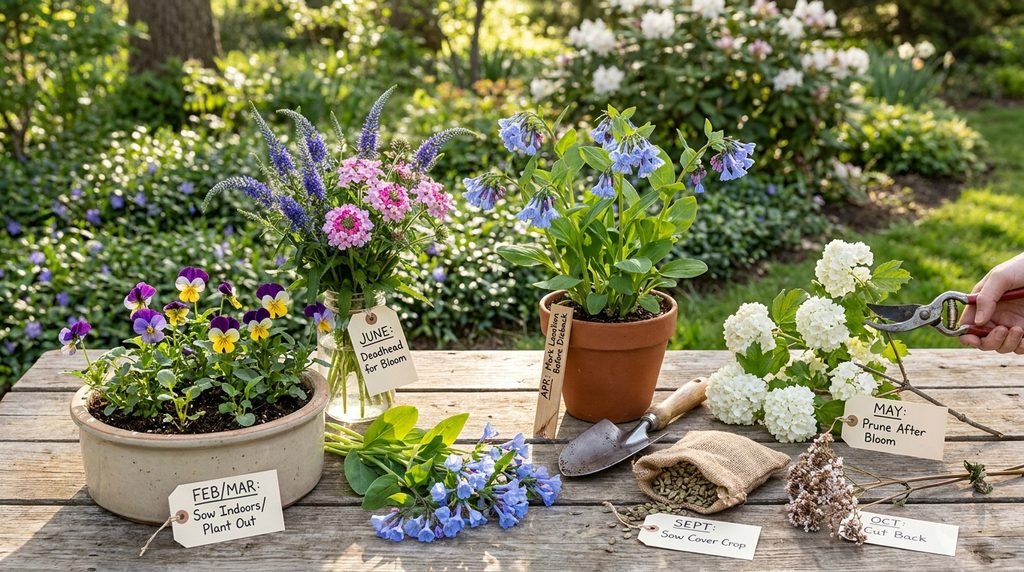
February: Start Viola seeds indoors in cooler climates, since this flower tolerates transplanting out while frost risk still lingers.
March: Direct-sow Verbena once the soil has warmed slightly. Plant out Viola seedlings, which handle a light frost better than most annuals.
April: Divide and transplant established Vinca Minor if it’s outgrown its space. Watch for Virginia Bluebells emerging and blooming before the tree canopy overhead fully leafs out.
May: Plant out Verbena and Vinca bedding plants once frost risk has fully passed. Prune Viburnum immediately after its spring bloom finishes, not before.
June: Deadhead Verbena and Veronica regularly to extend bloom into late summer.
September: Sow Vetch as a fall cover crop in vegetable beds that will lie fallow over winter, turning it into the soil the following spring.
October: Cut back Valerian after bloom fades to tidy the bed before winter dormancy.
The most useful timing note for this letter involves Virginia Bluebells specifically. Its foliage dies back completely by early summer, so marking its location in spring helps avoid accidentally digging into dormant roots later in the season.
Mistakes Beginners Make With This Letter
A few errors show up repeatedly with flowers that start with V, and most trace back to habits that work fine elsewhere but not here.
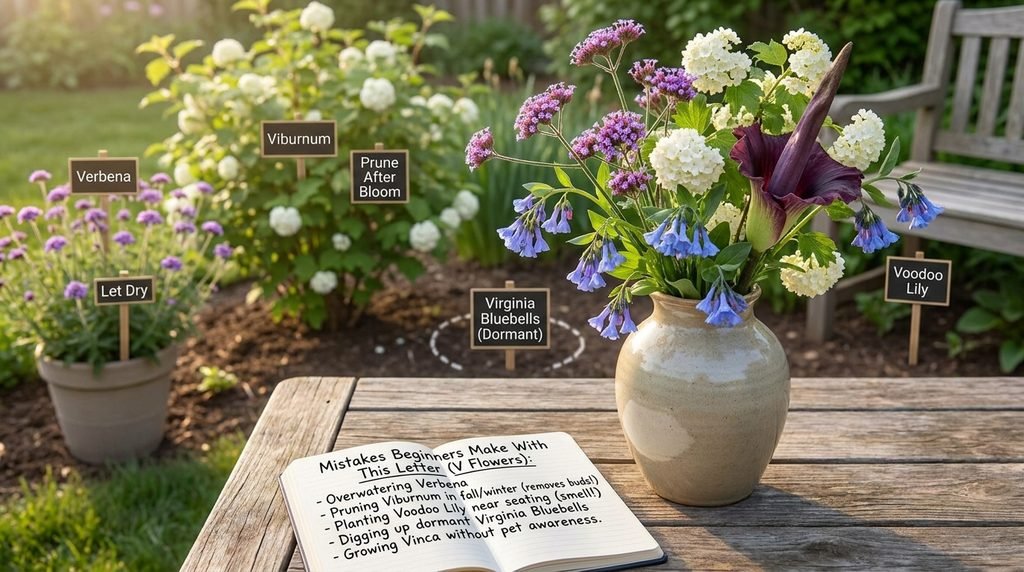
Overwatering Verbena is probably the most common mistake, since gardeners used to thirstier annuals end up encouraging fungal issues in a plant that actually prefers to dry out slightly between waterings. Pruning Viburnum at the wrong time is a close second, since cutting it back in fall or winter removes the following spring’s flower buds before they’ve had a chance to open. Planting Voodoo Lily near an entryway or patio without considering its smell during bloom is a frequent regret once the flower actually opens. Digging in a spot where Virginia Bluebells have gone dormant, without remembering their location, is another common mistake that damages roots unnecessarily.
- Overwatering Verbena instead of letting it dry slightly between waterings
- Pruning Viburnum in fall or winter, removing next year’s flower buds
- Planting Voodoo Lily near seating areas without accounting for its smell
- Digging in dormant Virginia Bluebells’ location without marking it first
- Growing Vinca (Catharanthus) without considering pets that chew on plants
Most of these mistakes come from unfamiliarity with a plant’s specific quirks rather than from a lack of general gardening skill.
Where to Actually Buy These
Availability shifts noticeably across this letter. Verbena, Viola, and Vinca are nursery staples — nearly every garden center and big-box retailer carries all three in season, usually at a low individual cost. Veronica and Viburnum are close behind, widely available as established perennial and shrub starts.
Voodoo Lily, Vanda Orchid, and Virginia Bluebells sit at the other end. These typically require a specialty bulb supplier, an orchid grower, or a native-plant nursery rather than a general garden center. Voodoo Lily in particular is more often found through mail-order specialty tuber sellers than in a typical retail setting, given its niche appeal. The specialty tier here commands a noticeably higher price than the common tier, particularly for named Vanda Orchid hybrids.
If You Only Have Room for Three
Anyone working with a small bed or limited budget benefits from narrowing this list fast. Verbena takes the first spot, since almost no other annual on this list delivers as much long-blooming color for so little ongoing effort. Viola earns the second spot as the most reliable cool-season color source on this entire list.
The third spot depends on the space and goal. Gardeners with a shaded area under trees should choose Violet or Vinca Minor for reliable groundcover color where little else performs. Anyone chasing height and structure in a sunny border should choose Veronica instead. All three are strong enough to justify the final spot depending on what the space actually needs.
Handling These Safely
Not every flower that starts with V is safe around pets or small children, and a few deserve real caution rather than a passing mention. Voodoo Lily contains calcium oxalate crystals that cause mouth and throat irritation if chewed, in addition to its notably unpleasant odor during bloom. Vinca, specifically the Catharanthus type often sold as annual bedding Vinca, contains alkaloids that can cause vomiting and other symptoms if a pet or child eats a significant amount of the plant.
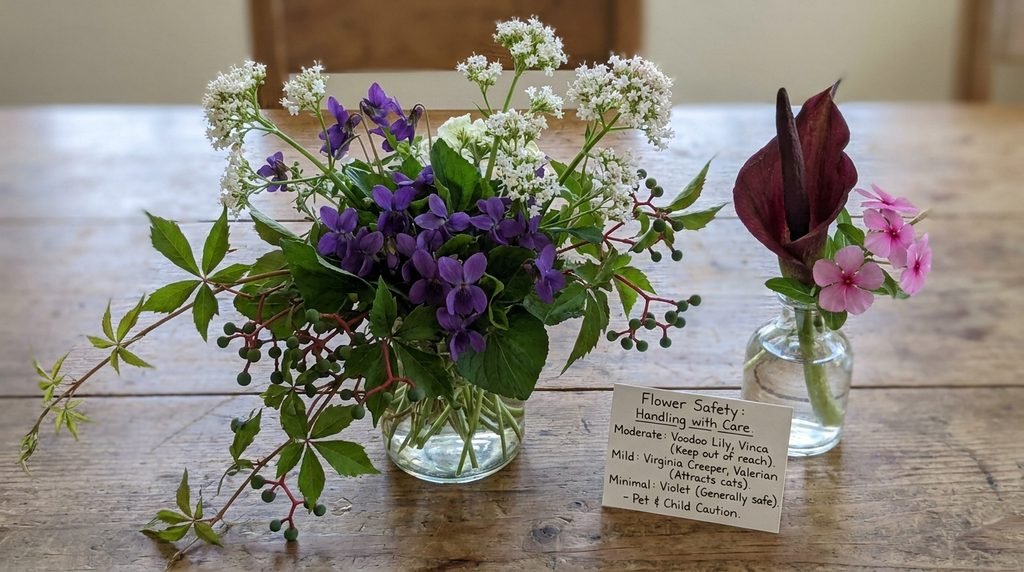
Virginia Creeper’s berries cause mild stomach upset if eaten, though the plant’s dramatic fall foliage makes it a popular choice despite this caveat. Valerian root has a long history of safe herbal use in controlled preparations, but the fresh plant can cause drowsiness or mild digestive upset if eaten directly in quantity, and cats are often strongly attracted to it in a manner similar to catnip. Violet, by contrast, is one of the safer flowers on this entire list, with both the flowers and leaves used in cooking and generally considered non-toxic.
| Flower | Toxicity Level | Main Concern |
| Voodoo Lily | Moderate | Calcium oxalate crystals, oral irritation |
| Vinca (Catharanthus) | Moderate | Alkaloids cause vomiting if ingested |
| Virginia Creeper | Mild | Berries cause stomach upset if eaten |
| Valerian | Mild | Drowsiness or upset in quantity; attracts cats |
| Violet | Minimal | Generally safe, used in cooking |
Households with pets that chew on garden plants should keep Voodoo Lily and Vinca out of easy reach. Valerian deserves a specific note for cat owners, since cats may seek it out deliberately in a way that increases the odds of overconsumption.
Sorting These Flowers by Color
Color often decides where a flower actually gets planted more than growing conditions do, since most gardeners are matching an existing scheme rather than starting fresh.
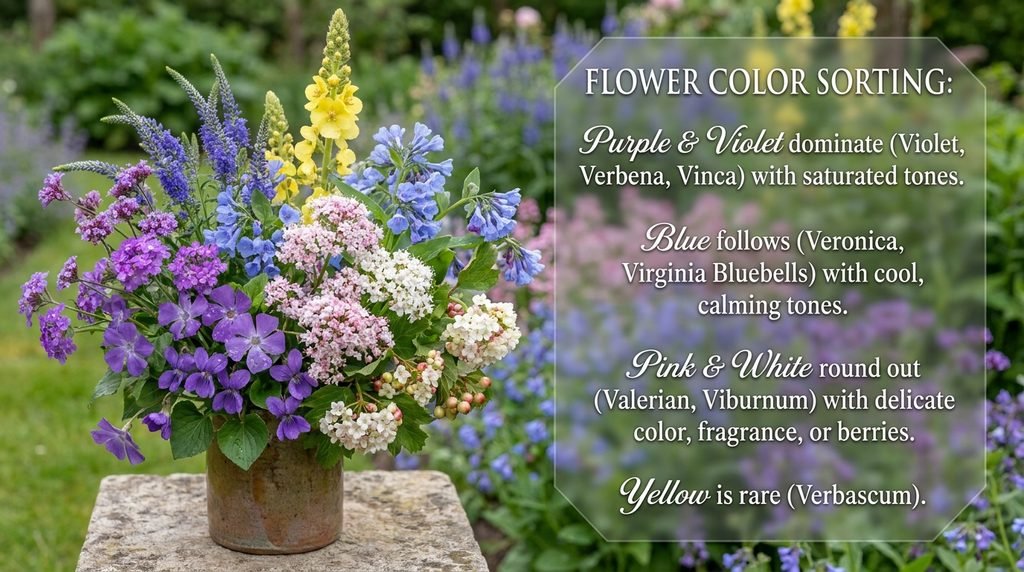
Purple and violet flowers dominate this letter more than almost any other color, with Violet, Verbena, and Vinca all offering saturated tones that hold up well across sun and shade alike. Blue flowers follow closely with Veronica and Virginia Bluebells, both bringing a genuinely cool, calming tone rare enough in most gardens to stand out. Pink and white flowers round out the letter with Valerian and certain Viburnum varieties, both bringing softer, more delicate color alongside useful fragrance or berries. Yellow tones are rarer across this letter, though Verbascum offers one of the few genuine options in that space.
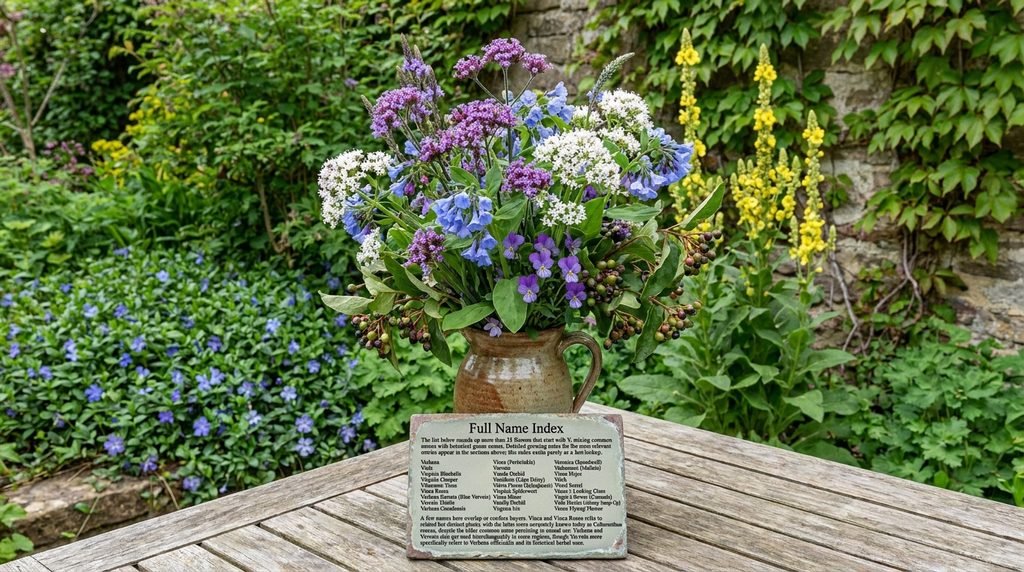
Full Name Index
The list below rounds up more than 35 flowers that start with V, mixing common names with botanical genus names. Detailed growing notes for the most relevant entries appear in the sections above; this index exists purely as a fast lookup.
- Verbena
- Viola
- Violet
- Vinca (Periwinkle)
- Veronica (Speedwell)
- Virginia Bluebells
- Vervain
- Valerian
- Verbascum (Mullein)
- Viburnum
- Victoria Water Lily
- Vanda Orchid
- Vinca Major
- Virginia Creeper
- Venidium (Cape Daisy)
- Verbena Bonariensis
- Vetch
- Velvet Flower (Salpiglossis)
- Viburnum Tinus
- Violet Wood Sorrel
- Vinca Rosea
- Volkameria
- Verbena Hastata (Blue Vervain)
- Virginia Spiderwort
- Vervain Mallow
- Vinca Minor
- Voodoo Lily
- Venus’s Looking Glass
- Virgin’s Bower (Clematis)
- Valerianella
- Vervain Thistle
- Verbena Canadensis
- Vanilla Orchid
- Viola Tricolor (Johnny Jump-Up)
- Virginia Iris
- Venus Flytrap Flower
A few names here overlap or confuse buyers. Vinca and Vinca Rosea refer to related but distinct plants, with the latter more accurately known today as Catharanthus roseus, despite the older common name persisting in casual use. Verbena and Vervain also get used interchangeably in some regions, though Vervain more specifically refers to Verbena officinalis and its historical herbal uses.
Common Name to Botanical Name Crosswalk
Botanical names matter most when ordering online or confirming a nursery tag, since common names shift by region in ways botanical names don’t. The crosswalk below covers the flowers referenced most throughout this guide.
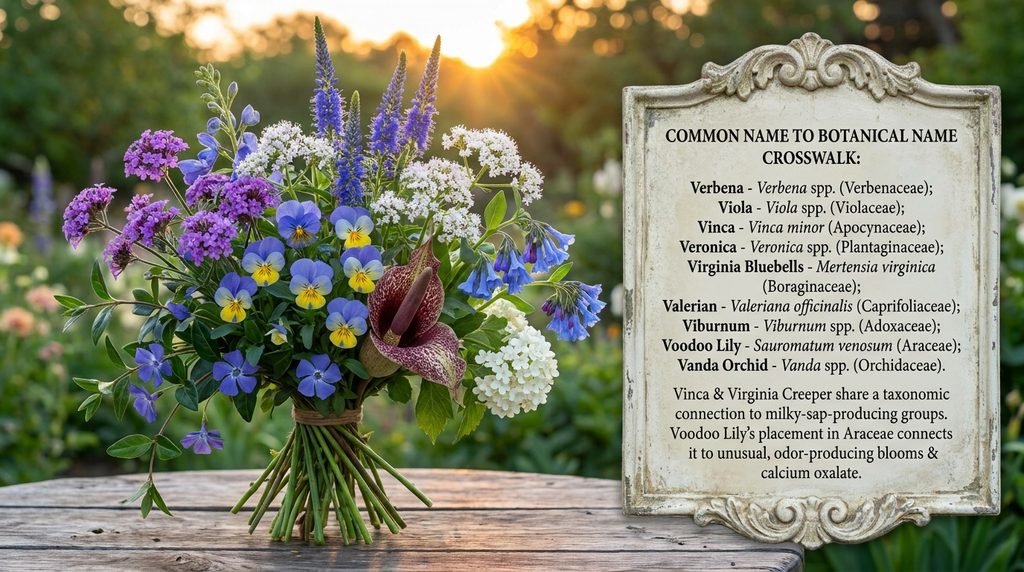
| Common Name | Botanical Name | Family |
| Verbena | Verbena spp. | Verbenaceae |
| Viola | Viola spp. | Violaceae |
| Vinca | Vinca minor | Apocynaceae |
| Veronica | Veronica spp. | Plantaginaceae |
| Virginia Bluebells | Mertensia virginica | Boraginaceae |
| Valerian | Valeriana officinalis | Caprifoliaceae |
| Viburnum | Viburnum spp. | Adoxaceae |
| Voodoo Lily | Sauromatum venosum | Araceae |
| Vanda Orchid | Vanda spp. | Orchidaceae |
Vinca and Virginia Creeper sharing a broader taxonomic connection to milky-sap-producing plant groups explains some of the caution attached to both, even though they sit in different families. Voodoo Lily’s placement in Araceae connects it to several other plants known for unusual, odor-producing blooms and calcium oxalate content, a pattern worth remembering across this entire plant family.
What These Flowers Have Meant Through History
Several flowers that start with V carry symbolism reaching well beyond the garden. Violet has represented modesty and faithfulness for centuries, an association strengthened in more recent history by Napoleon Bonaparte’s fondness for the flower, which became an unofficial symbol of his supporters during his exile and eventual return to power.
Verbena carries an older, more mystical meaning tied to enchantment and protection, historically used in various rituals and folk medicine practices across Europe long before its modern role as a cheerful bedding annual. Viburnum’s symbolism leans toward endurance and quiet strength, fitting for a shrub that provides fragrant spring blooms, useful berries, and reliable structure across multiple seasons. Valerian, by contrast, has picked up a gentler meaning tied to readiness and accommodation, likely connected to its long history as a calming herbal remedy used to ease restlessness.
Final Thoughts
Flowers that start with V cover a genuinely wide range once sorted by growing context instead of the alphabet, from the classic, shade-loving Violet to the strange, odor-producing Voodoo Lily. Starting with sun, shade, and skill level makes it far easier to land on the right flowers that start with V for your specific space, rather than picking one purely because it’s the most familiar name on the list. Whatever combination of color, fragrance, and growing conditions you’re working with, there’s very likely a V flower suited to it.
Frequently Asked Questions
What are the easiest flowers that start with V for beginners?
Verbena, Viola, and Vinca Minor are the most forgiving picks. All three tolerate average soil and inconsistent watering without much loss in bloom quality.
Which flowers that start with V are toxic to pets?
Voodoo Lily and Vinca carry the most notable risk. Virginia Creeper berries can also cause stomach upset if eaten.
Why does my Voodoo Lily smell so bad?
This is normal and intentional. The flower produces an odor similar to decaying meat specifically to attract the flies that pollinate it.
What’s the fastest-blooming flower that starts with V?
Verbena and Viola typically flower within seven to nine weeks from seed or transplant, making them strong choices for gardeners planting mid-season.
Is Vinca the same as Vinca Rosea?
They’re related but distinct. Vinca Rosea is an older common name for what’s now more accurately called Catharanthus roseus.
Why did my Virginia Bluebells disappear in summer?
This is expected behavior. Virginia Bluebells are a spring ephemeral, meaning their foliage naturally dies back once warmer weather arrives.
Is Valerian safe to grow if I have cats?
It’s generally safe, but cats are often strongly attracted to it, similar to catnip, which can lead to overconsumption if it’s easily accessible.
What’s a good companion plant for Verbena?
Roses work well, since Verbena’s long bloom period extends color at the base of a rose bush after its own flowering slows down.
When should Vetch be planted as a cover crop?
Early fall, so it can establish before winter and be turned into the soil the following spring to improve nitrogen levels.
Why won’t my Viburnum bloom this spring?
Late pruning is the most common cause. Cutting it back in fall or winter removes flower buds that have already formed for the following spring.