

Flowers that start with P cover an unusually wide stretch of the plant kingdom. Peony alone has carried centuries of meaning around honor and romance, while Pokeweed sits quietly at the other end of the letter as a genuine safety concern. Few other letters pack in this much contrast between garden staple and outright hazard.
This guide sorts flowers that start with P by growing context first, not by alphabet. Sun needs, shade tolerance, bloom speed, and skill level all come before any A-Z list. That structure gets you to a usable answer faster than scrolling through 45-plus names in sequence.
The tone stays practical throughout. Easy plants get called easy. Fussy ones get flagged honestly, including a few that need real caution around pets and children. Nothing here gets inflated just to fill out the count.
Meaning and symbolism get real attention too, since Peony, Poppy, and Passionflower each carry genuinely distinctive stories worth knowing. A full alphabetical index, a botanical name crosswalk, and a toxicity table sit near the end for quick reference, but the growing-context sections that follow are where the real planning value lives.
Quick Take: Where to Start
Peony solves the long-term investment problem better than almost any other perennial. Plant it once, and a healthy clump can keep producing enormous blooms for decades with minimal fuss. Petunia works differently. It grows fast, fills containers quickly, and keeps flowering from late spring through the first hard frost.
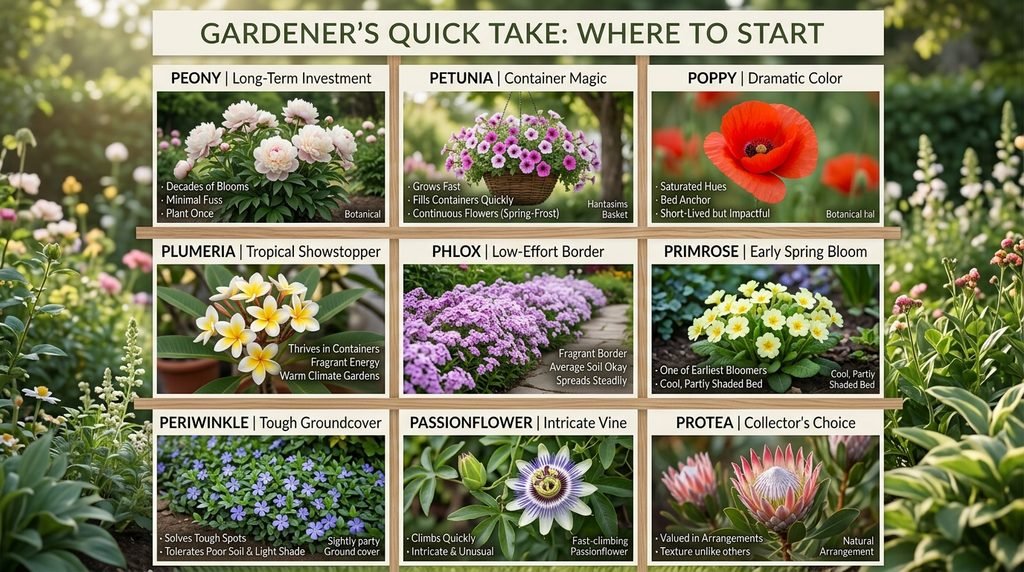
Poppy earns its spot for drama. Its paper-thin petals open in colors so saturated that a single patch can anchor an entire bed, even though each individual bloom lasts only a few days. Plumeria brings the tropical, fragrant showstopper energy associated with leis and warm-climate gardens, thriving in containers even outside frost-free zones.
Phlox is the low-effort pick for a fragrant summer border, spreading steadily without demanding much beyond average soil. Primrose earns its place as one of the earliest bloomers in a cool, partly shaded spring bed. Periwinkle solves the tough-groundcover problem, tolerating poor soil and light shade where many other spreading plants give up.
Passionflower rounds out the group as the vine pick, climbing quickly and producing some of the most intricate, unusual blooms of any flower on this list. Protea closes things out as the collector’s choice, valued in cut-flower arrangements for a texture unlike anything else covered here.
Full-Sun Picks That Hold Their Color
A handful of flowers that start with P were built for strong, direct light. These work well on a hot patio, a south-facing border, or any strip of soil that bakes through the afternoon.
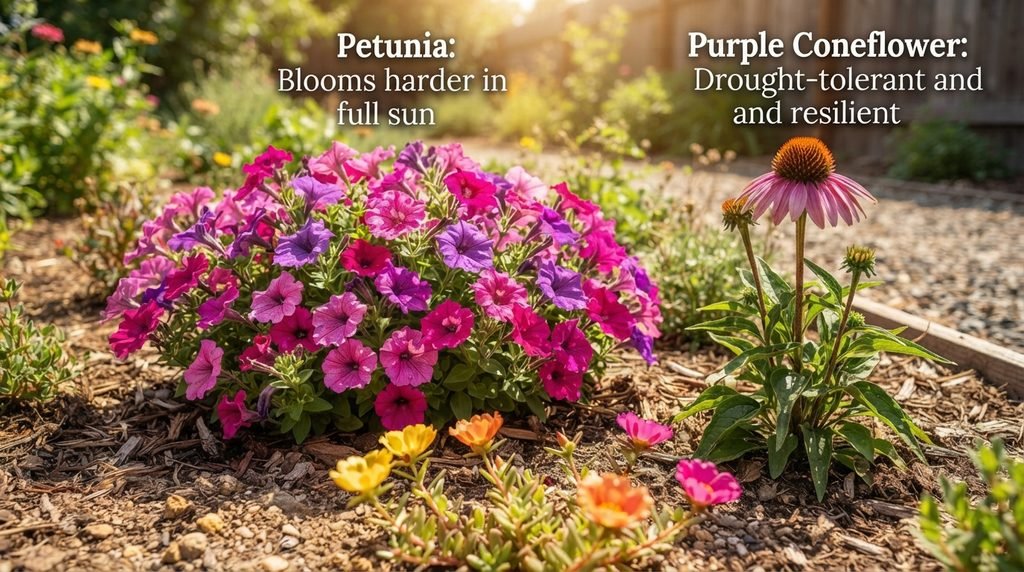
Petunia tops this list, blooming harder in full sun than in partial shade, where its flowers tend to stretch and thin. Poppy also demands strong sun, though most types bloom for only a short window before going dormant or fading for the season. Portulaca, commonly called Moss Rose, closes its petals on cloudy days and opens fully only once direct sun returns, a habit that makes its light preference obvious at a glance.
- Petunia — blooms harder in full sun than partial shade
- Poppy — needs strong light during its short bloom window
- Portulaca — closes on cloudy days, thrives in hot, dry beds
- Purple Coneflower — tolerates poor soil and full sun with minimal care
- Pincushion Flower — long summer bloom in a sunny border
Purple Coneflower deserves a specific mention here. It handles drought and poor soil about as well as anything on this list, making it a strong pick for a neglected sunny corner where fussier plants would struggle.
Shade and Partial-Shade Options
Shade narrows this list considerably, but a few flowers that start with P genuinely prefer it over full sun. This matters most for anyone gardening under mature trees or along a north-facing wall.
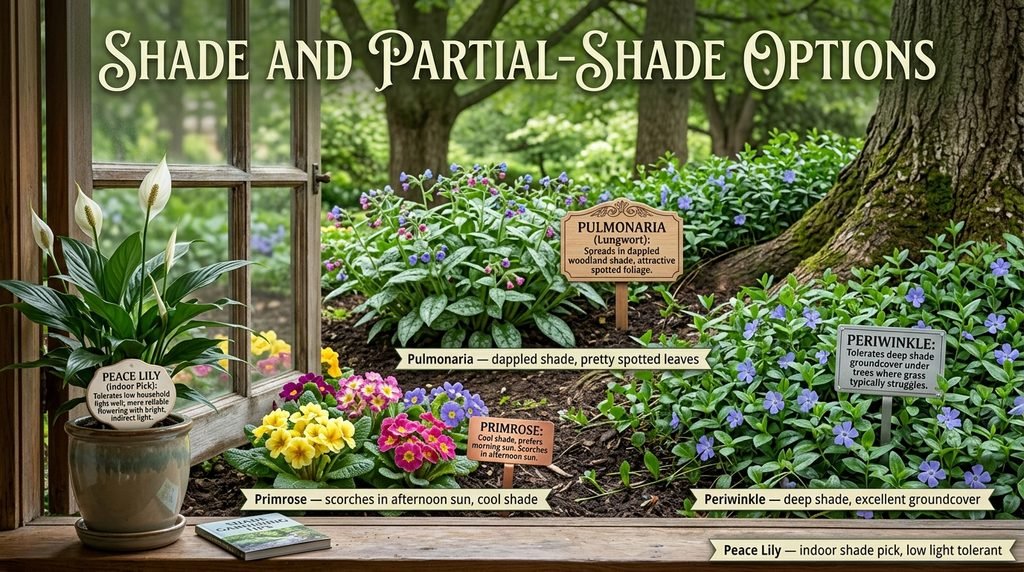
Primrose leads this group, since strong afternoon sun tends to scorch its early spring blooms rather than encourage them. Pulmonaria, or Lungwort, spreads well in dappled woodland shade, and its spotted foliage stays attractive even after its small blue or pink flowers fade. Periwinkle tolerates deep shade better than almost any other groundcover on this list, spreading steadily under trees where grass typically struggles.
- Primrose — scorches in strong afternoon sun, best in cool shade
- Pulmonaria — dappled shade, attractive foliage beyond bloom time
- Periwinkle — tolerates deep shade, spreads as a groundcover
- Peace Lily — indoor shade pick, tolerates low household light well
Peace Lily rounds out this group as the indoor option. It tolerates the lower light levels of a typical living room better than most flowering houseplants, though it will flower more reliably with some bright, indirect light.
Fast Bloomers Versus Slow Payoff
Bloom speed shifts which flowers that start with P make sense for a short-timeline project. Some reward you within weeks; others ask for years of patience.
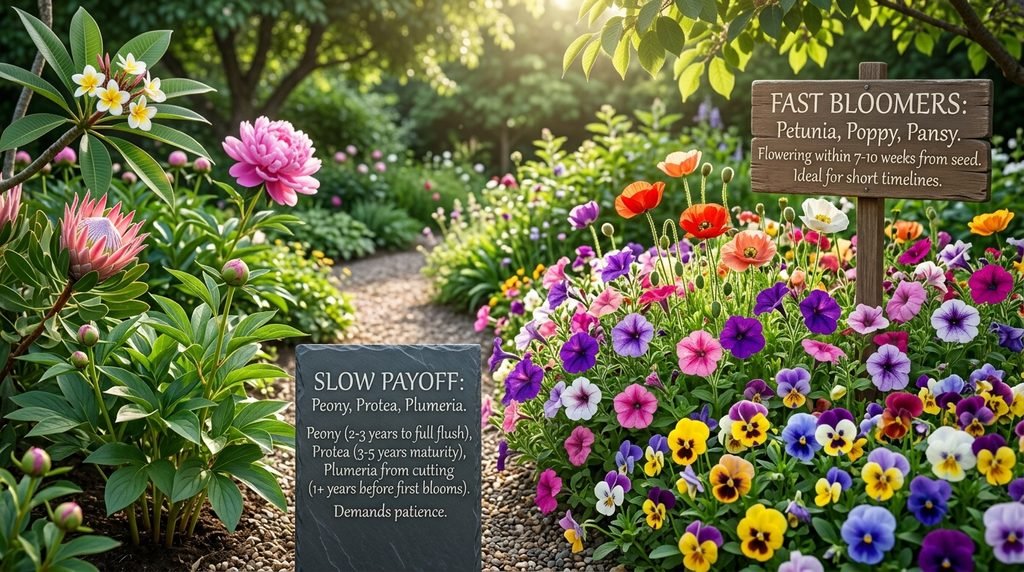
Petunia and Poppy move fastest among this group, often flowering within seven to nine weeks from seed. Pansy isn’t far behind, typically blooming within eight to ten weeks and tolerating cooler temperatures better than most fast annuals. These three suit gardeners planting mid-season or filling a gap before a specific date.
Peony sits at the opposite end. A newly planted root division often needs two to three years before producing a full flush of blooms, and gardeners are frequently warned not to judge a young plant by its first thin season. Protea, grown as a shrub, can take three to five years to reach flowering maturity, and Plumeria grown from a cutting typically needs at least a year or two of steady growth before its first blooms appear. Anyone working against a tight deadline should lean toward the fast annuals rather than these slower, long-term picks.
What Actually Holds Up With Minimal Care
A few flowers that start with P tolerate real neglect, which matters most for a first-time grower who wants results without a strict schedule.
Petunia is the standout among the annuals, surviving missed waterings and average soil better than most bedding plants. Periwinkle is nearly as forgiving, spreading on its own once established and rarely needing supplemental feeding. Portulaca rounds out the easy tier, since its drought tolerance means it genuinely performs better with less attention rather than more.
- Petunia — tolerates missed watering and average soil
- Periwinkle — spreads on its own, minimal feeding needed
- Portulaca — thrives on neglect in hot, dry spots
The pattern across this group is tolerance for inconsistency. None of these three punish a missed watering the way some of the pickier flowers that start with P do further down this list.
The Ones Worth a Warning
A smaller group demands more skill, more specific conditions, or genuine caution around pets and children.
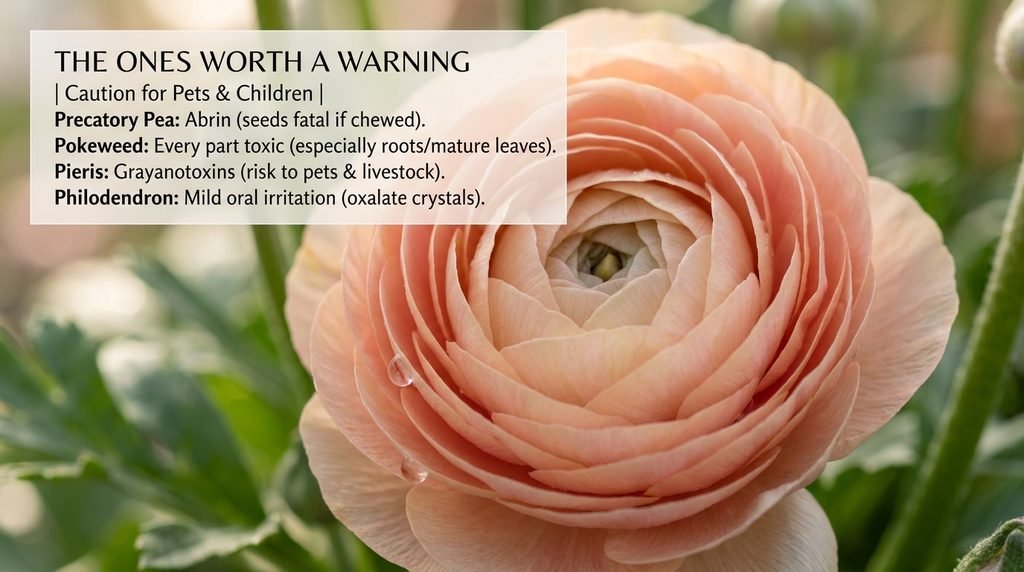
Precatory Pea, also called Rosary Pea, is the most serious concern on this entire letter. Its bright red-and-black seeds look almost decorative, but they contain abrin, a compound so toxic that a single properly chewed seed has been linked to fatal poisoning in documented cases. Pokeweed follows closely behind — its berries look tempting to birds and children alike, but every part of the plant, including the roots and mature leaves, carries a real toxicity risk for people and pets. Pieris, a popular flowering shrub, contains grayanotoxins that can cause serious symptoms if ingested in quantity, a risk shared with several other members of its plant family.
- Precatory Pea (Rosary Pea) — seeds contain abrin, extremely dangerous if chewed
- Pokeweed — toxic in every part, especially roots and mature leaves
- Pieris — contains grayanotoxins, risk to pets and livestock
- Philodendron — mild oral irritation from oxalate crystals if chewed by pets
Philodendron rounds out this group with a lower-severity but still real concern. It’s grown mostly for foliage rather than flowers, but its presence in so many homes with pets makes its mild toxicity worth flagging directly.
A Companion Planting Guide
Companion planting works better for some pairings than others, and a few flowers that start with P have genuinely useful partners worth knowing before laying out a bed. Pest deterrence, pollinator traffic, and root-space compatibility all factor into these choices.
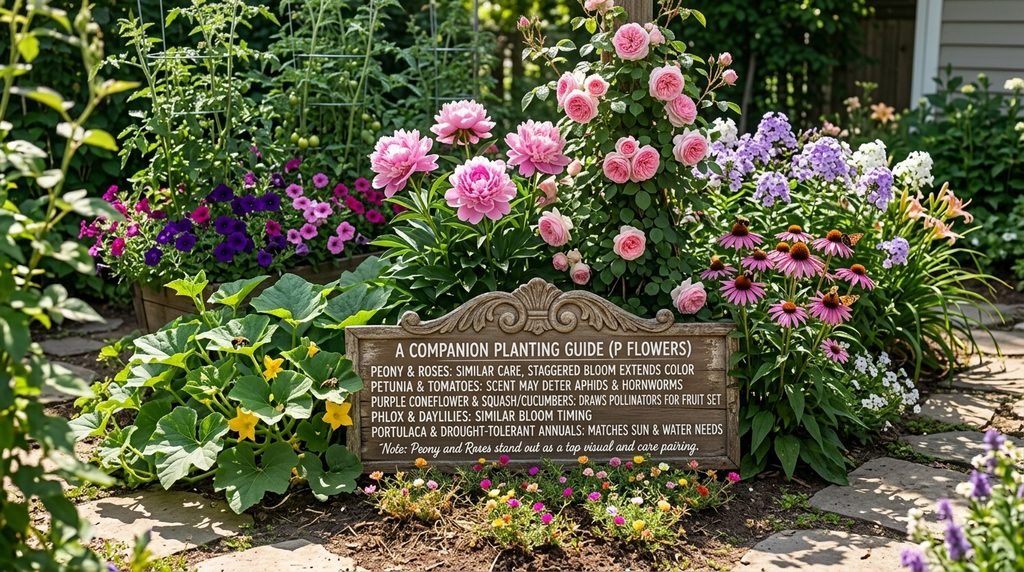
Petunia pairs well with tomatoes, since its scent is commonly credited with helping deter certain aphids and tomato hornworms. Peony grows comfortably alongside roses, sharing similar sun and soil needs while blooming on a slightly earlier schedule that extends the overall color window. Purple Coneflower attracts pollinators at a rate that benefits nearby vegetable crops, making it a smart border plant around a small kitchen garden.
| Flower | Good Companion | Why It Works |
| Petunia | Tomatoes | Scent may help deter aphids and hornworms |
| Peony | Roses | Similar sun and soil needs, staggered bloom timing |
| Purple Coneflower | Squash, cucumbers | Draws pollinators that boost nearby fruit set |
| Phlox | Daylilies | Similar bloom timing extends color together |
| Portulaca | Other drought-tolerant annuals | Matches sun and water needs closely |
Peony and roses stand out as the pairing worth remembering most, since gardeners frequently plant them together anyway for visual reasons without realizing the practical overlap in care needs.
A Season-by-Season Care Calendar
Timing changes outcomes for bulbs, perennials, and fast annuals in this group. A few weeks off schedule can mean missing a bloom window entirely. The calendar below covers the top picks from the Quick Take section.
March: Start Petunia and Poppy seeds indoors in cooler climates. Divide overcrowded Peony clumps only if absolutely necessary, since they resent frequent disturbance.
April: Direct-sow Poppy seed once soil has warmed slightly, since it germinates poorly if started too early. Plant out Pansy seedlings, which tolerate a light frost better than most annuals.
May: Plant out Petunia and Portulaca once frost risk has fully passed. Stake tall Peony varieties early, before heavy blooms cause stems to flop.
June: Deadhead Petunia and Poppy regularly to extend bloom into late summer. Watch Passionflower vines for rapid growth and provide sturdy support before they outgrow it.
September: Plant bare-root Peony divisions now for the strongest establishment before winter. Bring Plumeria indoors before nighttime temperatures dip near 40°F.
October: Cut back Phlox after bloom fades to reduce the risk of powdery mildew overwintering on old foliage. Protect young Protea shrubs in regions with any frost risk.
Skipping the fall planting window for Peony is the single most common calendar mistake tied to this group, since spring-planted divisions often take an extra year to reach the same bloom size.
Mistakes Beginners Make With This Letter
A few errors show up repeatedly with flowers that start with P, and most trace back to habits that work fine elsewhere but not here.
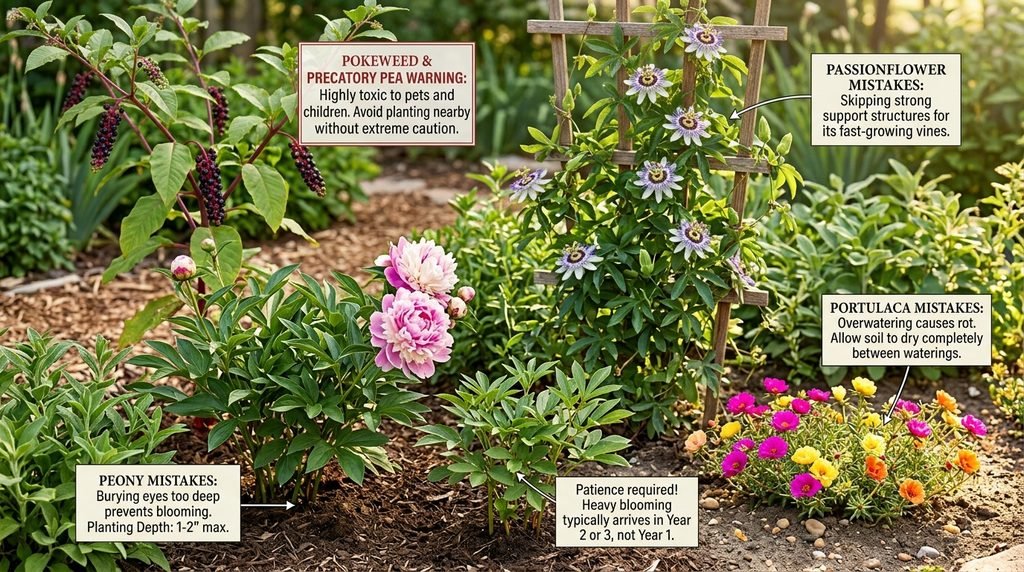
Planting Peony too deep is probably the most common mistake, since burying the eyes more than an inch or two below soil level often prevents blooming entirely. Overwatering Portulaca is a close second, since gardeners used to daily watering routines end up rotting a plant that actually prefers to dry out between waterings. Growing Precatory Pea or Pokeweed without considering pets or small children nearby is a serious oversight given how toxic both plants are. Expecting Peony to bloom heavily in its first year is another frequent source of disappointment, when the real payoff typically arrives in year two or three.
- Planting Peony roots too deep, which prevents blooming
- Overwatering Portulaca instead of letting it dry between waterings
- Growing Precatory Pea or Pokeweed without checking for pets or kids nearby
- Expecting full Peony blooms in the very first year after planting
- Skipping support structures for fast-growing Passionflower vines
Most of these mistakes come from applying habits that work for other, easier plants — daily watering, shallow patience, treating any berry as harmless — rather than from a lack of gardening skill generally.
Where to Actually Buy These
Availability shifts noticeably across this letter. Petunia, Pansy, Poppy, and Peony are nursery staples — nearly every garden center and big-box retailer carries all four in season, usually at a low individual cost. Phlox and Periwinkle are close behind, widely available as both seed and established nursery starts.
Protea, Precatory Pea, and specific rare Passionflower varieties sit at the other end. These typically require a specialty nursery, an import supplier, or a native-plant grower rather than a general garden center. That gap often reflects the specific growing conditions these plants need, or in the case of Precatory Pea, the fact that most mainstream retailers avoid stocking a plant with such serious toxicity. The specialty tier here also commands a noticeably higher price than the common tier.
If You Only Have Room for Three
Anyone working with a small bed or limited budget benefits from narrowing this list fast. Peony takes the first spot, since almost no other perennial on this list delivers as much long-term payoff for a single planting. Petunia earns the second spot as the fastest, most reliable annual color source on this entire list.
The third spot depends on climate and goal. Gardeners in warm climates chasing fragrance and drama should choose Plumeria. Anyone gardening primarily for pollinators should choose Purple Coneflower instead. Both are strong enough to justify the final spot depending on what the space actually needs.
Handling These Safely
Not every flower that starts with P is safe around pets or small children, and a few deserve real caution rather than a passing mention. Precatory Pea is the most serious concern in this entire letter — its seeds contain abrin, a compound so toxic that ingestion of even a single properly chewed seed has been linked to fatalities in documented cases.
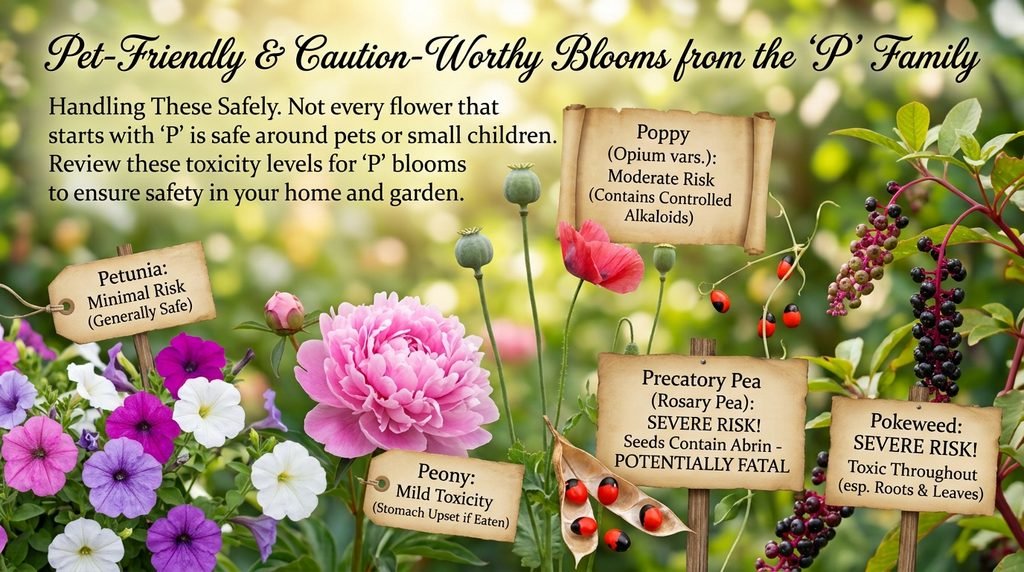
Pokeweed carries similarly severe risk, with toxicity present throughout the plant, including roots and mature leaves. Pieris contains grayanotoxins that can cause serious symptoms in pets and livestock if ingested in quantity.
Philodendron causes milder but still real oral irritation in pets due to oxalate crystals in its leaves. Poppy, depending on the species, can range from mildly irritating to legally restricted, particularly with Opium Poppy varieties. Peony, by contrast, carries only a mild toxicity risk, generally limited to stomach upset if a pet eats a large quantity.
| Flower | Toxicity Level | Main Concern |
| Pea (Rosary Pea) | Severe | Seeds contain abrin, potentially fatal |
| Pokeweed | Severe | Toxic throughout, especially roots and leaves |
| Pieris | Moderate | Grayanotoxins, risk to pets and livestock |
| Philodendron | Mild | Oxalate crystals cause oral irritation |
| Poppy (Opium varieties) | Moderate | Controlled alkaloids; legal restrictions may apply |
| Peony | Mild | Stomach upset if eaten in large quantity |
| Petunia | Minimal | Generally considered safe |
Households with pets that chew on garden plants should keep Precatory Pea and Pokeweed well out of reach entirely, ideally removed rather than simply relocated. Petunia and Peony, by contrast, can reasonably sit anywhere in a yard shared with curious pets or kids.
Sorting These Flowers by Color
Color often decides where a flower actually gets planted more than growing conditions do, since most gardeners are matching an existing scheme rather than starting fresh.
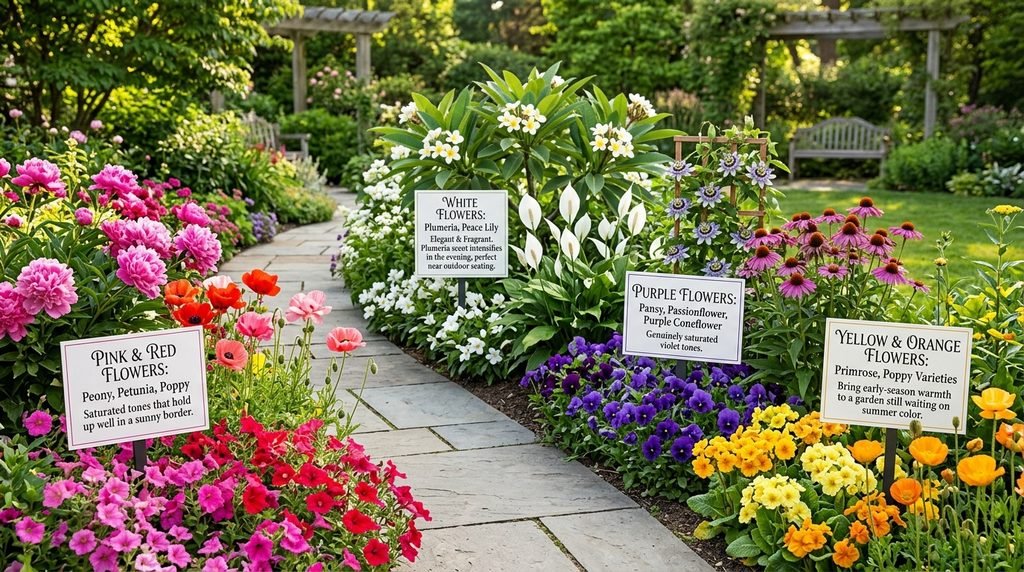
Pink and red flowers dominate this letter more than most others, with Peony, Petunia, and Poppy all offering saturated tones that hold up well in a sunny border. White flowers lean toward elegance and fragrance, with Plumeria and Peace Lily standing out; Plumeria in particular carries a scent that intensifies in the evening, making it a strong pick near outdoor seating used after dark. Purple flowers are well represented too, led by Pansy, Passionflower, and Purple Coneflower, each offering a genuinely saturated violet tone rather than a washed-out lavender. Yellow and orange flowers round out the letter with Primrose and certain Poppy varieties, both of which bring early-season warmth to a garden still waiting on summer color.
Full Name Index
The list below rounds up more than 45 flowers that start with P, mixing common names with botanical genus names. Detailed growing notes for the most relevant entries appear in the sections above; this index exists purely as a fast lookup.
- Peony
- Petunia
- Pansy
- Poppy
- Plumeria
- Phlox
- Primrose
- Periwinkle
- Passionflower
- Protea
- Portulaca (Moss Rose)
- Purple Coneflower
- Pincushion Flower (Scabiosa)
- Pieris
- Philodendron
- Pokeweed
- Precatory Pea (Rosary Pea)
- Peace Lily
- Pulmonaria (Lungwort)
- Pentas
- Pelargonium
- Painted Daisy
- Pussy Willow
- Prairie Smoke
- Purple Loosestrife
- Persian Buttercup (Ranunculus)
- Peruvian Lily (Alstroemeria)
- Prickly Pear Cactus Flower
- Plumbago
- Pincushion Cactus
- Purple Passion Plant
- Poinsettia
- Pygmy Water Lily
- Pitcher Plant
- Plume Poppy
- Prairie Coneflower (Ratibida)
- Ping Pong Plant (Billy Buttons)
- Primrose Jasmine
- Prickly Poppy
- Petticoat Daffodil
- Pomegranate Blossom
- Purple Bell Vine
- Painted Tongue (Salpiglossis)
- Pink Muhly Bloom Spike
- Parrot Tulip
- Petunia Wave Series
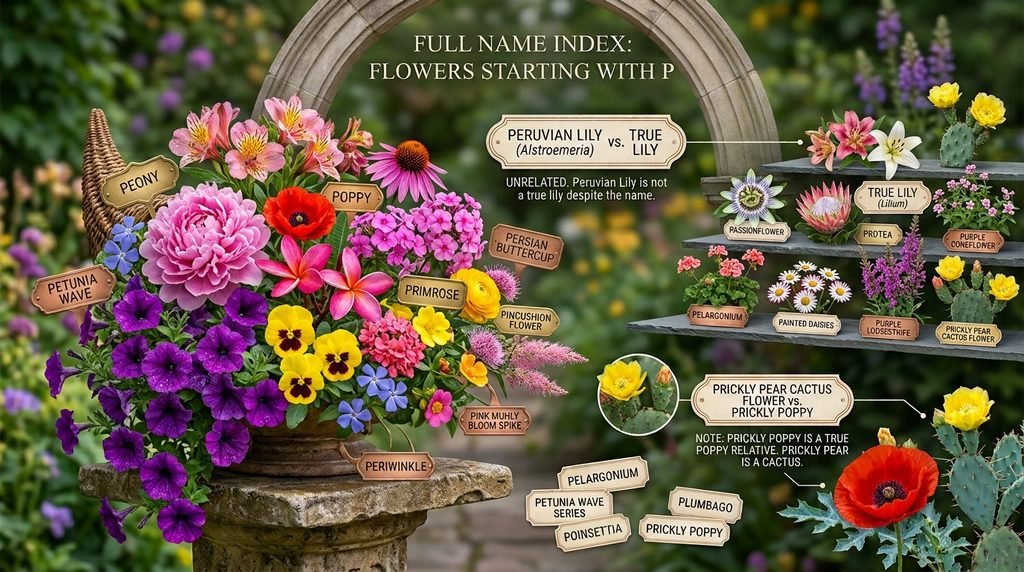
A few names here overlap or confuse buyers. Peruvian Lily and true lilies are unrelated despite the shared name, belonging to entirely different plant families. Prickly Pear and Prickly Poppy also get mixed up occasionally, despite one being a cactus and the other a true poppy relative.
Common Name to Botanical Name Crosswalk
Botanical names matter most when ordering online or confirming a nursery tag, since common names shift by region in ways botanical names don’t. The crosswalk below covers the flowers referenced most throughout this guide.
| Common Name | Botanical Name | Family |
| Peony | Paeonia spp. | Paeoniaceae |
| Petunia | Petunia spp. | Solanaceae |
| Pansy | Viola tricolor var. hortensis | Violaceae |
| Poppy | Papaver spp. | Papaveraceae |
| Plumeria | Plumeria spp. | Apocynaceae |
| Phlox | Phlox spp. | Polemoniaceae |
| Primrose | Primula spp. | Primulaceae |
| Periwinkle | Vinca minor | Apocynaceae |
| Passionflower | Passiflora spp. | Passifloraceae |
| Pokeweed | Phytolacca americana | Phytolaccaceae |
| Precatory Pea | Abrus precatorius | Fabaceae |
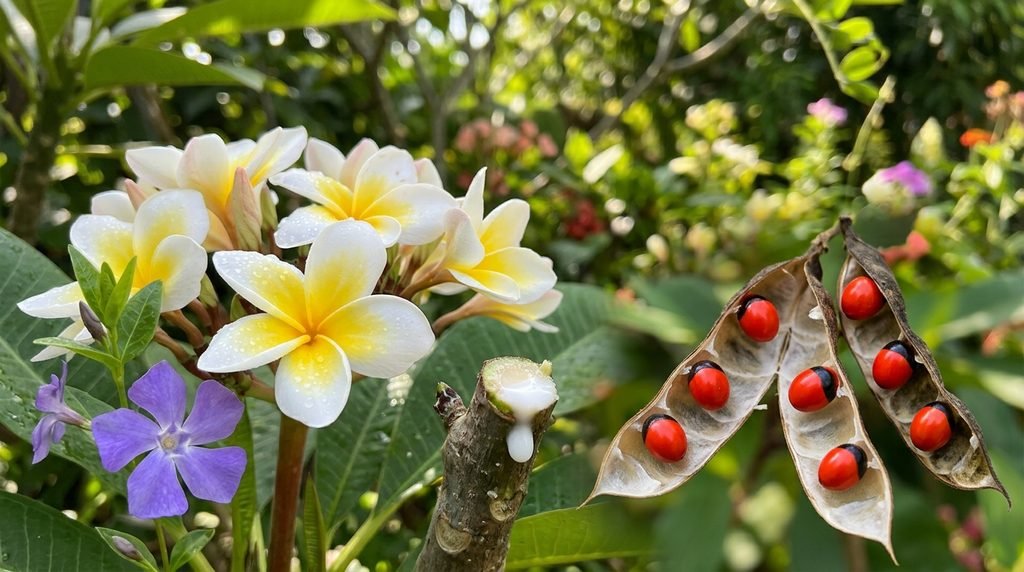
Plumeria and Periwinkle sharing the Apocynaceae family explains why both produce a milky sap when cut, a trait common throughout that plant family. Precatory Pea’s placement in Fabaceae, the pea and bean family, explains its seed pod structure, even though its toxicity sets it dramatically apart from edible relatives like peas and beans.
What These Flowers Have Meant Through History
A few flowers that start with P carry symbolism reaching well beyond the garden. Peony has represented honor, prosperity, and romance for centuries in Chinese culture, where it was once considered the unofficial national flower and a favored subject in imperial art. That association with wealth and status later spread into Western Victorian flower language, where Peony came to signal bashfulness as often as prosperity.
Poppy carries a more somber, modern meaning tied to remembrance, most visibly through its association with soldiers lost in the First World War, a symbol that took root after the flower was observed blooming across disturbed battlefield soil. Passionflower earned its name from Christian missionaries, who saw the flower’s unusual structure as a visual representation of the crucifixion, with its distinctive corona interpreted as a crown of thorns. Primrose, by contrast, carries a gentler meaning tied to young love and new beginnings, fitting for a flower that so often marks the earliest stretch of spring.
Final Thoughts
Flowers that start with P cover a genuinely wide range once sorted by growing context instead of the alphabet, from the decades-lasting Peony to the seriously toxic Precatory Pea. Starting with sun, shade, and skill level makes it far easier to land on the right flowers that start with P for your specific space, rather than picking one purely because it fits the letter. Whatever combination of color, meaning, and growing conditions you’re working with, there’s very likely a P flower suited to it.
Frequently Asked Questions
What are the easiest flowers that start with P for beginners?
Petunia, Periwinkle, and Portulaca are the most forgiving picks. All three tolerate average soil and inconsistent watering without much loss in bloom quality.
Which flowers that start with P are toxic to pets?
Peacock Pea and Pokeweed carry the most serious risk. Pieris and Philodendron cause milder but still notable reactions if ingested.
How long does it take a Peony to bloom after planting?
Most Peony divisions need two to three years to produce a full flush of blooms, so a thin first season is normal rather than a sign of failure.
Is Poppy the same plant used to make opium?
Only certain species. Papaver somniferum, the Opium Poppy, contains controlled alkaloids, while most ornamental poppy varieties do not carry the same legal restrictions.
What does the Peony flower symbolize?
The peony has long represented honor, prosperity, and romance, particularly in Chinese culture, where it once held near-official status as a national symbol.
Can Plumeria survive outside a tropical climate?
Yes, in a container that’s brought indoors before frost. It grows best in warm, frost-free conditions but tolerates being moved seasonally.
Why is Precatory Pea considered so dangerous?
Its seeds contain abrin, a compound toxic enough that a single properly chewed seed has been linked to fatal poisoning in documented cases.
Which P flowers are best for beginner gardeners?
Petunia and Pansy are forgiving, low-maintenance choices. Periwinkle is another strong beginner option for shaded groundcover.
Is Pokeweed safe to have in a yard with children?
It’s not recommended. Every part of the plant carries toxicity risk, particularly the roots and mature leaves, so removal is safer than relocation alone.
What’s a good companion plant for Petunia?
Tomatoes work well, since Petunia’s scent is commonly credited with helping deter aphids and tomato hornworms nearby.
When should Peony be planted for the best results?
Fall planting, ideally September, gives bare-root divisions the strongest chance to establish before the following spring’s growth.