

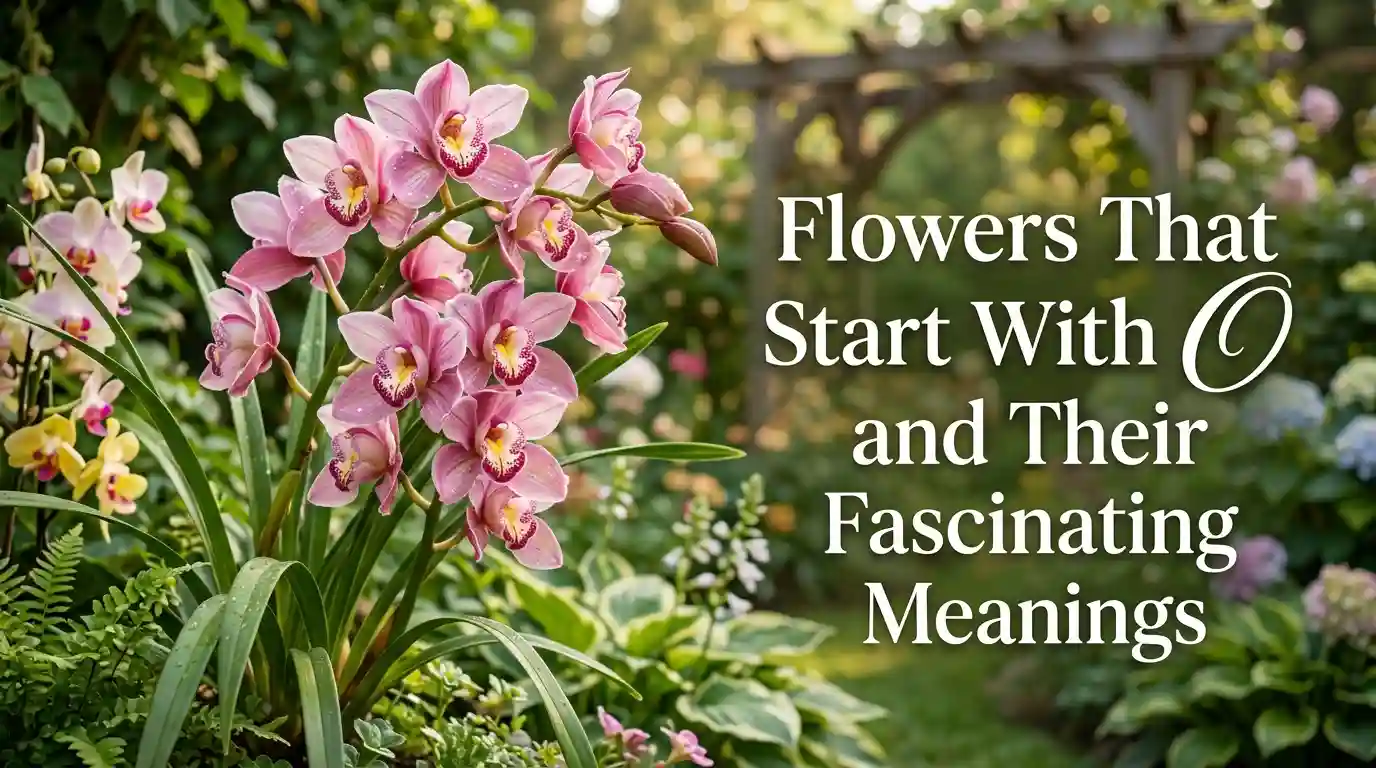
Flowers that start with O carry more symbolism per name than most letters manage. Orchid alone has meant luxury, fertility, and rare beauty across several cultures. Oleander, by contrast, carries a darker reputation, tied historically to poison lore that turns out to be entirely accurate.
This guide sorts flowers that start with O by growing context first, not alphabet order. Sun needs, shade tolerance, bloom speed, and skill level all come before any A-Z list. That structure gets you to a usable answer faster than scrolling through 40-plus names in sequence.
The tone stays practical throughout. Easy plants get called easy. Fussy ones get flagged honestly, including the handful that need real caution around pets and children. Nothing here gets inflated just to fill out the count.
Meaning and symbolism get real attention too, since this particular letter has an unusually rich history behind it. A full alphabetical index, a botanical name crosswalk, and a toxicity table sit near the end for quick reference, but the growing-context sections that follow are where the real planning value lives.
Quick Take: Where to Start
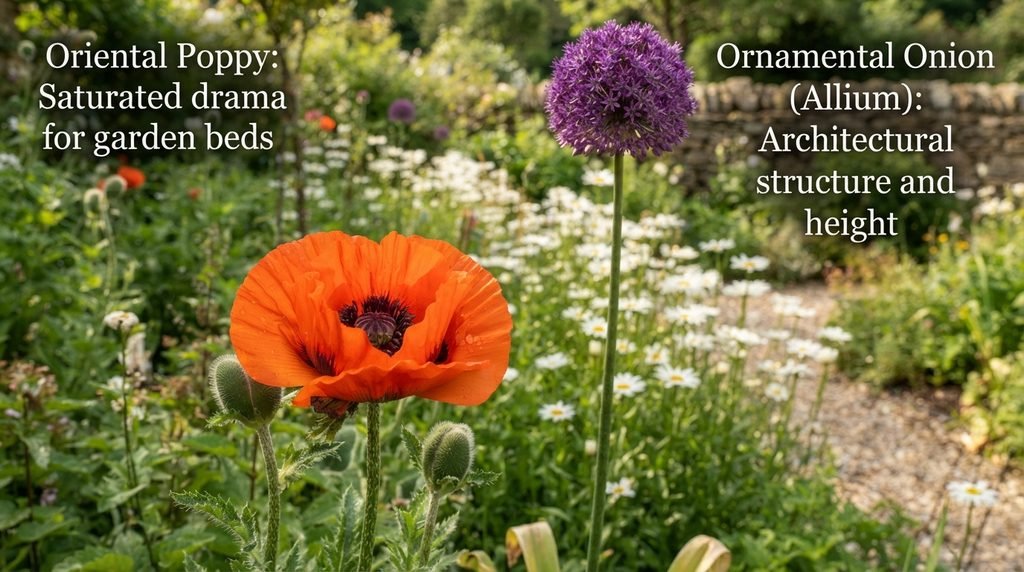
Orchid solves the long-lasting indoor bloom problem better than almost any other houseplant. A single Phalaenopsis spike can stay in flower for two to three months with minimal care. Osteospermum, or African Daisy, works differently. It blooms fast outdoors and keeps producing color through a long stretch of summer heat.
Oriental Poppy earns its spot for drama. Its crepe-paper petals open in a color so saturated that a single clump can anchor an entire bed. Ornamental Onion, better known by its genus name Allium, brings architectural structure with its round flower heads, standing well above most late-spring perennials.
Oxeye Daisy is the low-effort pick for naturalized meadows and cottage-style borders, spreading readily without much attention. Obedient Plant earns its name from a quirky trait — bend its individual flowers sideways, and they hold that new position, a party trick that makes it a favorite with kids exploring a garden.
Oswego Tea, a common name for Monarda didyma grown for tea, draws hummingbirds as reliably as any flower on this list. Orange Blossom rounds out the group as the fragrance pick, with a scent so distinctive it’s used in perfumery and traditionally tied to weddings across several cultures.
Full-Sun Picks That Hold Their Color
A handful of flowers that start with O were built for strong, direct light. These work well on a hot patio, a south-facing border, or any strip of soil that bakes through the afternoon.
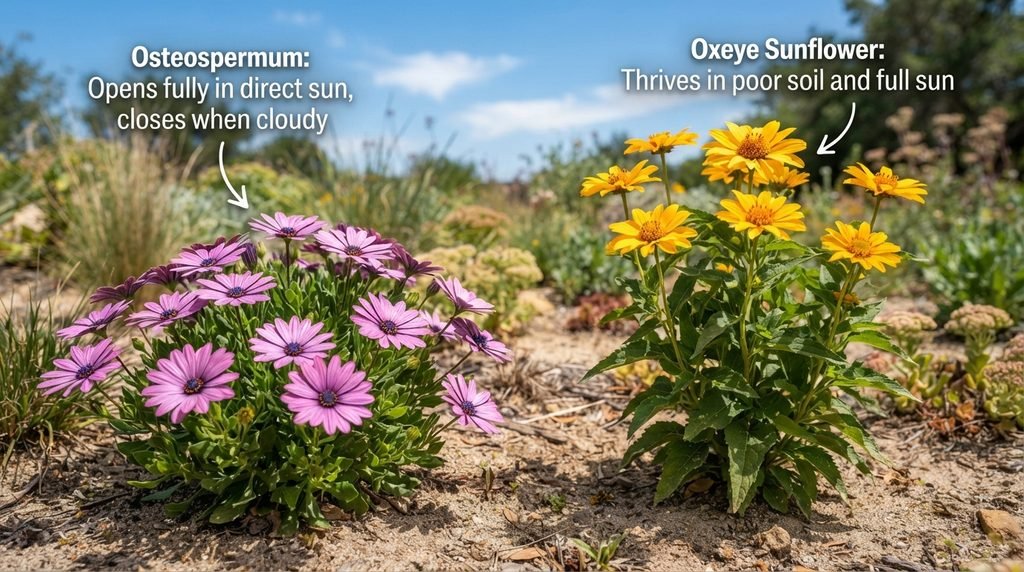
Osteospermum tops this list, closing its petals on overcast days and opening fully once the sun returns, a habit that tells you exactly what it needs. Oriental Poppy also demands full sun, though it goes dormant after its spring bloom and disappears from view until the following year, which surprises gardeners expecting year-round foliage. Ornamental Onion tolerates heat well once its bulb is established, sending up tall flower stalks that barely wilt even during a dry summer stretch.
- Osteospermum — closes on cloudy days, needs strong direct light
- Oriental Poppy — full sun during bloom, dormant afterward
- Ornamental Onion — heat-tolerant once bulb is established
- Oxeye Sunflower — thrives in poor soil and full sun, similar to a wild daisy
Oxeye Sunflower deserves a mention here too. It handles poor, dry soil about as well as anything on this list, making it a strong pick for a neglected sunny corner where fussier plants would struggle.
Shade and Partial-Shade Options
Shade cuts this list down considerably, but a few flowers that start with O genuinely prefer it over full sun. This matters most for anyone gardening under mature trees or along a north-facing wall.
Oconee Bells, a rare native woodland wildflower, needs consistent shade and moist, acidic soil to establish. It’s slow to spread, but its white spring blooms reward patience. Old Maid, more commonly known today as Catharanthus or Madagascar Periwinkle, tolerates partial shade reasonably well, though it flowers more heavily with a few hours of direct morning sun. Owl’s Clover, a wildflower native to parts of North America, prefers the cooler, more even light found at a woodland edge rather than an open, sun-baked bed.
- Oconee Bells — needs moist, acidic soil and consistent shade
- Old Maid (Catharanthus) — tolerates shade, blooms best with some morning sun
- Owl’s Clover — prefers woodland-edge light over open sun
Oconee Bells is the one to plan around carefully. It’s genuinely rare in cultivation and asks for conditions closer to its native Appalachian habitat than a typical suburban bed.
Fast Bloomers Versus Slow Payoff
Bloom speed shifts which flowers that start with O make sense for a short-timeline project. Some reward you within weeks; others ask for a full season or more.
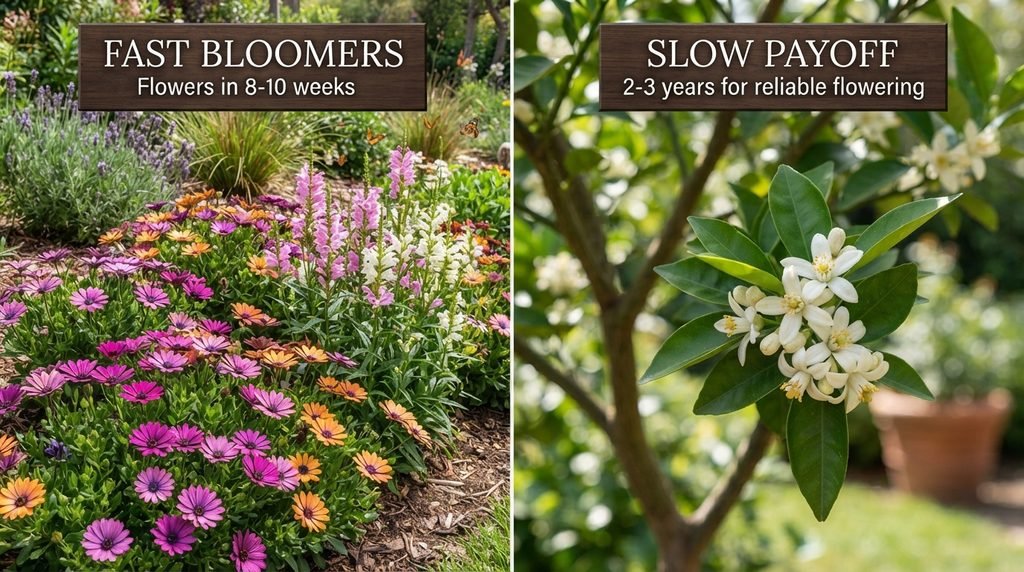
Osteospermum and Obedient Plant move fastest among this group, often flowering within eight to ten weeks from a nursery start. Oxeye Daisy isn’t far behind, typically blooming in its first year from seed if started early enough in spring. These three suit gardeners planting mid-season or filling a gap before a specific date.
Orchid sits at the opposite end. A Phalaenopsis grown from a seedling can take several years to reach its first bloom, though most sold at nurseries are already mature enough to flower soon after purchase. Orange Blossom, grown as a small citrus tree, typically needs two to three years of establishment before it flowers reliably. Anyone working against a tight deadline should lean toward the fast-bloom annuals rather than these slower, longer-term picks.
What Actually Holds Up With Minimal Care
A few flowers that start with O tolerate real neglect, which matters most for a first-time grower who wants results without a strict schedule.
Oxeye Daisy is the standout. It naturalizes readily, tolerates poor soil, and rarely needs deadheading to keep producing new blooms. Osteospermum is nearly as forgiving outdoors, surviving missed waterings better than many summer annuals. Ornamental Onion, once its bulb is in the ground, needs almost no ongoing attention beyond an occasional watering during extended dry spells.
- Oxeye Daisy — naturalizes easily, tolerates poor soil
- Osteospermum — handles missed watering better than most annuals
- Ornamental Onion — plant once, minimal care afterward
The pattern across this group is straightforward. None of these three punish inconsistency the way some of the pickier flowers that start with O do.
The Ones Worth a Warning
A smaller group demands more skill, more specific conditions, or genuine caution around pets and children.
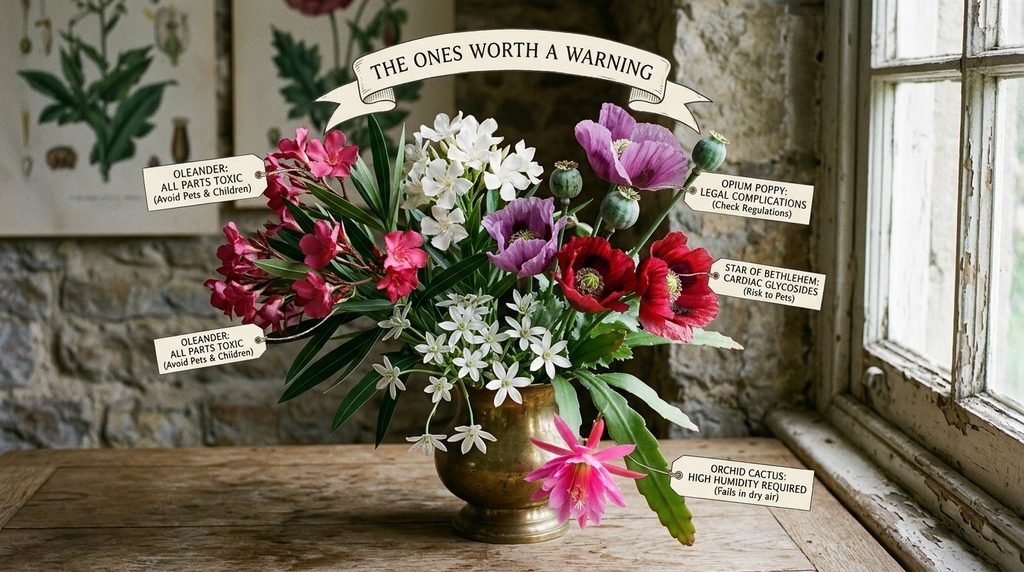
Oleander is the clearest case in this entire letter. Every part of this flowering shrub is toxic, and cases of poisoning have been documented even from water that cut stems sat in. It produces beautiful clusters of pink, white, or red blooms, but it belongs far from vegetable beds, play areas, and anywhere pets or livestock might graze. Opium Poppy carries legal complications in many regions beyond its toxicity, since it contains the same alkaloids used to produce controlled substances, and growing it isn’t legal everywhere. Star of Bethlehem, botanically Ornithogalum, looks harmless but contains cardiac glycosides that make it a real risk if ingested by pets.
- Oleander — toxic in every part; avoid near pets and livestock entirely
- Opium Poppy — contains controlled alkaloids; check local regulations before planting
- Star of Bethlehem (Ornithogalum) — contains cardiac glycosides, risk to grazing pets
- Orchid Cactus — not dangerous, but needs specific humidity most homes don’t naturally have
Orchid Cactus rounds out this group for a different reason. It isn’t toxic, but it fails often in average home humidity, disappointing growers who expect it to behave like a typical houseplant.
A Companion Planting Guide
Companion planting works better for some pairings than others, and a few flowers that start with O have genuinely useful partners worth knowing before laying out a bed. Pest deterrence, pollinator traffic, and root-space compatibility all factor into these choices.
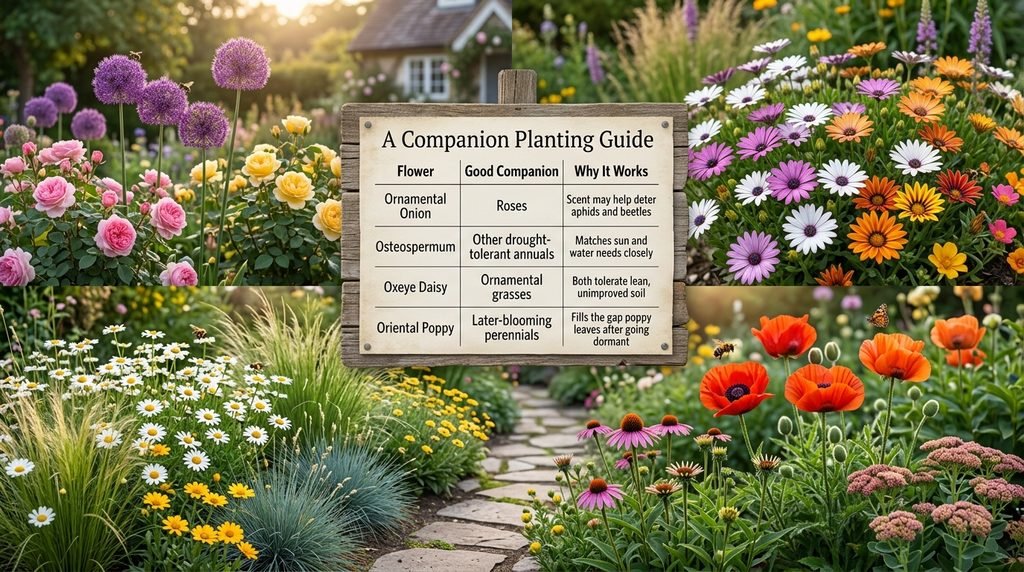
Ornamental Onion pairs well with roses, since its scent is commonly credited with deterring aphids and certain beetles that target rose foliage. Osteospermum grows comfortably alongside other drought-tolerant annuals, sharing similar sun and water needs without competing aggressively for either. Oxeye Daisy naturalizes well near ornamental grasses, since both share a similar tolerance for lean, unimproved soil.
| Flower | Good Companion | Why It Works |
| Ornamental Onion | Roses | Scent may help deter aphids and beetles |
| Osteospermum | Other drought-tolerant annuals | Matches sun and water needs closely |
| Oxeye Daisy | Ornamental grasses | Both tolerate lean, unimproved soil |
| Oriental Poppy | Later-blooming perennials | Fills the gap poppy leaves after going dormant |
Oriental Poppy’s pairing is worth a second look, since its early dormancy leaves a visible gap in a bed. Planting a later-blooming perennial nearby covers that gap once the poppy’s foliage disappears for the season.
A Season-by-Season Care Calendar
Timing changes outcomes for bulbs and fast annuals in this group. A few weeks off schedule can mean missing an entire bloom window. The calendar below covers the top picks from the Quick Take section.
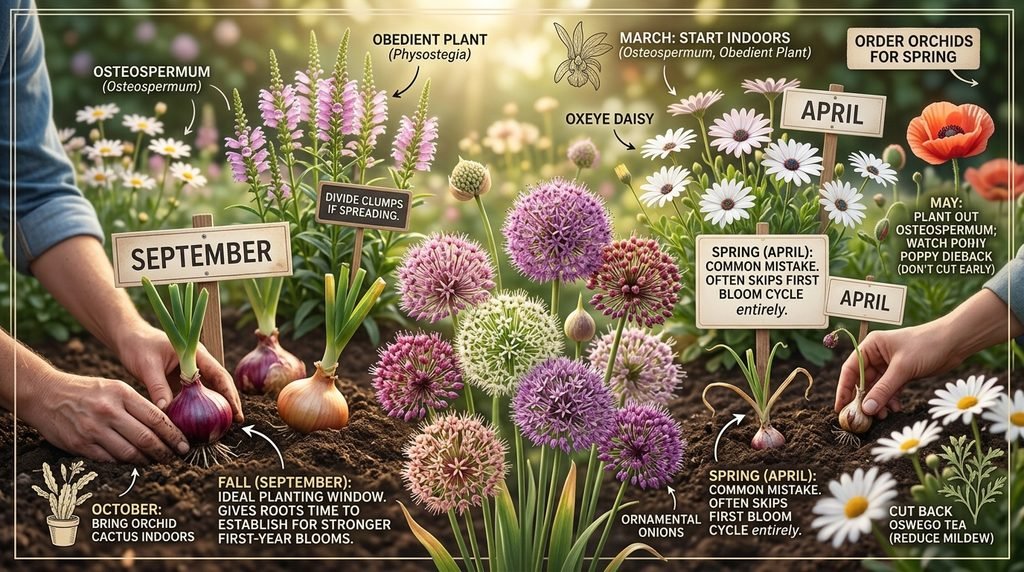
March: Start Osteospermum and Obedient Plant divisions indoors in cooler climates. Order Orchid nursery starts now if you want spring delivery.
April: Direct-sow Oxeye Daisy seed once soil has warmed. Plant Ornamental Onion bulbs if you missed the fall window, though fall planting gives stronger first-year blooms.
May: Plant out Osteospermum seedlings once frost risk has passed. Watch Oriental Poppy foliage begin its natural dieback — resist cutting it early.
September: This is the ideal month for planting Ornamental Onion bulbs, giving roots time to establish before winter. Divide Obedient Plant clumps if they’ve spread beyond their space.
October: Bring Orchid Cactus indoors before the first frost if it spent summer outside. Cut back Oswego Tea after bloom fades to reduce mildew risk over winter.
The most common timing mistake in this group is planting Ornamental Onion bulbs in spring instead of fall. Spring-planted bulbs often skip their first bloom cycle entirely, while fall planting gives a much stronger first-year show.
Mistakes Beginners Make With This Letter
A few errors show up repeatedly with flowers that start with O, and most trace back to habits that work fine elsewhere but not here.
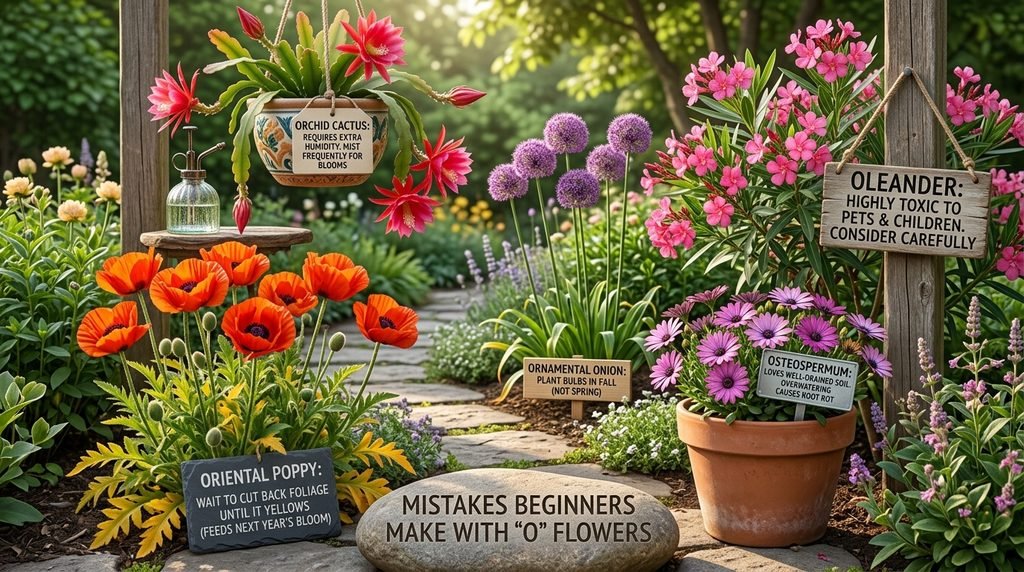
Cutting Oriental Poppy foliage back before it yellows naturally is a common mistake, since that foliage feeds the plant’s next bloom cycle. Overwatering Osteospermum is another frequent issue, since soggy soil leads to root rot faster than drought ever does. Planting Oleander without considering pets or small children nearby is a serious oversight given how toxic the plant is. Expecting Orchid Cactus to bloom in average household humidity, without any supplemental misting, often leads to disappointment.
- Cutting Oriental Poppy foliage back before it yellows naturally
- Overwatering Osteospermum, which leads to root rot
- Planting Oleander without checking for pets or children nearby
- Expecting Orchid Cactus to bloom without extra humidity
- Planting Ornamental Onion bulbs in spring instead of fall
Most of these mistakes trace back to impatience or applying habits from easier plants. Waiting out a dormant poppy or adjusting humidity for a cactus takes more attention than a typical annual bed.
Where to Actually Buy These
Availability shifts noticeably across this letter. Orchid, Osteospermum, and Oxeye Daisy are nursery staples — nearly every garden center carries all three in season, usually at a reasonable individual cost. Ornamental Onion bulbs are close behind, widely available through both nurseries and mail-order bulb suppliers in fall.
Oconee Bells, Opium Poppy, and specific rare Orchid species sit at the other end. These typically require a specialty native-plant nursery, a regulated seed supplier, or an orchid grower rather than a general garden center. That gap often reflects the specific growing conditions or legal restrictions involved, which mainstream retailers aren’t set up to navigate. The specialty tier here also commands a noticeably higher price than the common tier.
If You Only Have Room for Three
Anyone working with a small bed or limited budget benefits from narrowing this list fast. Osteospermum takes the first spot, since almost no other flower on this list delivers as much summer color for as little ongoing effort. Ornamental Onion earns the second spot for its architectural presence and near-zero care once established.
The third spot depends on the space and goal. Anyone wanting a long-lasting indoor bloom should choose Orchid. Gardeners chasing drama for a single dramatic season should choose Oriental Poppy instead. Both are strong enough to justify the final spot depending on what the space needs to accomplish.
Handling These Safely
Not every flower that starts with O is safe around pets or small children, and a few deserve real caution rather than a passing mention. Oleander is the most serious concern by a wide margin — its toxic compounds affect heart rhythm, and ingestion can be life-threatening without prompt veterinary or medical care. Star of Bethlehem contains cardiac glycosides from the same broad category, posing a real risk to grazing pets even though the plant looks unremarkable. Opium Poppy carries legal restrictions in several regions in addition to its alkaloid content, so checking local rules matters as much as safety here.
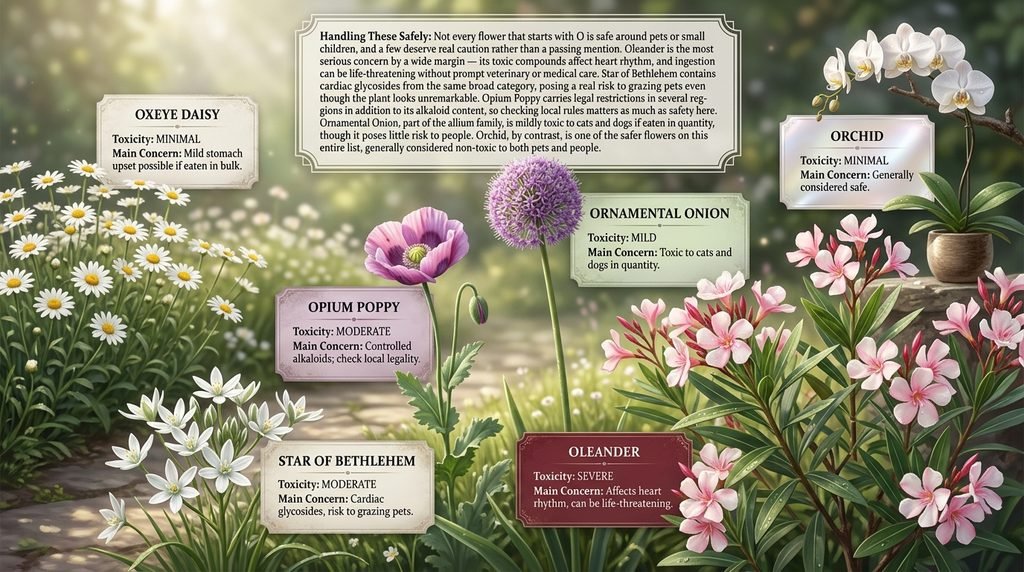
Ornamental Onion, part of the allium family, is mildly toxic to cats and dogs if eaten in quantity, though it poses little risk to people. Orchid, by contrast, is one of the safer flowers on this entire list, generally considered non-toxic to both pets and people.
| Flower | Toxicity Level | Main Concern |
| Oleander | Severe | Affects heart rhythm, can be life-threatening |
| Star of Bethlehem | Moderate | Cardiac glycosides, risk to grazing pets |
| Opium Poppy | Moderate | Controlled alkaloids; check local legality |
| Ornamental Onion | Mild | Toxic to cats and dogs in quantity |
| Oxeye Daisy | Minimal | Mild stomach upset possible if eaten in bulk |
| Orchid | Minimal | Generally considered safe |
Households with pets that graze on garden plants should keep Oleander and Star of Bethlehem well out of reach entirely. Ornamental Onion deserves a second thought too, particularly in yards where dogs tend to dig up freshly planted bulbs.
Sorting These Flowers by Color
Color often decides where a flower actually gets planted more than growing conditions do, since most gardeners are matching an existing scheme rather than starting fresh.
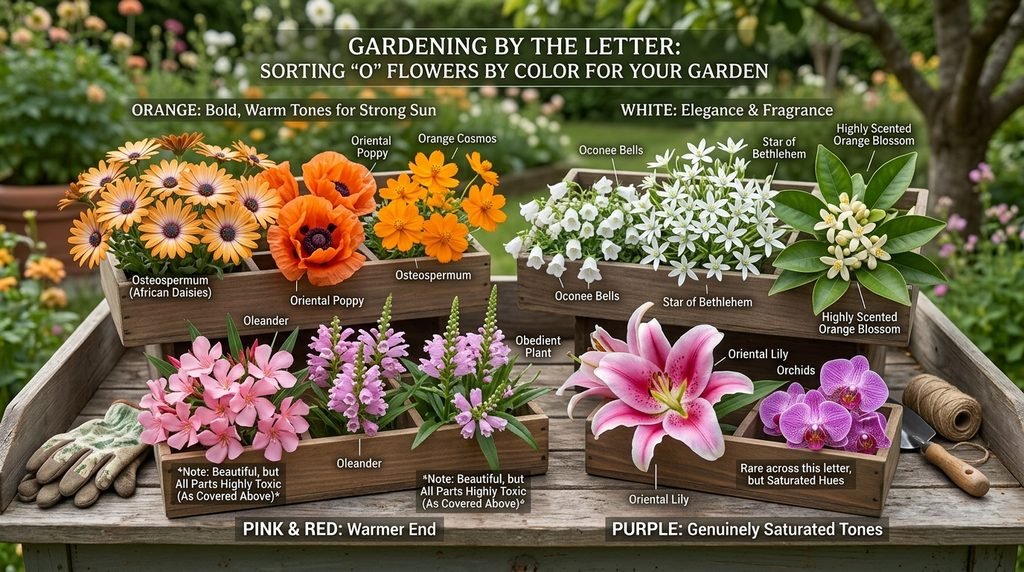
Orange flowers naturally lead this letter, and Osteospermum, Oriental Poppy, and Orange Cosmos all bring bold, warm tones that hold up well in strong sun. White flowers lean toward elegance here, with Oconee Bells, Orange Blossom, and Star of Bethlehem standing out; Orange Blossom in particular is prized as much for scent as for its pale, waxy petals. Pink and red flowers close out the warmer end of this letter with Oleander and Obedient Plant, though the former comes with the safety caveats already covered above. Purple flowers are comparatively rare across this letter, but Oriental Lily and certain Orchid varieties fill that gap with genuinely saturated tones.
Full Name Index
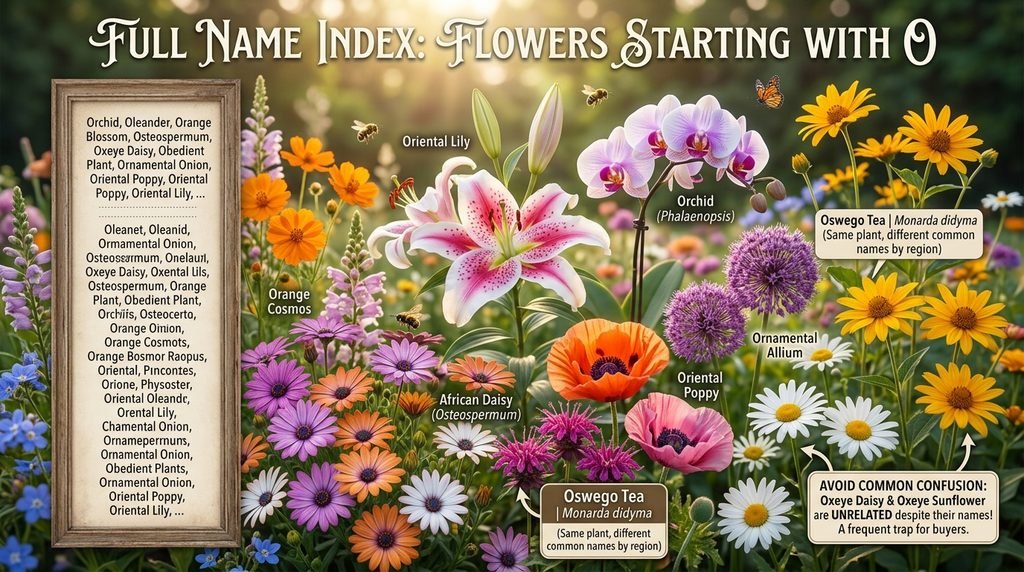
The list below rounds up more than 40 flowers that start with O, mixing common names with botanical genus names. Detailed growing notes for the most relevant entries appear in the sections above; this index exists purely as a fast lookup.
- Orchid
- Oleander
- Orange Blossom
- Osteospermum (African Daisy)
- Oxeye Daisy
- Obedient Plant
- Ornamental Onion (Allium)
- Oriental Poppy
- Oriental Lily
- Orchid Tree (Bauhinia)
- Oconee Bells
- Old Maid (Catharanthus)
- Owl’s Clover
- Oyster Plant
- October Daphne
- Oswego Tea (Monarda didyma)
- Oxlip
- Ornithogalum (Star of Bethlehem)
- Orange Cosmos
- Opium Poppy
- Oconee Azalea
- Orchid Cactus (Epiphyllum)
- Oxblood Lily
- Ozark Sundrops
- Onion Flower
- Orange Jessamine
- Oxeye Sunflower
- Old Man Cactus
- Oregon Grape
- Ornamental Kale
- Orchid Primrose
- Oconee Trillium
- Orange Daylily
- Ostrich Plume Astilbe
- Oleaster
- Oregano Flower
- Obedient Plant Vivid
- October Skies Aster
- Orange Butterfly Weed
- Osage Rose
- Ornithogalum Umbellatum
- Oconee Lily
A few names here overlap or confuse buyers. Oswego Tea and Monarda are the same plant, just approached through different common names depending on region. Oxeye Daisy and Oxeye Sunflower are unrelated despite the shared first word, which trips up more than a few first-time buyers browsing seed catalogs.
Common Name to Botanical Name Crosswalk
Botanical names matter most when ordering online or confirming a nursery tag, since common names shift by region in ways botanical names don’t. The crosswalk below covers the flowers referenced most throughout this guide.
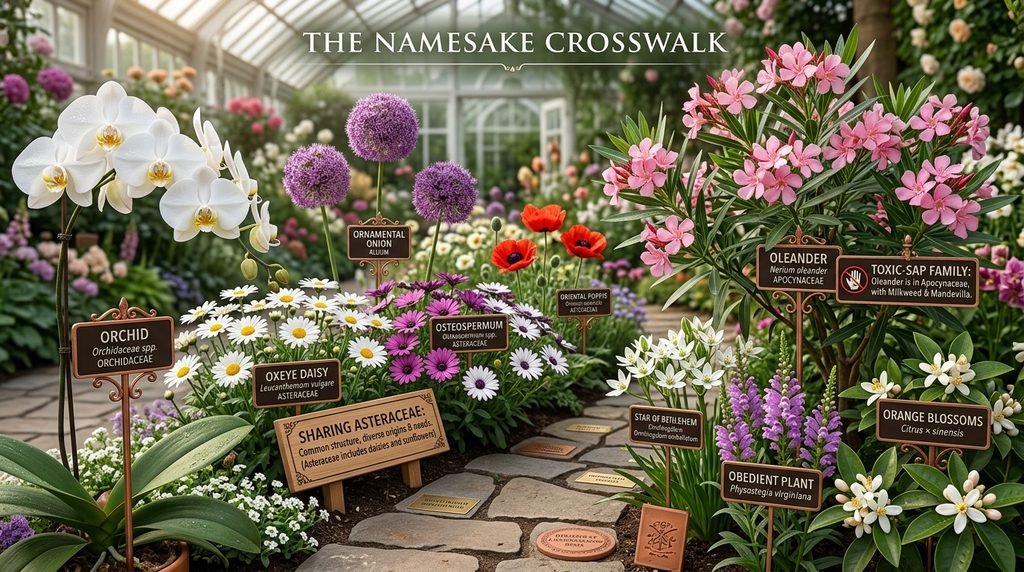
| Common Name | Botanical Name | Family |
| Orchid | Orchidaceae spp. | Orchidaceae |
| Oleander | Nerium oleander | Apocynaceae |
| Osteospermum | Osteospermum spp. | Asteraceae |
| Oxeye Daisy | Leucanthemum vulgare | Asteraceae |
| Ornamental Onion | Allium spp. | Amaryllidaceae |
| Oriental Poppy | Papaver orientale | Papaveraceae |
| Star of Bethlehem | Ornithogalum umbellatum | Asparagaceae |
| Obedient Plant | Physostegia virginiana | Lamiaceae |
| Orange Blossom | Citrus × sinensis | Rutaceae |
Osteospermum and Oxeye Daisy sharing the Asteraceae family explains their similar daisy-like flower structure, despite very different origins and climate needs. Oleander’s placement in Apocynaceae puts it in the same toxic-sap family as Milkweed and Mandevilla, a pattern that shows up repeatedly across several other letters as well.
What These Flowers Have Meant Through History
A few flowers that start with O carry symbolism reaching well beyond the garden. The orchid has represented luxury, strength, and rare beauty across multiple cultures for centuries, and in Victorian flower language it specifically signaled refined, delicate love rather than a bolder passion. Its rarity in earlier centuries, before modern cultivation made it widely available, only deepened that association with status and exclusivity.
Oleander carries a far darker story, tied historically to accidental and intentional poisonings recorded across Mediterranean and Asian history, a reputation that lines up accurately with its real toxicity rather than existing as pure myth. Orange Blossom, by contrast, has long symbolized purity and fertility, which is exactly why it became a traditional bridal flower in several European and Middle Eastern wedding customs. Oxeye Daisy carries a simpler, folk-rooted meaning tied to innocence and new beginnings, likely because of how readily it naturalizes across open fields each spring.
Final Thoughts
Flowers that start with O cover more range than the letter’s modest size suggests, from the nearly effortless Osteospermum to the genuinely toxic Oleander. Starting with sun, shade, and skill level makes it far easier to land on the right flowers that start with O for your specific space, rather than picking one purely because it fits the letter. Whatever combination of color, meaning, and growing conditions you’re working with, there’s very likely an O flower suited to it.
Frequently Asked Questions
What are the easiest flowers that start with O for beginners?
Oxeye Daisy, Osteospermum, and Ornamental Onion are the most forgiving picks. All three tolerate average soil and inconsistent watering without much loss in bloom quality.
Which flowers that start with O are toxic to pets?
Oleander and Star of Bethlehem carry the most serious risk. Ornamental Onion is also mildly toxic to cats and dogs if eaten in quantity.
What does the Orchid flower symbolize?
Orchids have long represented luxury, refined love, and rare beauty across several cultures, a reputation tied partly to their historical rarity before modern cultivation.
Is Oleander really as dangerous as people say?
Yes. Every part of the plant is toxic, and documented poisoning cases include exposure from smoke, sap, and even water that cut stems sat in.
How long does an Orchid bloom actually last?
A single Phalaenopsis orchid spike often stays in flower for two to three months with basic indoor care.
Why did my Oriental Poppy disappear after spring?
This is normal. Oriental Poppy goes dormant after its spring bloom, and its foliage dies back until growth resumes the following year.
Can I legally grow Opium Poppy in my garden?
It depends on your region. Opium Poppy contains controlled alkaloids, and some areas restrict or regulate growing it, so checking local rules is worth doing first.
What’s a good companion plant for Ornamental Onion?
Roses pair well, since Ornamental Onion’s scent is commonly credited with helping deter aphids and certain beetles from rose foliage.