

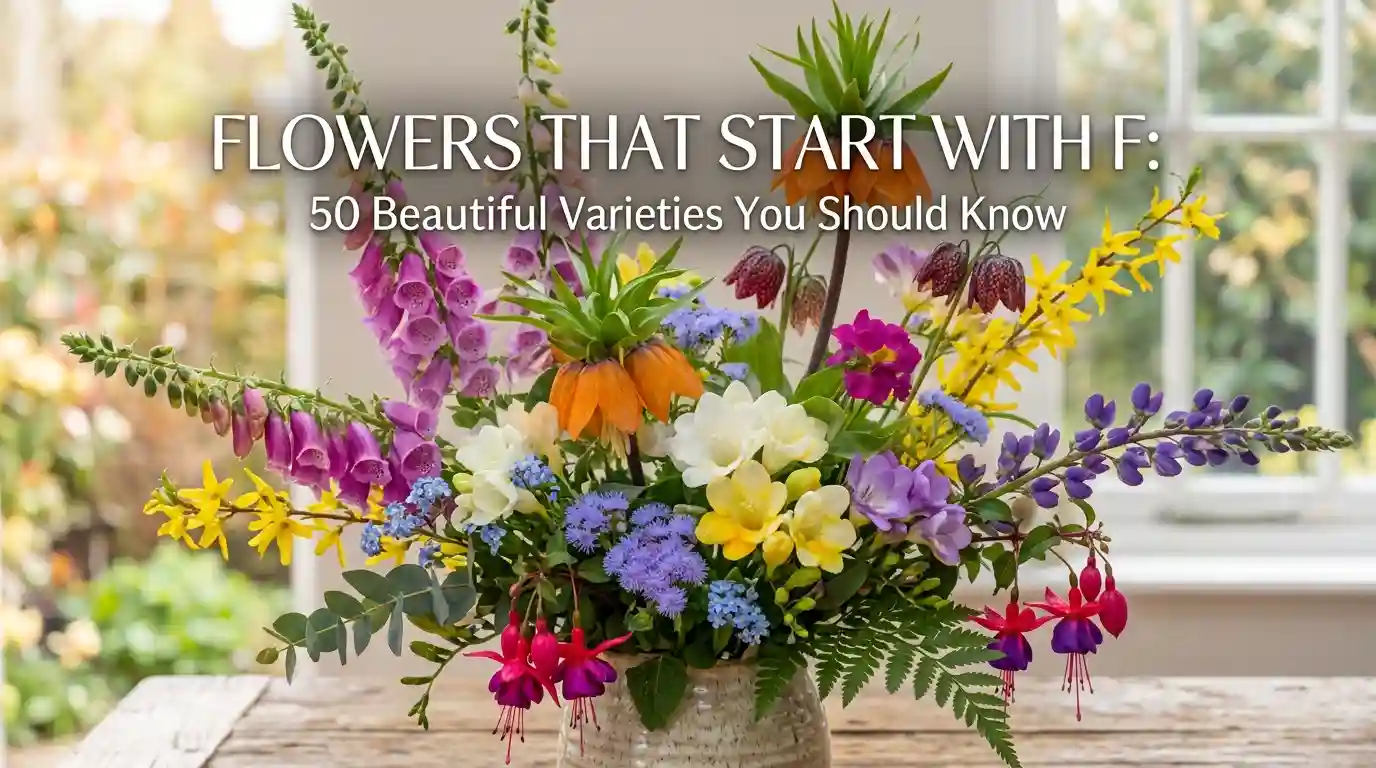
Finding flowers that start with F opens the door to a surprisingly varied group of plants. The letter F includes fragrant flowers, cottage-garden favorites, woodland blooms, tropical plants, wildflowers, and striking ornamental varieties.
Some F flowers are easy choices for beginners. Others need more specific conditions, such as mild winters, excellent drainage, or partial shade. That difference matters when choosing plants for a real garden.
Instead of placing every flower into one long alphabetical list, this guide first looks at practical growing situations. That makes it easier to find flowers for sunny borders, shaded spaces, containers, pollinator gardens, and low-maintenance landscapes.
The alphabetical index comes later as a quick reference. This approach keeps the article useful for gardeners while still covering 50 beautiful flowers that start with F.
10 F Flowers Worth Knowing First
Not every flower beginning with F has the same garden value. Some stand out because of fragrance, while others are valued for long flowering, unusual shapes, or their ability to attract pollinators.
These ten choices provide a useful starting point for gardeners exploring this group.
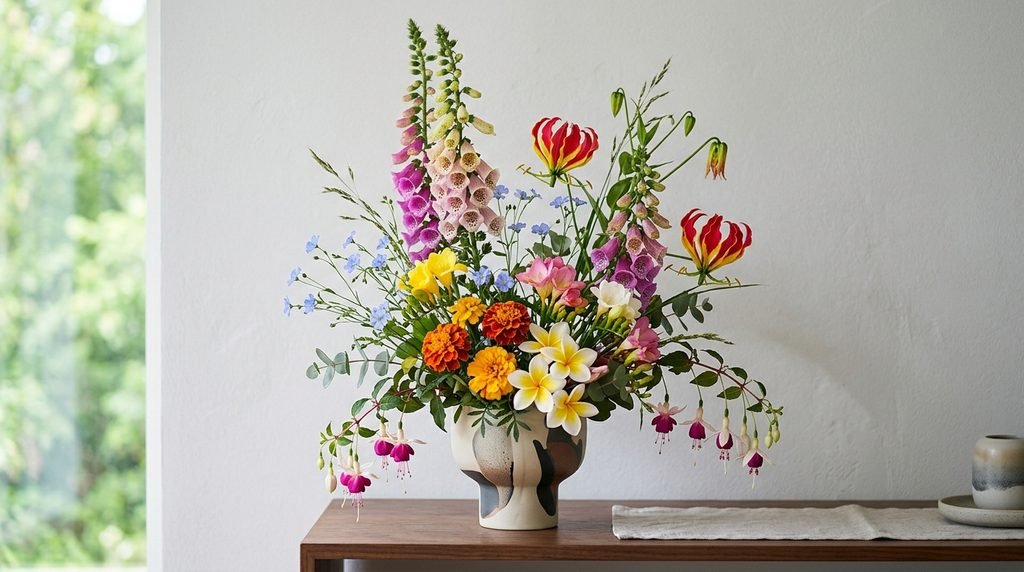
| Flower | Why Grow It? |
| Foxglove | Excellent vertical height |
| Freesia | Sweet fragrance |
| Fuchsia | Long-lasting colorful blooms |
| Forget-Me-Not | Beautiful blue flowers |
| French Marigold | Easy seasonal color |
| Four O’Clock | Evening blooms |
| Flax | Delicate blue flowers |
| Frangipani | Tropical fragrance |
| Feverfew | Useful cottage-garden plant |
| Flame Lily | Dramatic climbing flowers |
Foxglove works especially well where vertical structure is needed, while Freesia is a strong choice for fragrance and cut-flower displays. Fuchsia adds hanging flowers to containers and borders.
For gardeners wanting unusual flowering behavior, Four O’Clock is particularly interesting because its blooms typically open later in the day.
Sunny Spots: F Flowers That Love Strong Light
A sunny garden provides excellent conditions for many F flowers. Full sun usually means at least six hours of direct light, although the exact requirement varies by plant and climate.
The strongest choices for sunny spaces tend to include drought-tolerant annuals, flowering perennials, and plants from naturally bright habitats. Good drainage is also important for several of these varieties.
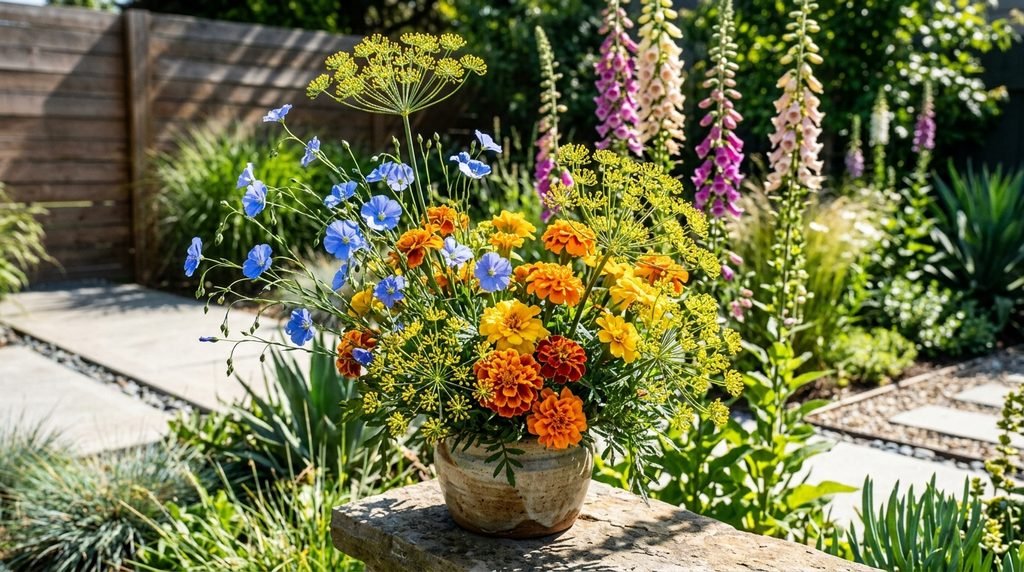
| Flower | Light Preference | Best Garden Use |
| Flax | Full sun | Wildflower beds |
| French Marigold | Full sun | Borders |
| Feverfew | Full sun | Cottage gardens |
| Four O’Clock | Sun to partial shade | Evening gardens |
| Foxglove | Sun to partial shade | Cottage borders |
| Fennel Flower | Full sun | Naturalistic planting |
Flax produces delicate flowers that can soften the appearance of a sunny planting area. French Marigolds provide stronger color and work particularly well around borders.
Foxgloves need a slightly different approach. They can tolerate brighter conditions in suitable soil, but dappled or light shade is often preferable, especially where summers are hot.
Shade and Woodland Conditions
Not every garden receives strong sunlight. Trees, walls, and buildings can create areas where direct light is limited.
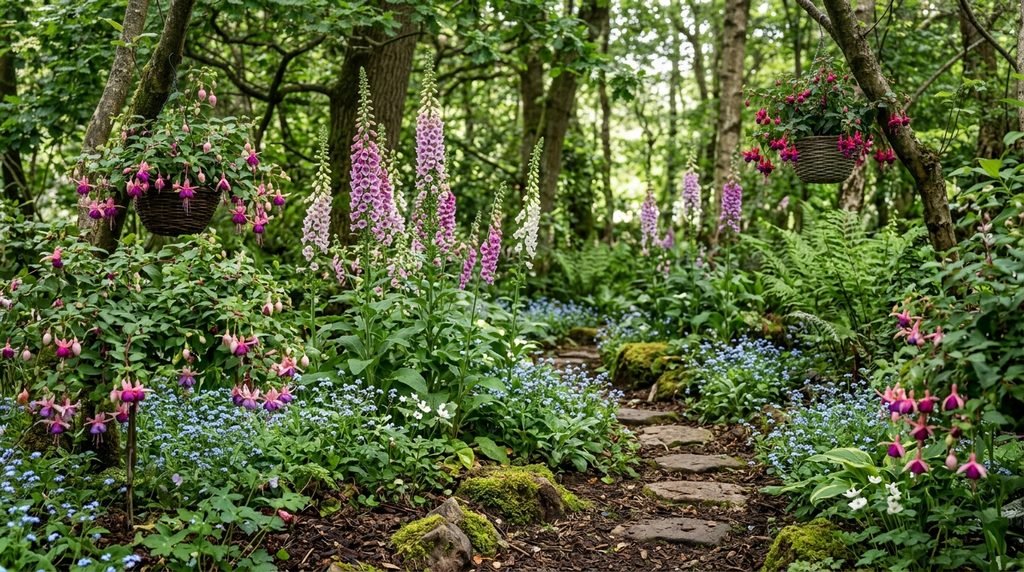
Several F flowers can handle partial shade, and some are particularly useful for woodland-style planting. The key is to distinguish between light shade and deep, dry shade because those conditions are not interchangeable.
Forget-Me-Not is useful for softer spring color, while Foxglove adds height and architectural form. Fuchsia can also perform well in partial shade, particularly in areas protected from harsh conditions.
Hardy fuchsias generally flower best in full sun but also tolerate partial shade. They prefer soil that avoids both prolonged dryness and persistent wetness.
The Best F Flowers for Beginners
A beginner-friendly flower should not require constant attention. Plants that tolerate ordinary garden conditions are often better choices than unusual species with highly specific needs.
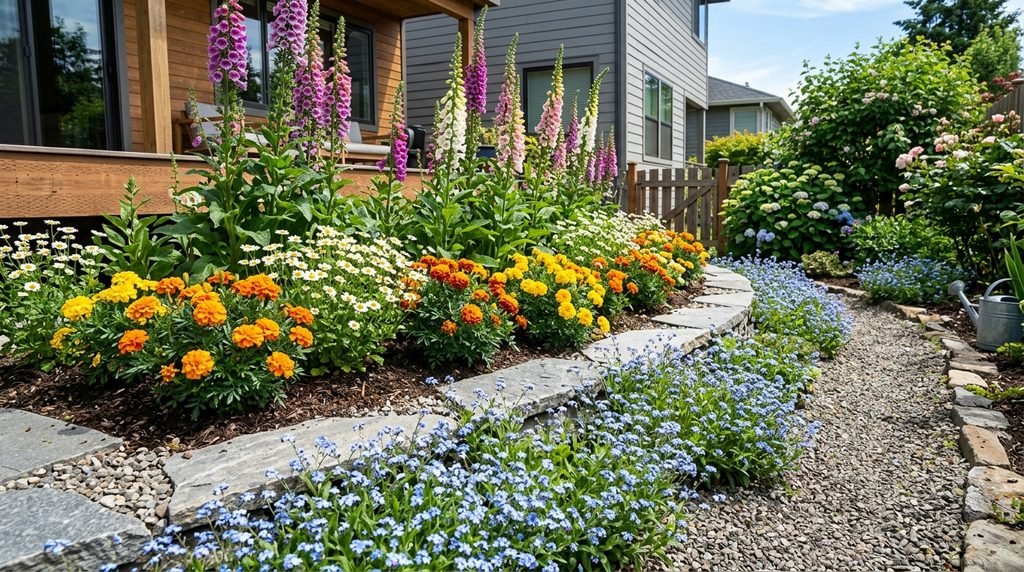
Several F flowers fit this category. They can provide reliable color without demanding complicated routines.
Foxglove
Foxgloves are surprisingly easy to establish when planted in suitable soil. They prefer organic-rich, well-drained ground and light or dappled shade.
French Marigold
French Marigolds are popular annuals because they provide bright seasonal color and work well in beds, borders, and containers.
Forget-Me-Not
Forget-Me-Nots are useful for natural-looking spring displays. They can also spread readily, making them suitable where a relaxed garden style is desired.
Feverfew
Feverfew fits naturally into cottage gardens and mixed borders. Its small daisy-like flowers create a soft effect among larger blooms.
These choices are useful because they offer different forms and flowering styles. A gardener can combine them instead of relying on one type of flower.
Fragrant F Flowers for Gardens and Bouquets
Fragrance can transform an ordinary flower bed into a much more memorable garden. It is especially valuable near paths, patios, entrances, and seating areas where the scent can be noticed easily.
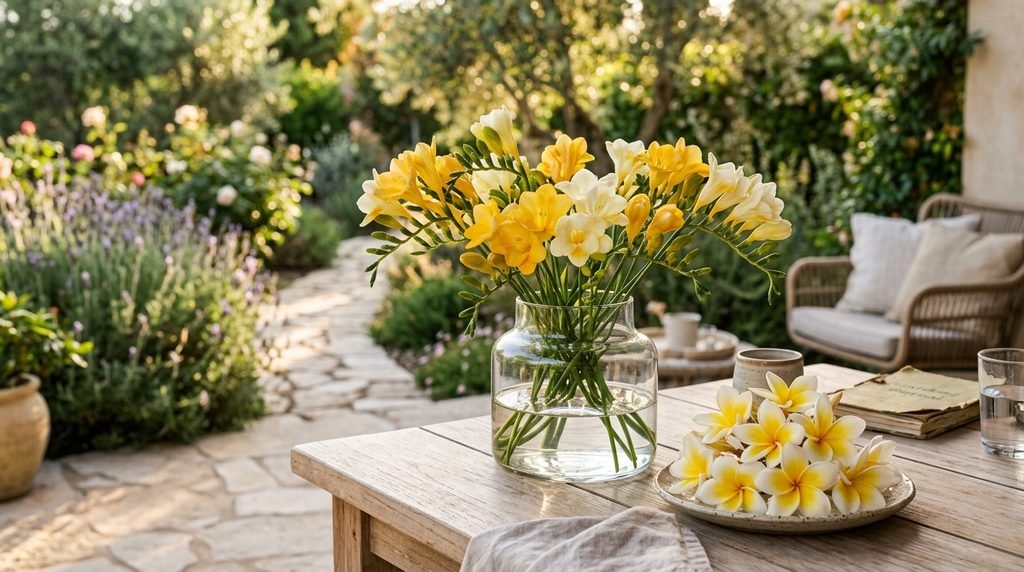
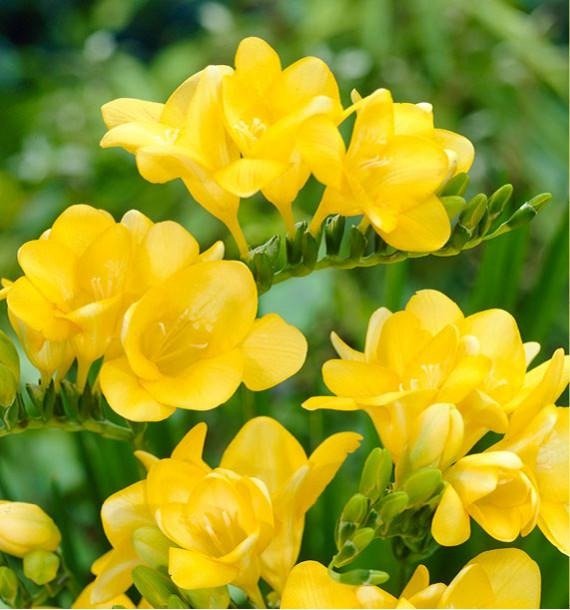
Freesia is one of the strongest choices in this group. Its fragrant flowers are also popular in floral arrangements.
Frangipani offers another powerful fragrance, but it belongs to warm-climate gardening. It is best suited to tropical or subtropical conditions and may need protection in cooler regions.
Freesia generally prefers bright light, mild temperatures, and well-drained growing conditions. Its fragrant flowers make it particularly valuable for cutting gardens.
F Flowers That Work Well in Containers
Containers give gardeners more control over soil, drainage, and placement. They are particularly useful for tender flowers that may need to be moved during cold weather.
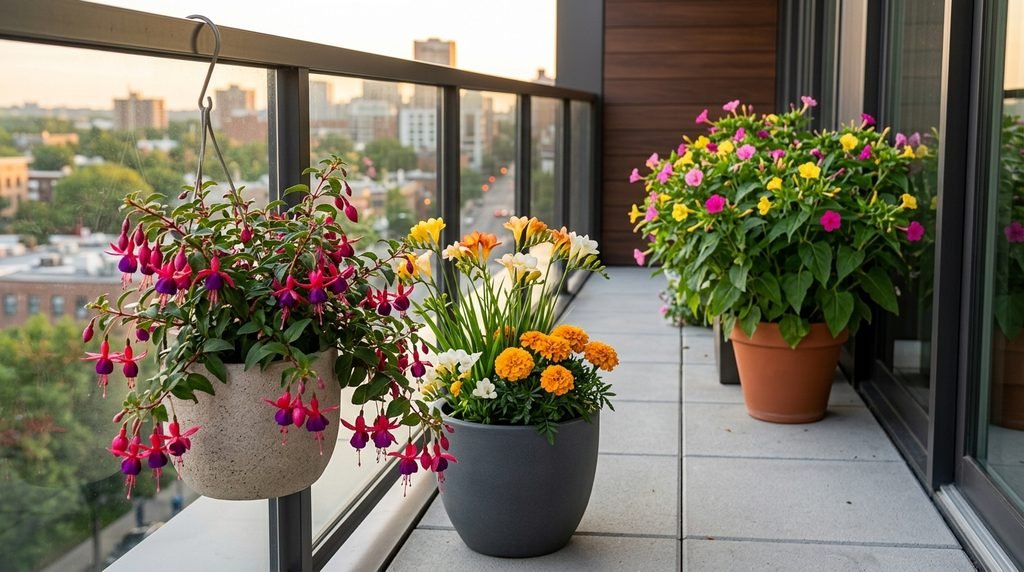
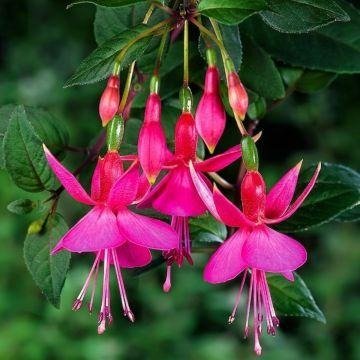
Fuchsia is one of the strongest container choices. Its hanging flowers look especially attractive in baskets and raised pots. Hardy and tender forms have different winter requirements, so plant labels should be checked carefully.
Freesia can also work well in containers when drainage and seasonal temperature requirements are met. French Marigolds provide an easier option for gardeners seeking straightforward seasonal color.
Four O’Clock can also become an interesting container feature because its later-opening flowers add interest when many daytime flowers begin to fade.
F Flowers for Pollinators
Flowers can provide more than visual appeal. The right planting can support bees, butterflies, hummingbirds, and other beneficial visitors.
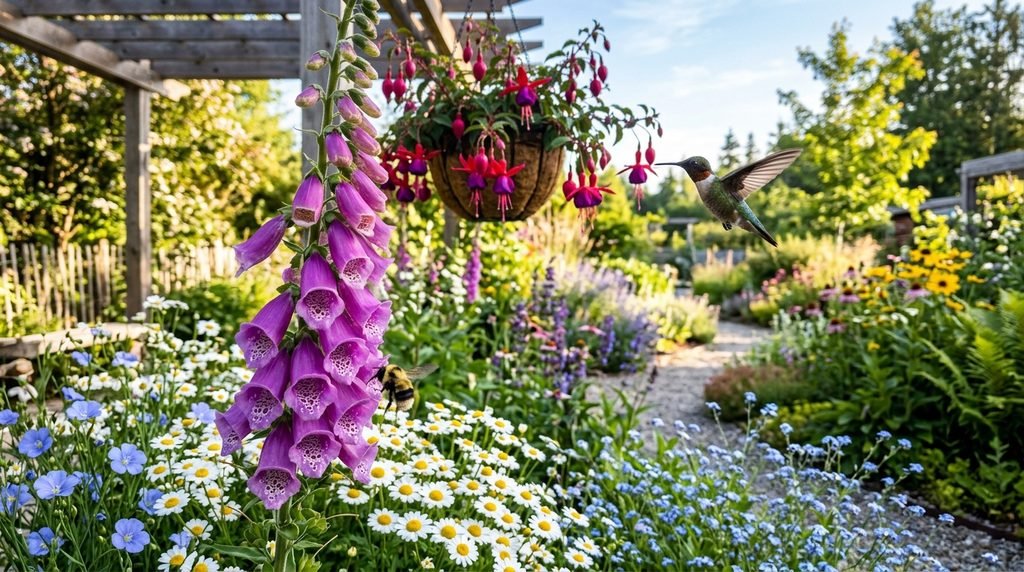
Foxgloves have nectar-rich tubular flowers that attract bees. Their flower structure makes them especially useful in wildlife-friendly gardens.
Feverfew, Fuchsia, Flax, and Forget-Me-Not can also contribute to a diverse planting scheme. A mix of flower shapes is generally more useful than filling a garden with a single species.
A pollinator garden should also include flowers ffob tiuzw od kldhzxxzf hlwuu. This helps provide resources over a longer part of the growing season.
What to Avoid When Growing F Flowers
Many gardening problems are caused by placing a plant in the wrong environment. A flower may be perfectly healthy but still fail when its basic requirements are ignored.
Several F flowers have clear preferences that should be considered before planting.
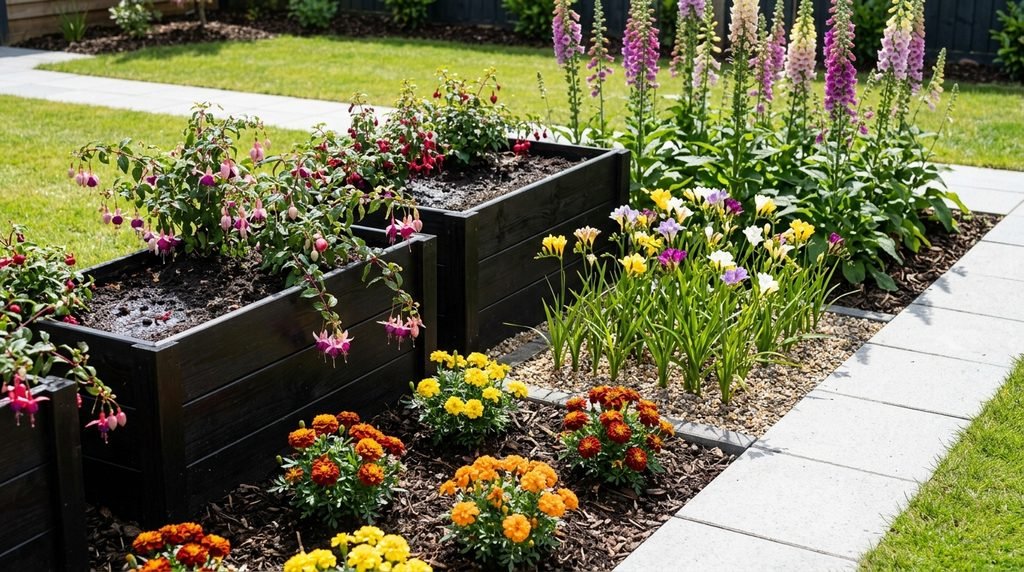
- Avoid waterlogged soil for Freesia and other plants that require good drainage.
- Avoid deep shade when growing Fuchsia for abundant flowers.
- Avoid planting Foxglove where children or pets may easily access it.
- Avoid extreme heat for cool-season Forget-Me-Nots displays.
- Avoid treating tender Frangipani as a frost-hardy garden plant.
- Avoid overcrowding French Marigolds.
- Avoid allowing container-grown Fuchsia to dry out repeatedly during active growth.
The biggest lesson is simple: plant selection should come before planting location. Matching the flower to the site prevents many avoidable problems.
Companion Planting Ideas for F Flowers
Companion planting can make a flower bed look fuller while also giving each plant a suitable growing partner. The best combinations usually bring together flowers with similar light, moisture, and soil needs.
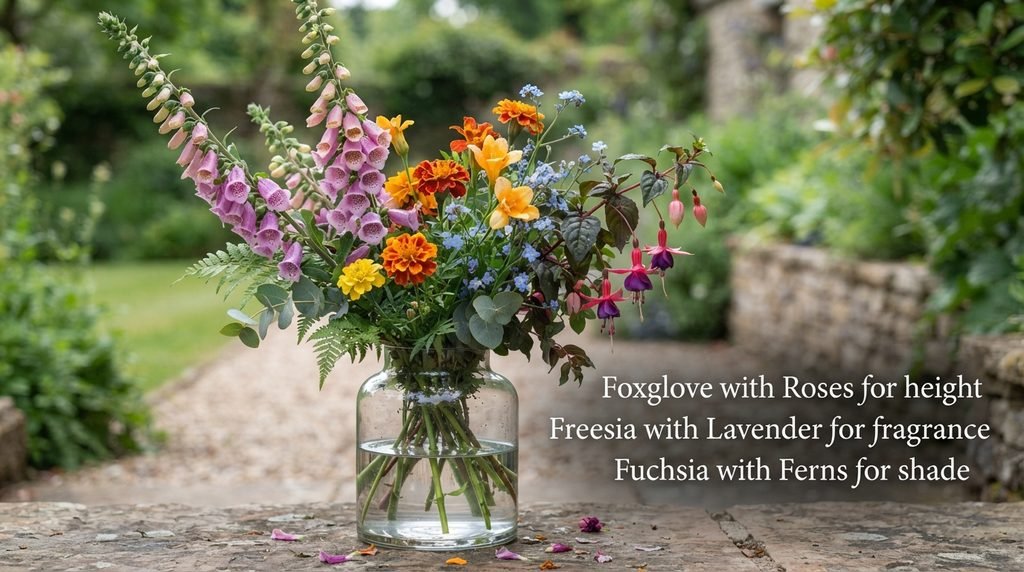
For F flowers, the goal is not simply to match colors. Plant height, flowering time, root space, and pollinator value also matter. Foxglove, for example, creates vertical interest, while lower-growing flowers can fill the space around its base. Foxglove also performs well in wildlife and cottage gardens.
| F Flower | Suitable Companion | Why the Pair Works |
| Foxglove | Rose | Adds height behind shorter plants |
| Freesia | Lavender | Combines fragrance and texture |
| Fuchsia | Ferns | Works well in partial shade |
| Forget-Me-Not | Tulips | Creates a soft spring color |
| French Marigold | Zinnia | Strong summer color |
| Flax | Yarrow | Suits sunny, well-drained beds |
| Feverfew | Salvia | Blends well in cottage gardens |
| Four O’Clock | Cosmos | Extends daily garden interest |
These combinations can be adjusted to suit the garden’s size. Fuchsia and Ferns are especially useful for shaded areas, while Flax and Yarrow are better suited to bright, well-drained spaces.
The strongest companion planting usually avoids overcrowding. Each flower needs enough room for air movement and healthy growth.
USDA Hardiness Guide for Popular F Flowers
Climate is one of the most important factors when selecting a flower. A plant that survives winter in one region may need to be treated as an annual or protected in another.
Hardiness information can also vary by species and cultivar. This table therefore works as a general guide rather than a guarantee for every variety.
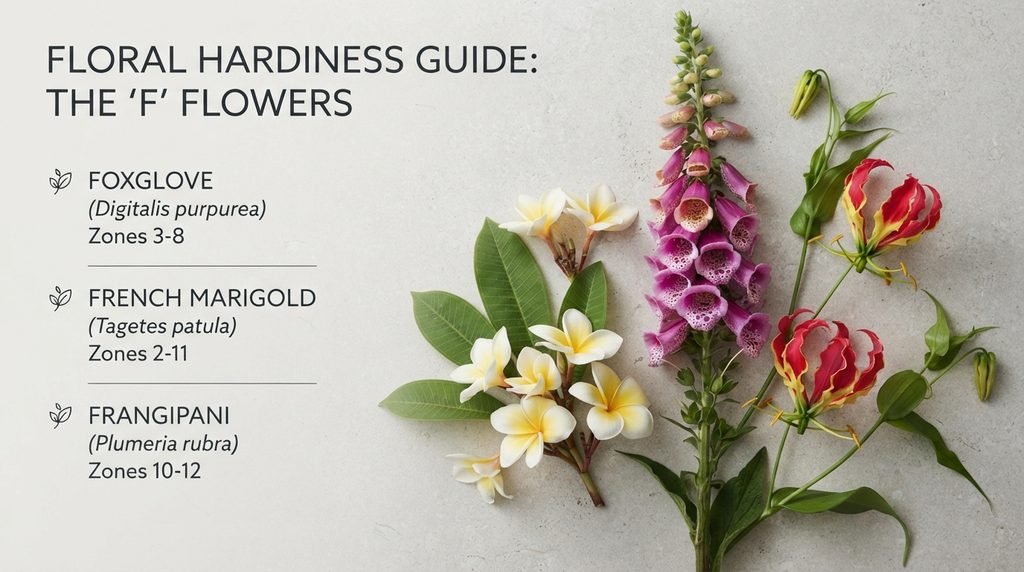
| F Flower | Approximate USDA Zones | Growing Note |
| Foxglove | 3–8 | Prefers cool conditions |
| Forget-Me-Not | 3–8 | Best in mild spring weather |
| Feverfew | 5–9 | Suitable for sunny borders |
| Flax | 3–9 | Needs good drainage |
| French Marigold | 2–11 as annual | Grown seasonally in cold areas |
| Fuchsia | 8–10 for many tender types | Hardy species tolerate colder areas |
| Freesia | 9–10 | Often grown seasonally elsewhere |
| Four O’Clock | 7–11 | Warm-weather favorite |
| Frangipani | 10–12 | Needs frost-free conditions |
| Flame Lily | 9–11 | Warm climate or protected growing |
Fuchsia requires particular attention because “fuchsia” covers both tender and hardy types. Tender fuchsias are generally planted outdoors after frost danger has passed, while some hardy forms can tolerate considerably colder conditions.
Frangipani and Flame Lily are better suited to warm climates. In colder areas, they may need containers, greenhouse protection, or seasonal treatment.
Beginner Mistakes to Avoid With F Flowers
Most gardening mistakes are easier to prevent than to correct. The same is true for flowers beginning with F.
Some problems come from incorrect watering. Others happen because a plant is placed in too much shade, exposed to frost, or grown in soil that stays wet for too long.
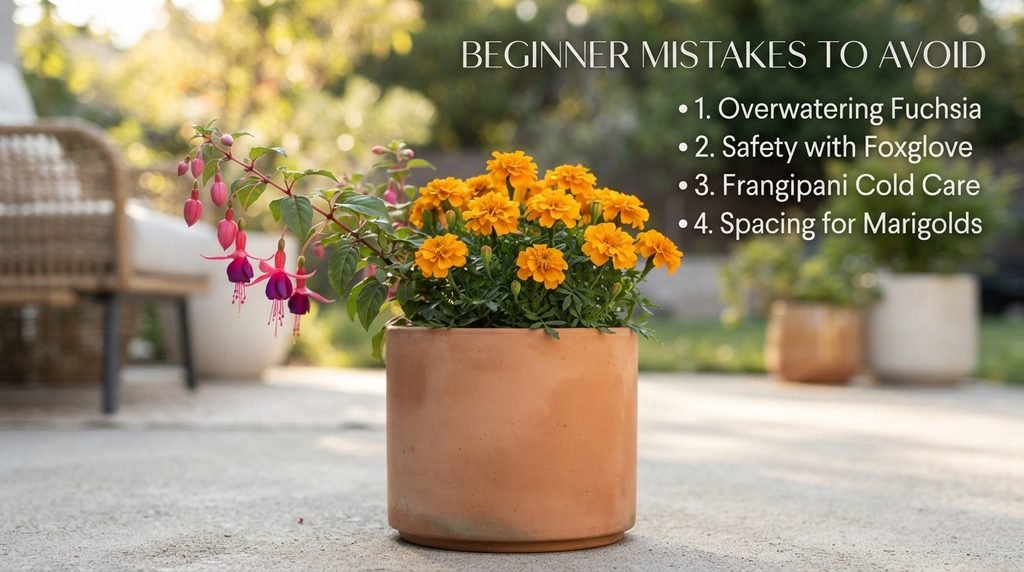
1. Overwatering Fuchsia
Fuchsias like consistent moisture, but their growing medium should not remain soggy. Container plants need especially careful watering because excess water can remain around the roots.
2. Planting Foxglove Without Considering Safety
Foxglove contains toxic compounds if eaten. It should be positioned carefully around children and pets, and gloves are recommended when handling the plant.
3. Treating Frangipani Like a Cold-Hardy Perennial
Frangipani is a tropical or subtropical plant. Cold temperatures can damage it, so outdoor planting should be limited to suitable climates.
4. Crowding French Marigolds
French Marigolds need enough space for air circulation and healthy development. Overcrowding can make the foliage stay damp and reduce the overall appearance of the bed.
5. Giving Freesia Poor Drainage
Freesia performs better when excess water can move away from the root area. Heavy, constantly wet soil can create growing problems.
These mistakes all point to the same lesson: every flower should be planted according to its actual requirements rather than appearance alone.
A Simple Seasonal Care Calendar
Flower care becomes easier when the major tasks are planned around the growing season. The exact timing depends on climate, but the general sequence remains useful.
Fuchsia, Freesia, Foxglove, French Marigold, and other F flowers have different seasonal rhythms. Some are cool-season plants, while others wait for warm weather before making strong growth.
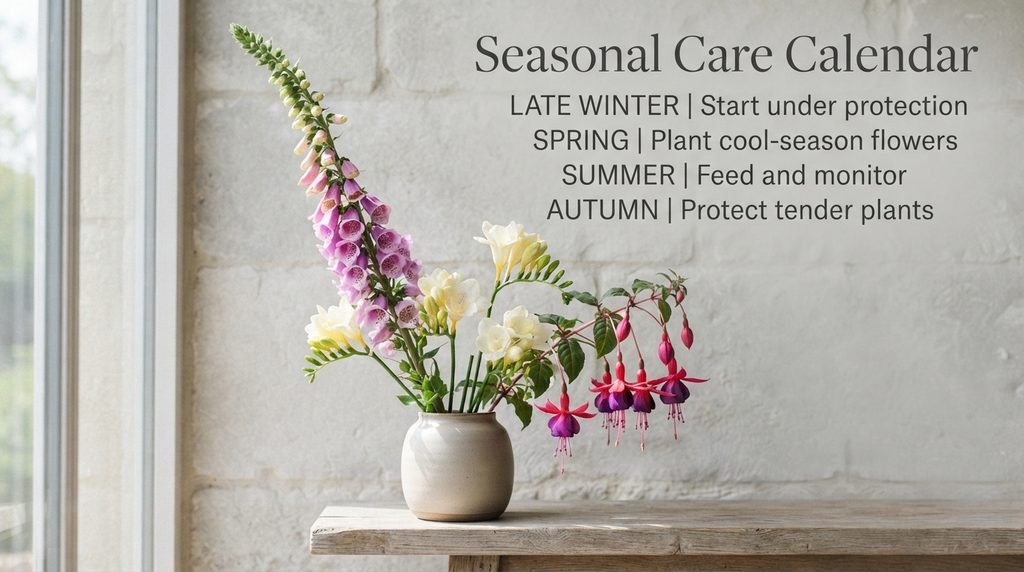
| Season | Main Gardening Task |
| Late Winter | Start tender flowers under protection |
| Early Spring | Plant cool-season flowers |
| Mid-Spring | Prepare beds and improve drainage |
| Late Spring | Plant frost-sensitive flowers |
| Early Summer | Feed and water actively growing plants |
| Mid-Summer | Deadhead and monitor pests |
| Late Summer | Collect seeds where appropriate |
| Autumn | Protect tender plants before cold weather |
| Winter | Store frost-sensitive plants where needed |
Tender Fuchsias should only be moved outdoors after the frost risk has passed. They can also be grown in containers and brought under protection when temperatures fall.
Foxgloves follow a different rhythm. Depending on the species and growing conditions, they can establish from seed and may self-seed naturally after flowering.
A seasonal approach prevents rushed planting and makes it easier to protect plants at the right time.
Which flowers are easy to find?
Availability often influences which flowers gardeners actually choose. Popular bedding plants are usually easier to locate than unusual tropical or specialty species.
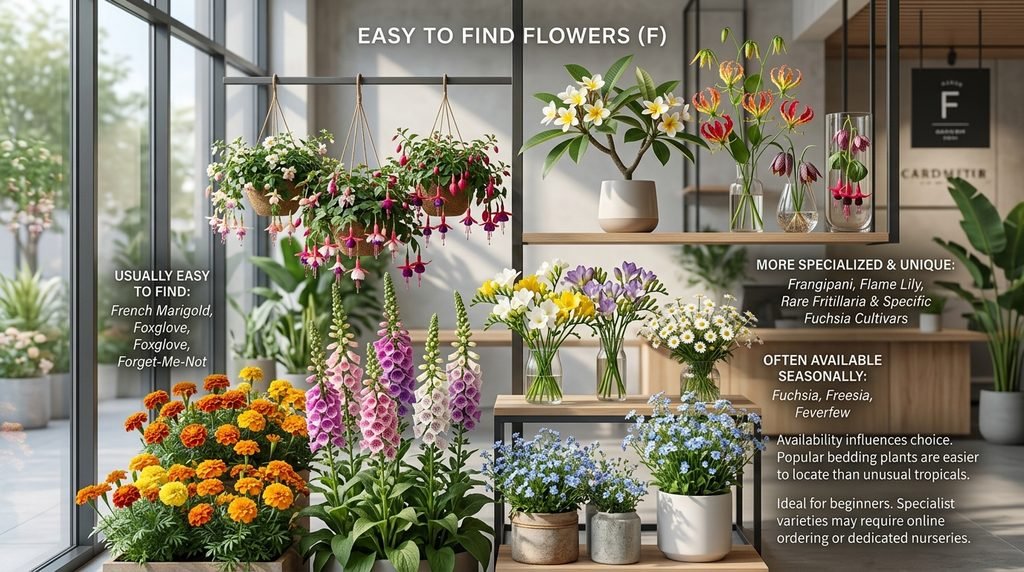
French Marigold, Fuchsia, Foxglove, and Forget-Me-Not are generally easier to encounter through garden centers, seed suppliers, or seasonal plant sales. Specialist flowers may require online ordering or a nursery that focuses on unusual plants.
Fuchsia is a good example of a plant with broad availability. The RHS notes that tender fuchsias are commonly sold through garden centers and nurseries, while specialist growers offer a wider range of forms.
| Availability Level | Examples |
| Usually easy to find | French Marigold, Foxglove, Forget-Me-Not |
| Often available seasonally | Fuchsia, Freesia, Feverfew |
| More specialized | Frangipani, Flame Lily |
| Specialty collection plants | Some rare Fritillaria and Fuchsia cultivars |
For a beginner, readily available flowers are often the better starting point. They are easier to replace, compare, and research.
Specialty varieties become more attractive when a gardener already understands the local climate and growing conditions.
If Only Three F Flowers Can Be Chosen
Limited space does not mean a garden has to look ordinary. Three carefully selected plants can provide height, color, and a different flowering style.
The best three depend on climate, but for a general garden, the following combination offers strong visual variety.
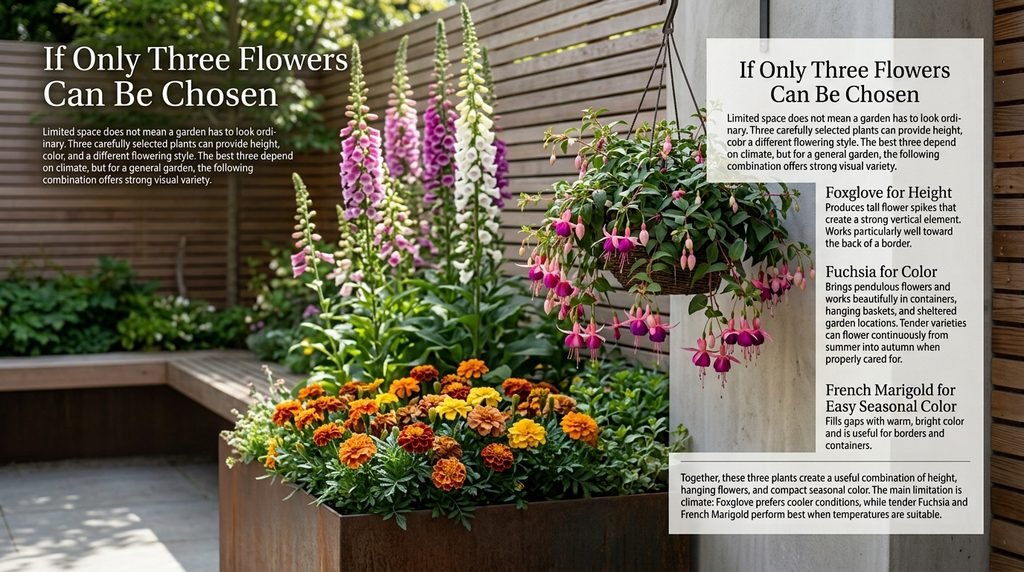
Foxglove for Height
It works particularly well toward the back of a border.
Fuchsia for Color
Fuchsia brings pendulous flowers and works beautifully in containers, hanging baskets, and sheltered garden locations. Tender varieties can flower continuously from summer into autumn when properly cared for.
French Marigold for Easy Seasonal Color
French Marigold fills gaps with warm, bright color and is useful for borders and containers.
Together, these three plants create a useful combination of height, hanging flowers, and compact seasonal color. The main limitation is climate: Foxglove prefers cooler conditions, while tender Fuchsia and French Marigold perform best when temperatures are suitable.
F Flowers and Their Safety Considerations
Not every flower should be treated as edible simply because it is grown ornamentally. Some F plants contain compounds that can cause serious problems when eaten.
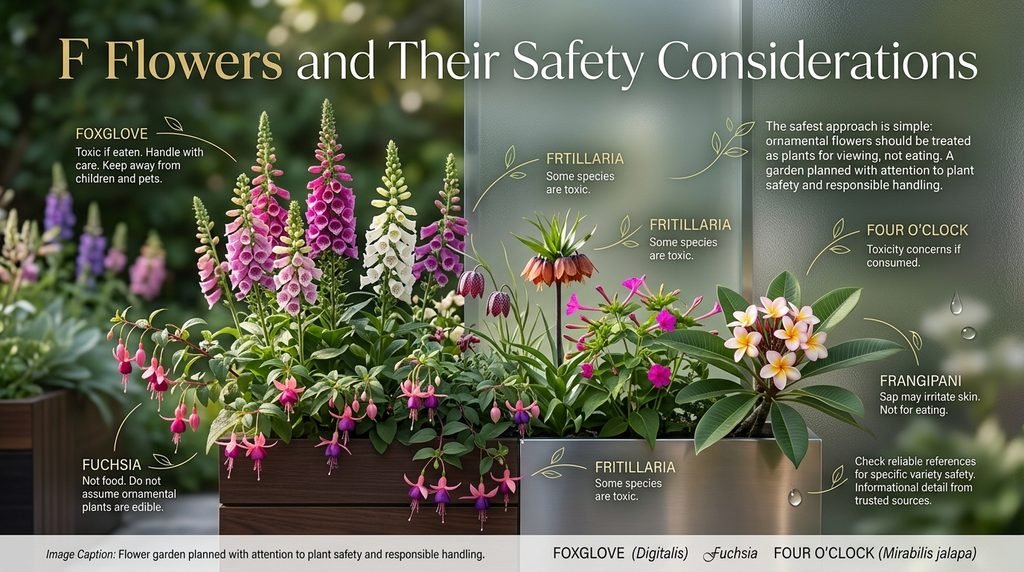
Foxglove deserves the greatest attention in this group. It is classified by the RHS as toxic if eaten. Children, pets, and anyone handling the plant should be kept away from accidental ingestion.
Fuchsia has a different safety profile, but plant parts should still not be treated as food unless a particular species and preparation are known to be suitable. General garden safety guidance recommends avoiding consumption of ornamental plants.
| F Flower | Main Safety Concern |
| Foxglove | Toxic if eaten |
| Fritillaria | Some species are toxic |
| Euphorbia-type flowering plants | Irritating sap |
| Four O’Clock | Toxicity concerns if consumed |
| Frangipani | Sap may irritate |
| Fuchsia | Do not assume ornamental plants are edible |
Safety information can differ between species and cultivars. Plant labels and reliable horticultural or veterinary references should be checked whenever a particular variety is being grown around children or animals.
The safest approach is simple: ornamental flowers should be treated as plants for viewing, not eating.
F Flowers by Color
Red F Flowers
Red Fuchsia flowers create a dramatic effect in containers and hanging baskets. Some Flame Lily varieties also bring intense red and orange tones, making them excellent focal plants in warm climates.
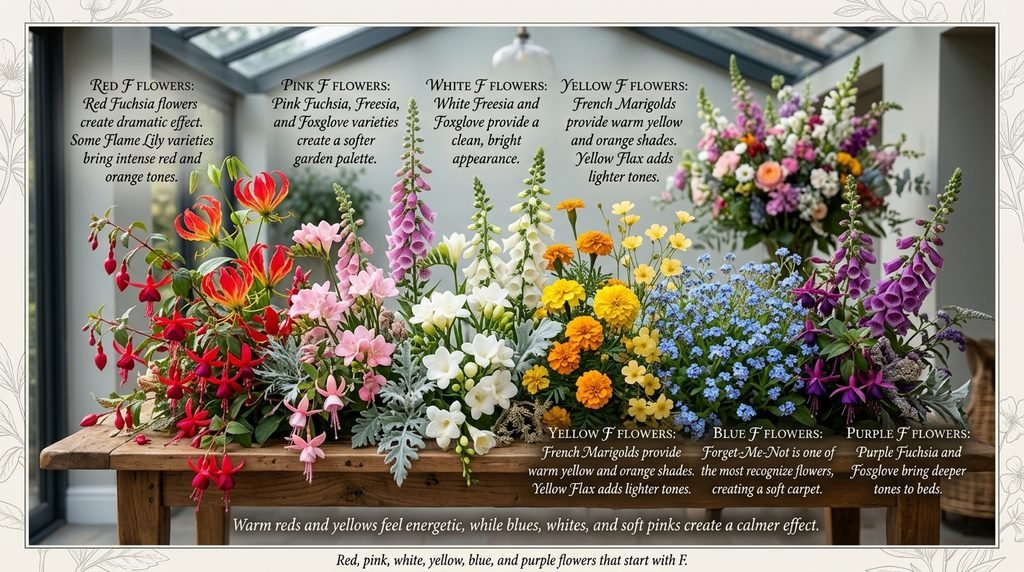
Pink F Flowers
Pink Fuchsia, Freesia, and Foxglove varieties create a softer garden palette. These shades work particularly well with white flowers and silvery foliage.
White F Flowers
White Freesia and some Foxglove varieties provide a clean, bright appearance.
Yellow F Flowers
French Marigolds provide warm yellow and orange shades for summer borders. Yellow Flax and some other F plants can also add lighter tones to naturalistic planting.
Blue F Flowers
Forget-Me-Not is one of the most recognizable blue flowers beginning with F. Its small blooms create a soft carpet of color during the spring season.
Purple F Flowers
Different colors can be combined to create a specific garden mood. Warm reds and yellows feel energetic, while blues, whites, and soft pinks create a calmer effect.
50 Flowers That Start With F
The alphabetical list is placed near the end so it works as a quick reference rather than controlling the entire article. Each name below represents a flower, flowering plant, or commonly recognized ornamental plant beginning with the letter F.
Some are familiar garden favorites. Others are wildflowers, tropical plants, bulbs, or specialty plants that are better suited to experienced growers.
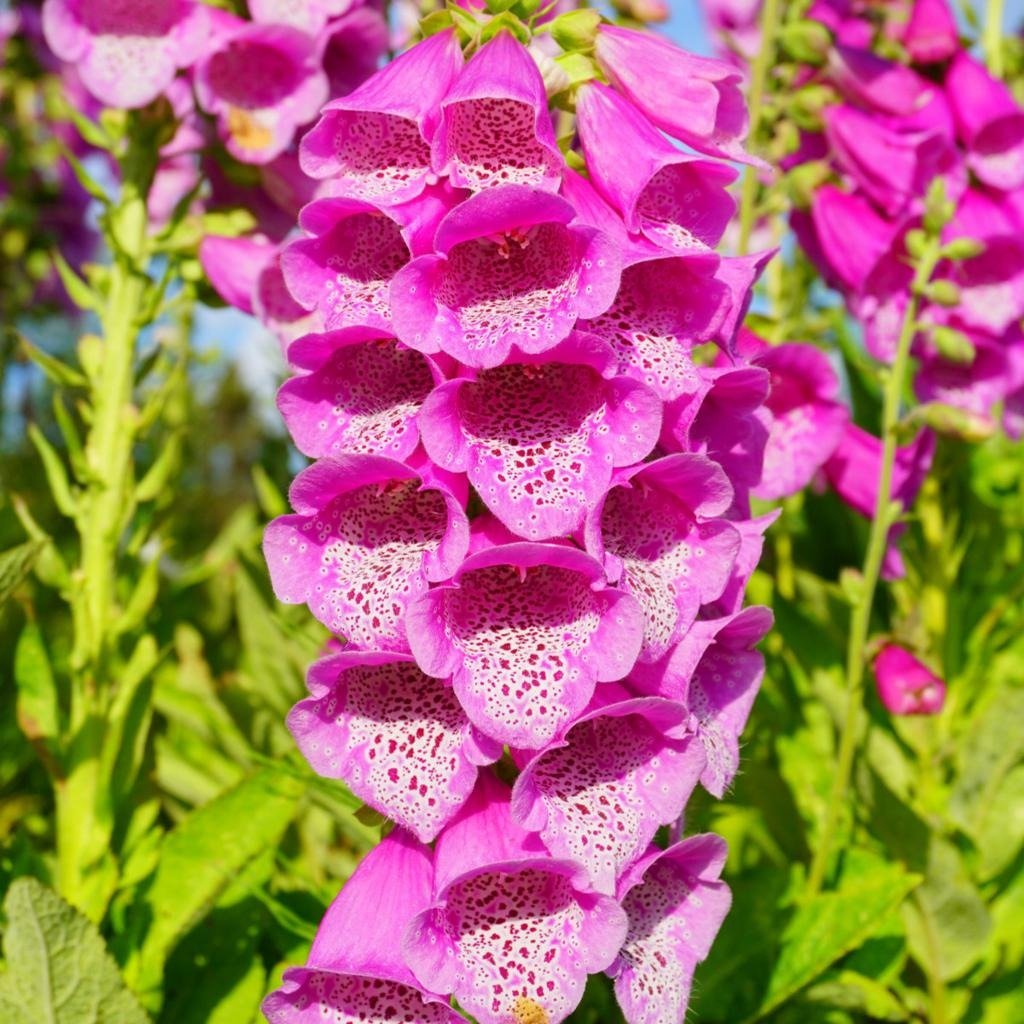
- Foxglove
- Freesia
- Fuchsia
- Forget-Me-Not
- French Marigold
- Four O’Clock
- Flax
- Feverfew
- Frangipani
- Flame Lily
- Fritillaria
- Fairy Lily
- False Indigo
- Fairy Fan Flower
- Fireweed
- Fire Lily
- Flamingo Flower
- Flannel Flower
- Flame Azalea
- Flowering Quince
- Flowering Tobacco
- Forget-Me-Not Tree
- Forsythia
- Fox and Cubs
- Fairy Duster
- False Sunflower
- Fennel Flower
- Finger Flower
- Fringed Gentian
- Fringed Pink
- Fairy Primrose
- Fountain Grass
- Firecracker Flower
- Firebush
- Firethorn
- Florist’s Gloxinia
- Flaming Sword
- Floribunda Rose
- Forest Pansy
- Foxglove Beardtongue
- False Rue Anemone
- Fairy Slipper Orchid
- Fairy Bells
- Fairy Candles
- Five-Spot
- Four-Nerve Daisy
- Fringed Orchid
- Frogfruit
- Fumewort
- Fritillaria imperialis
This list gives gardeners a broad selection, from easy annuals such as French Marigold to more specialized plants such as Fairy Slipper Orchid. The growing requirements can differ greatly, so the name alone should never determine where a plant is placed.
Botanical Names Behind the F Flowers
Common names can vary from one region to another. Botanical names provide a more dependable way to identify plants, especially when buying seeds or comparing care instructions.
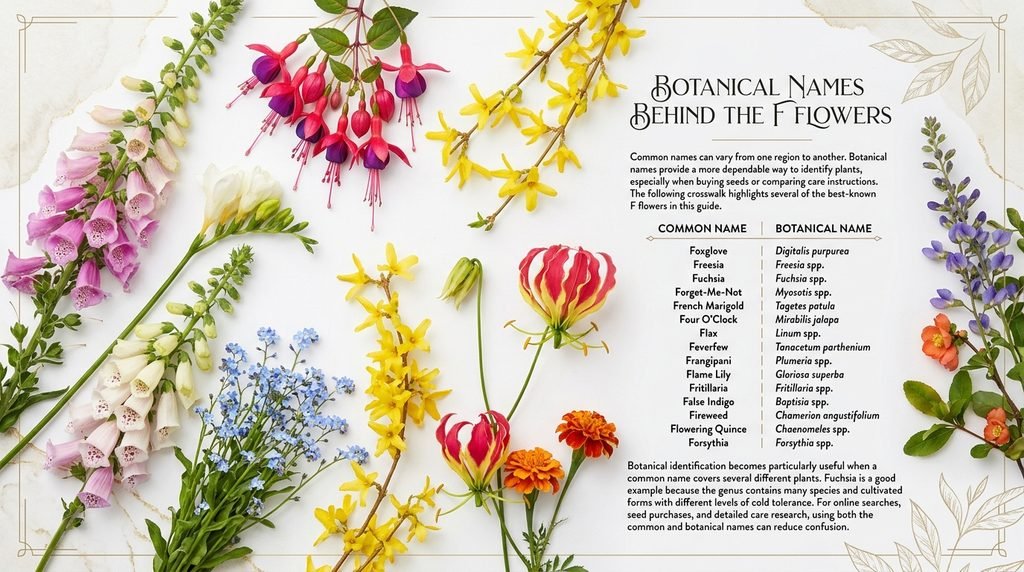
The following crosswalk highlights several of the best-known F flowers in this guide.
| Common Name | Botanical Name |
| Foxglove | Digitalis purpurea |
| Freesia | Freesia spp. |
| Fuchsia | Fuchsia spp. |
| Forget-Me-Not | Myosotis spp. |
| French Marigold | Tagetes patula |
| Four O’Clock | Mirabilis jalapa |
| Flax | Linum spp. |
| Feverfew | Tanacetum parthenium |
| Frangipani | Plumeria spp. |
| Flame Lily | Gloriosa superba |
| Fritillaria | Fritillaria spp. |
| False Indigo | Baptisia spp. |
| Fireweed | Chamerion angustifolium |
| Flowering Quince | Chaenomeles spp. |
| Forsythia | Forsythia spp. |
Botanical identification becomes particularly useful when a common name covers several different plants. Fuchsia is a good example because the genus contains many species and cultivated forms with different levels of cold tolerance.
For online searches, seed purchases, and detailed care research, using both the common and botanical names can reduce confusion.
What Do F Flowers Symbolize?
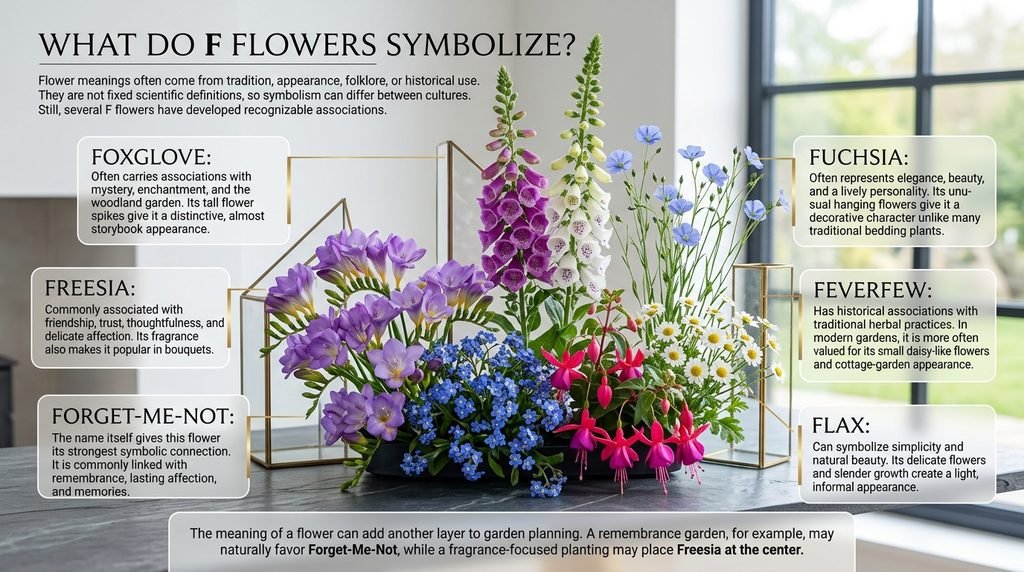
Flower meanings often come from tradition, appearance, folklore, or historical use. They are not fixed scientific definitions, so symbolism can differ between cultures.
Still, several F flowers have developed recognizable associations.
Foxglove
Foxglove often carries associations with mystery, enchantment, and the woodland garden. Its tall flower spikes give it a distinctive, almost storybook appearance.
Freesia
Freesia is commonly associated with friendship, trust, thoughtfulness, and delicate affection. Its fragrance also makes it popular in bouquets.
Forget-Me-Not
The name itself gives this flower its strongest symbolic connection. It is commonly linked with remembrance, lasting affection, and memories.
Fuchsia
Fuchsia often represents elegance, beauty, and a lively personality. Its unusual hanging flowers give it a decorative character unlike many traditional bedding plants.
Feverfew
Feverfew has historical associations with traditional herbal practices. In modern gardens, it is more often valued for its small daisy-like flowers and cottage-garden appearance.
Flax
Flax can symbolize simplicity and natural beauty. Its delicate flowers and slender growth create a light, informal appearance.
The meaning of a flower can add another layer to garden planning. A remembrance garden, for example, may naturally favor Forget-Me-Not, while a fragrance-focused planting may place Freesia at the center.
50 F Flowers: Quick Growing Comparison
A quick comparison can help narrow the choices after exploring the longer list. The table focuses on practical garden traits rather than simply repeating flower names.
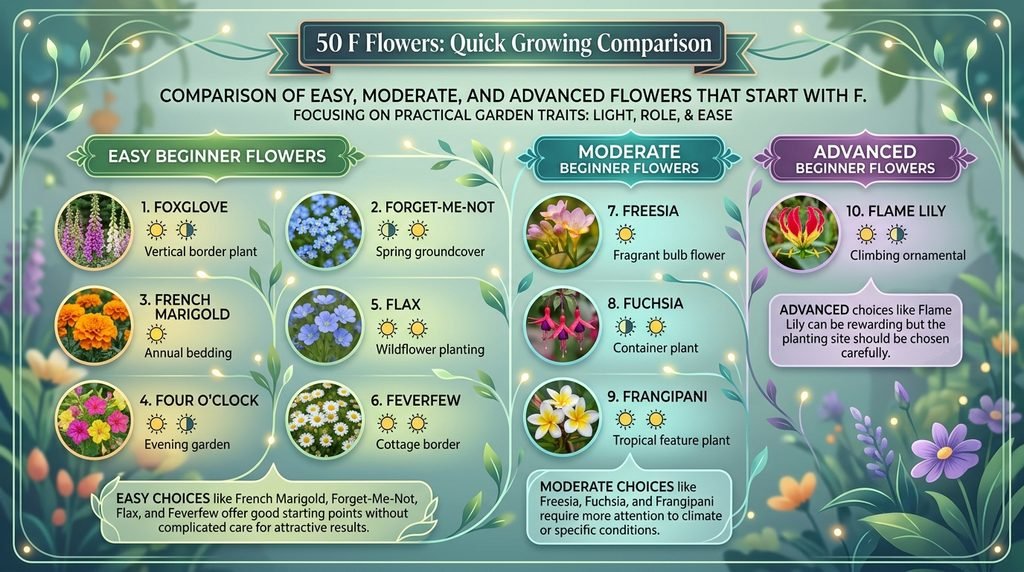
| Flower | Best Light | Typical Garden Role | Beginner Level |
| Foxglove | Sun/partial shade | Vertical border plant | Easy |
| Freesia | Sun | Fragrant bulb flower | Moderate |
| Fuchsia | Partial shade/sun | Container plant | Moderate |
| Forget-Me-Not | Partial shade/sun | Spring groundcover | Easy |
| French Marigold | Full sun | Annual bedding | Easy |
| Four O’Clock | Sun/partial shade | Evening garden | Easy |
| Flax | Full sun | Wildflower planting | Easy |
| Feverfew | Full sun | Cottage border | Easy |
| Frangipani | Full sun | Tropical feature plant | Moderate |
| Flame Lily | Sun/partial shade | Climbing ornamental | Advanced |
The easiest choices here are French Marigold, Forget-Me-Not, Flax, and Feverfew. They offer good starting points for gardeners who want attractive results without complicated care.
Freesia, Frangipani, and Flame Lily require more attention to climate or growing conditions. They can still be rewarding, but the planting site should be chosen carefully.
Frequently Asked Questions About Flowers That Start With F
1. What are the most popular flowers that start with F?
Some of the best-known choices include Foxglove, Freesia, Fuchsia, Forget-Me-Not, French Marigold, and Four O’Clock. They cover a wide range of colors, forms, and growing conditions.
2. What is the easiest F flower to grow?
French Marigold is one of the easiest choices for seasonal color. It generally performs well in sunny locations and is widely grown as an annual.
3. Which F flower has a strong fragrance?
Freesia is one of the strongest fragrant choices. Its scented flowers are especially popular for bouquets and cutting gardens.
4. Which flowers that start with F are good for shade?
Fuchsia and Foxglove can work well in partial shade, although their exact requirements vary by species and local climate. Forget-Me-Not can also perform well where soil remains reasonably moist.
5. Are Foxgloves poisonous?
Yes. Foxgloves contain cardiac glycosides and can cause serious poisoning if eaten. They should be grown where accidental consumption is unlikely, particularly around children and pets.
6. Do Fuchsias grow in full sun?
Some Fuchsias tolerate or prefer brighter conditions, but many perform best with protection from intense afternoon heat. Tender types especially benefit from suitable shelter and consistent moisture.
7. Can Freesia be grown in containers?
Yes. Freesia can be grown in containers when the growing medium drains well, and the plant receives suitable light and temperatures.
8. Which F flower blooms at night?
Four O’Clock is famous for flowers that generally open later in the day. Its evening flowering makes it interesting for gardens designed to be enjoyed after sunset.
9. What blue flower starts with F?
Forget-Me-Not is the most familiar blue flower beginning with F. Its small blue flowers are particularly associated with spring gardens.
10. Which F flowers attract pollinators?
Foxglove, Fuchsia, Flax, and Feverfew can contribute to pollinator-friendly planting. A mixture of flower shapes and flowering periods can make a garden more useful to visiting insects.
11. Can Frangipani grow in cold climates?
Frangipani is a warm-climate plant and does not tolerate frost well. In colder regions, it is better grown in a container that can be protected during winter.
12. Which F flower is best for a cottage garden?
Foxglove and Feverfew are particularly suitable for cottage-style planting. Their informal shapes combine well with other traditional border flowers.
13. Which F flower is best for a small garden?
Fuchsia is an excellent option when vertical space is limited because it can grow effectively in containers and hanging baskets. French Marigold is another useful choice for compact spaces.
14. Are all F flowers perennials?
No. The group contains annuals, biennials, perennials, bulbs, shrubs, vines, and tropical plants. Their life cycles depend on the species.
15. How many flowers that start with F are there?
There are far more than 50 plants whose common names begin with F. The exact number depends on whether regional common names, cultivars, species, and alternative names are included.
Final Thoughts
The world of flowers that start with F includes far more variety than a simple alphabetical search might suggest. Foxglove provides height, Freesia brings fragrance, Fuchsia adds hanging color, Forget-Me-Not supplies delicate blue blooms, and French Marigold offers dependable seasonal brightness.
The best choice depends on the growing conditions available. Sunlight, soil drainage, temperature, moisture, and winter conditions should all be considered before planting.
For beginners, French Marigold, Forget-Me-Not, Feverfew, and Flax offer approachable starting points. Gardeners looking for something more unusual can explore Frangipani, Flame Lily, Fritillaria, and other specialty plants when the climate allows.
A successful F-themed garden does not need to contain dozens of varieties. A thoughtful combination of a few plants with different heights, colors, flowering periods, and textures can create a much stronger result.