

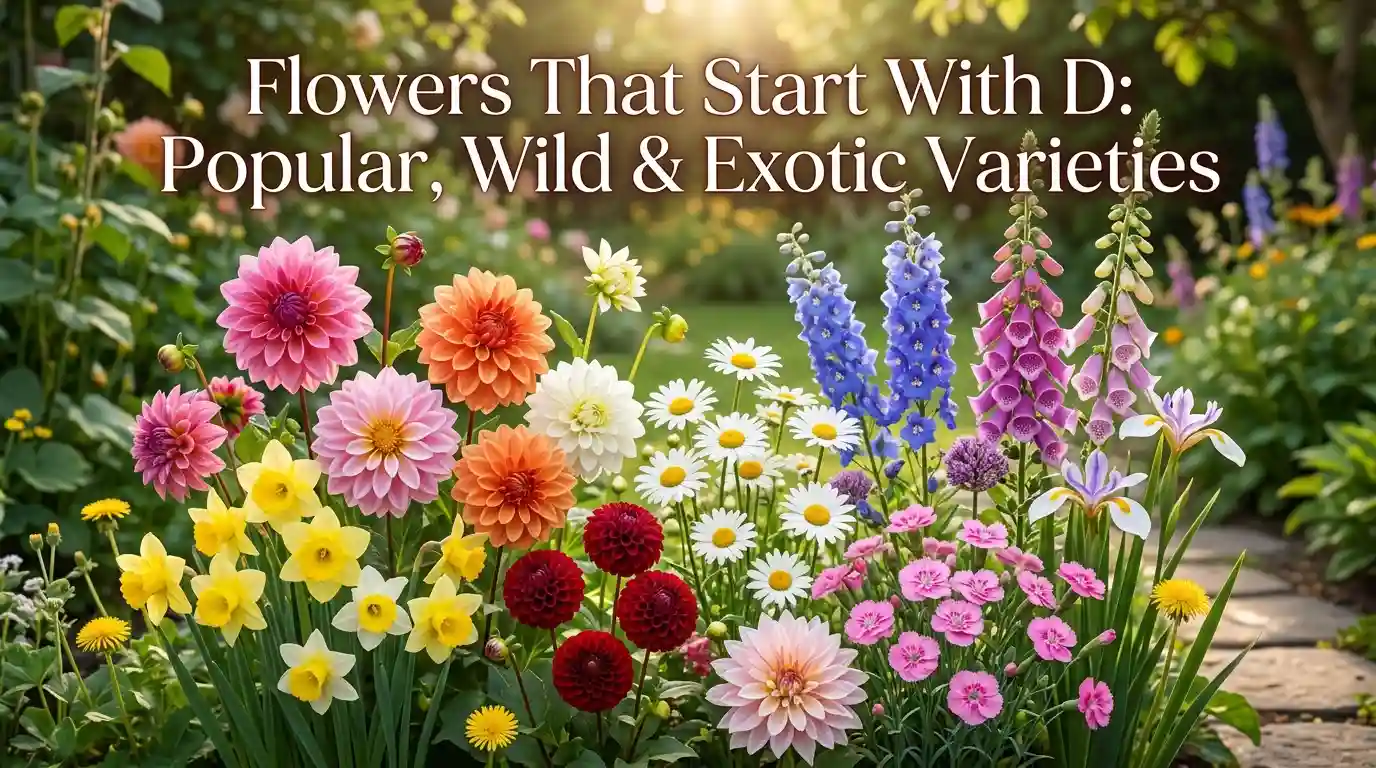
The world of flowers offers far more diversity than many gardeners realize, and the flowers that start with D are a perfect example. Some are dependable garden favorites that bloom for months with little effort. Others are unusual wildflowers that thrive in natural landscapes. A few are truly exotic specimens that attract attention wherever they grow.
Many flower guides focus only on names. While that information has value, gardeners often need practical advice before selecting a plant. A flower that performs beautifully in one climate may struggle in another. Likewise, some flowers demand constant care while others practically thrive on neglect.
This guide takes a different approach. Instead of starting with a long alphabetical list, it focuses on growing situations, care requirements, and practical garden uses. Readers can quickly discover which D flowers fit their landscape, experience level, and growing conditions.
An alphabetical reference section appears later in the article for quick browsing. However, the primary goal is to help gardeners choose flowers that will actually succeed in their garden.
Quick Picks Worth Considering First
Some flowers earn their popularity through reliability. Others stand out because of unusual blooms, strong fragrance, or exceptional wildlife value.
The following D flowers are often among the best starting points for gardeners looking to expand their planting options.
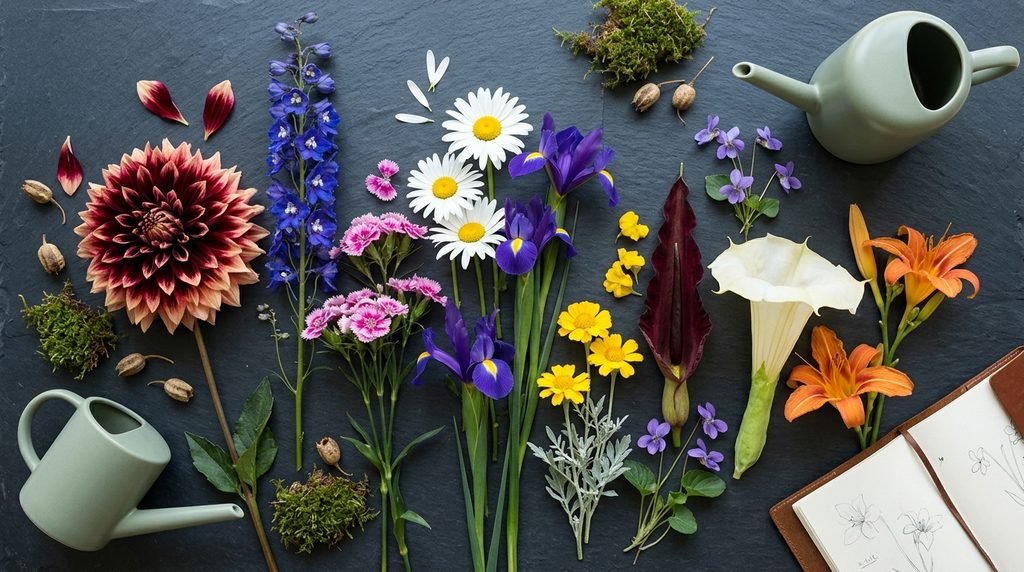
| Flower | Why Gardeners Love It |
| Dahlia | Spectacular bloom variety |
| Delphinium | Tall spikes of colorful flowers |
| Dianthus | Fragrant and easy to grow |
| Daisy | Reliable and versatile |
| Dutch Iris | Elegant spring flowers |
| Desert Marigold | Excellent drought tolerance |
| Dog Violet | Shade-friendly beauty |
| Dragon Arum | Exotic appearance |
| Datura | Dramatic trumpet-shaped blooms |
| Daylily | Long-lasting garden performance |
These flowers cover a broad range of gardening styles. Some fit cottage gardens, while others create dramatic focal points in formal landscapes.
For gardeners seeking dependable performance, Dahlias, Daylilies, and Dianthus remain among the strongest options
What Thrives Without Constant Attention
Many gardeners appreciate flowers that deliver strong performance without demanding daily maintenance. Fortunately, several D flowers fit that description.
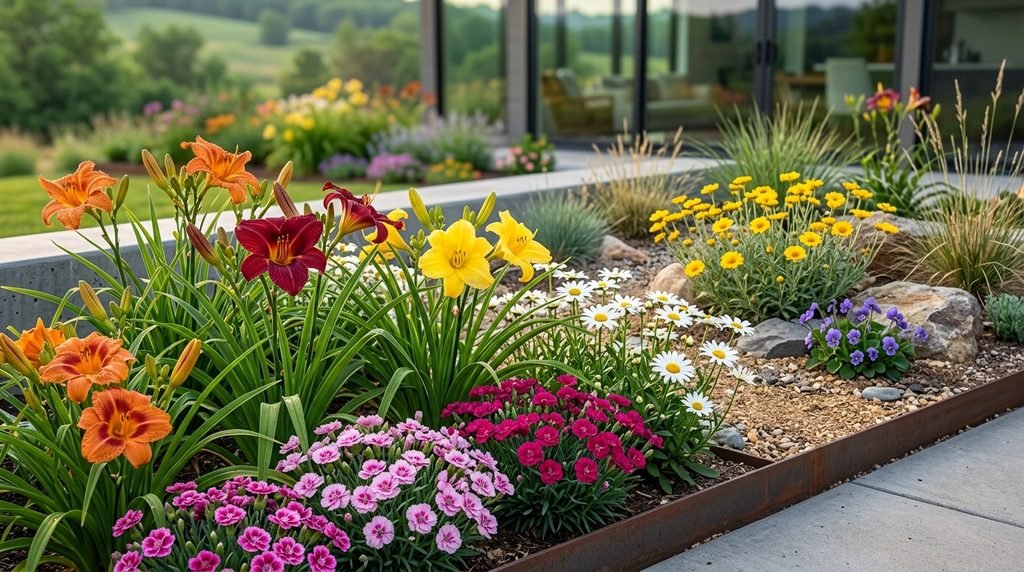
These varieties generally tolerate average soil conditions and occasional watering mistakes while continuing to produce attractive blooms.
| Flower | Care Level | Drought Tolerance |
| Daisy | Easy | Moderate |
| Daylily | Easy | High |
| Dianthus | Easy | Moderate |
| Desert Marigold | Easy | High |
| Dog Violet | Moderate | Low |
Daylilies stand out because they adapt to a wide range of growing conditions. Once established, they often return year after year with little intervention.
Desert Marigold offers another advantage. It thrives in hot, dry locations where many traditional flowering plants struggle.
Daylily
Busy gardeners often appreciate Daylilies because they tolerate neglect surprisingly well. Their colorful flowers appear throughout the growing season, while their foliage continues to provide structure after blooming ends.
Dianthus
Sweet fragrance and compact growth make Dianthus a popular choice for borders and containers. Wide varieties flower repeatedly when spent blooms are removed.
Daisy
Simple yet effective, Daisies remain among the most recognizable flowers in the world. Their cheerful appearance suits both formal and informal landscapes.
Bright Choices for Sunny Gardens
Many flowers that start with D perform best when exposed to several hours of direct sunlight. These conditions encourage stronger flowering and healthier growth.
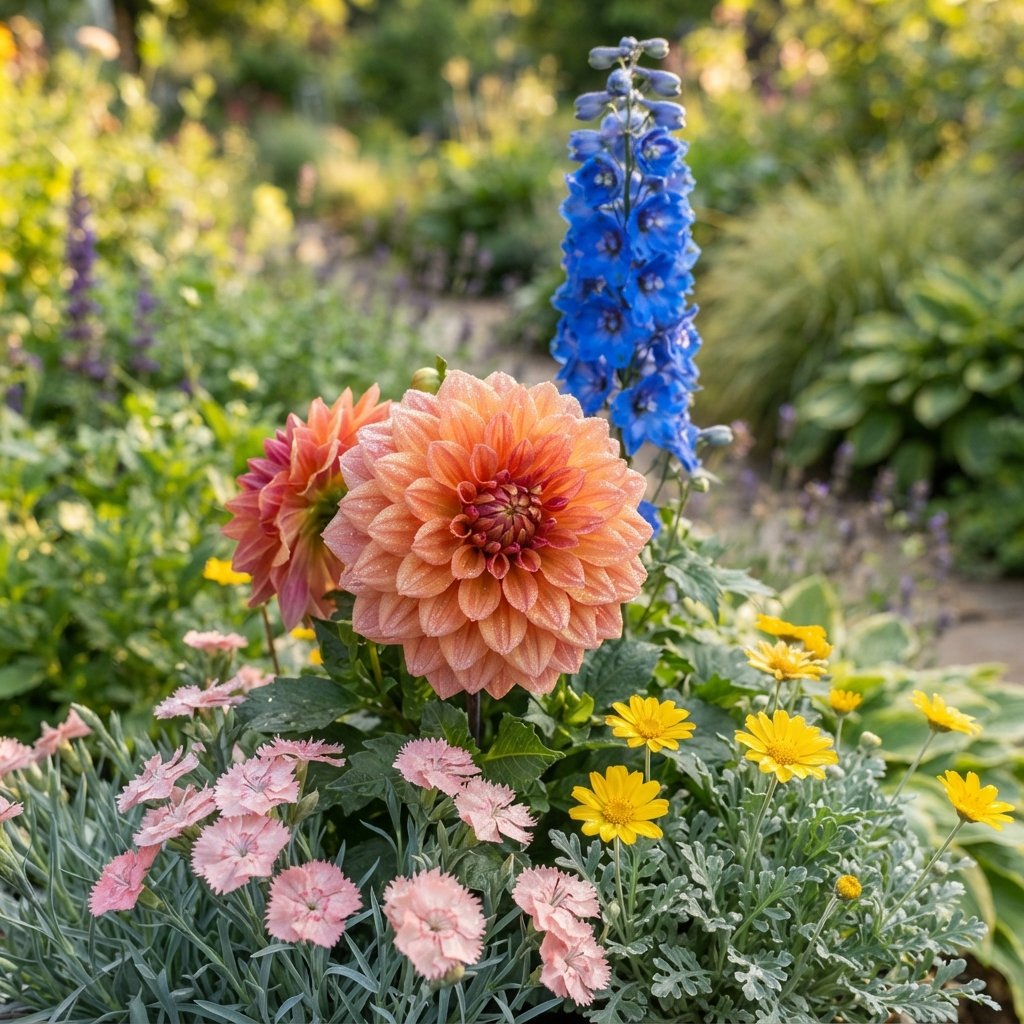
Gardeners with sunny landscapes often achieve excellent results from the following selections.
| Flower | Sun Requirement | Bloom Season |
| Dahlia | Full Sun | Summer–Fall |
| Delphinium | Full Sun | Spring–Summer |
| Daylily | Full Sun | Summer |
| Desert Marigold | Full Sun | Spring–Fall |
| Dianthus | Full Sun | Spring–Summer |
Dahlias reward gardeners with some of the most diverse flower forms available. Their blooms range from small pom-pom shapes to massive dinner-plate varieties.
Delphiniums create a different effect. Their tall flower spikes add vertical interest and often become focal points in cottage-style gardens.
Dahlia
When dramatic garden color is the goal, Dahlias rarely disappoint. Their extraordinary variety of shapes and colors allows gardeners to create highly customized displays.
Delphinium
Vertical flower spikes bring balance to mixed borders. Delphiniums excel in that role while attracting pollinators throughout their blooming period.
Desert Marigold
Hot climates can limit planting choices. Desert Marigold solves that challenge with bright yellow blooms and exceptional drought resistance.
Flowers That Handle Partial Shade
Not every landscape receives all-day sunlight. Trees, fences, and buildings frequently create areas with filtered light or partial shade.
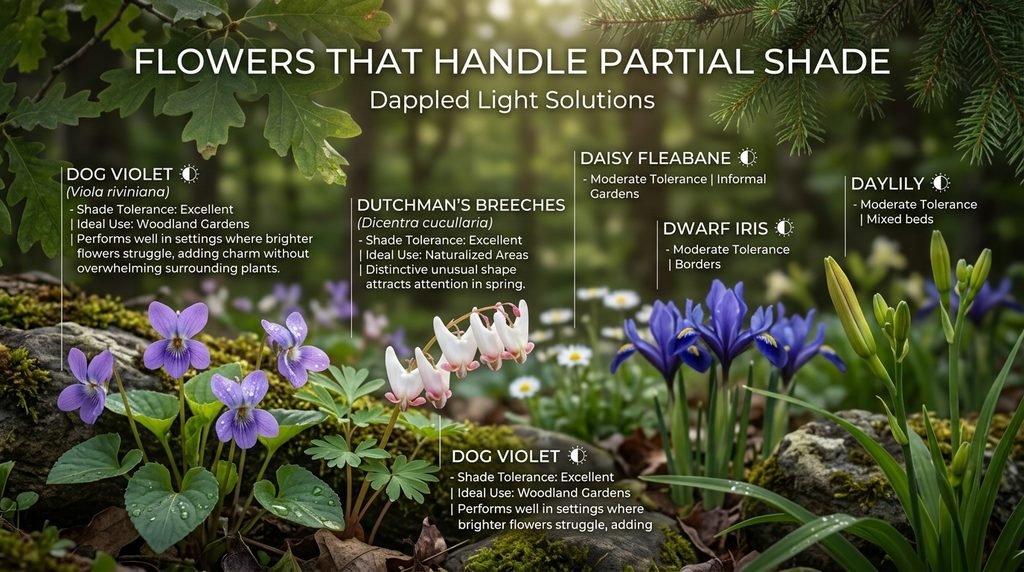
Several D flowers adapt well to these conditions and continue producing attractive blooms.
| Flower | Shade Tolerance | Ideal Use |
| Dog Violet | Excellent | Woodland gardens |
| Dutchman’s Breeches | Excellent | Naturalized areas |
| Daisy Fleabane | Moderate | Informal gardens |
| Dwarf Iris | Moderate | Borders |
| Daylily | Moderate | Mixed beds |
Shade gardens often benefit from flowers that provide both texture and seasonal color.
Dog Violet performs especially well in woodland-style settings where brighter flowers may struggle.
Dog Violet
Woodland gardens frequently include Dog Violets because they adapt naturally to filtered sunlight. Their delicate blooms add charm without overwhelming surrounding plants.
Dutchman’s Breeches
Among native woodland flowers, few are as distinctive as Dutchman’s Breeches. Their unusual flower shape attracts attention during spring.
Fast Bloomers for Quick Color
Some flowers reward patience. Others provide almost immediate results.
Gardeners seeking rapid color often choose species that establish quickly and bloom early.
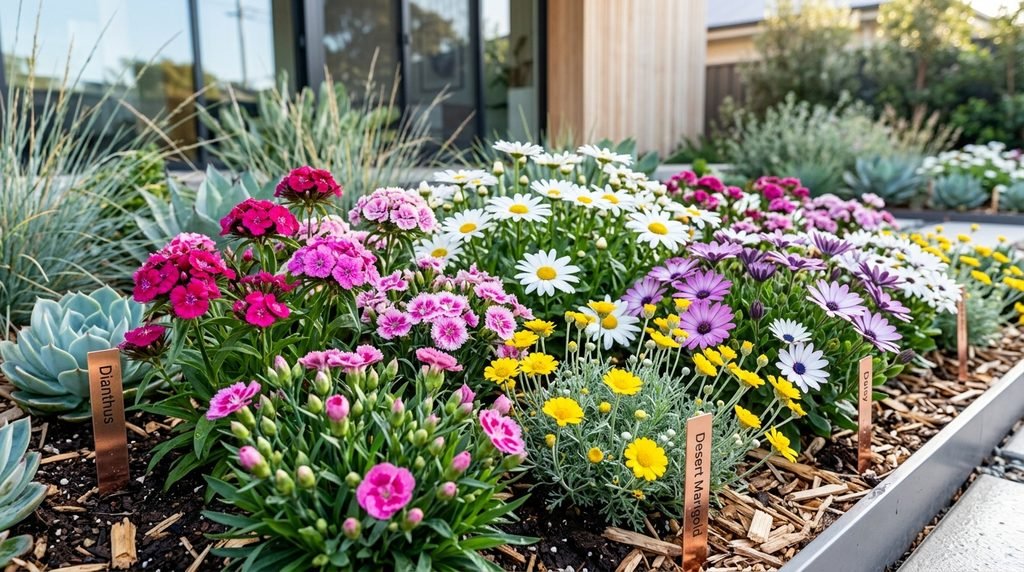
| Flower | Bloom Speed |
| Dianthus | Fast |
| Daisy | Fast |
| Desert Marigold | Fast |
| Daylily | Moderate |
| Dahlia | Moderate |
Fast-growing flowers are particularly useful for filling new garden beds and refreshing landscapes after seasonal transitions.
Dianthus and Daisies remain among the most dependable options for gardeners seeking quick visual impact.
The D Flowers Most Beginners Succeed With
A successful first gardening season often depends on choosing forgiving plants.
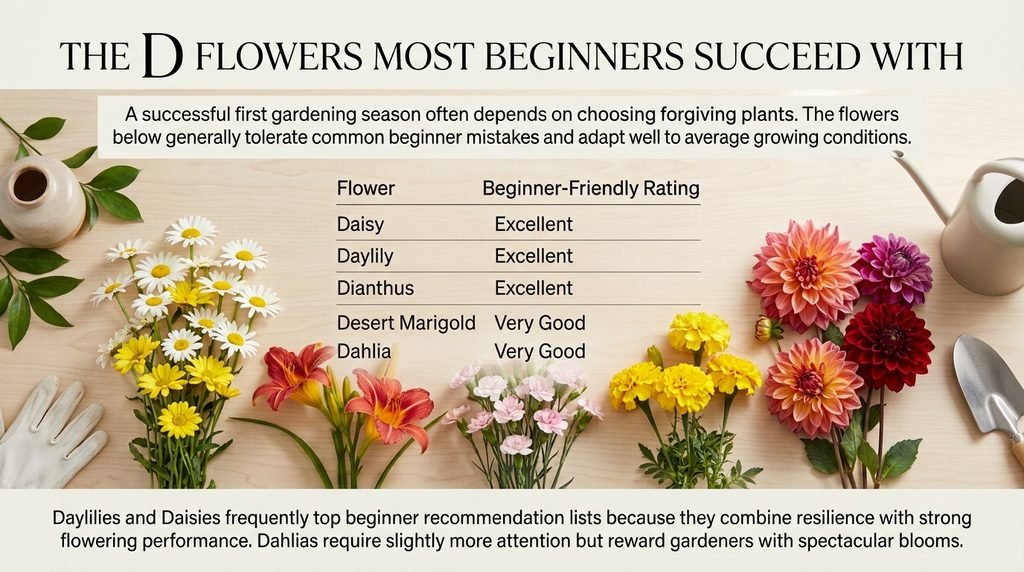
The flowers below generally tolerate common beginner mistakes and adapt well to average growing conditions.
| Flower | Beginner-Friendly Rating |
| Daisy | Excellent |
| Daylily | Excellent |
| Dianthus | Excellent |
| Desert Marigold | Very Good |
| Dahlia | Very Good |
Daylilies and Daisies frequently top beginner recommendation lists because they combine resilience with strong flowering performance.
Dahlias require slightly more attention but reward gardeners with spectacular blooms.
The Ones Better Left to Experienced Gardeners
Some flowers reward extra effort but require more precise care.
Gardeners considering these plants should understand their specific requirements before planting.
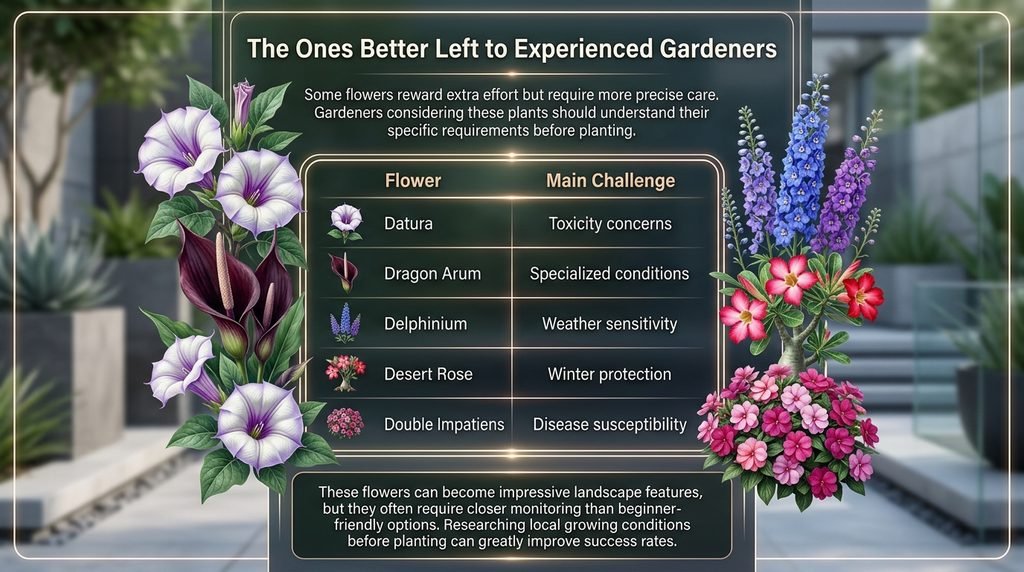
| Flower | Main Challenge |
| Datura | Toxicity concerns |
| Dragon Arum | Specialized conditions |
| Delphinium | Weather sensitivity |
| Desert Rose | Winter protection |
| Double Impatiens | Disease susceptibility |
These flowers can become impressive landscape features, but they often require closer monitoring than beginner-friendly options.
Researching local growing conditions before planting can greatly improve success rates.
Smart Flower Pairings That Work Well Together
A beautiful garden is rarely built around a single flower. Most successful landscapes combine plants that share similar growing requirements while offering different bloom times, heights, and textures.
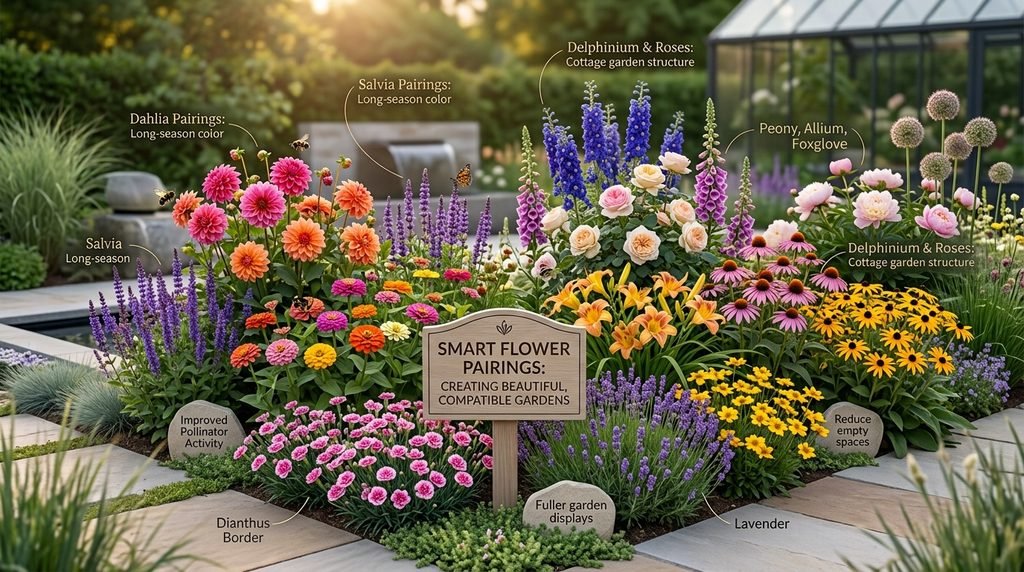
Many flowers that start with D perform even better when planted alongside compatible companions. These combinations improve pollinator activity, create fuller garden displays, and reduce empty spaces after blooming periods end.
| D Flower | Good Companion Plants | Main Benefit |
| Dahlia | Salvia, Zinnia, Cosmos | Long-season color |
| Daylily | Coneflower, Black-Eyed Susan | Extended summer blooms |
| Dianthus | Lavender, Coreopsis | Drought-tolerant border |
| Daisy | Shasta Daisy, Salvia, Yarrow | Pollinator attraction |
| Delphinium | Roses, Foxglove | Cottage garden structure |
| Dutch Iris | Peony, Allium | Spring interest |
| Dog Violet | Ferns, Hosta | Woodland appeal |
| Desert Marigold | Blanket Flower | Heat tolerance |
These combinations work because they share similar growing preferences. For example, Delphiniums and Roses complement each other visually while enjoying comparable soil conditions.
Daylilies and Coneflowers create another excellent partnership because both provide reliable summer color with relatively low maintenance requirements.
Understanding Climate Compatibility
Many gardening failures occur because plants are grown outside their preferred climate range. Choosing flowers suited to local hardiness zones dramatically increases success rates.
The following guide provides a general overview of USDA hardiness zones for popular flowers that start with D.
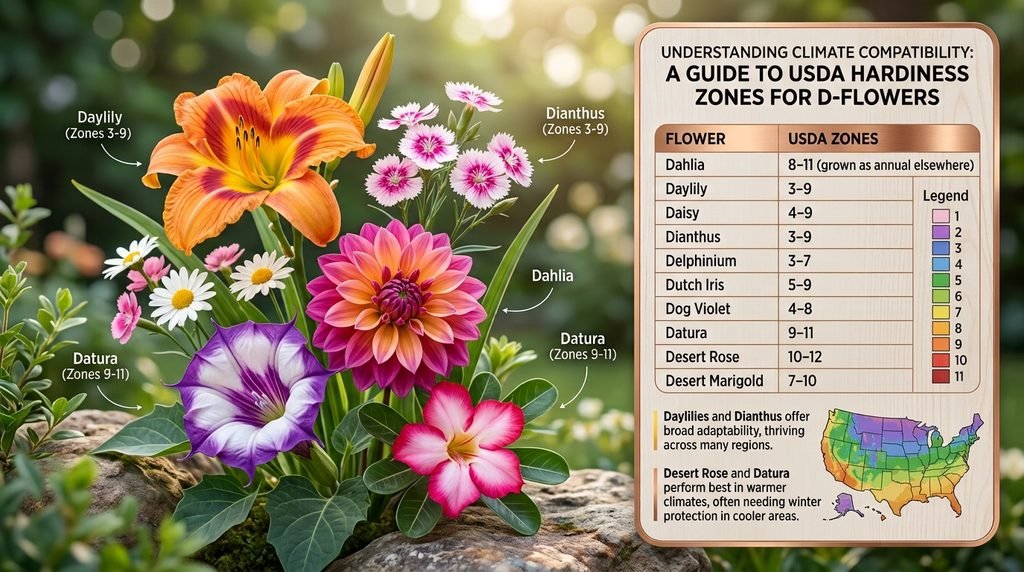
| Flower | USDA Zones |
| Dahlia | 8–11 (grown as annual elsewhere) |
| Daylily | 3–9 |
| Daisy | 4–9 |
| Dianthus | 3–9 |
| Delphinium | 3–7 |
| Dutch Iris | 5–9 |
| Dog Violet | 4–8 |
| Datura | 9–11 |
| Desert Rose | 10–12 |
| Desert Marigold | 7–10 |
Daylilies and Dianthus offer some of the broadest adaptability among D flowers. Gardeners across many regions can grow them successfully.
Desert Rose and Datura, however, perform best in warmer climates and often require winter protection in cooler areas.
Mistakes That Cause Problems With D Flowers
Even healthy plants can struggle when basic growing requirements are ignored. Many issues arise not because a flower is difficult but because it is planted in the wrong location.
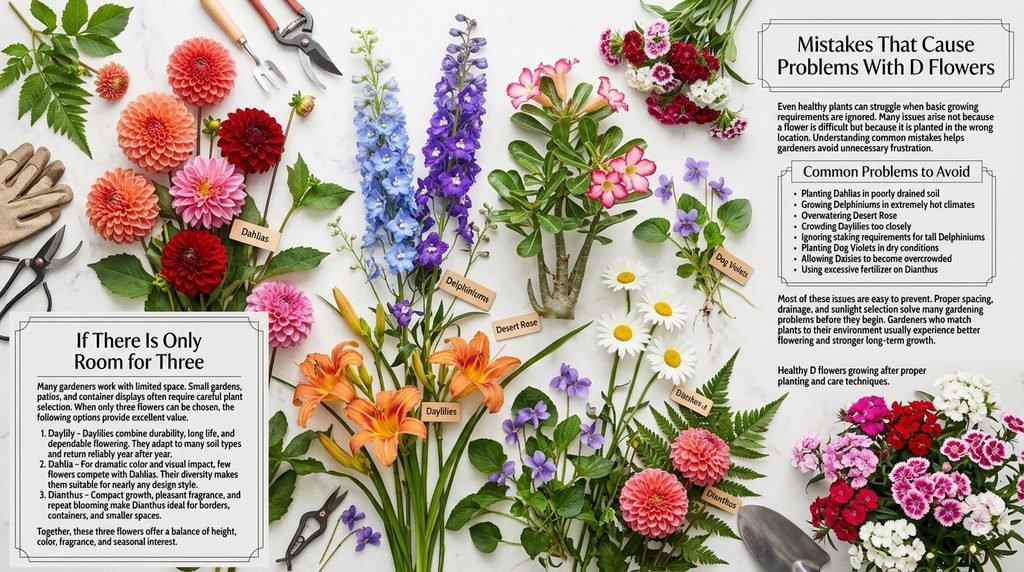
Understanding common mistakes helps gardeners avoid unnecessary frustration.
Common Problems to Avoid
- Planting Dahlias in poorly drained soil
- Growing Delphiniums in extremely hot climates
- Overwatering Desert Rose
- Crowding Daylilies too closely
- Ignoring staking requirements for tall Delphiniums
- Planting Dog Violets in dry conditions
- Allowing Daisies to become overcrowded
- Using excessive fertilizer on Dianthus
Most of these issues are easy to prevent. Proper spacing, drainage, and sunlight selection solve many gardening problems before they begin.
Gardeners who match plants to their environment usually experience better flowering and stronger long-term growth.
If There Is Only Room for Three
Many gardeners work with limited space. Small gardens, patios, and container displays often require careful plant selection.
When only three flowers can be chosen, the following options provide excellent value.
1. Daylily
Daylilies combine durability, long life, and dependable flowering. They adapt to many soil types and return reliably year after year.
2. Dahlia
For dramatic color and visual impact, few flowers compete with Dahlias. Their diversity makes them suitable for nearly any design style.
3. Dianthus
Compact growth, pleasant fragrance, and repeat blooming make Dianthus ideal for borders, containers, and smaller spaces.
Together, these three flowers offer a balance of height, color, fragrance, and seasonal interest.
Seasonal Care Calendar
Flower care becomes easier when tasks are completed at the right time. Small seasonal actions often produce much stronger results than reactive maintenance.
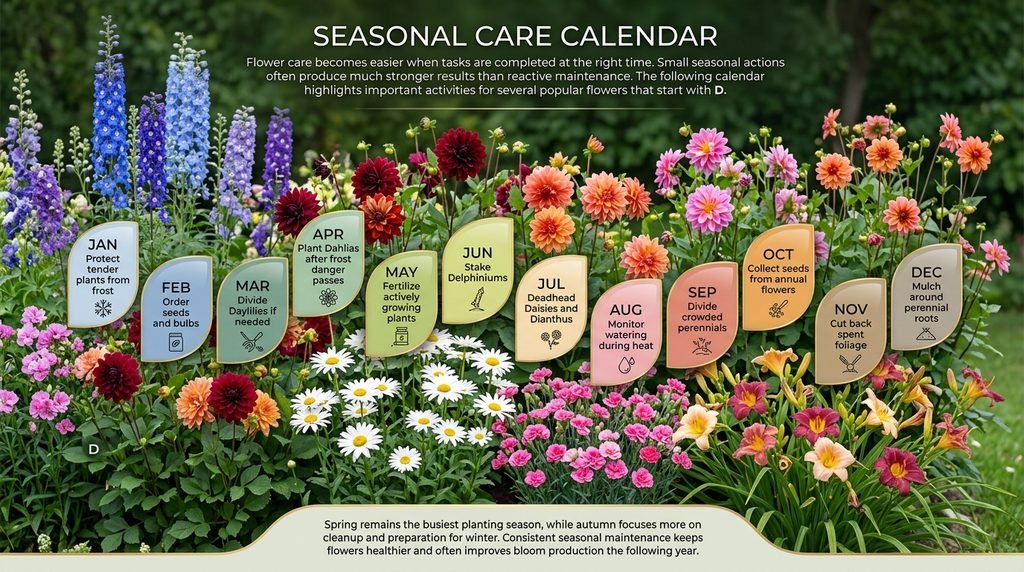
The following calendar highlights important activities for several popular flowers that start with D.
| Month | Recommended Task |
| January | Protect tender plants from frost |
| February | Order seeds and bulbs |
| March | Divide Daylilies if needed |
| April | Plant Dahlias after frost danger passes |
| May | Fertilize actively growing plants |
| June | Stake Delphiniums |
| July | Deadhead Daisies and Dianthus |
| August | Monitor watering during heat |
| September | Divide crowded perennials |
| October | Collect seeds from annual flowers |
| November | Cut back spent foliage |
| December | Mulch around perennial roots |
Spring remains the busiest planting season, while autumn focuses more on cleanup and preparation for winter.
Consistent seasonal maintenance keeps flowers healthier and often improves bloom production the following year.
Safety Notes Every Gardener Should Know
Beauty and safety should go hand in hand. While many ornamental flowers are relatively safe, some contain compounds that may cause problems for pets or children if consumed.
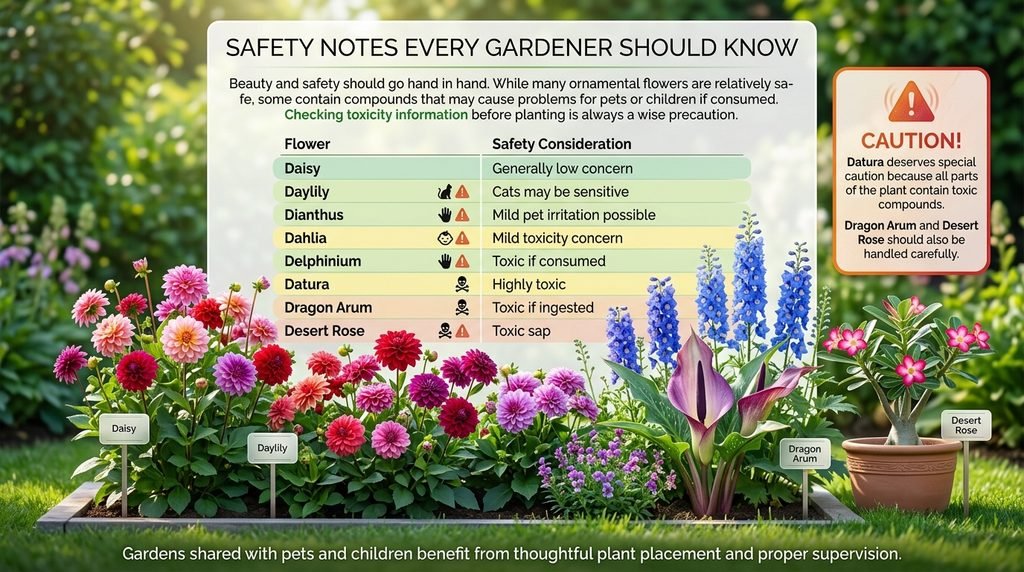
Checking toxicity information before planting is always a wise precaution.
| Flower | Safety Consideration |
| Daisy | Generally low concern |
| Daylily | Cats may be sensitive |
| Dianthus | Mild pet irritation possible |
| Dahlia | Mild toxicity concern |
| Delphinium | Toxic if consumed |
| Datura | Highly toxic |
| Dragon Arum | Toxic if ingested |
| Desert Rose | Toxic sap |
Datura deserves special caution because all parts of the plant contain toxic compounds. Dragon Arum and Desert Rose should also be handled carefully.
Gardens shared with pets and children benefit from thoughtful plant placement and proper supervision.
Looking at D Flowers Through Color
Color influences the mood of a garden more than many people realize.
White flowers such as some Daisy varieties create brightness and help shaded spaces feel more open. They also stand out beautifully during evening hours.

Pink Dianthus flowers introduce softness and fragrance to borders. Their compact growth makes them useful for pathways and edging.
Yellow Daylilies and Daisies create cheerful displays that attract attention from a distance. These colors work especially well in cottage-style gardens.
Purple Delphiniums bring elegance and vertical structure. Their tall flower spikes create visual contrast against lower-growing plants.
Red Dahlias add dramatic focal points and frequently become the centerpiece of summer flower beds.
Flower Meanings and Symbolism
Flowers often carry symbolic meanings that make them popular gifts and garden additions.
Daisies traditionally represent innocence, simplicity, and fresh beginnings. Their clean appearance naturally supports these associations.
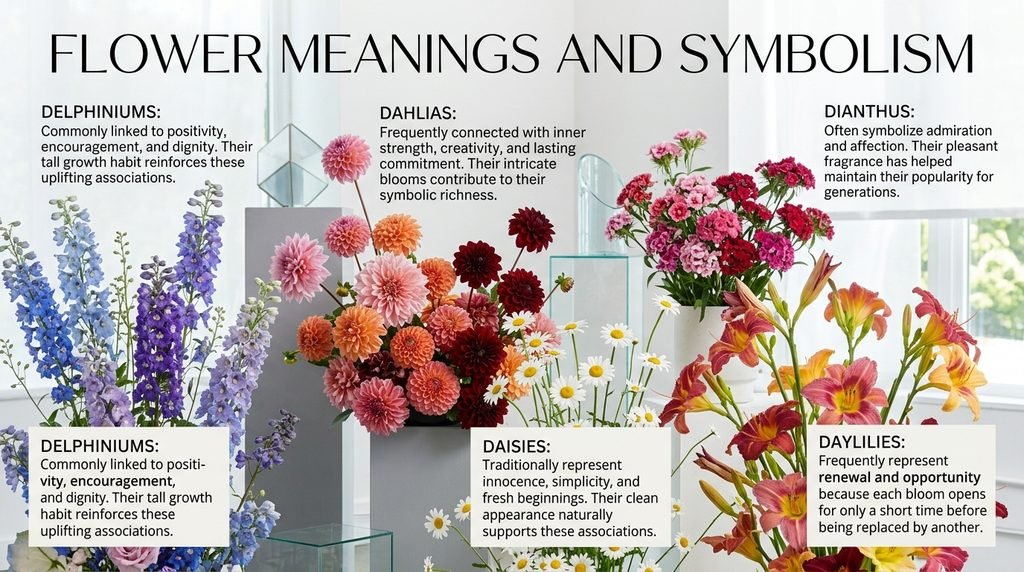
Dahlias are frequently connected with inner strength, creativity, and lasting commitment. Their intricate blooms contribute to their symbolic richness.
Dianthus flowers often symbolize admiration and affection. Their pleasant fragrance has helped maintain their popularity for generations.
Delphiniums are commonly linked to positivity, encouragement, and dignity. Their tall growth habit reinforces these uplifting associations.
Daylilies frequently represent renewal and opportunity because each bloom opens for only a short time before being replaced by another.
Alphabetical Index of Flowers That Start With D
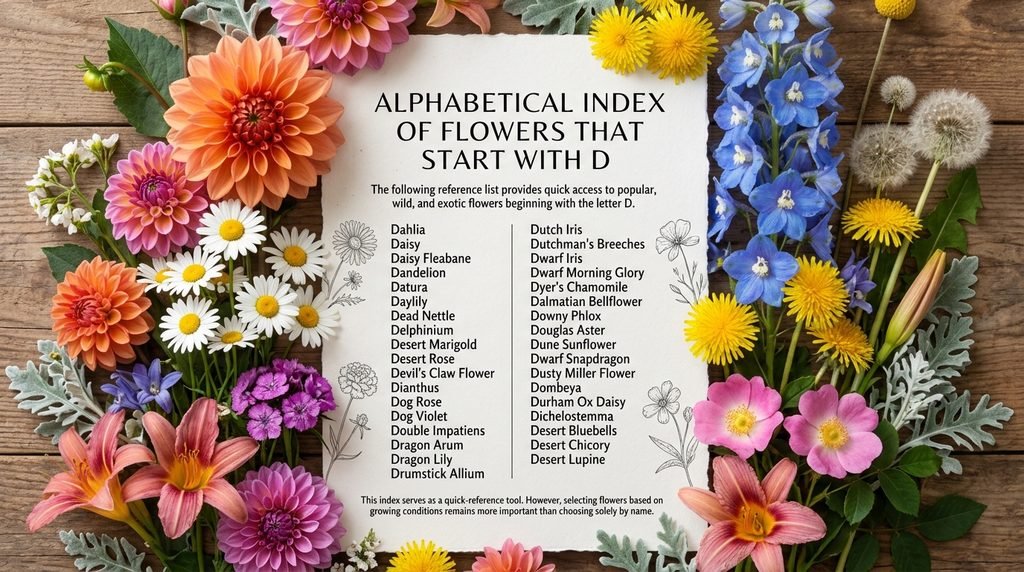
The following reference list provides quick access to popular, wild, and exotic flowers beginning with the letter D.
- Dahlia
- Daisy
- Daisy Fleabane
- Dandelion
- Datura
- Daylily
- Dead Nettle
- Delphinium
- Desert Marigold
- Desert Rose
- Devil’s Claw Flower
- Dianthus
- Dog Rose
- Dog Violet
- Double Impatiens
- Dragon Arum
- Dragon Lily
- Drumstick Allium
- Dutch Iris
- Dutchman’s Breeches
- Dwarf Iris
- Dwarf Morning Glory
- Dyer’s Chamomile
- Dalmatian Bellflower
- Downy Phlox
- Douglas Aster
- Dune Sunflower
- Dwarf Snapdragon
- Dusty Miller Flower
- Dombeya
- Durham Ox Daisy
- Dichelostemma
- Desert Bluebells
- Desert Chicory
- Desert Lupine
This index serves as a quick-reference tool. However, selecting flowers based on growing conditions remains more important than choosing solely by name.
Botanical Name Crosswalk
Common flower names are useful for everyday gardening conversations, but botanical names provide greater accuracy. A single flower may have several regional names, while its scientific name remains consistent worldwide.
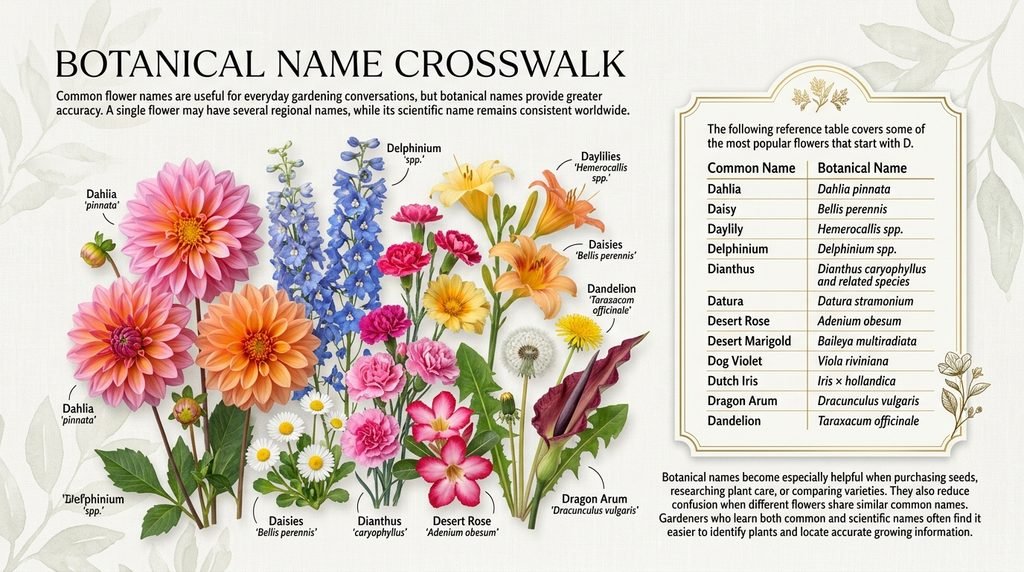
The following reference table covers some of the most popular flowers that start with D.
| Common Name | Botanical Name |
| Dahlia | Dahlia pinnata |
| Daisy | Bellis perennis |
| Daylily | Hemerocallis spp. |
| Delphinium | Delphinium spp. |
| Dianthus | Dianthus caryophyllus and related species |
| Datura | Datura stramonium |
| Desert Rose | Adenium obesum |
| Desert Marigold | Baileya multiradiata |
| Dog Violet | Viola riviniana[ |
| Dutch Iris | Iris × hollandica |
| Dragon Arum | Dracunculus vulgaris |
| Dandelion | Taraxacum officinale |
Botanical names become especially helpful when purchasing seeds, researching plant care, or comparing varieties. They also reduce confusion when different flowers share similar common names.
Gardeners who learn both common and scientific names often find it easier to identify plants and locate accurate growing information.
Frequently Asked Questions
1. What are the most popular flowers that start with D?
Dahlias, Daisies, Daylilies, Delphiniums, and Dianthus are among the most widely grown flowers beginning with D. These plants combine ornamental value with reliable garden performance.
2. Which flowers that start with D are easiest for beginners?
Daylilies, Daisies, and Dianthus are excellent beginner-friendly choices. They tolerate common gardening mistakes and adapt to many growing conditions.
3. Are there wildflowers that start with D?
Yes. Dog Violet, Daisy Fleabane, Desert Bluebells, Dandelion, and Douglas Aster are examples of wildflowers that start with D.
4. Which D flowers attract pollinators?
Dahlias, Daisies, Delphiniums, and Daylilies attract bees, butterflies, and other beneficial insects. Pollinator activity often increases when these flowers are planted in groups.
5. What is the most exotic flower that starts with D?
Dragon Arum is often considered one of the most exotic D flowers because of its dramatic shape and unusual appearance. Desert Rose is another striking option.
6. Which flowers that start with D bloom the longest?
Daylilies, Dahlias, and Dianthus can bloom for extended periods when properly maintained and deadheaded regularly.
7. Are any flowers that start with D toxic?
Yes. Datura, Dragon Arum, Delphinium, and Desert Rose contain compounds that can be harmful if consumed. Care should be taken around pets and children.
8. Which D flowers grow well in containers?
Dahlias, Dianthus, Desert Rose, and compact Daylily varieties perform well in containers when provided with adequate drainage and sunlight.
9. Do flowers that start with D prefer sun or shade?
Most popular D flowers prefer full sun. However, Dog Violet and Dutchman’s Breeches tolerate partial shade quite well.
10. Which D flower works best in a cottage garden?
Delphinium is a classic cottage garden favorite because of its tall flower spikes and colorful blooms. Dahlias and Daisies also fit beautifully into cottage-style designs.
11. What flower that starts with D tolerates drought?
Desert Marigold and Desert Rose are particularly well adapted to dry conditions. Once established, they require relatively little supplemental watering.
12. Which D flowers have fragrance?
Many Dianthus varieties produce a pleasant, spicy fragrance. Some Daylily and Daisy cultivars may also have a light scent.
13. Can flowers that start with D grow from seed?
Many can. Daisies, Delphiniums, Dandelions, and Dianthus are commonly propagated from seed.
14. What are the best flowers that start with D for small gardens?
Dianthus, compact Dahlias, and Dwarf Iris varieties work especially well in limited spaces.
15. Which flowers that start with D return every year?
Daylilies, Delphiniums, Daisies, and many Dianthus varieties are perennials that return year after year under suitable conditions.
Final Thoughts
The variety found among flowers that start with D is remarkable. Some, like Daylilies and Daisies, are dependable garden staples that succeed in a wide range of conditions. Others, such as Dragon Arum and Desert Rose, offer unusual beauty for gardeners seeking something different.
Choosing the right flower depends less on appearance and more on matching plant requirements with local growing conditions. Sun exposure, climate, soil type, and maintenance expectations all influence success.
Whether the goal is creating a pollinator-friendly landscape, a cottage garden, a drought-tolerant planting scheme, or simply adding more color to outdoor spaces, flowers that start with D provide plenty of excellent options. With thoughtful selection and proper care, these flowers can deliver beauty, diversity, and seasonal interest for years to come.