

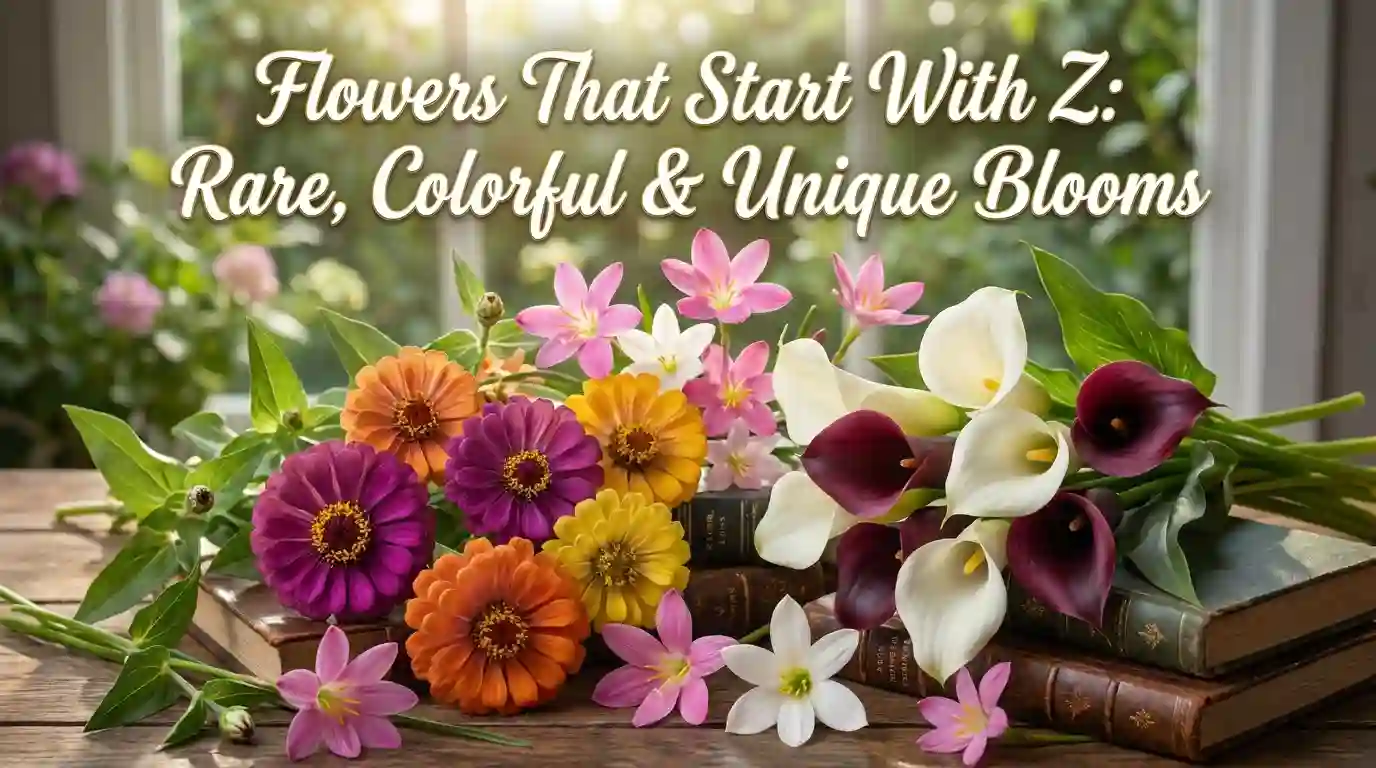
Z sits at the far end of the alphabet in more ways than one. It’s also one of the rarest starting letters for flower names in English, which means anyone searching for flowers that start with Z is working with a genuinely short, specialized list rather than the sprawling options available under letters like R or C. That scarcity isn’t a drawback here — it’s actually the point. Nearly every plant on this list earns its place by solving a specific problem, whether that’s a shaded slope, a toxic-plant identification concern, or a houseplant that tolerates low light better than almost anything else on the shelf.
Rather than opening with a flat alphabetical roll call, this guide sorts its Z flowers by growing conditions first — sun exposure, shade tolerance, bloom speed, and skill level — since that’s the information that actually determines whether a plant survives its first season. The alphabetical list is still included, but it sits near the end, functioning as a lookup tool once the practical groundwork has already been covered.
Because this letter includes both showy garden annuals and a genuinely dangerous wildflower that gets mistaken for something edible, the toxicity section further down deserves particular attention. A short list doesn’t mean a low-stakes one, and at least one entry here has a documented history of poisoning livestock and, in rare cases, people who misidentified it.
Every factual claim in this guide — bloom timing, hardiness range, toxicity, native origin — has been checked against multiple horticultural and veterinary references and rewritten independently rather than copied from any single source. Where the available data varies between references, that uncertainty is noted rather than smoothed over.
Quick Take: The Z Flowers Worth Knowing
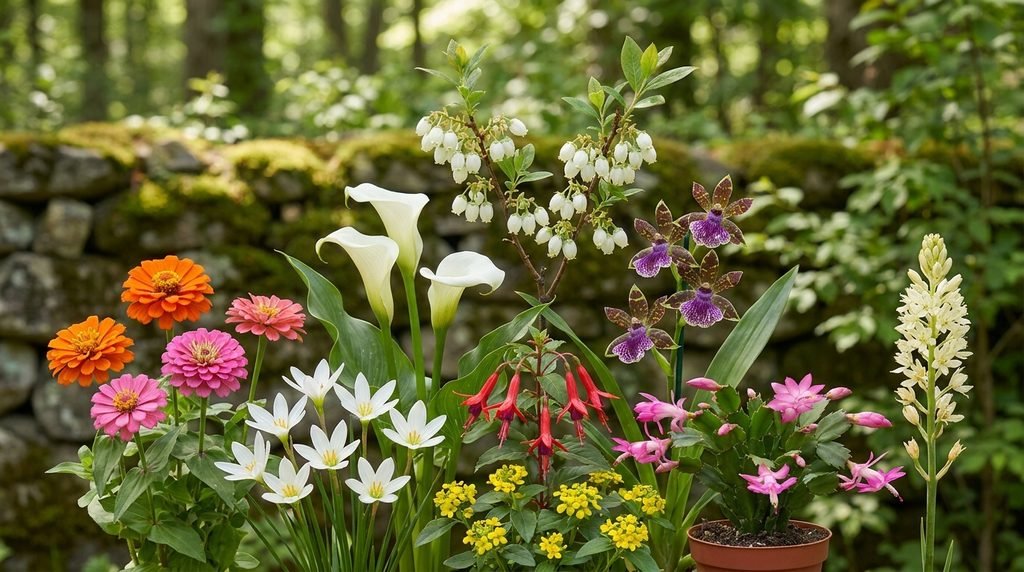
Zinnia leads this list for the simplest reason possible: it’s the only true Z flower that functions as an all-purpose, easy-care garden annual, blooming reliably from seed within weeks and tolerating heat, humidity, and inconsistent watering better than most competing bedding plants. Zephyr lily, also called rain lily, solves a different problem entirely, producing a sudden flush of crocus-like blooms within days of a good rainstorm, which makes it a useful, low-maintenance bulb for naturalizing in a lawn or border.
Zantedeschia, more widely recognized by its common name calla lily, earns a spot for its sculptural, curled spathe and its usefulness as both a garden plant and a long-lasting cut flower. Zenobia, a lesser-known flowering shrub, brings clusters of small white bell-shaped blooms and a genuinely pleasant anise-like fragrance to woodland-edge plantings that few other shrubs on any letter can match. Zygopetalum, an orchid genus prized by collectors, stands out for combining an unusually strong, sweet fragrance with mottled, jewel-toned petals rarely seen in more common orchid varieties.
- Zinnia — easiest all-purpose Z flower for beginners and cut-flower gardens
- Zephyr Lily (Zephyranthes) — best for sudden, low-maintenance bulb color after rain
- Zantedeschia (Calla Lily) — best sculptural cut flower on this list
- Zenobia — best fragrant flowering shrub for woodland-edge planting
- Zygopetalum — best fragrant orchid for collectors
- California Fuchsia (Zauschneria) — best hummingbird plant for dry, rocky soil
- Golden Alexanders (Zizia aurea) — best low-maintenance native pollinator plant
- Christmas Cactus (Zygocactus) — best low-light indoor bloomer
- Death Camas — not a recommendation, but essential to recognize and avoid
The mix here reflects how varied this short list actually is: annual bedding color, a rain-triggered bulb, a woodland shrub, an orchid, a native wildflower, a houseplant, and a genuine safety concern all sit within the same eight letters of the alphabet.
What Handles Full Sun Without Complaint
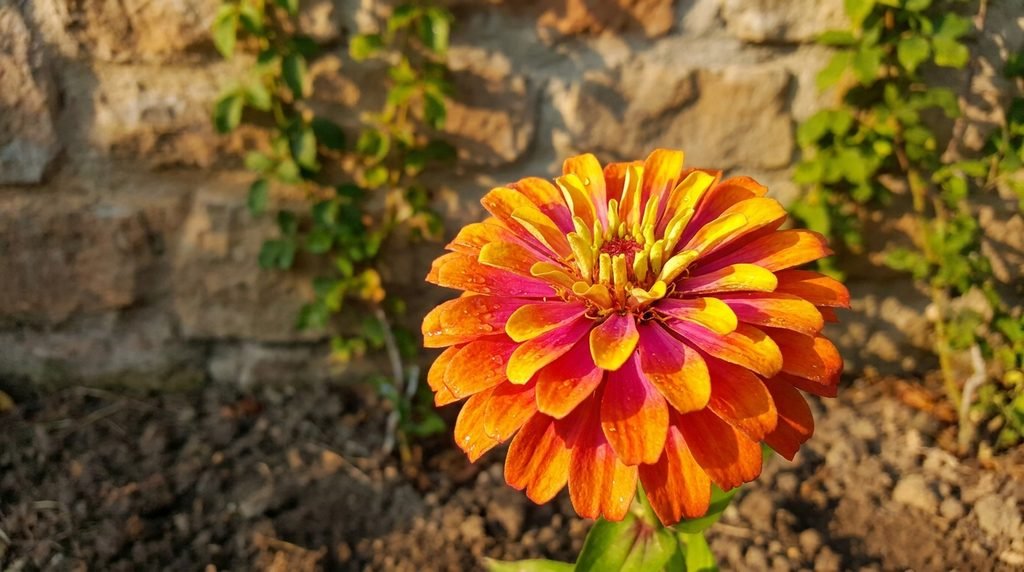
Zinnia is the clearest sun-lover on this list, producing its best bloom count and brightest color only with six or more hours of direct light daily, and it noticeably thins out and becomes prone to powdery mildew if crowded into partial shade. Zephyr lily follows a similar pattern, flowering most reliably in full sun, though it tolerates a bit more shade than zinnia without failing outright. California fuchsia is the most demanding sun-lover of the group, actually requiring lean, fast-draining, rocky soil in addition to full sun — rich or consistently moist soil causes root rot and weak, floppy growth.
Golden Alexanders splits the difference, tolerating both full sun and light shade, though its bloom is noticeably fuller and longer-lasting with more direct light. This works best when it’s planted at the front or edge of a bed where morning sun reaches it directly, rather than tucked behind taller companions that block midday light.
| Flower | Sun Requirement | Soil Preference | Note |
| Zinnia | Full sun | Average, well-drained | Prone to mildew in shade or crowded planting |
| Zephyr Lily | Full sun | Well-drained | Tolerates light shade with reduced bloom |
| California Fuchsia | Full sun | Lean, rocky, fast-draining | Declines quickly in rich or wet soil |
| Golden Alexanders | Full sun to light shade | Average, moist to well-drained | Fuller bloom with more direct sun |
Zinnia and California fuchsia sit at opposite ends of the soil-richness spectrum despite sharing a full-sun requirement, which is worth remembering before planting them in the same bed — zinnia appreciates a bit of fertility that would actually weaken California fuchsia’s growth.
What Tolerates Shade or Low Light
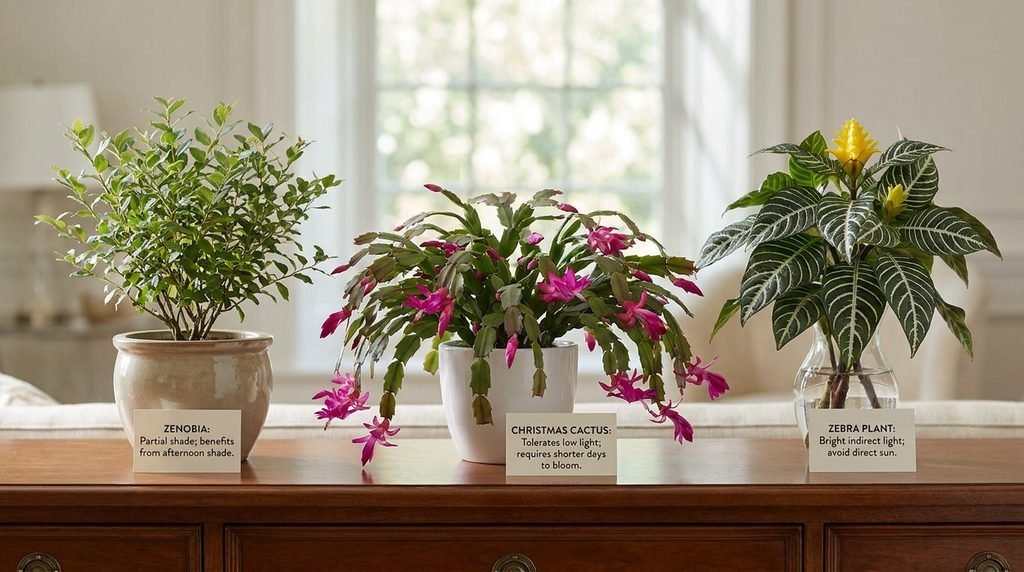
Shade-tolerant options are limited on this list, but the ones that exist are genuinely useful for specific situations. Zenobia handles partial shade well, particularly the dappled light found at a woodland edge, and actually benefits from some afternoon shade in hotter climates where full sun can scorch its foliage. Zebra plant, grown almost exclusively as a houseplant, needs bright indirect light rather than direct sun, since direct exposure through a window can scorch its distinctively veined leaves.
Christmas cactus is the most shade-tolerant entry on this entire list, and it’s worth noting that this plant actually requires a period of shorter days and cooler temperatures to trigger blooming in the first place, which makes it one of the few flowers here where reduced light during part of the year is a feature rather than a limitation.
- Zenobia — partial shade, benefits from afternoon shade in hot climates
- Zebra Plant — bright indirect light, avoid direct sun through glass
- Christmas Cactus — tolerates low light; requires shorter days and cooler nights to bloom
Christmas cactus stands apart from the other two specifically because its light needs change seasonally — bright, indirect light works fine most of the year, but a deliberate period of reduced light and cooler nights in fall is what actually triggers the winter bloom most growers are hoping for.
Which Ones Reward Impatience
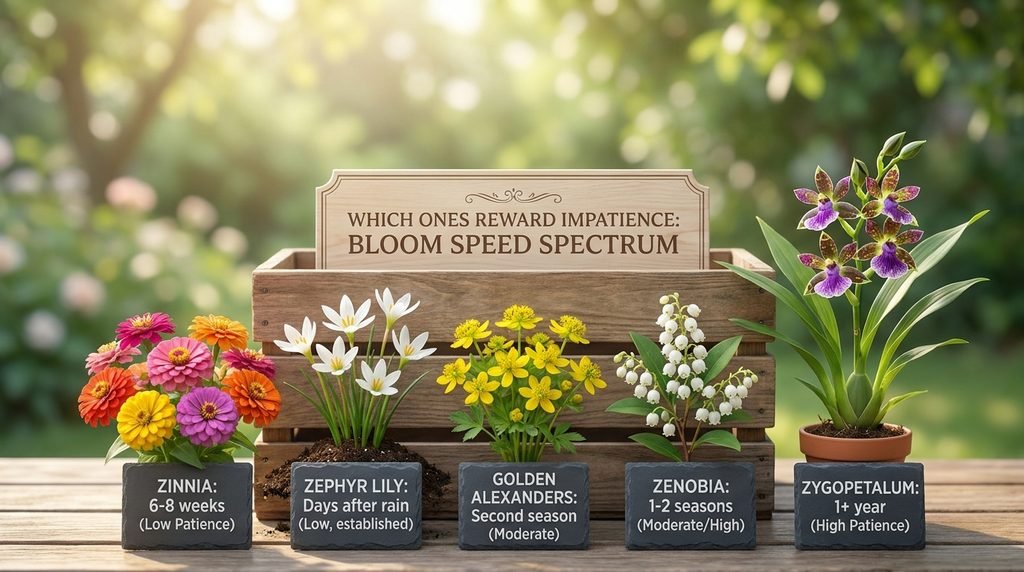
Bloom speed varies more sharply on this list than the small number of entries might suggest. Zinnia is by far the fastest, often producing its first flowers within six to eight weeks of direct sowing, which makes it the obvious choice for anyone wanting quick color from seed. Zephyr lily can bloom even faster under the right trigger — established bulbs often flower within a week of a substantial rainfall, though that speed depends entirely on the bulb already being established in the ground.
Zenobia and Zygopetalum sit at the slower end of this spectrum. Zenobia, as a woody shrub, typically needs a full season or two to establish before producing a strong bloom show, and Zygopetalum orchids often take a year or more from a young division before flowering reliably. Golden Alexanders fall in the middle, generally blooming in their second season after establishing from seed or a nursery division.
| Flower | Approximate Time to First Bloom | Patience Required |
| Zinnia | 6–8 weeks from seed | Low |
| Zephyr Lily | Days after rain (established bulb) | Low, once established |
| Golden Alexanders | Second season | Moderate |
| Zenobia | 1–2 seasons to establish | Moderate to high |
| Zygopetalum | 1+ year from division | High |
For anyone wanting a fast, visible result this season, zinnia remains the safest choice on this entire list, while Zenobia and Zygopetalum are better approached as longer-term additions rather than quick wins.
Solid Starter Picks and Where Experience Actually Matters
Zinnia is, without much competition, the best entry point into this letter for a first-time grower — it tolerates missed waterings, average soil, and general beginner uncertainty while still producing reliable color. Zephyr lily is a reasonable second choice, since it largely takes care of itself once planted and doesn’t demand precise timing the way some bulbs do.
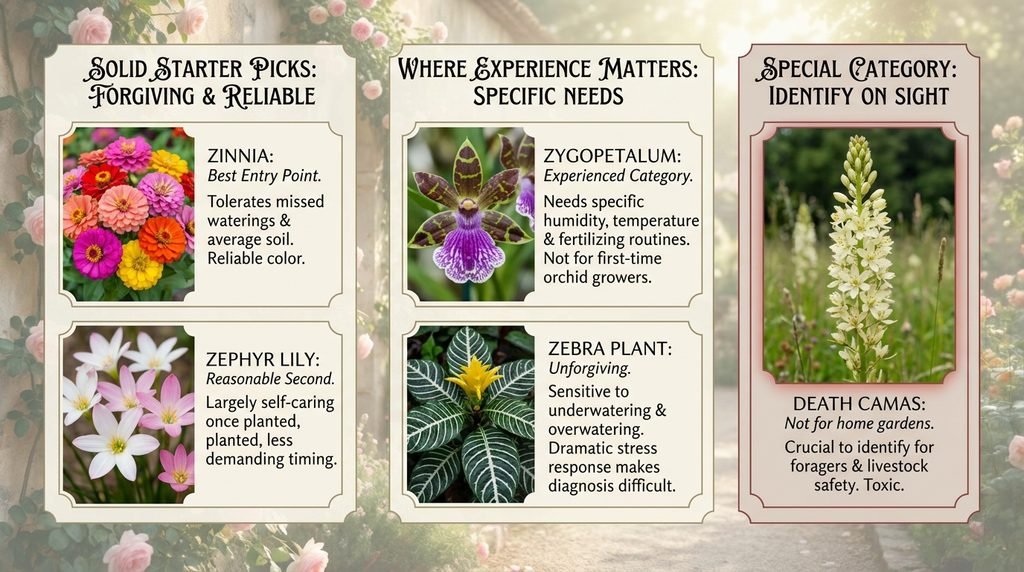
Zygopetalum and zebra plant both belong in a more experienced category, though for different reasons. Zygopetalum orchids need specific humidity, temperature, and fertilizing routines that differ meaningfully from more forgiving orchids like Phalaenopsis, and a beginner attempting one as a first orchid is more likely to be discouraged by early failure than rewarded with bloom. Zebra plant, while not difficult exactly, is unforgiving of both underwatering and overwatering, and its dramatic leaf response to stress can make it hard for a new houseplant owner to diagnose what’s actually going wrong.
Death camas deserves a category of its own here — not as a plant to grow deliberately in most home gardens, but as one worth being able to identify on sight, particularly for anyone who forages wild alliums or lives in a region where livestock graze near native meadows.
Common Early Mistakes With Z Flowers
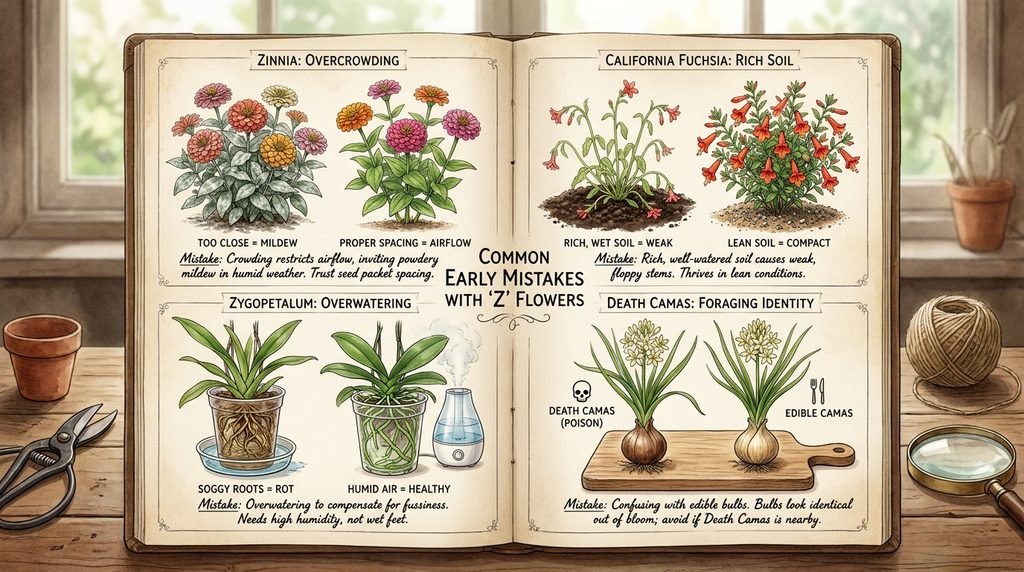
The most frequent mistake with this letter is planting zinnia too close together, which restricts airflow and dramatically increases the risk of powdery mildew, especially in humid climates. Avoid crowding zinnia seedlings — the spacing recommended on most seed packets often looks too generous at planting time but proves necessary once the plants reach full size. A second common error involves California fuchsia planted in rich, well-watered soil meant for showier perennials nearby, which produces weak, floppy stems instead of the tight, compact growth this plant shows in leaner conditions.
Zygopetalum owners frequently overwater in an attempt to compensate for the plant’s reputation as fussy, when the more common actual problem is insufficient humidity rather than insufficient water at the roots. Finally, gardeners occasionally mistake death camas for edible wild onion or camas lily during foraging, a mix-up serious enough that experienced foragers recommend never harvesting either plant from an area where death camas is confirmed to grow nearby, since the bulbs look nearly identical when out of bloom.
If You Only Have Room for Three
Given how specialized this list is, three well-chosen Z flowers can still cover a reasonably wide range of practical needs. Zinnia handles the easy, colorful, cut-flower role better than anything else here. Zephyr Lily adds low-maintenance bulb interest that requires almost no ongoing attention once established. Zenobia rounds out the trio with fragrant, structural shrub interest that neither of the other two can provide, particularly useful for a woodland-edge spot that needs more than just seasonal annual color.
This combination also spreads bloom timing reasonably well across the growing season — zinnia carries the bulk of summer, zephyr lily offers surprise color after rain throughout the warm months, and Zenobia’s early-to-mid spring bloom provides interest before the other two have even been planted for the year.
Pairing Z Flowers With Neighbors That Won’t Compete
Companion planting for this letter often means looking outside it entirely, simply because there aren’t many Z flowers sharing the same growing niche to pair with each other. Zinnia works well alongside other full-sun annuals like cosmos or marigold, all of which share similar water needs and won’t compete aggressively for root space. California fuchsia pairs naturally with other lean-soil, drought-tolerant plants such as sedum or Russian sage, since all three prefer the same dry, rocky conditions.
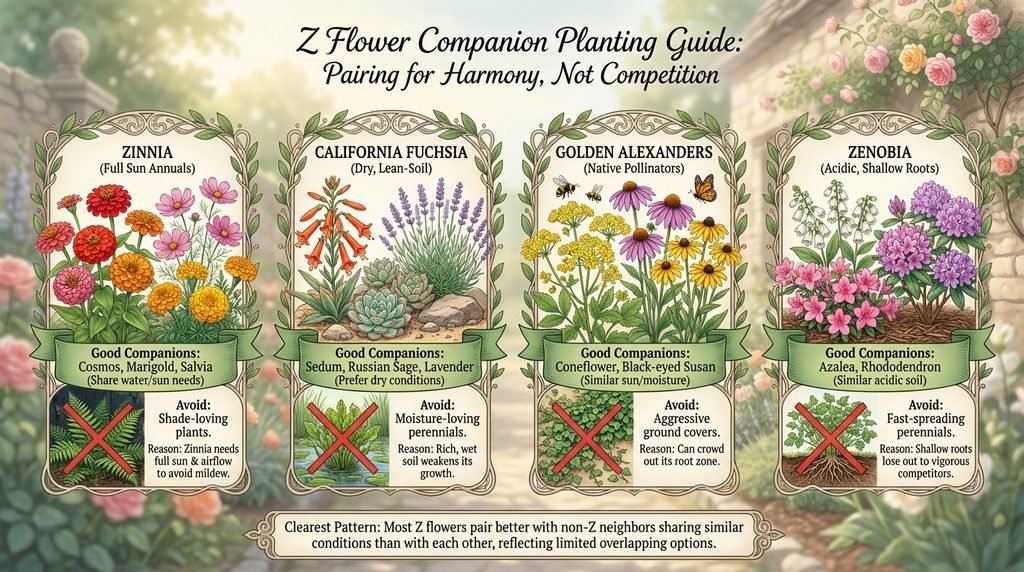
Golden Alexanders does well near other native pollinator plants like coneflower or black-eyed Susan, sharing similar sun and moisture requirements without one plant overwhelming the other. Avoid planting Zinnia directly next to aggressive, fast-spreading perennials, since its shallow root system can be outcompeted for moisture and nutrients by more vigorous neighbors.
| Z Flower | Good Companions | Avoid Pairing With | Reason |
| Zinnia | Cosmos, marigold, salvia | Shade-loving plants | Zinnia needs full sun and airflow to avoid mildew |
| California Fuchsia | Sedum, Russian sage, lavender | Moisture-loving perennials | Rich, wet soil weakens its growth |
| Golden Alexanders | Coneflower, black-eyed Susan | Aggressive ground covers | Ground covers can crowd out its root zone |
| Zenobia | Azalea, rhododendron (similar acidic soil needs) | Fast-spreading perennials | Shallow roots lose out to vigorous competitors |
The clearest pattern here is that most Z flowers pair better with well-known non-Z companions sharing similar conditions than with each other, which simply reflects how few genuinely overlapping options this letter offers.
Matching Zones to Reality
Hardiness varies considerably across this list, from cold-hardy native wildflowers to tender tropical houseplants. Golden Alexanders is among the most cold-tolerant, reliably surviving USDA zones 3 through 8 as a herbaceous perennial that dies back and returns each spring. Zinnia is moderately hardy, generally reliable in zones 5 through 9, provided it has the acidic, well-drained soil it needs regardless of climate.
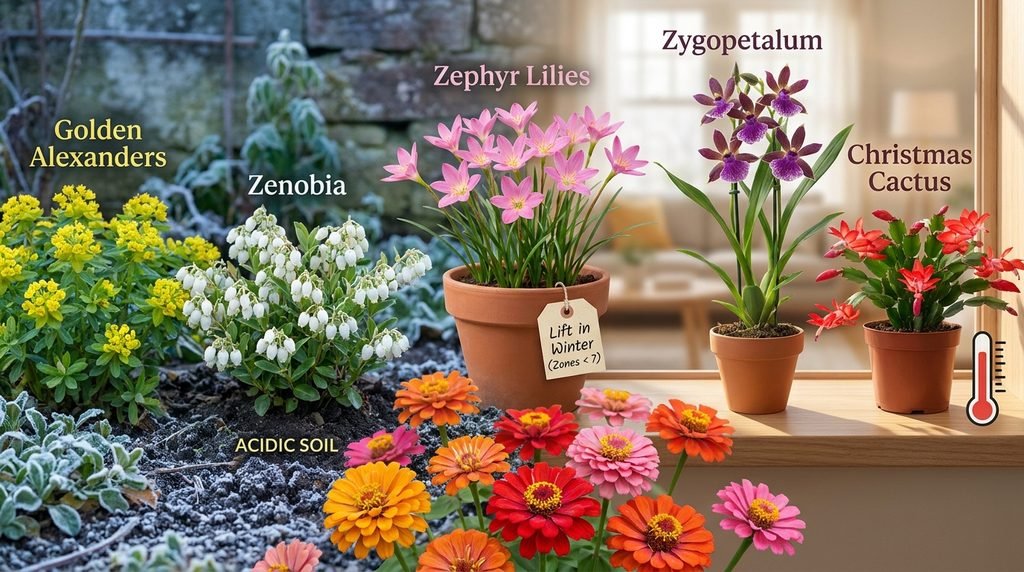
Zinnia, grown as an annual almost everywhere, isn’t meaningfully limited by hardiness zone, since it completes its life cycle within a single season. Zephyr lily is more particular, hardy outdoors in zones 7 through 10, with gardeners in colder regions typically lifting and storing the bulbs over winter or treating the plant as a seasonal container specimen. Zygopetalum and Christmas cactus are both grown indoors outside of tropical and subtropical zones, generally needing zone 10 or warmer to survive outdoors year-round.
| Flower | USDA Hardiness Zones | Notes |
| Golden Alexanders | 3–8 | Cold-hardy native perennial |
| Zenobia | 5–9 | Needs acidic, well-drained soil regardless of zone |
| Zinnia | Grown as annual (not zone-limited) | Completes life cycle in one season |
| Zephyr Lily | 7–10 | Bulbs need lifting or winter protection in colder zones |
| Zygopetalum, Christmas Cactus | 10–11 outdoors; grown indoors elsewhere | Require indoor culture in most temperate climates |
Gardeners in zone 6 or colder should plan on treating zephyr lily as a container or lift-and-store bulb, while Zygopetalum and Christmas cactus are safest kept as houseplants entirely rather than attempted outdoors except during a mild summer stretch.
A Seasonal Rhythm for the Top Picks
Spring is the main planting window for zinnia seed, sown directly after the last frost once soil has warmed. This is also when Zenobia produces its fragrant white blooms, typically in April or May depending on climate, and when Golden Alexanders flower in meadows and native plant beds. Zephyr lily bulbs, if not already established, are best planted in spring as well, though they won’t show their signature rain-triggered blooms until summer storms arrive.
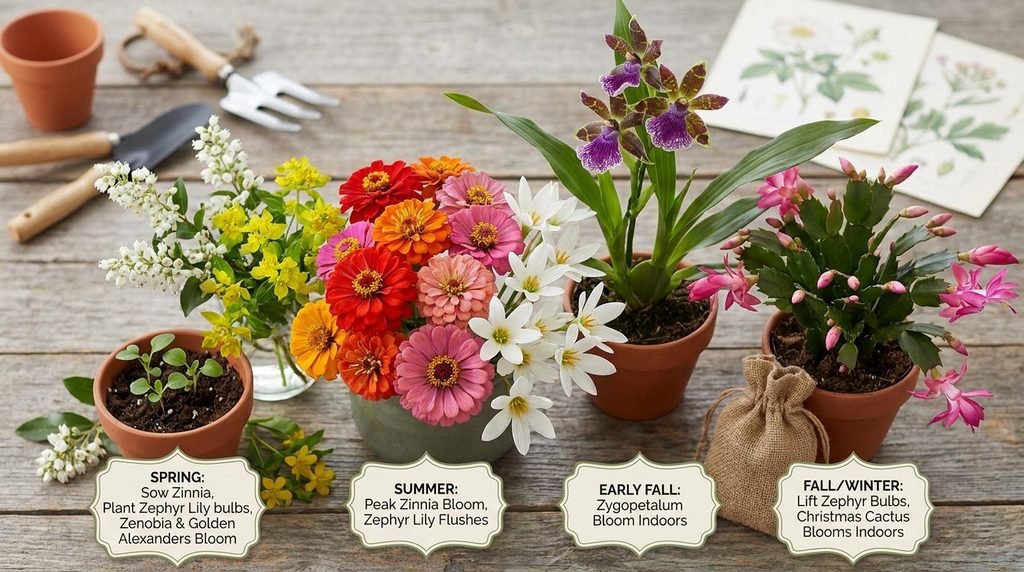
Summer is peak bloom season for zinnias, and the primary window for zephyr lily’s surprise flushes after rainfall. Zygopetalum, grown indoors, typically blooms in late summer or early fall depending on the specific hybrid, offering color at a time when most outdoor Z flowers are winding down. Fall is mainly a maintenance season for this letter, with zephyr lily bulbs in colder zones needing to be lifted before the first hard frost, and Christmas cactus beginning its light-and-temperature-triggered path toward a winter bloom.
| Season | Primary Task | Flowers Involved |
| Spring | Sow zinnia; plant zephyr lily bulbs; Zenobia and Golden Alexanders bloom | Zinnia, Zephyr Lily, Zenobia, Golden Alexanders |
| Summer | Peak zinnia bloom; rain-triggered zephyr lily flushes | Zinnia, Zephyr Lily |
| Early Fall | Zygopetalum bloom indoors | Zygopetalum |
| Fall | Lift zephyr lily bulbs in cold zones; begin Christmas cactus light cycle | Zephyr Lily, Christmas Cactus |
| Winter | Christmas cactus blooms indoors | Christmas Cactus |
The calendar shows a clear split between this letter’s outdoor summer bloomers and its indoor plants, which peak in fall and winter instead — a useful detail for anyone trying to keep some kind of Z flower in bloom across most of the year.
What to Keep Away From Pets and Curious Hands
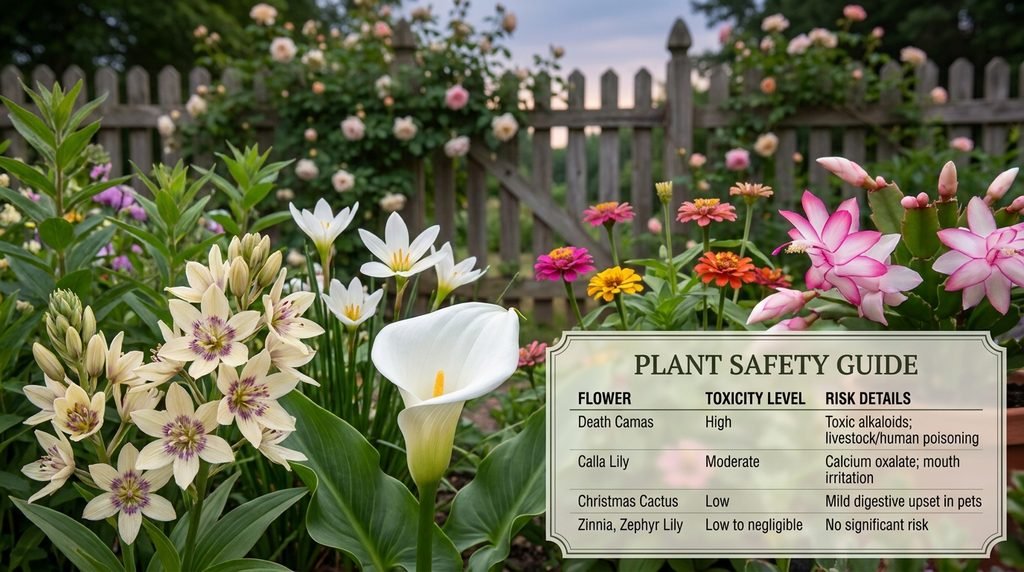
Toxicity on this list ranges from a serious, well-documented hazard to essentially no risk at all, and the difference matters enormously depending on which plant is involved. Death camas is the standout concern, containing toxic alkaloids throughout the plant that have a long, documented history of poisoning livestock that graze on it accidentally, along with rare but serious cases of human poisoning when the bulb is mistaken for wild onion or the plant is confused with camas lily before flowering. Symptoms in both livestock and humans can include vomiting, low blood pressure, and in severe cases, cardiac complications, making this one of the more genuinely dangerous plants covered across this entire alphabet series.
Zantedeschia, better known as calla lily, carries a milder but still notable risk, since its tissue contains calcium oxalate crystals that cause painful irritation to the mouth and throat if chewed, particularly in curious pets. Christmas cactus is only mildly toxic, generally causing digestive upset rather than anything severe if ingested by a cat or dog. Zinnia, zephyr lily, Zenobia, and Golden Alexanders are all considered low-risk or non-toxic in typical garden exposure.
| Flower | Toxicity Level | Risk Details |
| Death Camas | High | Toxic alkaloids; documented livestock and human poisoning cases |
| Zantedeschia (Calla Lily) | Moderate | Calcium oxalate crystals cause oral and throat irritation |
| Christmas Cactus | Low | Mild digestive upset if ingested by pets |
| Zinnia, Zephyr Lily, Zenobia, Golden Alexanders | Low to negligible | No significant toxicity reported in standard references |
Death camas deserves the most serious attention on this list, and anyone who forages wild alliums or manages land where livestock graze near native meadows should be able to identify it confidently before the plant flowers, since the bulb alone is easy to mistake for something edible.
Sorting by Color
White is one of the more prominent colors on this short list, appearing in Zenobia’s small bell-shaped clusters, death camas’s pale, greenish-white flower spikes, and several Zantedeschia cultivars, though calla lilies also come in deep purples, yellows, and pinks depending on the variety. Yellow shows up in Golden Alexanders’ flat-topped flower clusters and in some zinnia and Zygopetalum cultivars, offering a warmer note among an otherwise cooler-toned list.
Red and orange tones are rarer but distinctive, found most clearly in California fuchsia’s tubular, hummingbird-attracting blooms and in certain vivid zinnia cultivars bred specifically for bold color. Purple and mottled tones are largely the territory of Zygopetalum, whose orchid blooms often combine deep violet, brown, and green in a single striking flower, a color combination not really echoed anywhere else on this list.
The Full Roster, A to Z
With growing conditions, companion pairings, and safety information already covered, the list below works best as a quick lookup rather than a starting point for browsing this letter.
- California Fuchsia — Zauschneria californica
- Christmas Cactus — Schlumbergera (formerly Zygocactus)
- Death Camas — Zigadenus / Toxicoscordion venenosum
- Golden Alexanders — Zizia aurea
- Night Phlox — Zaluzianskya
- Wandering Jew (Inch Plant) — Tradescantia zebrina
- Zantedeschia (Calla Lily) — Zantedeschia aethiopica
- Zebra Iris — Iris pallida ‘Variegata’
- Zebra Plant — Aphelandra squarrosa
- Zenobia — Zenobia pulverulenta
- Zephyr Lily (Rain Lily) — Zephyranthes
- Zexmenia — Zexmenia hispida
- Zigzag Goldenrod — Solidago flexicaulis
- Zinnia — Zinnia elegans
- Zygopetalum — Zygopetalum (hybrid orchids)
Fifteen entries make up this verified list — a genuinely short roster, but one where nearly every plant serves a distinct purpose rather than repeating what an earlier entry already covers.
Matching Common Names to Botanical Names
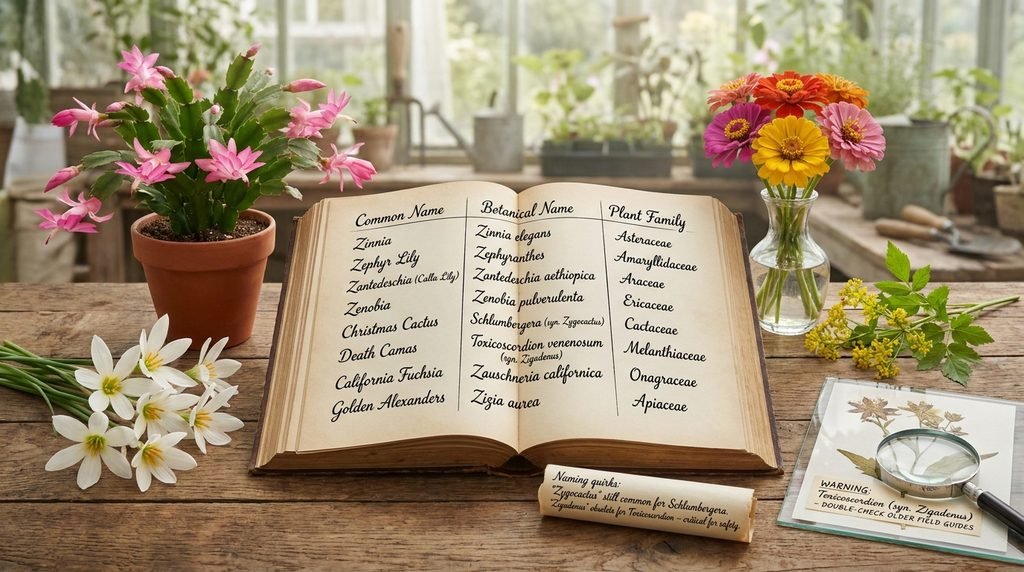
A few naming quirks are worth flagging for this letter specifically. Christmas cactus is still sold under its older genus name, Zygocactus, almost as often as its currently accepted name, Schlumbergera, which is why it earns a spot on Z-flower lists despite technically being reclassified out of the genus decades ago. Death camas presents a more serious naming issue: older references often use the genus Zigadenus, while updated taxonomy places most species in Toxicoscordion, and both names may appear depending on the age of the source, which matters when researching identification or toxicity information.
Zephyr lily and rain lily refer to the same plant, Zephyranthes, with the common name varying mostly by regional preference. Zebra plant and wandering Jew both carry a “zebra” reference in either their common or botanical naming due to distinctive striped foliage, despite being entirely unrelated species from different plant families.
| Common Name | Botanical Name | Plant Family |
| Zinnia | Zinnia elegans | Asteraceae |
| Zephyr Lily | Zephyranthes | Amaryllidaceae |
| Zantedeschia (Calla Lily) | Zantedeschia aethiopica | Araceae |
| Zenobia | Zenobia pulverulenta | Ericaceae |
| Christmas Cactus | Schlumbergera (syn. Zygocactus) | Cactaceae |
| Death Camas | Toxicoscordion venenosum (syn. Zigadenus) | Melanthiaceae |
| California Fuchsia | Zauschneria californica | Onagraceae |
| Golden Alexanders | Zizia aurea | Apiaceae |
The Zigadenus-to-Toxicoscordion shift is the one most worth double-checking before relying on an older field guide, since misidentifying death camas based on outdated naming carries real safety consequences rather than just academic confusion.
What These Flowers Are Said to Represent
Symbolism is thin for this letter overall, since several of its plants are regional wildflowers or houseplants that never accumulated the kind of Victorian flower-language tradition attached to roses or lilies. Zinnia is the clear exception, carrying a well-documented symbolic association with lasting friendship and remembrance, which has made it a popular choice for gifts marking long-term relationships rather than romantic gestures specifically.
Zantedeschia carries its own modest symbolic history, generally associated with magnificence and beauty, and its elegant, sculptural form has made it a recurring choice in wedding florals across multiple cultures. Most of the remaining Z flowers on this list simply haven’t built up enough shared cultural history to carry consistent symbolic meaning, which is worth stating plainly rather than inventing significance that doesn’t genuinely exist in the historical or folkloric record.
Bringing It Together
Flowers that start with Z will never compete with more common letters for sheer variety, but the short list that does exist covers a surprisingly wide range of practical uses — easy annual color, low-maintenance bulbs, fragrant shrubs, collector orchids, and at least one plant worth knowing purely for safety reasons. Matching the right entry to the right spot in the garden, rather than approaching this letter as a curiosity to complete an alphabet, is what makes this short list genuinely useful.
For most home gardens, a simple combination of zinnia for easy color, zephyr lily for low-maintenance bulb interest, and Zenobia for fragrant shrub structure covers the practical range this letter has to offer, without requiring specialized orchid or houseplant experience.
Frequently Asked Questions
1. Are there many flowers that start with Z?
No, Z is one of the rarest starting letters for flower names in English, with roughly fifteen genuinely verifiable, well-documented flowers that start with Z rather than the dozens available under more common letters.
2. What is the easiest Z flower to grow?
Zinnia is by far the easiest, growing quickly from seed in average, well-drained soil and full sun with minimal ongoing care.
3. Is death camas dangerous?
Yes, seriously so. It contains toxic alkaloids that have poisoned livestock and, in rare cases, humans who mistook its bulb for wild onion or edible camas.
4. Are calla lilies the same as Zantedeschia?
Yes, Zantedeschia is the botanical name for the plant commonly sold and known as a calla lily.
5. What Z flower works best indoors?
Christmas cactus and Zygopetalum orchids are the two most common Z flowers grown as houseplants, though Christmas cactus is considerably easier for beginners.
6. Can zephyr lily survive cold winters?
Only in USDA zones 7 and warmer without protection. In colder climates, the bulbs typically need to be lifted and stored indoors over winter.
7. What does Zenobia smell like?
Zenobia’s small white flowers carry a fragrance often compared to anise or lily of the valley, making it a popular choice for fragrant woodland-edge plantings.
8. Is Christmas cactus toxic to pets?
It carries only mild toxicity, typically causing digestive upset rather than anything severe if a cat or dog ingests part of the plant.
9. What’s the fastest-blooming Z flower?
Zinnia blooms fastest from seed, typically within six to eight weeks, while established zephyr lily bulbs can flower within days of a good rain.
10. Why is Christmas cactus sometimes called Zygocactus?
Zygocactus was its original genus classification before taxonomists reclassified it into Schlumbergera, and the older name is still used informally and on some plant tags.
11. What color are most Z flowers?
White and yellow are the most common colors among Z flowers, though California fuchsia offers red-orange tones and Zygopetalum orchids bring distinctive purple and mottled combinations.
12. Is California fuchsia the same as regular fuchsia?
No. Despite the shared common name, California fuchsia (Zauschneria) is a different genus from the fuchsia typically sold in hanging baskets, and the two have very different care needs.
13. What’s the biggest mistake people make with zinnia?
Planting seedlings too close together is the most common error, since crowded zinnias are far more prone to powdery mildew than properly spaced plants.
14. Do Zygopetalum orchids need special care?
Yes, they require more specific humidity and temperature conditions than beginner-friendly orchids like Phalaenopsis, making them a better choice for a gardener with some prior orchid experience.
15. What does zinnia symbolize?
Zinnia is traditionally associated with lasting friendship and remembrance, making it a popular gift for marking long-term relationships rather than romantic occasions specifically.