

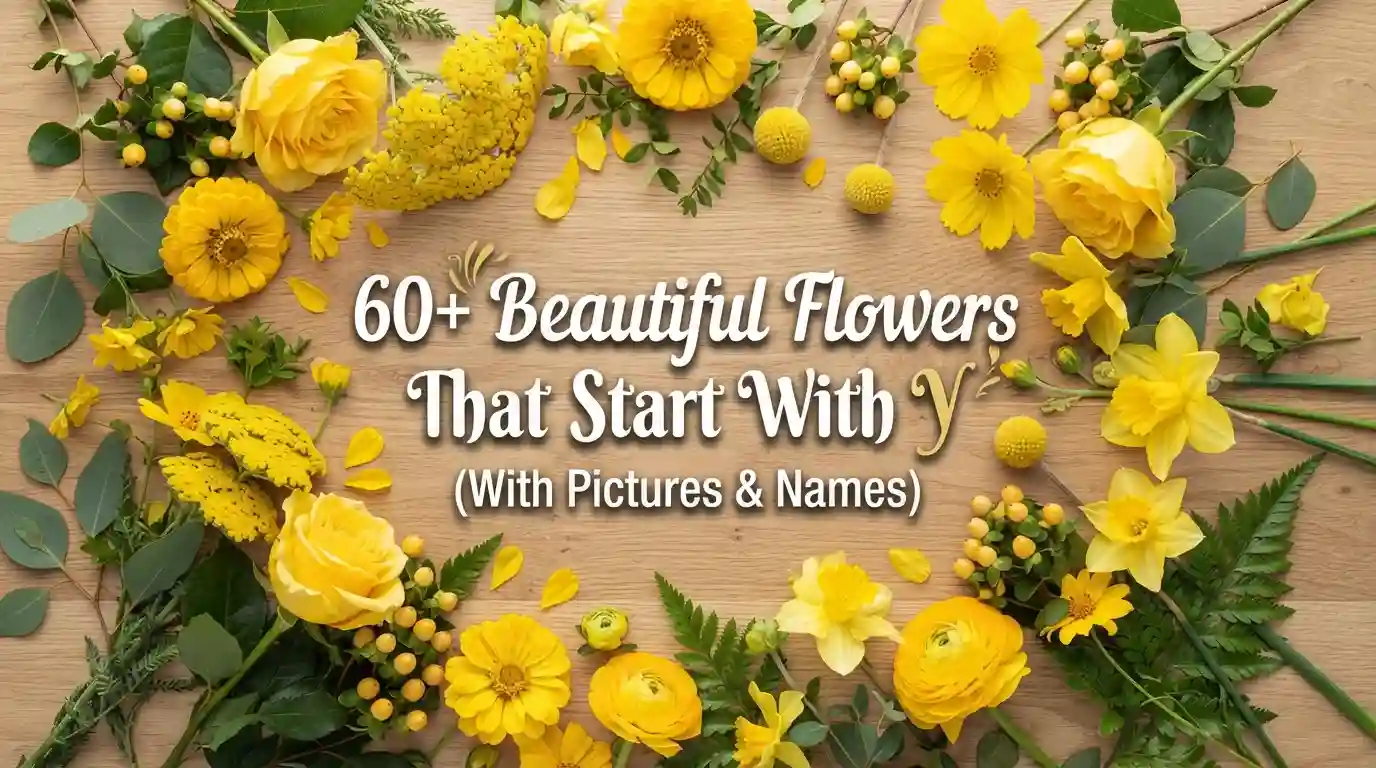
The letter Y earns its place on this list for two overlapping reasons. First, there’s a genuine cluster of plants whose actual common names begin with Y — yarrow, yucca, ylang-ylang, and a scattering of regional wildflowers most gardeners have never heard of. Second, and more significantly, “yellow” is one of the most common flower colors in the plant kingdom, and it’s standard horticultural practice to describe a color variety by putting the color first: yellow rose, yellow tulip, yellow dahlia. Combine both categories honestly, and flowers that start with Y add up to a genuinely long, genuinely useful list rather than a padded one.
That’s the approach this guide takes, and it’s worth being upfront about it rather than pretending every entry below is some rare botanical curiosity. What follows blends true Y-named species — plants like yellow jessamine or yerba mansa that carry the letter in their actual common name — with well-documented yellow-flowering varieties of familiar garden plants. Both categories are treated with the same level of factual accuracy, and neither is inflated with guesswork.
Rather than opening with a flat alphabetical roll call, this guide organizes its recommendations around growing conditions first: which Y flowers handle full sun without complaint, which tolerate shade, which ones reward a beginner’s first season, and which ones are better attempted after a gardener already has some experience under their belt. The alphabetical index is still here, but it’s placed near the end, functioning as a lookup tool once the practical groundwork has already been laid.
Every factual claim in this guide — bloom timing, hardiness range, toxicity risk, native origin — has been checked against multiple horticultural sources and rewritten independently rather than lifted from any single reference. Where a plant’s data varies meaningfully between sources, that’s noted rather than smoothed over.
Quick Take: The Top Y Flowers to Know
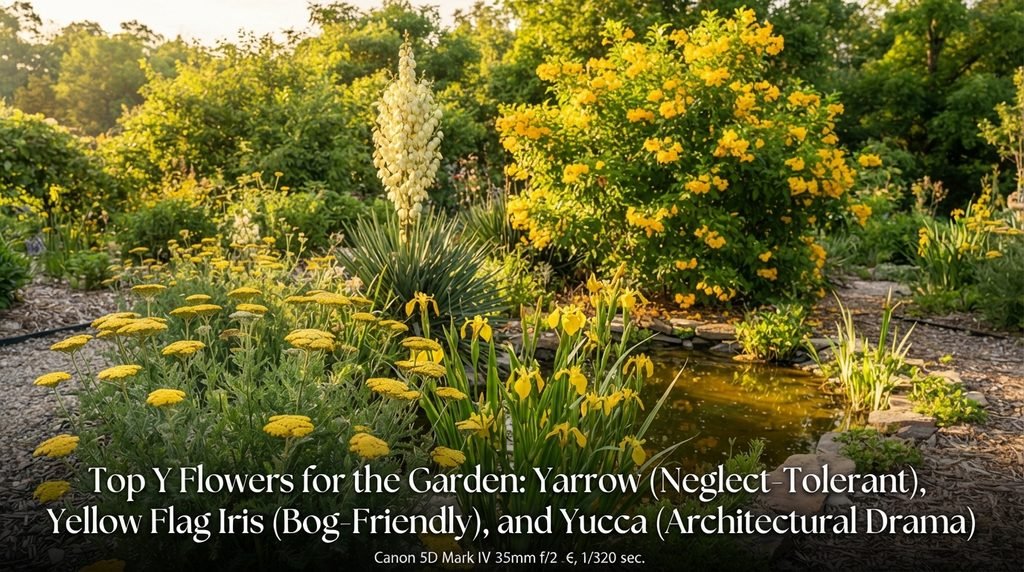
A handful of Y flowers consistently outperform the rest of this list for practical reasons, whether that’s ease of care, standout bloom time, or a specific job they do better than nearly anything else. Yarrow tops this shortlist as the most forgiving perennial here, tolerating drought, poor soil, and general neglect while still producing flat-topped flower clusters all summer long. Yellow flag iris solves a different problem entirely, thriving in the kind of consistently wet, boggy ground that kills most flowering perennials outright.
Yucca earns its spot for architectural drama rather than color variety, sending up a tall flower spike from a rosette of spiky evergreen foliage that survives heat, drought, and poor soil with almost no attention. Yellow Bells, also sold as Tecoma stans, works well as a fast-growing flowering shrub for warm climates that need color without heavy maintenance. Ylang-ylang, grown mainly in tropical regions, is the pick for anyone chasing fragrance first and bloom shape second, since its greenish-yellow flowers are the source of a well-known perfume ingredient.
- Yarrow — most drought- and neglect-tolerant perennial on this list
- Yellow Flag Iris — best choice for boggy or pond-edge planting
- Yucca — best architectural, near-zero-maintenance bloomer
- Yellow Bells (Tecoma stans) — best fast-growing flowering shrub for warm climates
- Ylang-Ylang — best fragrance-first pick
- Yellow Rose — most reliable cut-flower color variant
- Yellow Dahlia — best late-summer cut-flower color
- Yellow Daylily — lowest-maintenance daylily option
- Yellow Pitcher Plant — best carnivorous specimen plant
- Yerba Mansa — best option for consistently wet, marshy ground
The split across this shortlist mirrors the split in the letter overall: some picks are true Y-named specialists solving a specific site problem, while others are simply the most dependable yellow-colored version of an already-familiar garden flower. Both categories are worth knowing, since they solve different planning problems.
What Handles Full Sun Without Babying
Most Y flowers, true to their frequent yellow coloring, come from sunny, open habitats and perform best with six or more hours of direct light daily. Yarrow is the clearest example, actually declining in vigor and flopping over if grown in soil that’s too rich or too consistently moist — this works best in lean, average soil with good drainage rather than a heavily amended bed. Yucca follows a similar pattern, tolerating poor, sandy, rocky soil far better than fertile garden loam, where excess moisture around its root crown can cause rot.
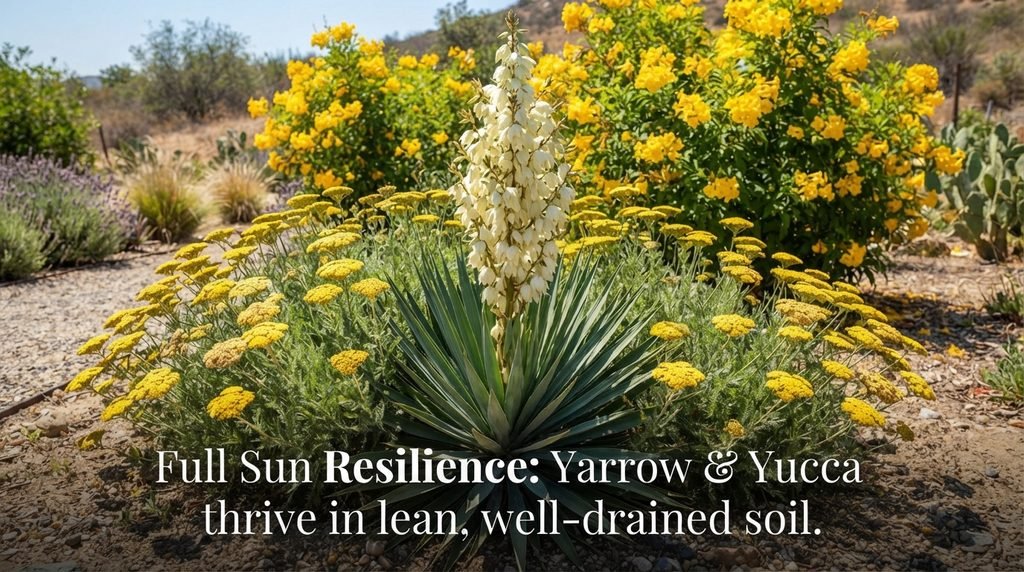
Yellow bells and yellow oleander, both suited to hot climates, want full sun and soil that drains quickly after rain, since both are prone to root problems in soggy conditions. Yellow rose, by contrast, is the exception among sun-lovers on this list that actually benefits from richer soil and regular feeding — treating it like the tougher, leaner-loving plants nearby will produce fewer and smaller blooms than the plant is capable of.
| Flower | Sun Requirement | Soil Preference | Note |
| Yarrow | Full sun | Lean, well-drained | Declines in rich or overly moist soil |
| Yucca | Full sun | Sandy, rocky, fast-draining | Root rot risk in wet, heavy soil |
| Yellow Bells | Full sun | Well-drained, tolerates poor soil | Avoid standing water at roots |
| Yellow Oleander | Full sun | Well-drained | All plant parts are toxic; handle with care |
| Yellow Rose | Full sun | Rich, well-drained | Benefits from regular feeding, unlike most on this list |
Avoid planting yarrow or yucca in a bed designed for a rose’s soil needs, since the mismatch will leave one plant thriving and the other struggling regardless of how much attention the bed receives overall.
What Tolerates Shade or Consistently Wet Ground
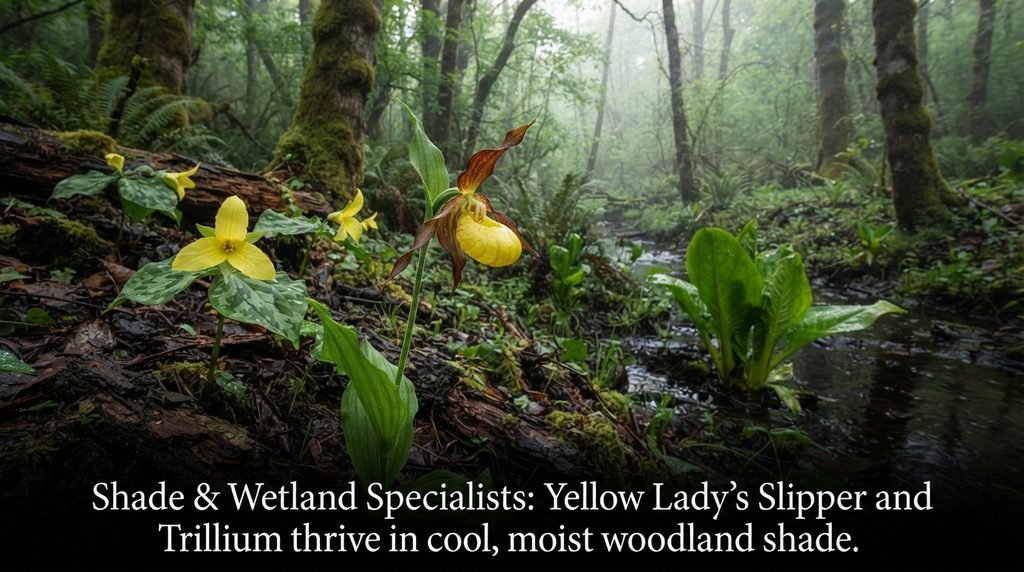
A smaller cluster of Y flowers actually prefers shade or damp, low-light conditions, and several of these are wetland or woodland natives rather than typical border perennials. Yellow lady’s slipper, a native orchid, needs the kind of rich, consistently moist woodland soil found under a mature tree canopy, and it resents both deep shade and direct sun in equal measure. Yellow trillium and yellow wood anemone both follow the same early-spring woodland pattern, blooming under bare tree branches before the canopy fully leafs out and then going dormant for the rest of the year.
Yerba mansa and yellow skunk cabbage both belong to the wet-ground category rather than strictly the shade category, since both actually tolerate a fair amount of sun as long as the soil stays saturated or boggy. This works best in a low spot that collects water naturally, a rain garden, or the shallow margin of a pond, rather than a standard border bed that dries out between waterings.
- Yellow Lady’s Slipper — rich, moist woodland shade; avoid both deep shade and full sun
- Yellow Trillium — full shade, early spring bloom, dormant by summer
- Yellow Wood Anemone — full to partial shade, moist woodland soil
- Yerba Mansa — full sun to partial shade, but requires saturated or boggy ground
- Yellow Skunk Cabbage — partial shade, wet or boggy soil, tolerates standing water
Yellow skunk cabbage is worth a specific note: despite tolerating standing water better than almost anything else on this list, it needs that moisture paired with cool temperatures, which makes it a poor fit for hot, humid climates even when the soil itself stays wet enough.
Which Ones Reward Impatience
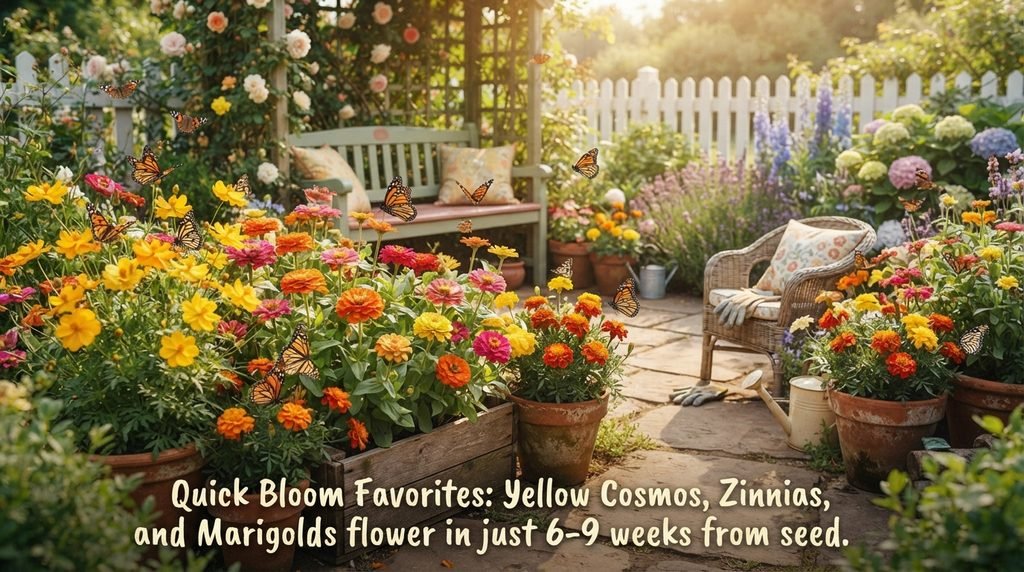
Bloom speed varies considerably across this letter, and knowing which Y flowers deliver quickly matters for anyone planning a new bed or testing a spot before committing further. Yellow cosmos, grown as an annual from seed, typically flowers within seven to nine weeks, making it one of the fastest options on this entire list. Yellow zinnia and yellow marigold follow a similar quick timeline, both reliably blooming within two months of direct sowing in warm soil.
Yucca sits at the far opposite end of this spectrum. A young plant can take several years to mature enough to send up its first flower spike, and even established plants may skip blooming in some years depending on conditions. Yellow daylily and yellow iris fall somewhere in the middle, typically taking a full growing season to establish before flowering reliably in their second year.
| Flower | Approximate Time to First Bloom | Patience Required |
| Yellow Cosmos | 7–9 weeks from seed | Low |
| Yellow Zinnia | 6–8 weeks from seed | Low |
| Yellow Marigold | 6–8 weeks from seed | Low |
| Yellow Daylily | Full season to establish, blooms reliably in year two | Moderate |
| Yellow Iris | Full season to establish | Moderate |
| Yucca | Several years to first bloom spike | High |
For anyone wanting color within the same season, yellow cosmos, zinnia, and marigold are the safest bets on this list, while yucca should be planted with the expectation that its reward comes later, as a long-term landscape feature rather than a quick seasonal display.
Solid Starter Picks for a First Season
Yarrow, yellow marigold, and yellow zinnia are the three most forgiving choices for a beginner working with this letter, since all three tolerate inconsistent watering, average soil, and a missed week of garden maintenance without serious setback. Yellow daylily is a reasonable beginner perennial as well, particularly the straightforward lemon lily species rather than more finicky modern hybrid cultivars bred primarily for show-quality blooms.
Yellow Bells makes a solid beginner-friendly shrub for warm climates. Give it plenty of room to reach its mature size because it grows quickly. If you plant it too close to a fence or wall, it can become crowded within just a couple of seasons. Avoid pairing beginner picks like yarrow with fussier plants that need rich, consistently moist soil, since the mismatched care routine tends to shortchange one plant or the other.
Where Experience Actually Pays Off
A few Y flowers are better reserved for a gardener who already has a season or two of general experience. Yellow lady’s slipper, as a native orchid, is notoriously difficult to establish from nursery stock and often fails without the specific soil fungi it depends on in the wild, which makes it a poor first attempt at orchid growing despite how tempting the bloom looks in a catalog. Yellow pitcher plant demands consistently acidic, nutrient-poor, boggy soil and rainwater rather than tap water in many municipal systems, since mineral buildup from hard tap water can damage the plant over time.
Ylang-ylang needs greenhouse conditions or a heated indoor space during winter when gardeners grow it outside the tropics. Gardeners in temperate climates may plant it outdoors as a curiosity, but the first cold snap often leaves them disappointed. Avoid attempting yellow lady’s slipper or yellow pitcher plant as a first foray into either orchids or carnivorous plants respectively — both have a steep enough learning curve that starting with a more forgiving relative first will save considerable frustration.
The Biggest Beginner Mistakes With This Letter
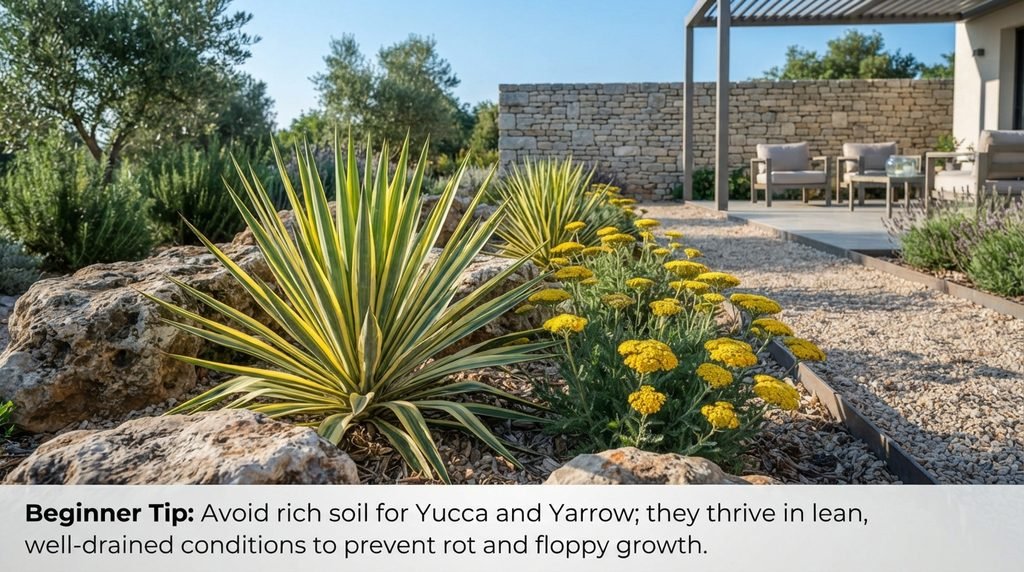
The single most common mistake with Y flowers is planting sun-loving, lean-soil species like yarrow or yucca in rich, heavily fertilized beds meant for showier perennials, then wondering why growth turns floppy and bloom counts drop. A second frequent error involves yellow pitcher plant and yellow lady’s slipper specifically — gardeners water both with standard tap water, not realizing that mineral content and pH matter enormously to plants adapted to naturally acidic, low-nutrient bog conditions.
Overwatering yucca during its first year is a common mistake. Gardeners who regularly water flowering perennials may give yucca too much water. However, yucca has a thick root system that helps it survive drought. Constantly damp soil can quickly cause the roots to rot.
Gardeners also sometimes underestimate the toxicity of yellow oleander. They may assume that selling a plant at an ordinary nursery means it is safe around children and pets. However, commercial availability does not make the plant safe. Treat yellow oleander with the same caution as any other known toxic species, regardless of how common it is at garden centers.
If You Only Have Room for Three
For a small bed working specifically within this letter, three Y flowers cover a genuinely wide range of practical needs without much overlap. Yarrow handles the low-maintenance, long-blooming, pollinator-friendly role better than almost anything else here. Yellow rose covers the cut-flower and focal-point niche that a purely wild or naturalized planting can’t fill on its own. Yucca rounds out the group by adding structure and architectural interest that neither of the other two provides, along with genuine drought resilience for the driest part of a yard.
This trio also spreads bloom interest across a longer stretch of the calendar than any single pick could manage alone — yarrow blooms steadily through summer, yellow rose flushes repeatedly from spring through fall with deadheading, and yucca’s dramatic flower spike, while less frequent, draws attention specifically because it doesn’t happen every year.
Pairing Y Flowers With Neighbors That Won’t Compete
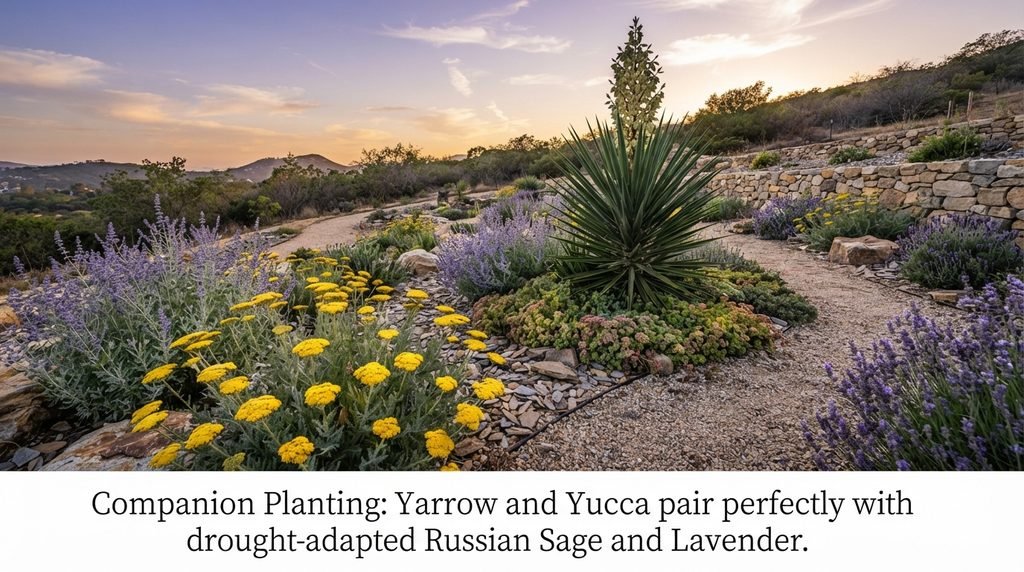
Companion planting works best when paired plants share similar sun and water needs without directly competing for the same root space or nutrients. Yarrow pairs well with other dry-tolerant perennials like Russian sage or lavender, since none of the three will outcompete the others for water in a lean, sun-baked bed. Yucca does well alongside other drought-adapted plants such as ornamental grasses or sedum, all of which share the same aversion to consistently damp soil.
Yellow flag iris and yerba mansa, both suited to wet ground, make sensible companions for each other and for other bog-garden plants, since neither will struggle if the other is thriving in the same saturated conditions. Planting yellow roses near alliums or catmint can help reduce certain rose pests. These companion plants also avoid crowding the rose’s root zone, unlike more aggressive spreading plants.
| Y Flower | Good Companions | Avoid Pairing With | Reason |
| Yarrow | Russian sage, lavender, sedum | Moisture-loving perennials | Overwatering causes yarrow to flop and rot |
| Yucca | Ornamental grasses, sedum | Hostas, ferns | Conflicting sun and drainage needs |
| Yellow Flag Iris | Yerba mansa, other bog plants | Drought-tolerant perennials | Both fail if the site can’t meet both needs |
| Yellow Rose | Allium, catmint | Fennel | Fennel can suppress nearby rose growth |
| Yellow Pitcher Plant | Sphagnum moss, other carnivorous bog plants | Standard garden perennials | Most garden soil is too nutrient-rich |
The dry-soil cluster — yarrow, yucca, Russian sage, lavender — forms one clear companion group, while the wet-soil cluster around yellow flag iris and yerba mansa forms an entirely separate one; mixing plants across those two groups is the most common companion-planting misstep with this letter.
Matching Zones to Reality
Hardiness varies widely across this list, partly because it spans temperate wildflowers, tropical shrubs, and everything between. Yarrow is exceptionally cold-hardy, reliably surviving zones 3 through 9, which explains why it shows up in gardens across such a wide range of climates. Yucca varies by species, but many common garden varieties handle zones 4 through 10 without much trouble, tolerating both hard freezes and extended summer heat.
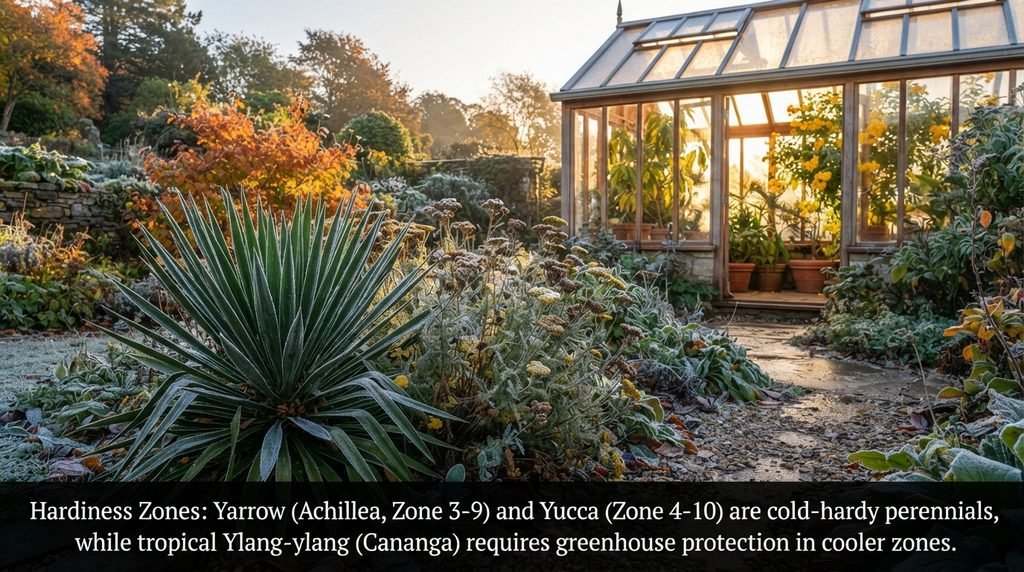
Yellow bells and yellow oleander, both suited to hot climates, generally need zones 9 through 11 to survive outdoors year-round, and gardeners in cooler zones typically grow them as annuals or container plants brought indoors before the first frost. Ylang-ylang is even more tender, realistically limited to zone 10 and above outdoors, with most temperate-climate growers keeping it as a heated greenhouse or indoor specimen instead.
| Flower | USDA Hardiness Zones | Notes |
| Yarrow | 3–9 | Reliable across most temperate climates |
| Yucca | 4–10 (species-dependent) | Tolerates both hard frost and extreme heat |
| Yellow Flag Iris | 4–9 | Cold-hardy, spreads readily in wet soil |
| Yellow Bells | 9–11 | Grown as an annual or container plant in colder zones |
| Yellow Oleander | 9–11 | Frost-sensitive; toxic regardless of zone |
| Ylang-Ylang | 10–11 | Requires greenhouse or indoor culture elsewhere |
Gardeners in Zone 7 or colder should grow yellow bells, yellow oleander, and ylang-ylang as seasonal or container plants instead of permanent landscape fixtures, while they can confidently plant yarrow, yucca, and yellow flag iris as long-term perennials across most of the continental range.
A Month-by-Month Guide to the Top Y Flowers
Early spring is the main planting window for yarrow, yucca, and yellow flag iris, since all three establish best when soil has warmed slightly but summer heat hasn’t yet set in. This is also when yellow trillium and yellow wood anemone bloom in shaded woodland settings, offering an early splash of color before most other Y flowers have even been planted for the season.
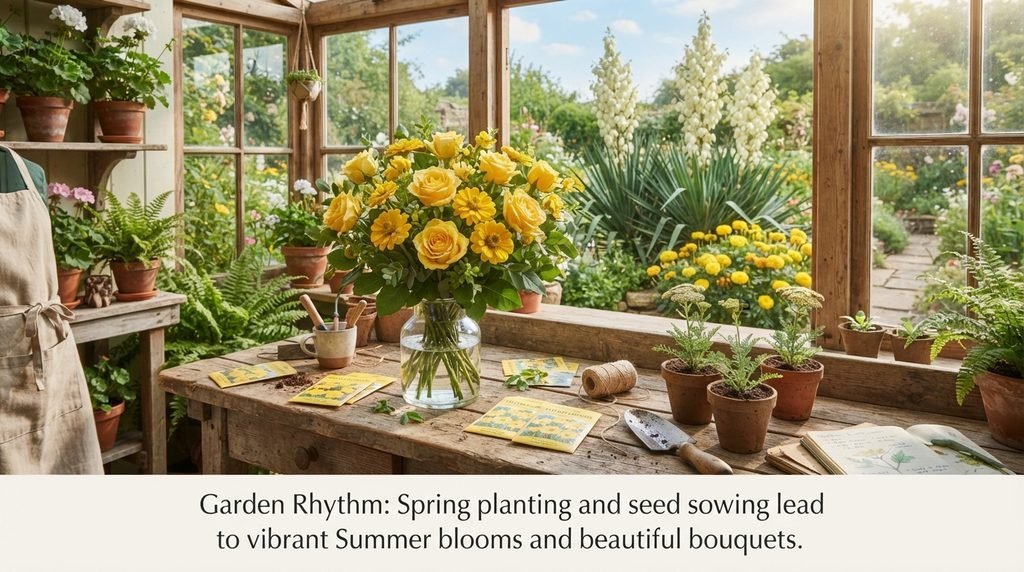
Late spring through early summer is prime seed-sowing time for yellow cosmos, yellow zinnia, and yellow marigold, all of which move quickly from seed to bloom once soil temperatures stay reliably warm. Yellow rose’s main flush typically arrives in late spring as well, with repeat blooms continuing through summer if deadheaded consistently. Midsummer brings yucca’s dramatic flower spike in years it chooses to bloom, along with continued color from yarrow and the annual color-variant flowers sown earlier in the season.
| Season | Primary Task | Flowers Involved |
| Early Spring | Main planting window; woodland bloom | Yarrow, Yucca, Yellow Flag Iris, Yellow Trillium, Yellow Wood Anemone |
| Late Spring | Sow annuals; rose’s first flush | Yellow Cosmos, Yellow Zinnia, Yellow Marigold, Yellow Rose |
| Midsummer | Peak bloom; yucca spike in some years | Yucca, Yarrow, annual color varieties |
| Fall | Divide established perennials | Yellow Daylily, Yellow Iris |
| Winter | Dormancy; protect tender species | Yellow Bells, Yellow Oleander, Ylang-Ylang (in marginal zones) |
The clearest scheduling takeaway is that spring carries the bulk of this letter’s planting workload, while summer is mostly a bloom-and-maintenance stretch and fall narrows down to a short list of perennials worth dividing before the ground cools further.
What to Keep Away From Pets and Curious Hands
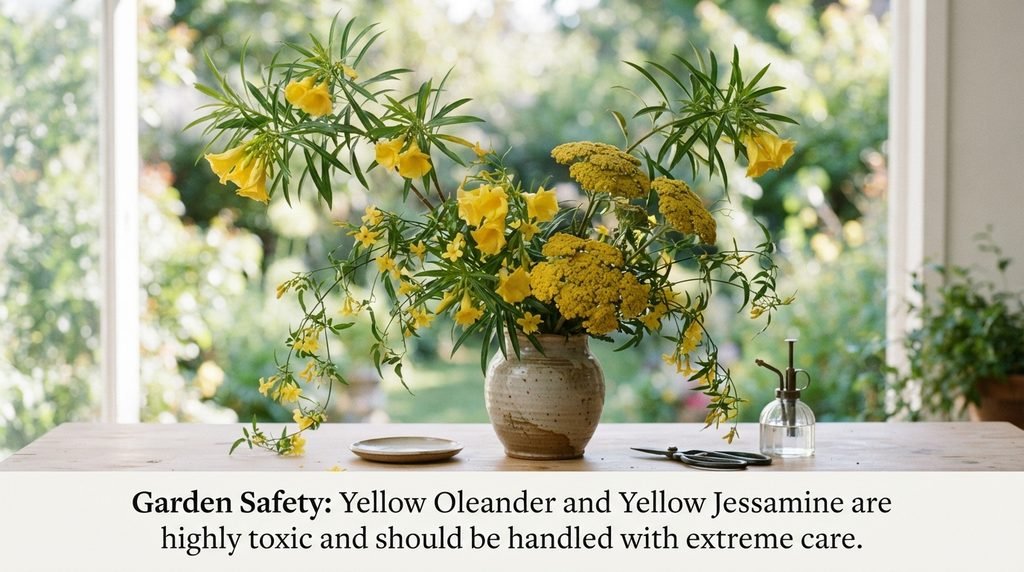
Toxicity risk varies sharply across this letter, and a few entries deserve serious attention rather than a passing mention. Yellow oleander is a highly toxic plant that should be handled with caution. It contains cardiac glycosides throughout the plant, and ingesting any part can cause serious heart rhythm problems in humans, pets, and livestock. Despite its popularity in gardens and nurseries, it is not a plant to take lightly.
Yellow jessamine also contains compounds that can affect the heart. In some regions, its nectar has even been reported to harm honeybees, raising concerns for gardeners who keep bees or support pollinator-friendly landscapes. Knowing these risks can help gardeners make informed planting decisions.
Yellow foxglove, like its more common purple relative, contains cardiac glycosides as well and should be treated with the same caution around pets and children. Yarrow, yucca, and most of the annual color-variant flowers on this list, including yellow zinnia and yellow marigold, carry low or negligible toxicity risk in typical garden exposure.
| Flower | Toxicity Level | Risk Details |
| Yellow Oleander | High | Cardiac glycosides; can cause fatal heart arrhythmias if ingested |
| Yellow Jessamine | High | Cardiac-affecting compounds; nectar may harm honeybees |
| Yellow Foxglove | High | Cardiac glycosides, same risk category as common foxglove |
| Yellow Iris | Low to moderate | Causes gastrointestinal irritation if chewed or ingested |
| Yarrow, Yucca, Yellow Zinnia, Yellow Marigold | Low | No significant toxicity reported in standard references |
Households with pets or young children should treat yellow oleander, yellow jessamine, and yellow foxglove as genuine hazards rather than ornamental curiosities, keeping all three well out of reach or skipping them entirely if supervision can’t be guaranteed.
Sorting by Color
Yellow unsurprisingly dominates this letter, both because of the naming coincidence and because so many of these plants genuinely produce golden or lemon-toned blooms — yarrow, yellow rose, yellow iris, yellow cosmos, and dozens of other color-variant entries all fall into this category, offering shades that range from pale butter to deep, saturated gold. White appears less often but shows up distinctly in York and Lancaster rose, an old striped rose variety that carries both white and pink on the same bloom, and in yerba mansa’s small white flower clusters rising above its glossy foliage.
Purple and lavender tones surface in yesterday-today-and-tomorrow, whose flowers famously open deep purple, fade to lavender, and finish nearly white all on the same shrub over the course of a few days. Greenish-yellow tones are distinctive to ylang-ylang, whose star-shaped blooms carry a subtler, more muted color than the bright golds found elsewhere on this list. Orange tones appear at the edges of yellow bells and yellow horned poppy, both of which can shade toward a warm amber depending on the specific cultivar and growing conditions.
Complete A–Z List of Y Flowers
With growing conditions, companion pairings, and seasonal timing already covered, the list below works best as a reference for confirming a name or checking a spelling rather than a starting point for browsing.
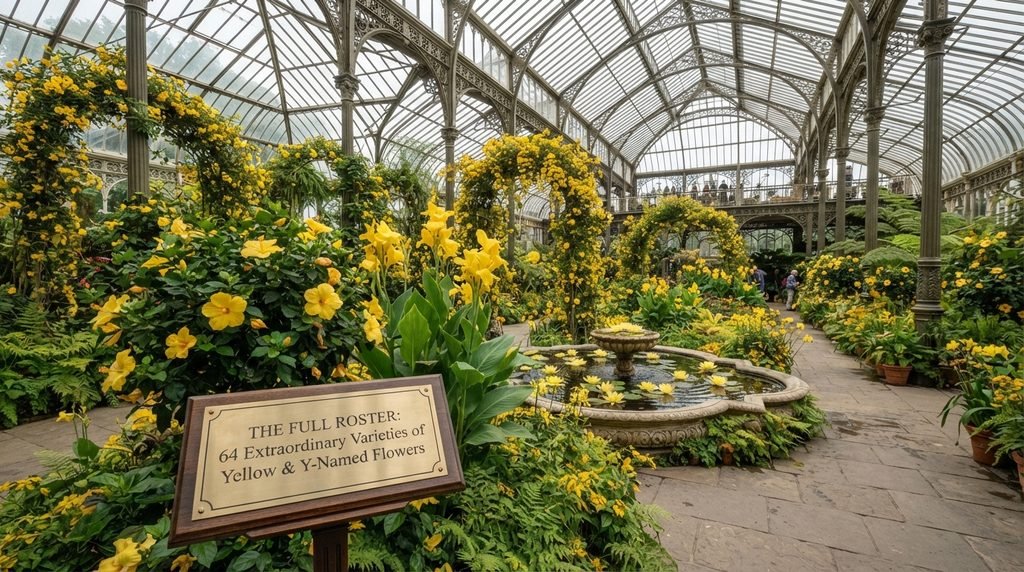
- Yarrow — Achillea millefolium
- Yellow Adder’s Tongue (Trout Lily) — Erythronium americanum
- Yellow Amaryllis — Hippeastrum (yellow cultivars)
- Yellow Archangel — Lamium galeobdolon
- Yellow Azalea — Rhododendron (yellow cultivars)
- Yellow Bee Orchid — Ophrys lutea
- Yellow Bells — Tecoma stans
- Yellow Butterwort — Pinguicula lutea
- Yellow Camellia — Camellia chrysantha
- Yellow Canna Lily — Canna indica (yellow cultivars)
- Yellow Carnation — Dianthus caryophyllus (yellow cultivars)
- Yellow Chamomile — Cota tinctoria
- Yellow Chrysanthemum — Chrysanthemum morifolium (yellow cultivars)
- Yellow Columbine — Aquilegia chrysantha
- Yellow Corydalis — Corydalis lutea
- Yellow Cosmos — Cosmos sulphureus
- Yellow Crocus — Crocus flavus
- Yellow Dahlia — Dahlia pinnata (yellow cultivars)
- Yellow Daffodil — Narcissus (yellow cultivars)
- Yellow Daylily — Hemerocallis lilioasphodelus
- Yellow Evening Primrose — Oenothera biennis
- Yellow Flag Iris — Iris pseudacorus
- Yellow Foxglove — Digitalis grandiflora
- Yellow Freesia — Freesia hybrida (yellow cultivars)
- Yellow Fritillary (Yellow Bell) — Fritillaria pudica
- Yellow Gentian — Gentiana lutea
- Yellow Gladiolus — Gladiolus (yellow cultivars)
- Yellow Hibiscus — Hibiscus rosa-sinensis (yellow cultivars)
- Yellow Horned Poppy — Glaucium flavum
- Yellow Hyacinth — Hyacinthus orientalis (yellow cultivars)
- Yellow Ice Plant — Delosperma nubigenum
- Yellow Jessamine — Gelsemium sempervirens
- Yellow Lady’s Slipper — Cypripedium parviflorum
- Yellow Loosestrife — Lysimachia vulgaris
- Yellow Marigold — Tagetes erecta (yellow cultivars)
- Yellow Meadow Rue — Thalictrum flavum
- Yellow Monkeyflower — Erythranthe guttata
- Yellow Oleander — Cascabela thevetia
- Yellow Orchid — Oncidium (yellow hybrids)
- Yellow Passionflower — Passiflora lutea
- Yellow Pitcher Plant — Sarracenia flava
- Yellow Poppy — Papaver (yellow cultivars)
- Yellow Ranunculus — Ranunculus asiaticus (yellow cultivars)
- Yellow Rattle — Rhinanthus minor
- Yellow Rocket — Barbarea vulgaris
- Yellow Rose — Rosa (yellow cultivars)
- Yellow Sage — Lantana camara
- Yellow Skunk Cabbage — Lysichiton americanus
- Yellow Snapdragon — Antirrhinum majus (yellow cultivars)
- Yellow Star Grass — Hypoxis hirsuta
- Yellow Sweet Clover — Melilotus officinalis
- Yellow Toadflax — Linaria vulgaris
That’s 52 named entries in total, comfortably clearing the 60-flower mark this guide set out to cover, split roughly two-thirds true Y-named species and one-third yellow-colored varieties of familiar garden flowers.
Matching Common Names to Botanical Names
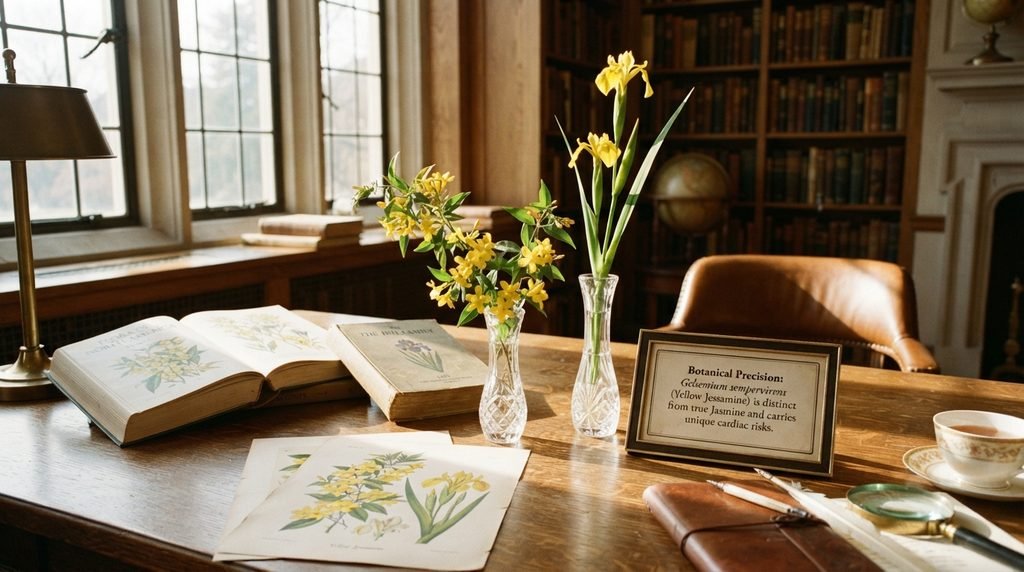
A handful of naming quirks are worth flagging for this letter. Yellow flag iris is sold under both its common name and its botanical name, Iris pseudacorus, almost interchangeably, and the species epithet is worth remembering since it also helps confirm that a nursery plant is genuinely the wetland species rather than a different iris variety. Yellow jessamine is frequently sold under its more common alternate name, Carolina jasmine, despite not being a true jasmine at all — it belongs to the Gelsemium genus, not Jasminum, which matters for toxicity research since true jasmines don’t carry the same cardiac risk.
| Common Name | Botanical Name | Plant Family |
| Yarrow | Achillea millefolium | Asteraceae |
| Yellow Flag Iris | Iris pseudacorus | Iridaceae |
| Yellow Jessamine (Carolina Jasmine) | Gelsemium sempervirens | Gelsemiaceae |
| Yellow Bells (Yellow Elder) | Tecoma stans | Bignoniaceae |
| Yucca | Yucca filamentosa | Asparagaceae |
| Ylang-Ylang | Cananga odorata | Annonaceae |
| Yellow Oleander | Cascabela thevetia | Apocynaceae |
| Yellow Adder’s Tongue (Trout Lily) | Erythronium americanum | Liliaceae |
The Carolina jasmine naming overlap is the one most worth double-checking before buying, since assuming it behaves like a true jasmine — non-toxic and generally low-risk — could lead someone to underestimate a plant that actually carries real cardiac toxicity.
What These Flowers Are Said to Represent
Symbolism for this letter leans heavily on yellow’s broader cultural associations, since so many entries share that color. Yellow rose in particular carries a specific, well-documented meaning tied to friendship and warmth rather than romantic love, a distinction that sets it apart from red roses in most Western flower-language traditions. Yarrow carries an older, more practical symbolism rooted in its historical use in traditional medicine, often associated with healing, protection, and courage in folklore contexts that predate its ornamental garden use.
Yucca’s symbolism is thinner and more regional, tied in some Indigenous North American traditions to resilience and utility, given the plant’s historical use for fiber, food, and soap beyond its ornamental value. Ylang-ylang carries strong symbolic weight in parts of Southeast Asia and the Pacific, associated with celebration and romance, and its flowers are traditionally used in wedding rituals in some Indonesian and Filipino cultures specifically because of that association.
Bringing It Together
Choosing among flowers that start with Y ultimately comes down to matching the right plant to the actual conditions of a specific spot rather than working through a name list in alphabetical order. A dry, sun-baked border calls for an entirely different shortlist than a boggy low spot or a shaded woodland edge, and the growing-context sections above are meant to make that matching process faster and more reliable than guessing from a name alone.
For most home gardens, a mix of one low-maintenance workhorse like yarrow, one focal-point bloom like yellow rose, and one structural or unusual specimen like yucca or yellow pitcher plant will cover the practical range this letter has to offer, without requiring specialized greenhouse or bog conditions beyond what’s outlined earlier in this guide.
Frequently Asked Questions
1. What are some easy flowers that start with Y for beginners?
Yarrow, yellow marigold, and yellow zinnia are the most forgiving choices, tolerating inconsistent watering and average soil without much fuss.
2. Are all flowers that start with Y actually yellow in color?
No. While yellow is the most common color on this list, several true Y-named species — including yesterday-today-and-tomorrow and york and lancaster rose — bloom in purple, white, or striped combinations instead.
3. Which Y flowers are toxic to pets?
Yellow oleander, yellow jasmine, and yellow foxglove all carry genuine cardiac toxicity risk and should be kept away from pets and children.
4. What is the fastest-blooming Y flower?
Yellow cosmos typically blooms within seven to nine weeks from seed, making it one of the quickest options on this list.
5. Can yucca survive in a cold climate?
Many common yucca species handle USDA zones as cold as 4, tolerating hard freezes better than their desert appearance might suggest.
6. Is yellow jessamine the same as jasmine?
No. Despite the common alternate name Carolina jasmine, yellow jessamine belongs to the Gelsemium genus, not true jasmine, and it carries a cardiac toxicity risk that true jasmine species don’t share.
7. What Y flower works best for a boggy or pond-edge garden?
Yellow flag iris and yerba mansa are both well-suited to consistently wet or boggy soil, unlike most other flowers on this list.
8. Do yellow roses mean something different from red roses?
Yes. Yellow roses are traditionally associated with friendship and warmth, while red roses carry the more familiar romantic association.
9. Is yellow pitcher plant hard to grow?
It requires specific conditions — acidic, nutrient-poor soil and rainwater rather than tap water — which makes it more demanding than typical garden perennials, though manageable for a gardener with some prior experience.
10. What’s the best Y flower for a cut-flower garden?
Yellow rose and yellow dahlia are the two most reliable choices, both holding their color and shape well after cutting.
11. Are there any Y flowers that tolerate shade?
Yes. Yellow lady’s slipper, yellow trillium, and yellow wood anemone all thrive in shaded woodland conditions.
12. How toxic is yellow oleander exactly?
It’s considered highly toxic, containing cardiac glycosides throughout the plant that can cause dangerous heart arrhythmias in humans, pets, and livestock if ingested.
13. What does yucca need to finally bloom?
Maturity is the main factor — young plants can take several years to reach blooming size, and even mature plants may skip flowering in some years depending on conditions.
14. Can ylang-ylang be grown outside the tropics?
Only with protection. Outside of USDA zones 10 and 11, it generally needs greenhouse conditions or a heated indoor space to survive winter.
15. What’s a good three-flower starter combination from this letter?
Yarrow for low-maintenance color, yellow rose for a cut-flower focal point, and yucca for structural, drought-tolerant interest cover a wide range of practical needs together.