


Flowers that start with W include Wisteria, a vine so famous for the cascading purple blooms that entire festivals are built around it, and White Baneberry, a genuinely dangerous woodland plant most gardeners have never heard of. That contrast between showstopper and hazard makes this letter worth sorting with real care.
This guide organizes flowers that start with W by growing context first, not alphabet order. Sun needs, shade tolerance, bloom speed, and skill level all come before any A-Z list. That structure gets you to a usable answer faster than scrolling through 50-plus names looking for the one that actually fits your yard.
The tone stays practical throughout. Easy plants get called easy. A few entries here need real caution around pets, children, and even livestock, and those get flagged directly rather than softened. This letter has more than enough genuine variety, so nothing needs to be inflated just to meet the count.
A full alphabetical index, a botanical name crosswalk, and a toxicity table sit near the end for quick reference, but the growing-context sections that follow carry the real planning value. Between famous flowering vines, woodland natives, and a couple of plants better admired from a distance, this letter covers real ground.
Quick Take: Where to Start
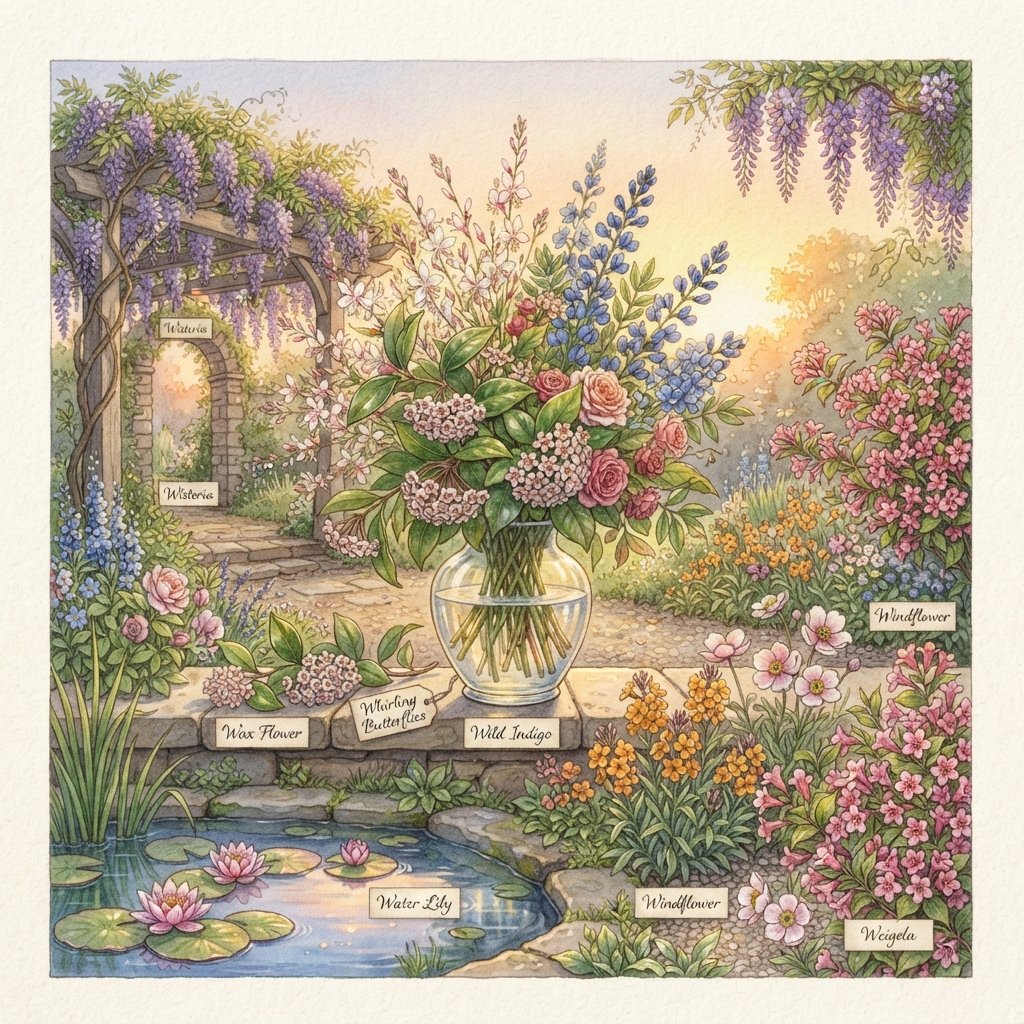
Wisteria solves the dramatic-focal-point problem better than almost any other vine, producing cascading clusters of purple, blue, or white flowers on a mature structure. Water Lily works differently, floating on the surface of a pond or water feature and offering a flowering option where most garden plants simply can’t grow.
Wallflower earns its spot for fragrance and reliability, blooming in cool spring conditions with a scent often compared to cloves or honey. Wax Flower, commonly sold as Hoya, brings low-maintenance charm to an indoor setting, producing clusters of star-shaped, waxy blooms with minimal care.
Windflower solves a specific problem: naturalized spring color under deciduous trees, spreading readily in the dappled light before summer canopy closes in. Weigela earns its place as the shrub pick, offering a heavy flush of trumpet-shaped spring blooms that draw hummingbirds reliably.
Whirling Butterflies, more commonly called Gaura, rounds out the group with a light, airy texture that moves in the slightest breeze, adding motion to a border that heavier flowers can’t provide. Wild Indigo closes the list as the native perennial pick, tolerating poor soil while producing tall spikes of blue, purple, or yellow flowers each early summer.
Full-Sun Picks That Hold Their Color
A handful of flowers that start with W were built for strong, direct light. These work well on a hot patio, a south-facing border, or any strip of soil that bakes through the afternoon.
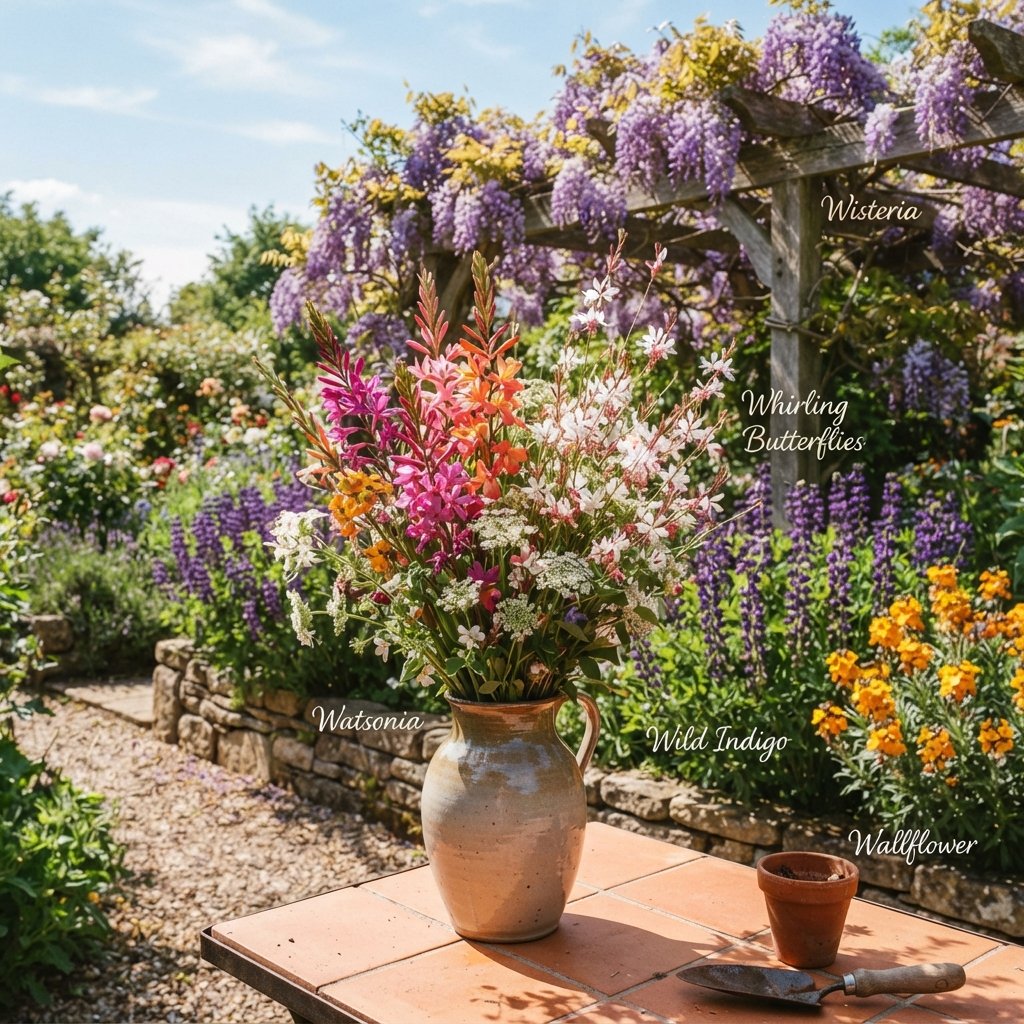
Wisteria needs full sun to bloom well, often flowering poorly or not at all in shadier spots regardless of how vigorously the vine itself grows. Wallflower tolerates cool, sunny spring conditions particularly well, though it can struggle once summer heat arrives in warmer climates. Whirling Butterflies thrives in full sun and lean, well-drained soil, actually blooming more sparsely in rich, overly fertile beds.
- Wisteria — needs full sun to bloom, regardless of vine vigor
- Wallflower — thrives in cool, sunny spring conditions
- Whirling Butterflies — prefers lean soil over rich, fertile beds
- Wild Indigo — tolerates poor soil and full sun with minimal care
- Watsonia — needs strong sun for its tall, colorful flower spikes
Watsonia deserves a specific mention here. It produces some of the tallest flower spikes on this letter, but only with consistent, strong sun exposure throughout the growing season.
Shade and Partial-Shade Options
Shade suits a genuine share of flowers that start with W, more than several other letters covered in this series. This matters most for anyone gardening under mature trees or along a north-facing wall.

Wood Anemone leads this group, spreading readily across a woodland floor in dappled spring light before disappearing back into dormancy once the tree canopy fully closes in for summer. Woodland Phlox tolerates partial to full shade well, producing fragrant blue-purple blooms that pair naturally with spring bulbs in the same setting. Wild Ginger, grown mainly for its heart-shaped foliage, produces small, unusual flowers low to the ground, tucked beneath the leaves in deep shade.
- Wood Anemone — spreads in dappled spring shade, dormant by summer
- Woodland Phlox — tolerates partial to full shade, fragrant blooms
- Wild Ginger — deep shade tolerant, flowers hidden beneath foliage
- White Trout Lily — woodland ephemeral, needs undisturbed shaded soil
White Trout Lily rounds out this group as a true spring ephemeral. Like several other woodland natives on this list, it needs undisturbed soil and patience, since colonies can take years to spread into a noticeable drift.
Fast Bloomers Versus Slow Payoff
Bloom speed shifts which flowers that start with W make sense for a short-timeline project. Some reward you within weeks; others ask for real, sometimes surprising, patience.
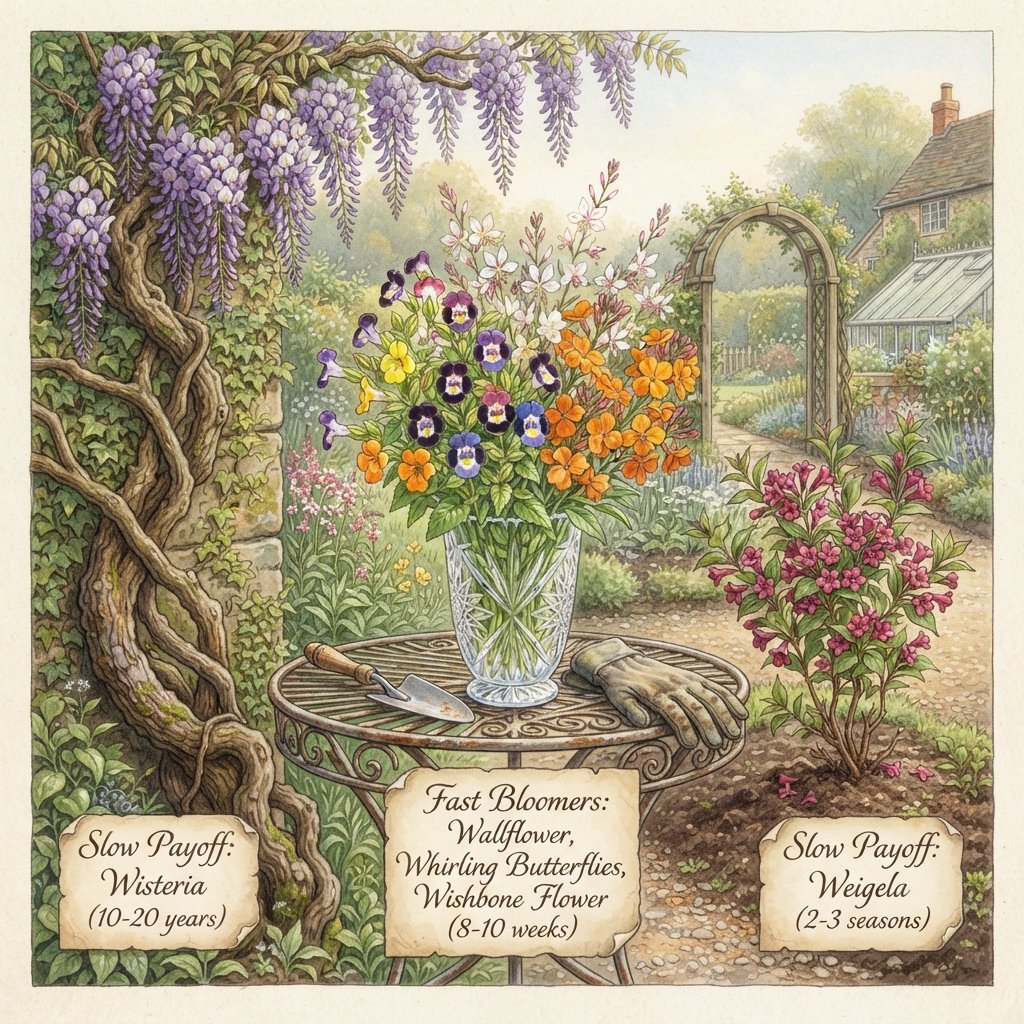
Wallflower and Whirling Butterflies move fastest among this group, often flowering within eight to ten weeks from seed or a nursery transplant. Wishbone Flower follows a similar timeline, rewarding a spring planting with steady color through summer in a partly shaded spot.
Wisteria sits at the extreme slow end of this entire series. A vine grown from seed can take anywhere from ten to twenty years to produce its first bloom, which is why nearly all nursery-sold Wisteria is grafted from an already-flowering specimen to shortcut that wait considerably. Weigela and Winter Camellia both fall into a more moderate slow category, typically needing two to three growing seasons to establish before a full flush of blooms appears. Anyone working against a tight deadline should lean toward the fast annuals rather than these considerably slower shrub and vine picks.
What Actually Holds Up With Minimal Care
Several flowers that start with W tolerate real neglect, which matters most for a first-time grower who wants results without a strict schedule.
Whirling Butterflies is the standout among the perennials here, tolerating drought and poor soil while still producing months of airy, continuous bloom. Wallflower is nearly as forgiving during its cool-season window, surviving inconsistent watering without much drop in flower quality. Wax Flower rounds out the easy tier as a houseplant, tolerating missed waterings and lower light better than many other flowering indoor plants.
- Whirling Butterflies — tolerates drought and poor soil, blooms for months
- Wallflower — forgiving during its cool-season bloom window
- Wax Flower — tolerates missed watering and lower indoor light
The pattern across this group is genuine tolerance for inconsistency. None of these three punish a missed watering the way some of the pickier flowers that start with W do further down this list.
The Ones Worth a Warning
A smaller group demands more skill, more specific conditions, or genuine caution around pets, children, and even livestock.
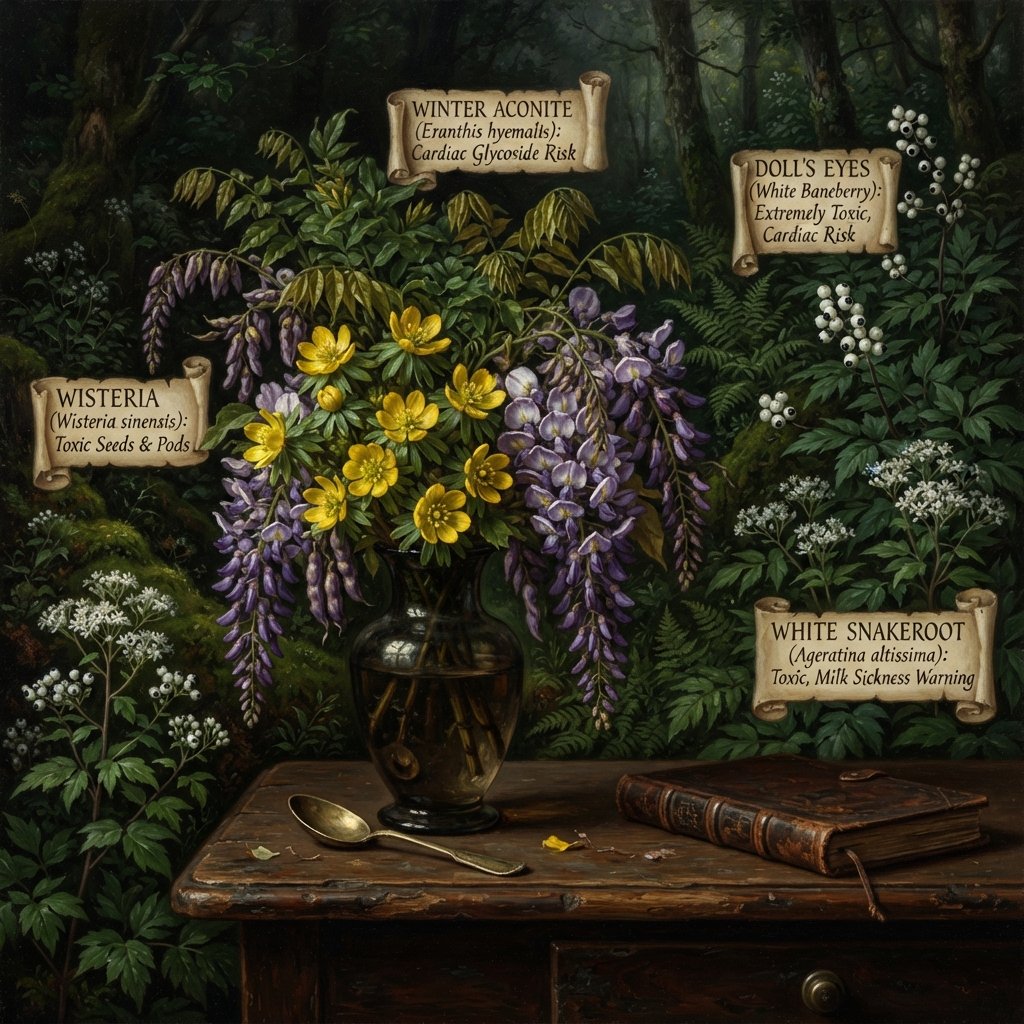
White Baneberry, commonly called Doll’s Eyes for its unusual white berries with a single black dot, is the most serious concern on this entire letter. Every part of the plant is toxic, and its berries in particular contain compounds that can cause cardiac symptoms severe enough to be life-threatening if eaten in quantity. It’s a genuinely striking woodland plant, but it belongs far from areas where curious kids might be drawn to its distinctive, doll-eye-like fruit. White Snakeroot carries a different but equally serious risk, historically responsible for what settlers called “milk sickness,” a sometimes fatal illness caused by drinking milk from livestock that had grazed on the plant. Wisteria seeds and pods carry a lower but still real severity, causing significant nausea and vomiting if chewed and swallowed, particularly by children drawn to the pods’ appearance.
- White Baneberry (Doll’s Eyes) — toxic throughout; berries can cause cardiac symptoms
- White Snakeroot — historically caused fatal “milk sickness” via contaminated milk
- Wisteria — seeds and pods cause significant nausea if eaten
- Winter Aconite — contains cardiac glycosides similar to other Ranunculaceae relatives
Winter Aconite rounds out this group. Its cheerful yellow late-winter blooms make it easy to forget that it belongs to the same toxic plant family as Monkshood and Buttercup, sharing a similar cardiac glycoside risk if ingested.
A Companion Planting Guide
Companion planting works better for some pairings than others, and several flowers that start with W have genuinely useful partners worth knowing before laying out a bed. Pest deterrence, pollinator traffic, and shared structural needs all factor into these choices.
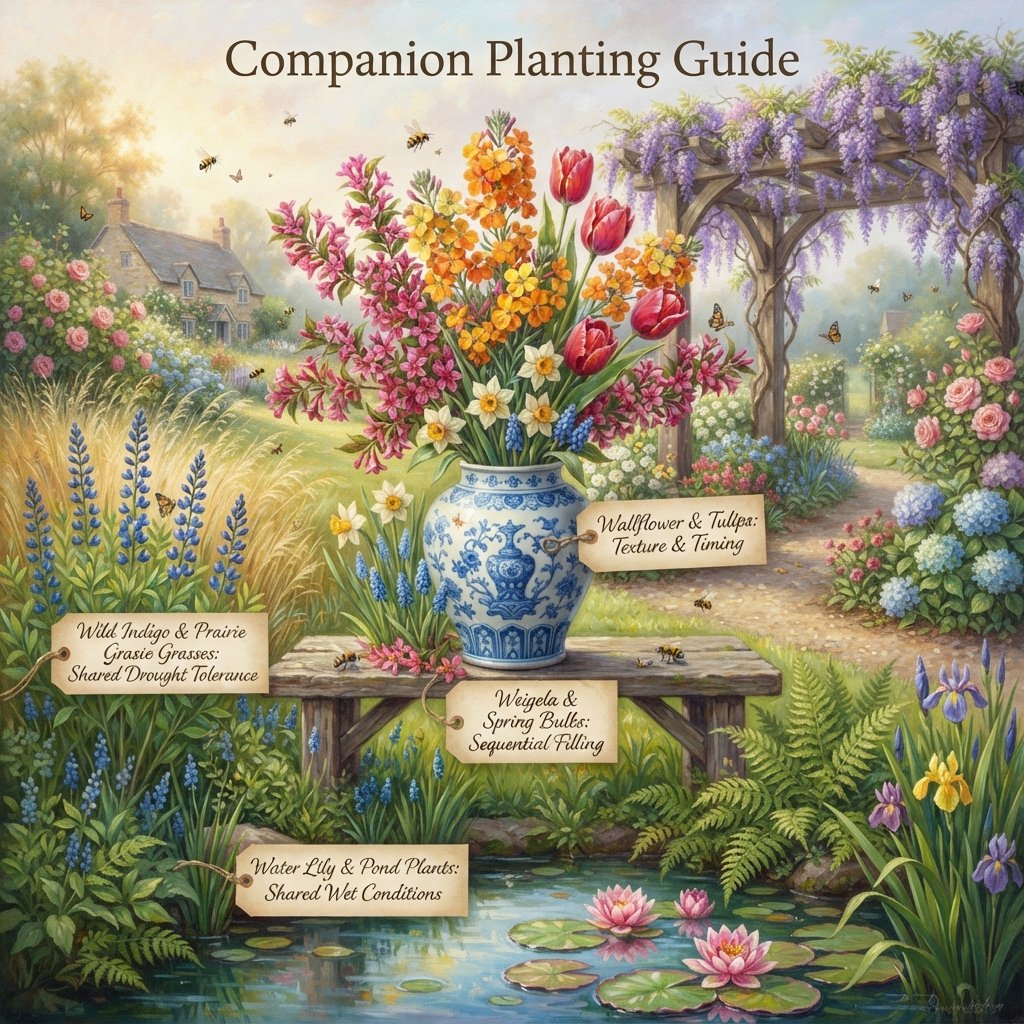
Wallflower pairs well with spring-blooming Tulip, sharing similar cool-season timing while offering a contrasting texture and fragrance. Wisteria, given its aggressive growth habit, works best paired with a genuinely sturdy structure rather than another plant, since few neighbors can compete with its vigorous vining growth. Water Lily grows comfortably alongside other pond-edge and floating plants, sharing the same consistently wet conditions without competing for the same limited dry ground.
| Flower | Good Companion | Why It Works |
| Wallflower | Tulips | Shared cool-season timing, contrasting texture |
| Water Lily | Other pond and floating plants | Shares consistently wet growing conditions |
| Wild Indigo | Native prairie grasses | Similar drought tolerance and poor-soil needs |
| Weigela | Spring bulbs at its base | Bare-branch bloom finishes as bulbs fill in |
Wisteria’s entry in this section is really about infrastructure rather than plant pairing. A pergola, strong arbor, or reinforced fence matters more to this vine’s success than any neighboring flower ever could.
A Season-by-Season Care Calendar
Timing changes outcomes for bulbs, vines, and fast annuals in this group. A few weeks off schedule can mean missing a bloom window entirely. The calendar below covers the top picks from the Quick Take section.
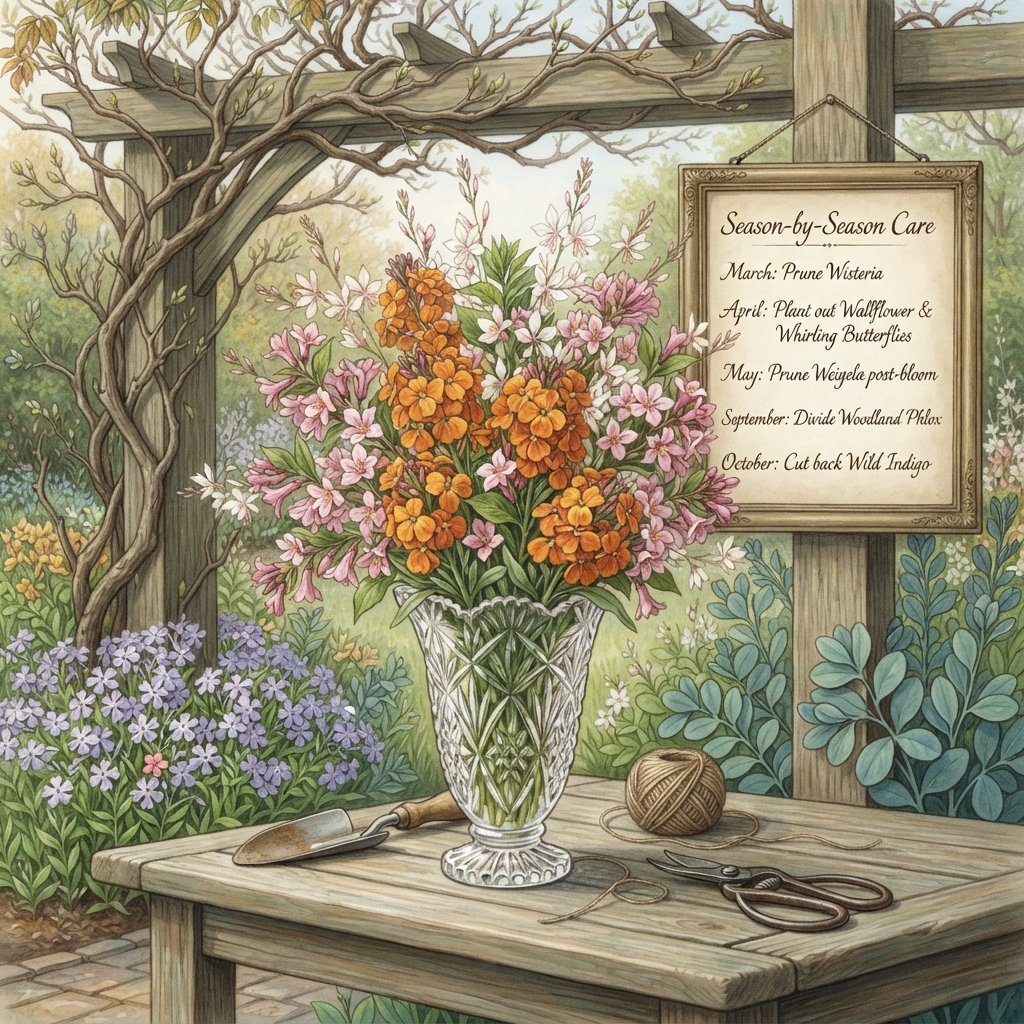
February: Start Wallflower seeds indoors in cooler climates, since this flower tolerates transplanting out while frost risk still lingers.
March: Prune Wisteria back hard to encourage bloom production over excess vegetative growth. Watch for Winter Aconite and Wood Anemone emerging under deciduous trees.
April: Plant out Wallflower seedlings. Direct-sow Whirling Butterflies and Wishbone Flower once frost risk has passed.
May: Plant out Wax Begonia and other tender annuals once nights stay reliably warm. Prune Weigela immediately after its spring bloom finishes, not before.
June: Deadhead Wallflower and Whirling Butterflies regularly to extend bloom into summer.
September: Divide and transplant Woodland Phlox if clumps have become overcrowded.
October: Cut back Wild Indigo after the first hard frost to tidy the bed before winter dormancy.
The most common timing mistake in this group involves pruning Wisteria at the wrong time or with the wrong intent. Summer pruning, done specifically to control excess vine growth rather than shape the plant, actually encourages more flower buds the following spring.
Mistakes Beginners Make With This Letter
A few errors show up repeatedly with flowers that start with W, and most trace back to habits that work fine elsewhere but not here.
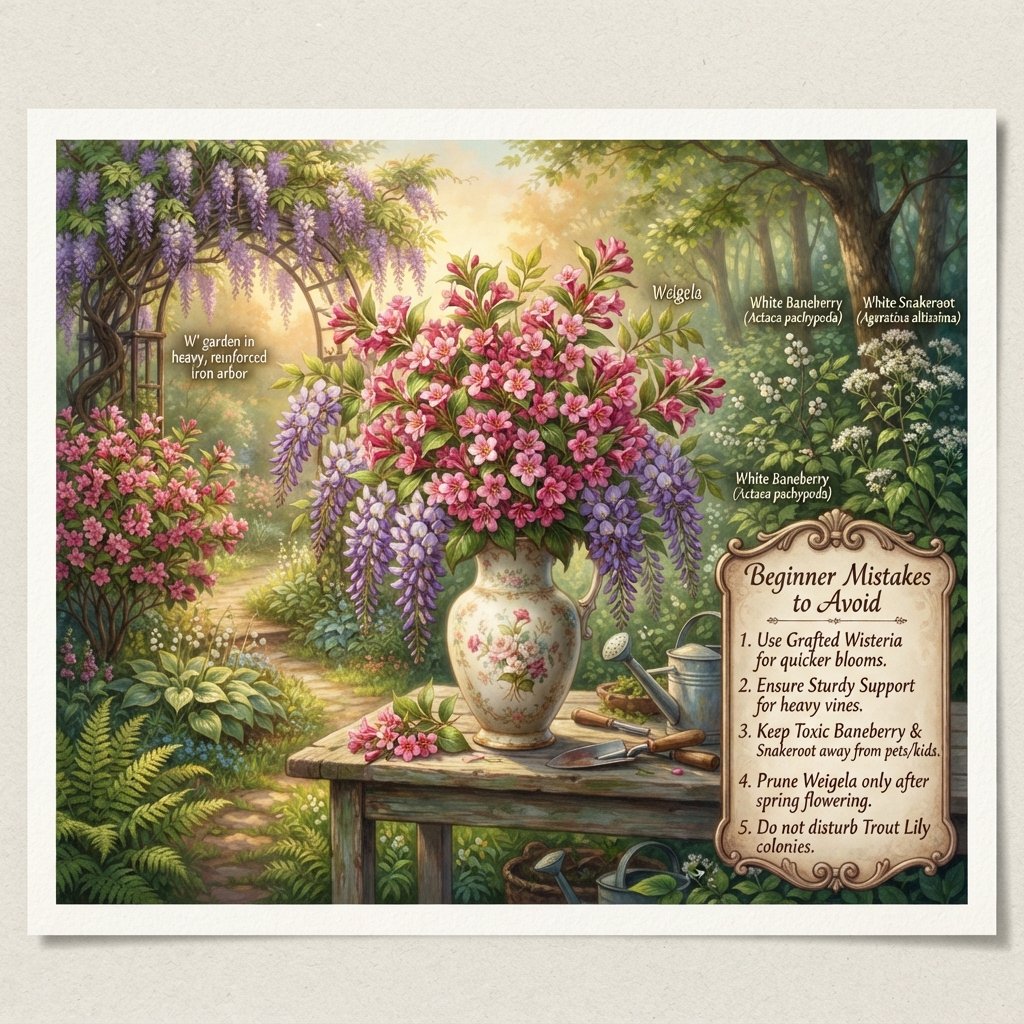
Expecting Wisteria to bloom within its first few years is probably the most common disappointment, especially with seed-grown rather than grafted specimens, which can take a decade or more to flower. Planting Wisteria without a genuinely sturdy support structure is a close second, since the vine’s mature weight can damage a flimsy trellis or arbor over time. Growing White Baneberry or White Snakeroot without considering pets, children, or grazing livestock nearby is a serious oversight given how toxic both plants are. Pruning Weigela in fall or winter, after flower buds have already formed, is another frequent source of disappointment the following spring.
- Expecting quick blooms from seed-grown Wisteria rather than a grafted specimen
- Installing Wisteria on a support structure too flimsy for its mature weight
- Growing White Baneberry or White Snakeroot without checking for pets, kids, or livestock nearby
- Pruning Weigela after flower buds have already set for next year
- Disturbing White Trout Lily or Wood Anemone colonies, which are slow to recover
Most of these mistakes come from underestimating a plant’s specific needs or timeline rather than from a lack of general gardening skill.
Where to Actually Buy These
Availability shifts noticeably across this letter. Wisteria, Wallflower, and Weigela are nursery staples — nearly every garden center and big-box retailer carries all three in season, usually at a reasonable individual cost, particularly for younger Wisteria specimens. Wax Flower and Whirling Butterflies are close behind, widely available as both seed and established nursery starts.
White Trout Lily, Wood Anemone, and specific rare Wisteria cultivars sit at the other end. These typically require a native-plant specialty nursery or a dedicated vine and shrub grower rather than a general garden center, partly because they’re slower to propagate and less profitable for mass retailers to stock. The specialty tier here commands a noticeably higher price than the common tier, particularly for mature, already-flowering Wisteria specimens.
If You Only Have Room for Three
Anyone working with a small bed or limited budget benefits from narrowing this list fast. Wisteria takes the first spot for anyone with a sturdy structure to fill, since few vines on this list deliver the same dramatic payoff, provided the wait is accepted upfront. Wallflower earns the second spot as the most reliable, fragrant cool-season color source on this entire list.
The third spot depends on the space and goal. Gardeners with a pond or water feature should choose Water Lily, since few other flowering options work in standing water at all. Anyone gardening primarily for pollinators and drought tolerance should choose Whirling Butterflies instead. Both are strong enough to justify the final spot depending on what the space actually needs.
Handling These Safely
Not every flower that starts with W is safe around pets, children, or livestock, and a few deserve real caution rather than a passing mention. White Baneberry is the most serious concern by a wide margin — its berries and other plant parts contain compounds capable of causing cardiac symptoms severe enough to be life-threatening if eaten in quantity. White Snakeroot poses a uniquely indirect risk, historically causing fatal “milk sickness” in people who drank milk from cows that had grazed on the plant, a risk still relevant for anyone keeping dairy animals near contaminated pasture.
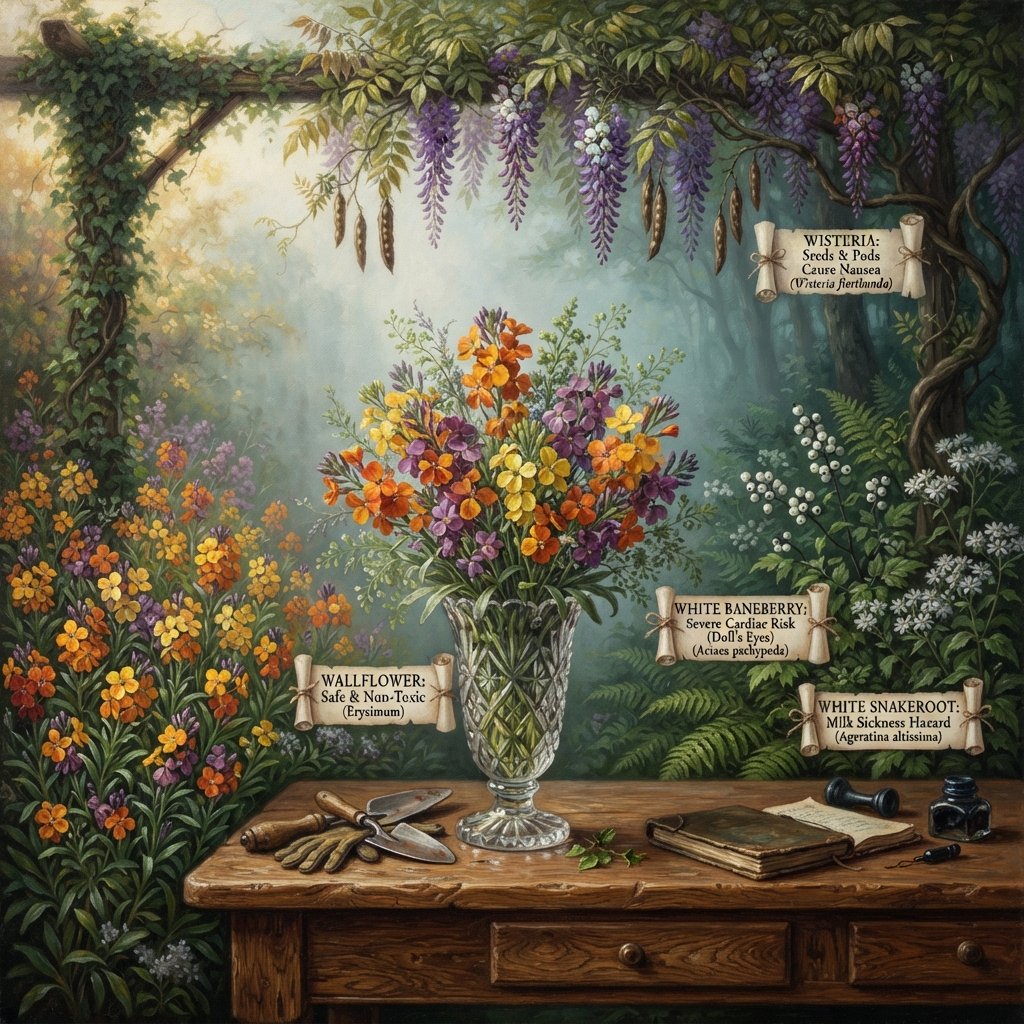
Wisteria seeds and pods cause significant nausea and vomiting if chewed and swallowed, a risk that matters most for curious children drawn to the pods’ unusual appearance. Winter Aconite contains cardiac glycosides similar to several other members of the buttercup family, posing a real risk if ingested in quantity. Wallflower, by contrast, is one of the safer flowers on this entire list, generally considered non-toxic to both pets and people.
| Flower | Toxicity Level | Main Concern |
| White Baneberry (Doll’s Eyes) | Severe | Berries can cause life-threatening cardiac symptoms |
| White Snakeroot | Severe (indirect) | Causes fatal “milk sickness” via contaminated dairy |
| Wisteria | Moderate | Seeds and pods cause significant nausea if eaten |
| Winter Aconite | Moderate | Cardiac glycosides; risk if ingested |
| Wallflower | Minimal | Generally considered safe |
Households with pets or grazing animals should treat White Baneberry and White Snakeroot as genuine hazards worth removing entirely rather than simply relocating. Wisteria pods are worth a specific mention for households with young children, since their unusual shape sometimes invites exactly the kind of curious handling that leads to accidental ingestion.
Sorting These Flowers by Color
Color often decides where a flower actually gets planted more than growing conditions do, since most gardeners are matching an existing scheme rather than starting fresh.
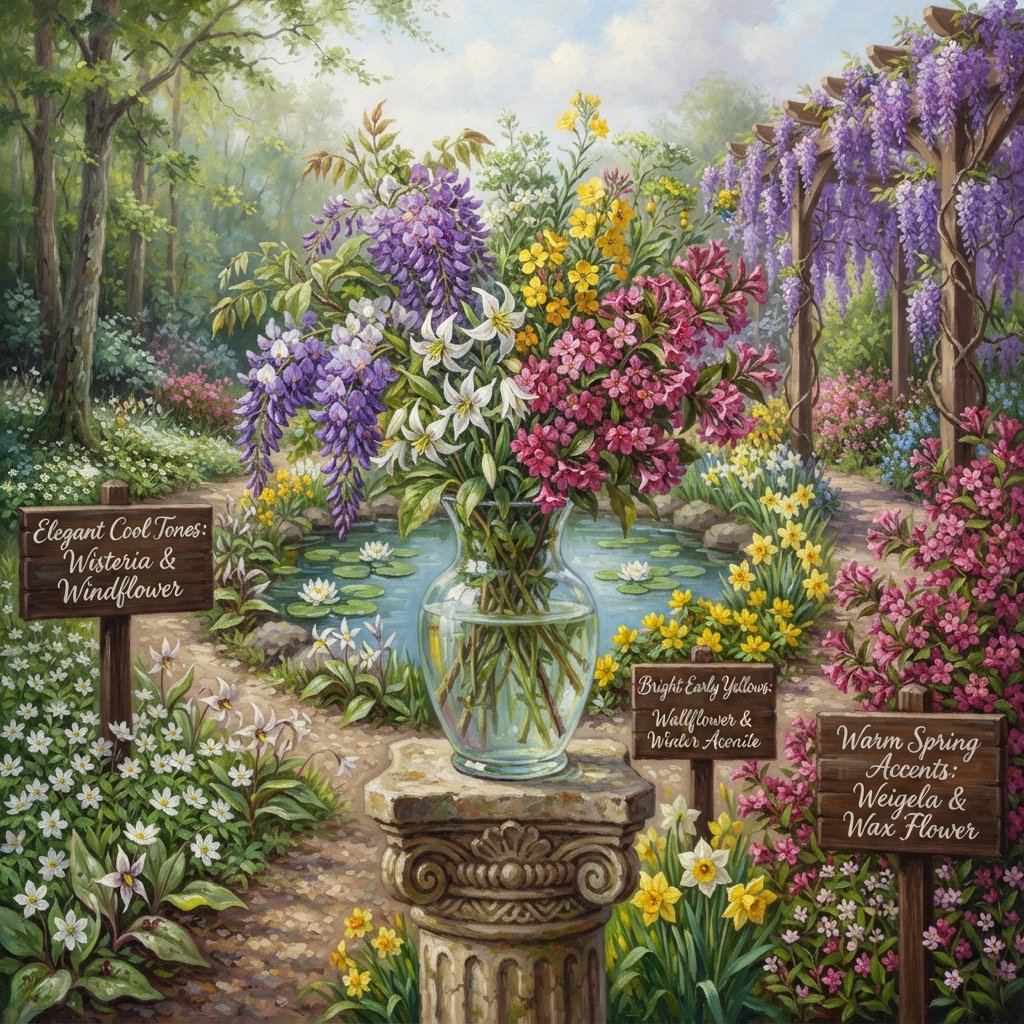
Purple and blue flowers dominate this letter more than almost any other color, with Wisteria and Windflower both offering saturated, cool tones that read as elegant against a range of backdrops. White flowers follow closely with Water Lily and White Trout Lily, both bringing pure, delicate color to very different settings — one floating on water, the other tucked into a woodland floor. Yellow flowers round out the letter with Wallflower and Winter Aconite, the latter bringing genuinely early, welcome color to a garden still emerging from winter dormancy. Pink and red tones show up in Weigela and certain Wax Flower varieties, both offering warmer color options within this otherwise cool-toned letter.
Full Name Index
The list below rounds up more than 50 flowers that start with W, mixing common names with botanical genus names. Detailed growing notes for the most relevant entries appear in the sections above; this index exists purely as a fast lookup.
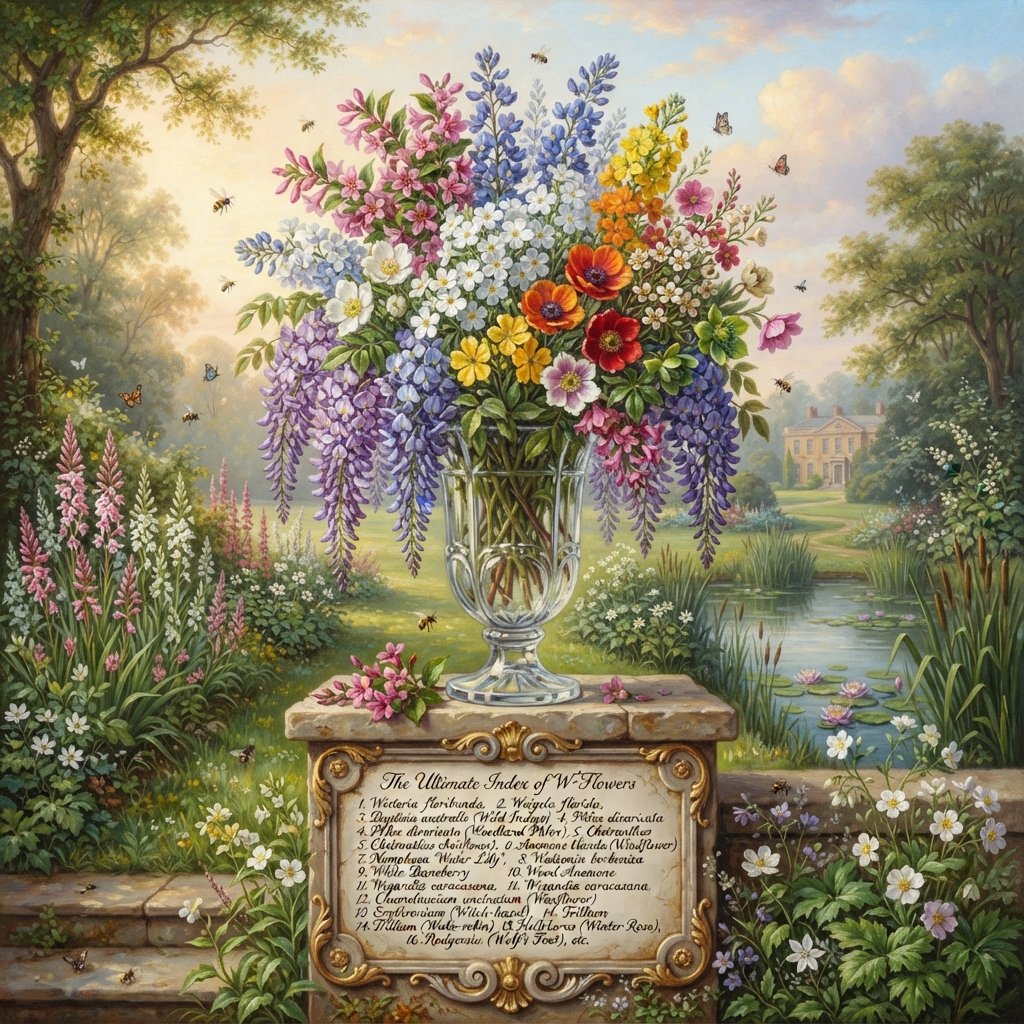
- Wisteria
- Water Lily
- Wallflower
- Wax Flower (Hoya)
- Windflower (Anemone)
- Winter Jasmine
- Wood Anemone
- Weigela
- White Clover
- Winter Aconite
- Wild Rose
- Woodland Phlox
- Watsonia
- Winter Heath
- Wild Bergamot
- Wandflower
- Whorled Milkweed
- Wintersweet
- Wild Indigo
- Waterlily Tulip
- Winged Everlasting
- Wild Geranium
- Wood Sorrel
- Whirling Butterflies (Gaura)
- Wax Begonia
- Wild Sweet William
- Winter Rose (Christmas Rose)
- Wishbone Flower
- White Snakeroot
- Water Hyacinth
- Woolly Betony
- Wild Lupine
- Winter Jessamine
- Wax Plant
- Woodruff
- Wild Petunia
- Winter Camellia
- Wormwood
- White Baneberry (Doll’s Eyes)
- Wild Columbine
- Winged Loosestrife
- Western Trillium
- Wild Carrot
- Water Poppy
- White Trout Lily
- Whorled Tickseed
- Wild Ginger
- Winter Cherry (Chinese Lantern)
- Wild Bleeding Heart
- Wax Vine
- Whiteflower Kudzu
- Winter-Flowering Clematis
A few names here overlap or confuse buyers. Wax Flower and Wax Plant refer to the same genus, Hoya, and are used somewhat interchangeably depending on region. Wild Carrot and Queen Anne’s Lace are also the same plant, botanically identical despite the different common names used in various contexts.
Common Name to Botanical Name Crosswalk
Botanical names matter most when ordering online or confirming a nursery tag, since common names shift by region in ways botanical names don’t. The crosswalk below covers the flowers referenced most throughout this guide.

| Common Name | Botanical Name | Family |
| Wisteria | Wisteria spp. | Fabaceae |
| Water Lily | Nymphaea spp. | Nymphaeaceae |
| Wallflower | Erysimum cheiri | Brassicaceae |
| Wax Flower | Hoya carnosa | Apocynaceae |
| Windflower | Anemone spp. | Ranunculaceae |
| Weigela | Weigela florida | Caprifoliaceae |
| White Baneberry | Actaea pachypoda | Ranunculaceae |
| White Snakeroot | Ageratina altissima | Asteraceae |
| Winter Aconite | Eranthis hyemalis | Ranunculaceae |
| Wild Indigo | Baptisia australis | Fabaceae |
Windflower, White Baneberry, and Winter Aconite all sharing the Ranunculaceae family explains a pattern worth remembering across this entire letter — several genuinely toxic plants cluster in this single family, alongside safer relatives like the common garden Buttercup. Wisteria and Wild Indigo sharing the Fabaceae family explains their similar pea-like flower structure, despite one being a climbing vine and the other an upright perennial.
What These Flowers Have Meant Through History
Several flowers that start with W carry symbolism reaching well beyond the garden. Wisteria has long represented longevity and immortality in Japanese culture, an association tied partly to the vine’s genuinely long lifespan, with some famous specimens documented as living well over a century while still producing vigorous annual blooms.
Water Lily carries a much older symbolic weight, tracing back to ancient Egyptian reverence for the lotus, where the flower’s habit of closing at night and reopening at dawn became a symbol of rebirth and the sun’s daily cycle. Wallflower earned its Victorian-era meaning of “fidelity in misfortune” from its literal habit of growing in the cracks of old walls and ruins, thriving in conditions that would defeat most other flowering plants. Windflower, or Anemone, carries a more melancholy story rooted in Greek mythology, said to have sprung from the blood of Adonis, which gave the flower a lasting association with fragile, fleeting love.
Final Thoughts
Flowers that start with W cover a genuinely wide range once sorted by growing context instead of the alphabet, from the famously patient Wisteria to the seriously toxic White Baneberry. Starting with sun, shade, and skill level makes it far easier to land on the right flowers that start with W for your specific space, rather than picking one purely because it’s the most recognizable name on the list. Whatever combination of color, fragrance, and growing conditions you’re working with, there’s very likely a W flower suited to it.
Frequently Asked Questions
What are the easiest flowers that start with W for beginners?
Wallflower, Whirling Butterflies, and Wax Flower are the most forgiving picks. All three tolerate average conditions without much loss in bloom quality.
Which flowers that start with W are toxic to pets?
White Baneberry and White Snakeroot carry the most serious risk. Wisteria seeds and Winter Aconite also pose real concerns if ingested.
Why won’t my Wisteria bloom?
Insufficient sun and improper pruning are the most common causes. Seed-grown vines can also simply take a decade or more before their first bloom.
Is Wisteria dangerous to grow if I have kids?
The seeds and pods can cause significant nausea if chewed and swallowed, so keeping an eye on fallen pods is worthwhile in households with young children.
What’s the fastest-blooming flower that starts with W?
Wallflower and Whirling Butterflies typically flower within eight to ten weeks from seed or transplant, making them strong choices for gardeners planting mid-season.
Why does my nursery-bought Wisteria bloom sooner than one grown from seed?
Most nursery Wisteria is grafted from an already-flowering specimen specifically to skip the decade-plus wait associated with seed-grown vines.
Is White Snakeroot dangerous to people directly?
Its most documented historical danger came indirectly, through milk from livestock that had grazed on the plant, though direct ingestion also carries real risk.
What’s a good companion plant for Wallflower?
Tulips work well, sharing similar cool-season timing while offering a contrasting bloom shape and added fragrance.
When should Wisteria be pruned?
Late winter for structural shaping, and again in summer to control excess vine growth, which encourages more flower buds the following spring.
What flowers that start with W work well in a water garden?
Water Lily and Water Poppy both perform well floating on or near standing water, where most other flowering plants can’t survive.